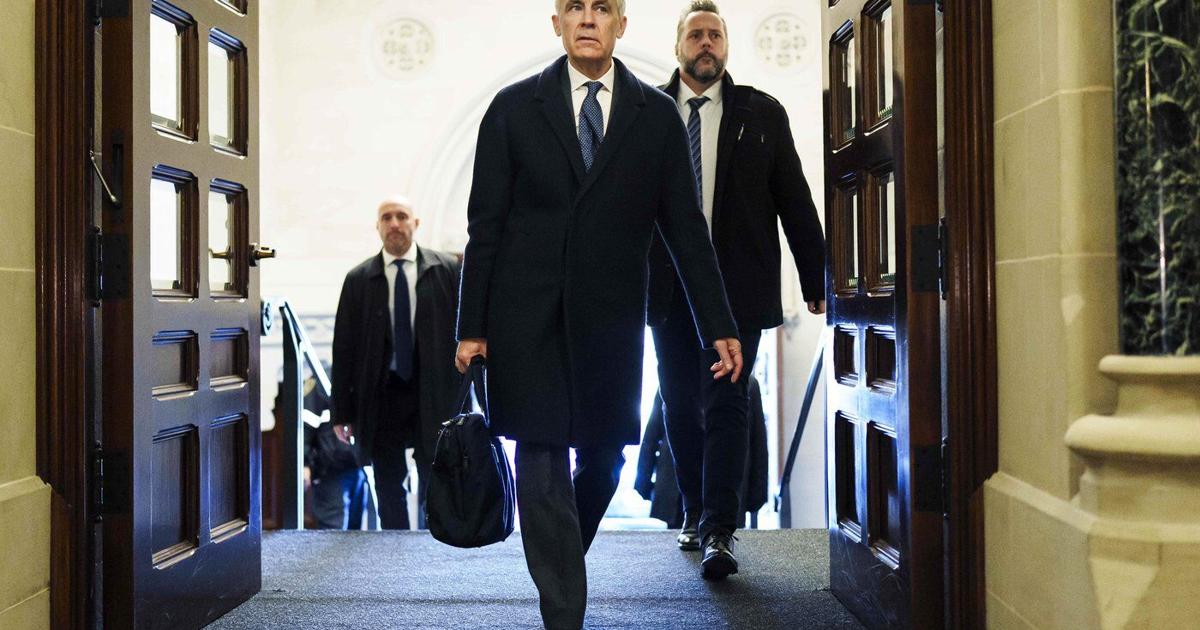
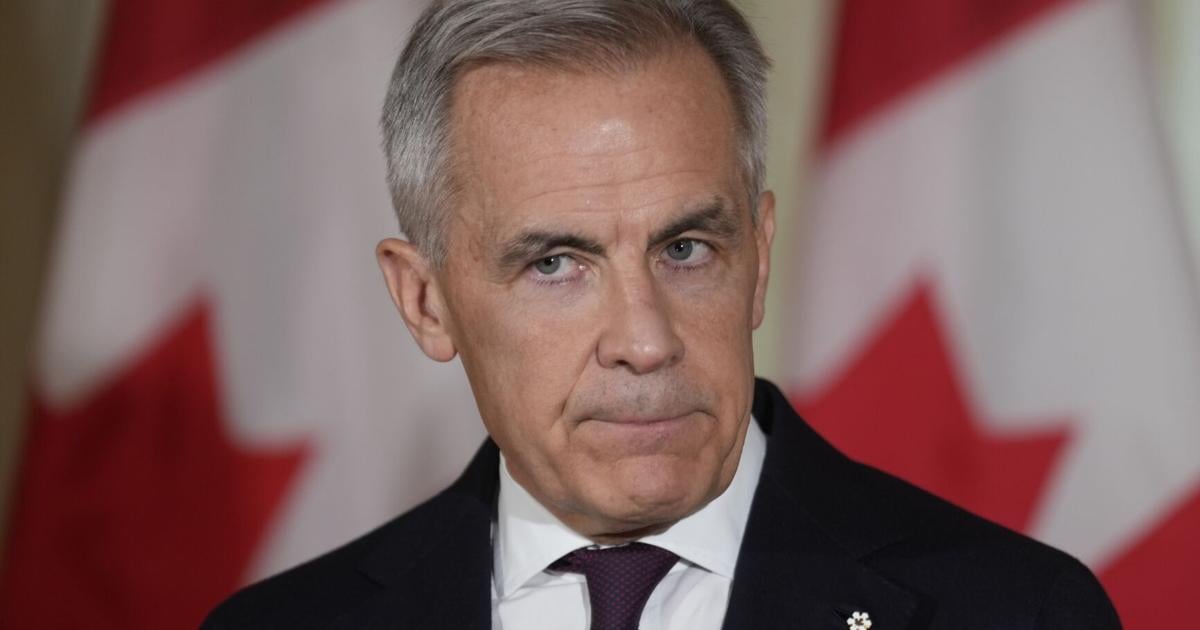
Prime Minister Mark Carney rode to power on a nationwide rejection of U.S. President Donald Trump — his threats and his values.
asserted
Carney → ride → Trump
But now, it’s worth asking why in the rush to reject Trump, the Carney government is emulating some of those same values and tactics.
asserted
government → ’ → values
Consider the government’s efforts to push through its pro-industry Bill C-39 — legislation that poses a risk to our natural environment, that changes labour negotiations by cementing the federal government’s ability to shut down legal strikes, and seeks to curtail Indigenous peoples’ constitutional rights in an effort to build projects faster.
asserted
that → consider → projects
This legislation looks remarkably similar to a bill Trump backs, the Bipartisan American Affordability and Jobs Act (BAAJA) or what some have called the data-centre-infrastructure-fast-tracking bill.
asserted
some → look → what
BAAJA is a permitting bill that seeks to build projects faster.
asserted
that → seek → projects
It sets limits on judicial reviews and narrows environmental reviews (in some cases, like certain pipeline expansions, projects are completely exempt from National Environmental Policy Act review).
asserted
projects → set → review
The Carney government confirmed it is considering ‘potentially lifting the current moratorium on Arctic offshore oil and gas exploration in the
The Carney government confirmed it is considering ‘potentially lifting the current moratorium on Arctic offshore oil and gas exploration in the
BAAJA weakens the U.S. Clean Water Act and Endangered Species Act, and it also curtails states and tribal authorities (in their efforts to protect non-federal waterways and Indigenous peoples’ sacred sites).
asserted
it → confirm → waterways
It also ensures, under its “disparate treatment” standard, that fossil-fuel companies will receive massive compensation if Congress attempts to curtail their activities in the future.
asserted
Congress → ensure → future
Business and industry groups have also praised it.
asserted
groups → praise → it
On Monday, more than 100 American scientists wrote to House representatives expressing support for the goals of the Democratic co-sponsors of the bill — to see the rapid build-out of inter-regional transmission lines and low-carbon energy technologies such as solar, wind, geothermal and batteries — but they expressed deep concerns that BAAJA is also “pulling the teeth” from the National Environmental Policy Act, the National Historic Preservation Act, the Clean Water Act and the Endangered Species Act, and that instead of phasing out coal, oil, and natural gas, BAAJA prevents it by enabling the expansion of such projects.
asserted
BAAJA → write → projects
“As scientists we feel strongly that the costs of this bill to the climate are too high,” they wrote.
asserted
they → feel → climate
In Canada, scientists have also joined Indigenous, labour and environmental groups in raising the alarm over Carney’s Bill C-39.
asserted
scientists → join → Bill
Last month, 56 fellows of the Royal Society of Canada signed an open letter saying C-39 risks “costly and potentially irreversible harm to Canada’s Natural Heritage.”
asserted
C-39 → sign → Heritage
The Canadian Society of Ecology and Evolution (CSEE) raised concerns over its rushed timelines, a permitting process that doesn’t respect science-based decision making, new measures that allow construction to begin on projects before environmental assessments are completed, and an approval process in the hands of a few cabinet ministers.
asserted
assessments → raise → ministers
Marine researcher Jessica Garzke told the Star she worries that a project approval timeline of less than a year means decisions will be based on incomplete and missing data.
asserted
decisions → tell → data
“We may not know what species are there, what the projects could be destroying, so the future impacts of these projects are not known,” she said.
uncertain
she → know → projects
This week, a study from a group of B.C. scientists found 18 proposed major projects, including two designated projects of national interest (projects that can be exempted from endangered species protections and other environmental laws), overlap with the habitat of 163 threatened and endangered species, including the whooping crane, the woodland caribou, and the southern resident killer whales.
asserted
that → find → crane
The group warned C-39 could lead to irreversible biodiversity loss, a degradation of carbon storage and freshwater supplies, and noted what it called a “growing policy contradiction” between the Liberal government’s stated policy goals — Carney’s ”A Force of Nature” environmental strategy and Canada’s commitment under the 2022 Kunming-Montreal Global Biodiversity Framework — and its actions.
uncertain
it → warn → Framework
The Star’s Althia Raj breaks down aspects of Bill C-39, Prime Minister Mark Carney’s Building Canada Strong Act.
asserted
Raj → break → Bill
The Star’s Althia Raj breaks down aspects of Bill C-39, Prime Minister Mark Carney’s Building Canada Strong Act.
asserted
Raj → break → Bill
Marie Auger-Méthé, a co-author of the study and an associate professor at UBC’s Institute for the Oceans and Fisheries, said she fears the government is removing the few safeguards in place to protect the most endangered species, and is putting new ones at risk.
asserted
government → say → risk
“These laws — like the Species At Risk Act — have been worked on for decades,” she said.
asserted
she → work → decades
“This new law (C-39) is allowing industrial projects to bypass them, and these changes are happening so quickly I’m afraid that we’re not going to be able to reverse this.
asserted
we → allow → this
So we’re putting decades of work ... into the garbage.”
asserted
we → put → garbage
On Friday, federal scientists are expected to rally on Parliament Hill.
asserted
scientists → expect → Hill
The president of the Professional Institute of the Public Service of Canada, Sean O’Reilly, said his members are speaking out of concern that C-39 puts political deadlines and economic interests ahead of evidence-based decision-making.
asserted
C-39 → say → making
“It opens the door to rushed assessments, compromised scientific independence and weakened safeguards — all while the government is cutting positions in the very departments responsible for assessing these risks,” O’Reilly said, of cuts at Environment Canada and the Department of Fisheries and Oceans.
asserted
O’Reilly → open → Fisheries
O’Reilly’s group wants C-39 amended.
asserted
C-39 → want → ?
So do the Royal Society of Canada and the CSEE.
asserted
Society → do → Canada
But their proposed amendments, taken on by opposition MPs, were rejected or gutted after a week-long marathon of midnight sittings by the Liberals on the committee studying the bill.
asserted
amendments → propose → bill
But by rushing a bill that does not need to be rushed — special exemption powers already exist for projects through legislation passed last year — the prime minister is signalling he does not respect the scientists, that he does not care about public buy-in, and that he is not open to compromise.
asserted
he → rush → compromise
Like BAAJA, C-39 is championed by big business and oil and gas companies.
asserted
C-39 → champion → business
Perhaps, it’s time to ask who wins in Mark Carney’s Canada, who risks losing most, and whatever happened to the Liberals’ commitment to social licence?
asserted
whatever → ’ → licence
 The Aporia