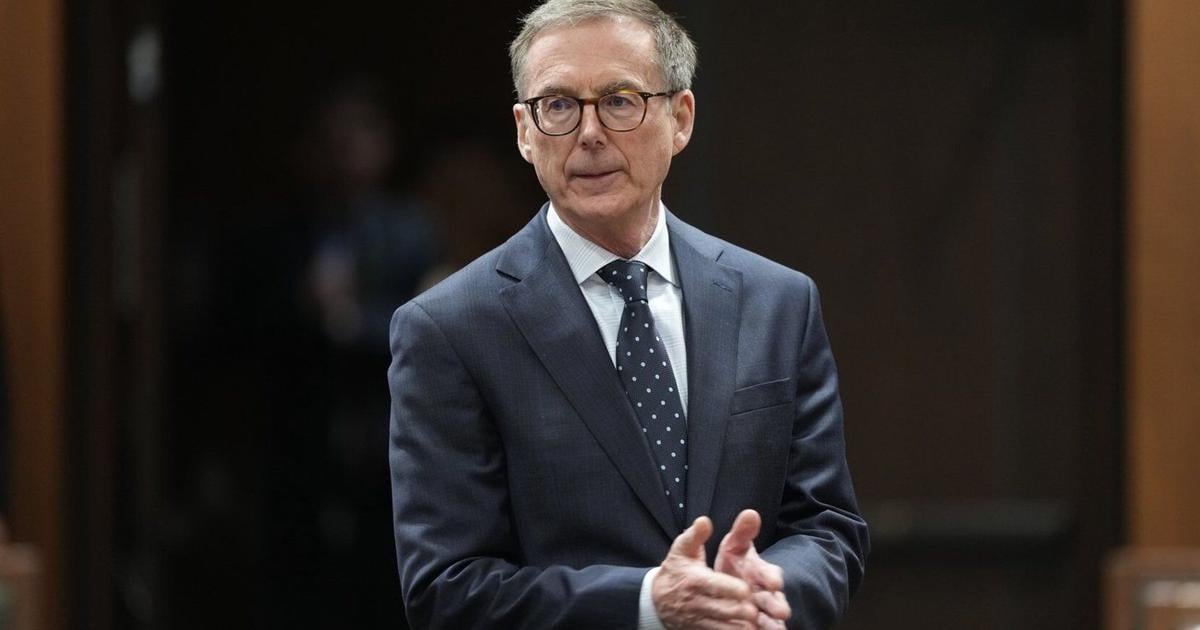
The Bank of Canada is keeping its 2 percent inflation target for another five years but may move sooner against supply shocks that threaten to keep prices elevated, the bank said Tuesday, as governor Tiff Macklem signalled that falling oil prices may leave inflation below its year-end forecast.
uncertain
prices → keep → forecast
In a speech to the Economic Club of Canada in Toronto, Macklem said oil prices and refinery margins have both come down since October, “suggesting inflation may not be quite as high” as the roughly 3.5 percent the bank projected for the end of this year.
uncertain
bank → say → year
Inflation has hovered around 3 percent since April, and the bank raised its policy rate by a quarter point to 2.5 percent in October, when its Monetary Policy Report projected inflation would stay near 3 percent through much of 2027.
asserted
inflation → hover → 2027
A softer year-end reading would not mean the bank is done tightening.
asserted
bank → mean → ?
Macklem said businesses have so far absorbed much of the higher production and transport costs, but that more is likely to reach consumers in the year ahead.
asserted
more → say → year
“This second-round effect of the oil shock will add to inflation persistence,” he said.
asserted
he → add → persistence
KPMG Canada economist Vincent Chartray said in a note that the remarks reaffirm the outlook for a rate hike at the bank’s Dec. 9 decision, Global News reported.
asserted
News → say → decision
The renewal matters to borrowers and households because the target anchors every decision on the bank’s policy rate.
asserted
target → matter → rate
Ottawa and the bank announced on Nov. 5 that they had renewed the framework from January 2027 through December 2031.
asserted
they → announce → December
It keeps the goal of 2 percent inflation, measured as the 12-month change in the consumer price index, within a control range of 1 to 3 percent.
asserted
It → keep → percent
Macklem credited the framework, introduced in 1991 and centred on 2 percent since 1995, with bringing inflation down from its 2022 peak of 8.1 percent without a recession.
asserted
Macklem → credit → recession
He also acknowledged the public cost.
asserted
He → acknowledge → cost
And they didn’t like it.
asserted
they → like → it
As we reviewed our framework, we held consultations across the country to hear from Canadians.
asserted
we → review → Canadians
We heard a lot of anger,” Macklem said.
asserted
Macklem → hear → anger
He conceded that “with the benefit of hindsight, our implementation of monetary policy could have been better” during the post-pandemic surge.
uncertain
implementation → concede → surge
“We were too slow to recognize the persistence of inflationary pressures and how broadly they were spreading through the economy,” he said.
asserted
he → recognize → economy
What the bank is changing
The target itself is untouched.
asserted
target → change → What
The changes sit in how the bank reads and responds to shocks.
asserted
bank → sit → shocks
In a statement released alongside the speech, the bank’s governing council said it will still look through supply shocks that are clearly short-lived.
asserted
that → release → shocks
But policy may need to respond sooner or more forcefully when shocks are large, persistent or broad-based, when demand is strong, or when households and businesses start expecting higher inflation to last.
uncertain
inflation → need → ?
The bank says it is investing in models to better assess supply shocks and will lean more on scenario analysis, surveys and real-time data.
asserted
it → say → analysis
A Bank of Canada staff article published this month reached a similar conclusion, finding that acting early on a supply shock is preferable because waiting for clarity can force a larger, more painful adjustment later.
asserted
waiting → publish → adjustment
Communications are changing too.
asserted
Communications → change → ?
Macklem said Canadians found it confusing when the bank discussed core measures that strip out food and gasoline, and that financial markets sometimes felt the bank was “moving the inflation goalposts.”
asserted
bank → say → goalposts
The bank also launched an online inflation dashboard Tuesday that gathers the other indicators it tracks.
asserted
it → launch → indicators
Macklem said that if inflation is “going to stay too high for too long, we would need to raise the policy interest rate,” but he did not say what the bank will do in December.
asserted
bank → say → December
Economists divided on deeper reform
asserted
Economists → divide → reform
Some economists argued before the review that it should go further.
asserted
it → argue → review
In a DeepDive for The Hub, Casey Pender, a PhD economist and the Frank McKenna School of Philosophy, Politics, and Economics (PPE) Postdoctoral Fellow at Mount Allison University in Sackville, N.B., wrote that supply shocks leave an inflation-targeting central bank two bad options: let prices run above target or tighten into an already battered economy.
asserted
prices → write → economy
“In its 2026 mandate review, the BoC should retire its inflation target and adopt a level path for NGDP—the dollar value of all final spending in the Canadian economy,” Pender wrote.
asserted
Pender → retire → economy
His case rests on the same episode Macklem addressed.
asserted
Macklem → rest → episode
Sorting supply-driven price increases from demand-driven ones as they happen is hard, Pender argued, and the bank misread both sides of the pandemic: it “loosened too much when prices briefly fell in 2020 and tightened too late when prices surged in 2021.”
asserted
prices → sort → 2021
A nominal GDP level target, he argued, would absorb supply shocks automatically, without that real-time call.
asserted
he → argue → call
Trevor Tombe, a University of Calgary economist, made the opposite case in an April 2025 column for The Hub.
asserted
Tombe → make → Hub
He argued that three decades on target built the credibility that kept inflation expectations anchored through the surge, citing International Monetary Fund research that found only about a fifth of global inflation shocks over the past 50 years were brought under control within two years.
asserted
fifth → argue → years
Canada’s post-pandemic episode, he wrote, was among them.
asserted
he → write → them
Tombe allowed that communications and transparency could improve, but not at the cost of a single, clear goal.
uncertain
communications → allow → goal
He also urged Ottawa to drop the employment language added in 2021.
asserted
He → urge → 2021
The renewed agreement keeps a version of it, committing to a “primary focus” on low inflation while allowing flexibility to support growth and “strong and stable labour market outcomes.”
asserted
agreement → renew → growth
…and 11 more, not listed.

 The Aporia