Buried beneath 15 to 20 feet of Nevada earth, behind 3-foot-thick reinforced concrete walls, a steel vault door and a heavily guarded access tunnel, a Pentagon contractor drew up plans to build a 5,000-square-foot subterranean fortress.
asserted
contractor → bury → fortress
The bunker was designed to store what was described as acquired "exotic material or tissue" – including recovered hardware and biological samples tied to unidentified anomalous phenomena (UAP), the Pentagon’s broader term for UFOs and other unexplained sightings in the air, space or sea.
asserted
what → design → air
The blueprint was not drawn from science fiction.
asserted
blueprint → draw → fiction
It is detailed inside a 538-page declassified contractor report released by the Department of War as part of the Trump administration's latest batch of UAP records, exposing how close a private firm came to building a secure repository under a $22 million Pentagon program.
asserted
firm → detail → program
The vault plans highlight the ambitions behind the Advanced Aerospace Weapon System Applications Program – also referred to in Pentagon correspondence as the Advanced Aerospace Threat Identification Program.
asserted
plans → highlight → Program
Launched in 2008 through a $10 million congressional earmark steered by then-Senate Majority Leader Harry Reid, D-Nev., and the late Sen. Daniel Inouye, D-Hawaii, the effort was billed as a study of foreign aerospace threats out to 40 years in the future.
Internal Defense Intelligence Agency (DIA) briefing notes from May 2009 say Reid was hunting for radical technological "leaps" across 12 areas – ranging from futuristic propulsion and stealth to directed-energy weapons, space-time travel and how advanced craft affect pilots.
uncertain
craft → launch → pilots
Behind closed doors, however, contractor Bigelow Aerospace Advanced Space Studies (BAASS) was preparing to acquire and store physical materials.
asserted
Studies → prepare → materials
When the DIA solicited bids in August 2008, only one company applied: North Las Vegas-based BAASS, founded by longtime Reid supporter Robert Bigelow.
asserted
company → solicit → Bigelow
The DIA awarded the contract the following month.
asserted
DIA → award → contract
Within weeks, BAASS moved into a nondescript building on South Polaris Avenue in Las Vegas and began turning it into a fortified compound – installing soundproofed offices, electronic deadbolts, tinted windows, security cameras and an 8-foot perimeter fence while stripping all company names and logos from the exterior.
asserted
BAASS → move → exterior
By May 2009, as the firm's payroll swelled to 47 full-time employees – including scientists, engineers and former military and law enforcement investigators – BAASS began shopping for five additional Las Vegas Valley office buildings to house a 5,000-square-foot laboratory, physical evidence storage and a secure conference room.
uncertain
BAASS → swell → laboratory
At the same time, the company's administrator drew up blueprints for the underground bunker at Bigelow Aerospace's North Las Vegas complex, a site protected by razor wire, surveillance cameras and round-the-clock armed guards with military backgrounds.
asserted
administrator → draw → backgrounds
"The need for a highly secure underground vault operated by BAASS became apparent in line with a BAASS priority to pursue and acquire recovered hardware and biological samples from the corporate world and/or from private individuals and groups located elsewhere, including Brazil," the July 2009 10-month report states.
asserted
report → operate → Brazil
Plans called for multiple security doors along a concrete access tunnel leading into the buried structure, with any protruding surface components "extensively camouflaged," the filing adds.
asserted
filing → call → structure
To shield the program from broader scrutiny, Reid pushed the Pentagon to place the effort behind one of the military's highest secrecy walls.
asserted
Reid → shield → walls
On June 24, 2009, Reid wrote directly to Deputy Defense Secretary William Lynn III warning that investigators had uncovered "several highly sensitive, unconventional aerospace-related findings" that required "extraordinary protection."
asserted
that → write → protection
Reid argued that standard classification protocols were not enough, warning that foreign intelligence services would target the program's methods and that public disclosure could scare off private industry partners.
uncertain
disclosure → argue → partners
He urged Lynn to place portions of the effort inside a Restricted Special Access Program governed by a strict "Bigoted Access List" – a tightly controlled roster limiting knowledge of the program's existence to a handful of pre-approved officials.
asserted
He → urge → officials
In an attachment to his letter, Reid proposed a 14-person access list that included himself, Inouye, Lynn, Senate aide Robert T. Herbert, seven government and military personnel and three BAASS contractors.
asserted
that → propose → himself
When DIA officials evaluated the program's actual work, however, they reached a sharply different conclusion.
asserted
they → evaluate → conclusion
In its first year, BAASS paid outside scientists to write 26 research papers on sci-fi-sounding concepts – including warp drives, wormholes, antigravity, invisibility cloaking and mind-controlled machines, contract records show.
asserted
records → pay → drives
While a DIA office initially praised the papers as solid academic surveys – noting several received positive peer reviews, including from researchers at Sandia National Laboratories – the agency's leadership refused to lock the program behind top-secret classification rules.
asserted
leadership → praise → rules
In a Nov. 13, 2009, memo, DIA Deputy Director Letitia A. Long formally rejected Reid's secrecy request.
asserted
Long → reject → request
"All program documents delivered to [the Defense Warning Office] during FY 2009 (the first year of the program) were unclassified because the contractor had not established a secure facility, and program employees were being vetted for clearances," Long wrote.
asserted
Long → deliver → clearances
Long noted that federal regulations prohibit the DIA from classifying basic scientific research unless it clearly relates to national security, adding that the agency was "unaware of any report containing information sufficiently sensitive and vulnerable to require extra protection."
Later that same month, DIA Director Lt. Gen. Ronald L. Burgess Jr. and Lynn met with Reid in person and told him the contractor's reports were of "limited value to DIA," recommending the project be moved out of the intelligence agency altogether, Burgess later wrote in a December 2010 memo.
asserted
Burgess → note → memo
Although Congress tacked on another $12 million for the effort in fiscal year 2010 – bringing total funding to $22 million and yielding 12 additional technical reports – the DIA did not continue the contract beyond its second year.
asserted
DIA → tack → year
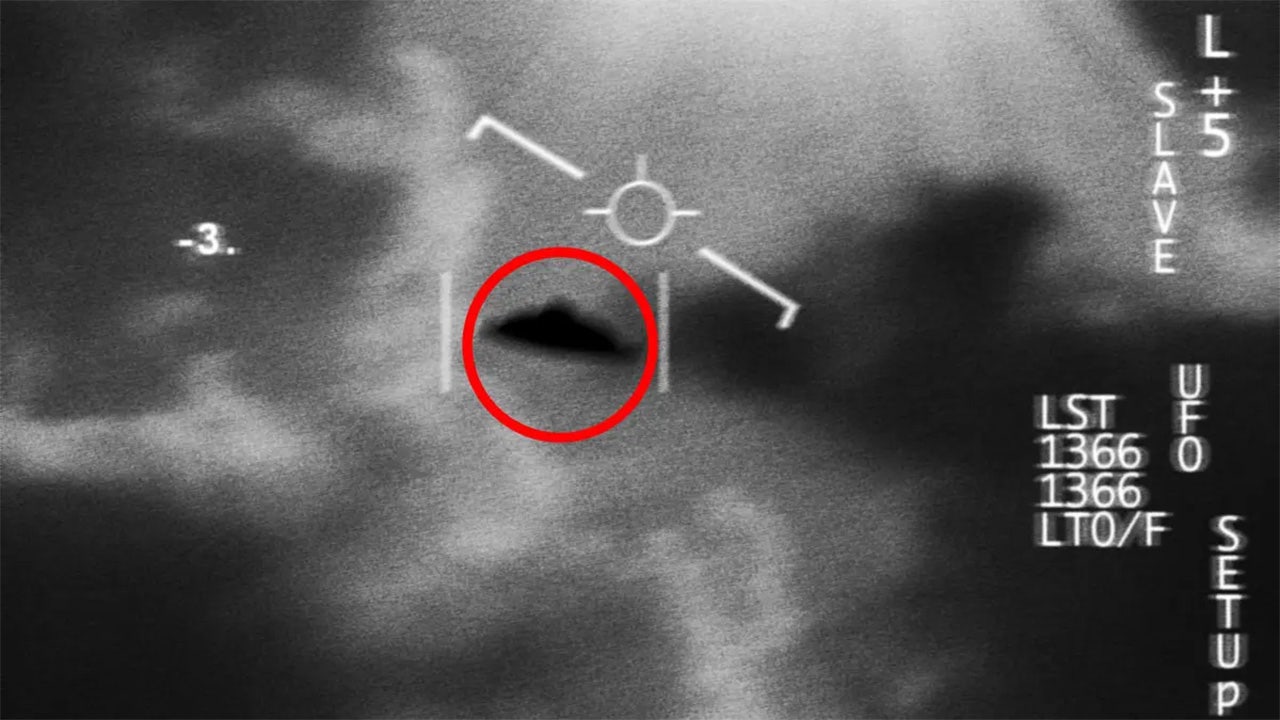
Alongside the paper trail, the Pentagon's eighth UAP release under the Presidential Unsealing and Reporting System for UAP Encounters (PURSUE) also included three newly declassified infrared and electro-optical sensor videos submitted by U.S. Central Command to the All-domain Anomaly Resolution Office (AARO).
asserted
release → include → Office
Recorded aboard U.S. military platforms in 2020, 2023 and 2026, the clips show sensors panning and zooming to track unidentified "areas of contrast" across the frame, including a 54-second 2026 recording in which a sensor tracks two separate objects before intermittently losing contact.
asserted
sensor → record → contact
Pentagon officials noted in the release that the video descriptions do not reflect analytical conclusions about the nature or significance of the objects, and said no redactions were made to hide information about UAP encounters under President Donald Trump's transparency directive.
Fox News Digital reached out to the Pentagon and AARO for comment.
asserted
Digital → note → comment
 The Aporia