Photo via Global News

How rare is the ‘very rare’ risk of vision loss from GLP-1 drugs?

Read the original at Global News ↗
Cite

Rana, U. (2026, November 26). How rare is the ‘very rare’ risk of vision loss from GLP-1 drugs? Global News. https://globalnews.ca/news/12167662/glp-1-vision-loss-naoin/

Dated from the outlet's own feed. Check the original for its byline.

Global News · collected 2026-11-26 · by Uday Rana

Quick Summary

Jeffery Gilman, a resident of Montreal, experienced sudden vision loss in his right eye after five months of using the GLP-1 drug Ozempic. Health Canada has issued a safety review warning of a “very rare but serious” risk of developing non-arteritic anterior ischemic optic neuropathy (NAION) from using prescription semaglutide drugs like Ozempic. This warning aligns with a similar notice from the U.S. FDA, which requires manufacturers to include warning labels on these products. The article details the condition, its symptoms, and risk factors, emphasizing the importance of consulting healthcare providers before use and seeking urgent medical help if sudden vision changes occur.
Written by AI on 2026-11-26, from this article's own text only (the story summary below draws on all the coverage).

AI analysis

Story summary

Health Canada on Wednesday revealed a possible link between the use of prescription semaglutide drugs, including Ozempic, and the risk of developing non-arteritic anterior ischemic optic neuropathy (NAION), a rare condition that can lead to vision loss. This warning comes a little over two weeks after the U.S. Food and Drug Administration issued a similar alert and required manufacturers to add warning labels to these products. Montreal resident Jeffery Gilman experienced sudden vision loss in his right eye five months after starting Ozempic in 2024, describing it as "equivalent to having a black veil thrown over my eye." Health Canada advises consumers to discuss potential risks with their healthcare provider before using GLP-1 drugs like semaglutide, and to seek urgent medical attention if they experience sudden vision loss or worsening eyesight while using the medication.

Written for “Risk of Vision Loss from GLP-1 Drugs” on 2026-11-27, grounded in this article and the 0 other(s) covering the same event.
Why this leaning score
This article does not take a side on a contested political question, so it has no leaning score. That is an answer rather than a gap: a match report or a rescue can be warmly or critically written without being left or right, and scoring it anyway is how approval of a subject gets recorded as a political position.
No political leaning scored for article 183418 · logged 2026-11-26

Compared with similar articles

This article reads unscored and hedges 11% of its claims. Each row says how that neighbour differs.
New York Post
Leans strongly right Hedges 6 of 31 claims Outlet record 66/100
“Article A discusses the FDA's announcement about a potential link between semaglutide drugs and vision loss, while Article B focuses on a specific case of a Montreal resident experiencing vision loss and Health Canada's safety review.”
The Straits Times
Hedges 18 of 56 claims Outlet record 65/100
“Article A discusses the broader context of drug companies adding warning labels due to lawsuits, while Article B focuses on a specific patient's experience with vision loss and Health Canada's safety review.”
The Globe and Mail
Hedges 0 of 13 claims Outlet record 52/100
“Article A reports Health Canada's warning about a rare risk of vision loss with semaglutide drugs, while Article B discusses an individual case of a patient who experienced vision loss and relates it to Health Canada's warning, but describes a different specific event involving a patient named Jeffery Gilman.”
The Globe and Mail
Hedges 2 of 15 claims Outlet record 52/100
“Article A reports a general warning from Health Canada about the rare risk of vision loss associated with semaglutide, while Article B describes an individual's experience with NAION after using Ozempic, though it mentions Health Canada's warning.”
Global News
Hedges 3 of 11 claims Outlet record 63/100
“While both articles discuss Health Canada's safety review and the risk of vision loss from GLP-1 drugs, they describe different specific events: Article A focuses on Jeffery Gilman's personal experience with NAION, while Article B reports on Health Canada's announcement of the safety review findings.”
Toronto Sun
Hedges 3 of 12 claims Outlet record 96/100
“Article A discusses Health Canada's warning about the risk of vision loss linked to semaglutide GLP-1 drugs, while Article B focuses on a specific case involving a patient named Jeffery Gilman who experienced vision loss after taking Ozempic.”
Toronto Star
Hedges 0 of 2 claims Outlet record 65/100
“Article A describes Health Canada's warning about the risk of vision loss with semaglutide drugs, while Article B focuses on a patient's personal experience with the condition and mentions Health Canada's review in a broader context.”
CBC News
Hedges 0 of 4 claims Outlet record 70/100
“Article A describes Health Canada issuing a warning, while Article B discusses a specific patient's case and Health Canada's safety review status, indicating different specific occurrences.”

Story

Risk of Vision Loss from GLP-1 Drugs
Health · 1 article(s) covering the same event.
How this article was measured signals, leaning charts, publisher record, byline, topics and claims

Signals How these are calculated →

Claims extracted
45
sentences that state something as happening or true
Uncertain
11%
5 of 45 hedged ("reportedly", "may", "according to")
Leaning
not political
takes no side on a contested political question
Publisher signals
63/100
Global News's corrections and hedging, across everything collected from it. Not a measure of accuracy.
Outlets on this story
1
Health
Same framing elsewhere
1
articles that frame the event the way this one does
Analyzed 2026-11-26 · how these are computed

How this is being covered How these are calculated →

Article leaning vs. publisher reliability
Source leaning vs. consistency

Publisher

Global News · 3808 article(s) · 13 correction(s) detected
Running correction rate · 13 correction(s)

Who wrote this

Uday Rana
59 article(s) here · 1 carrying a prediction
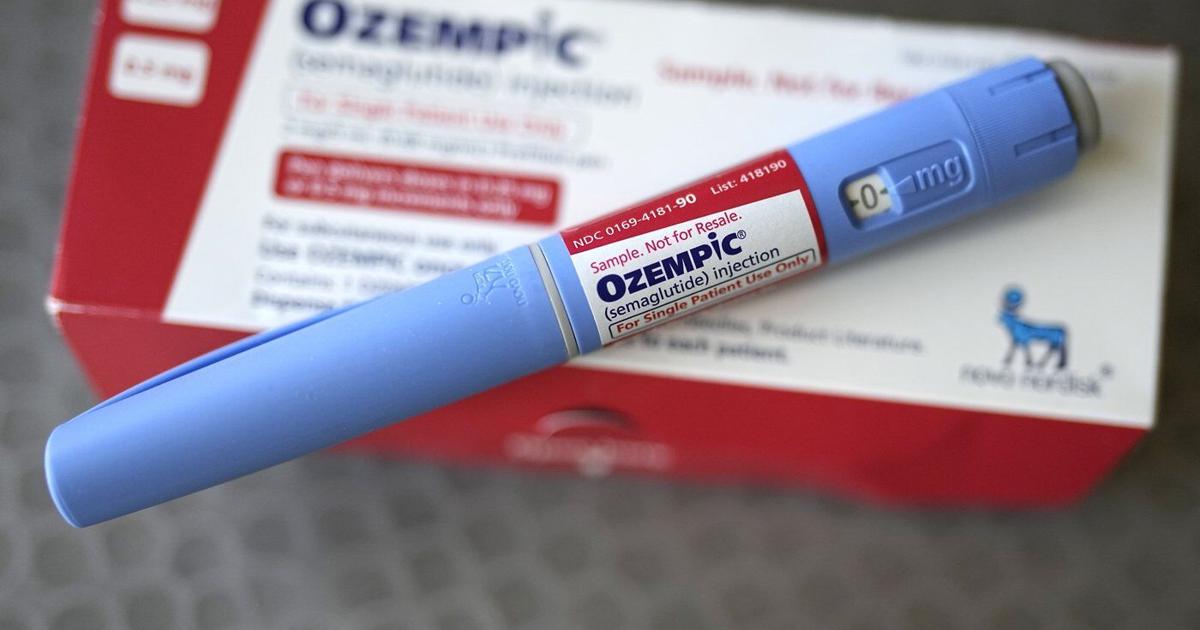
When Montreal resident Jeffery Gilman started taking the GLP-1 drug Ozempic in 2024, he would not have imagined that five months later he would wake up to a rude shock.
- Layoffs, programs cancelled as Calgary drops mental health funds from city budget - GLP-1s may carry ‘very rare but serious risk of vision loss’:
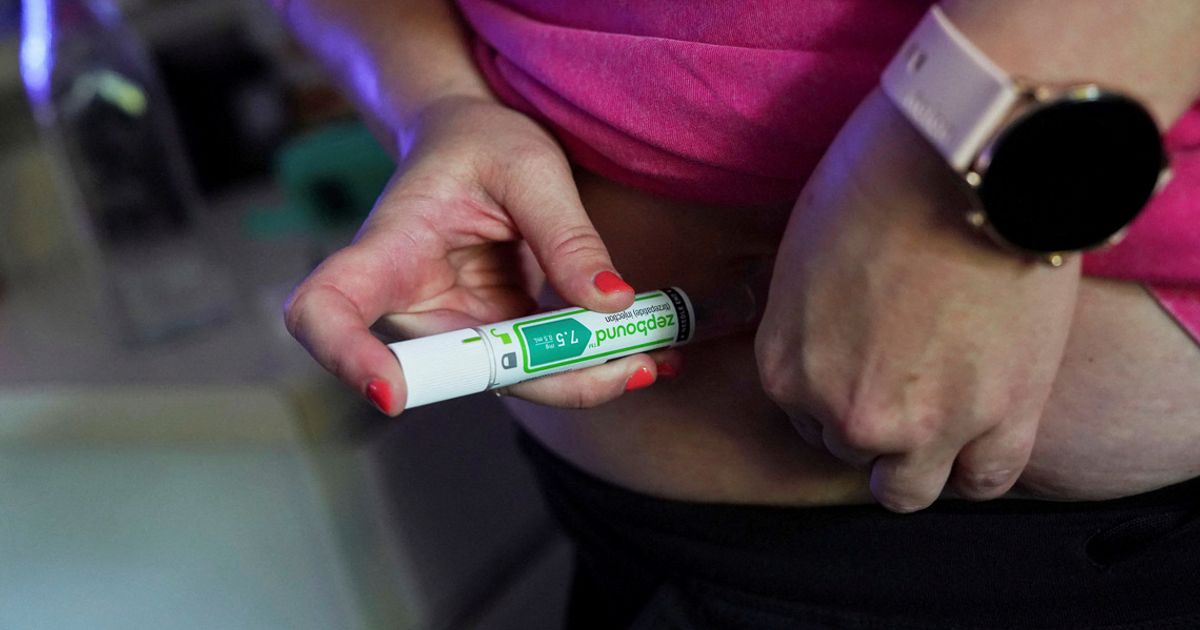
There is a “very rare but serious” risk that consumers using GLP-1 drugs such as semaglutide may experience vision loss, Health Canada is warning.
Last month, Justice Minister Sean Fraser announced that Canada will not extend MAID for people who are seeking it on the basis of mental illness alone.
In August, shortly after trade talks broke down between Ottawa and Washington, U.S. President Donald Trump said the U.S. would double these tariffs to 50 per cent starting Jan. 1, 2027.
“My officials will be meeting with the union Unifor, along with Stellantis and the government of Ontario.
Canadians are being flooded with Black Friday flyers in their mailboxes and inboxes this week ahead of the holiday shopping season, but most consumers may be about to reach for their credit cards.
“Before someone starts missing their mortgage payments, they may already have fallen behind on credit cards, car loans or other commitments as they try to keep a roof over their heads,” Harris said.
“Hopefully, we can choose from the best features available to create a really beautiful new facility that students and staff will feel both safe and comfortable in for the long term in Tumbler Ridge,” Anderson said.
“The leaders discussed the work underway to reach a mutually beneficial trade agreement that would create good jobs, boost affordability, and fully respect Canada’s languages, culture, and sovereignty.
Also by Uday Rana
Nothing else under this byline is closely related to this article, so these are simply their most recent.
All 59 articles by Uday Rana →

Topics

Health Canada Montreal Ozempic the U.S. Food and Drug Administration the University of Toronto

Subjects

Health Canada ORG · 6× Popovic PERSON · 4× Gilman PERSON · 3× Hertzel Gertsein PERSON · 1× Jeffery Gilman PERSON · 1× Marko Popovic PERSON · 1× McMaster University ORG · 1× Montreal ORG · 1× the U.S. Food and Drug Administration ORG · 1× the University of Toronto ORG · 1×

Narrative

- 3 in 4 Canadians can’t see their family doctor within a day, report finds - Long mental recovery for soldiers burned in CFB Wainwright fire: doctor - B.C. premier pledges to bolster health-care staffing as woman dies outside closed ER - Layoffs, programs cancelled as Calgary drops mental health funds from city budget People should not be alarmed or panic; they should talk with their healthcare providers about how vulnerable they are, Gerstein said.
framing: assertive · carried by 1 article(s) · first seen 2026-11-26
When Montreal resident Jeffery Gilman started taking the GLP-1 drug Ozempic in 2024, he would not have imagined that five months later he would wake up to a rude shock.
2026-11-26 · Global News
How rare is the ‘very rare’ risk of vision loss from GLP-1 drugs? · assertive framing

Claims (45 extracted, 5 hedged)

When Montreal resident Jeffery Gilman started taking the GLP-1 drug Ozempic in 2024, he would not have imagined that five months later he would wake up to a rude shock. asserted
he → start → shock
“I woke up one morning, and I couldn’t see out of my right eye,” Gilman said. asserted
Gilman → wake → eye
Gilman rushed to his optometrist and was diagnosed with a rare condition known as non-arteritic anterior ischemic optic neuropathy or NAION. asserted
Gilman → rush → neuropathy
“It was equivalent to having a black veil thrown over my eye,” he said. asserted
he → have → eye
Health Canada on Wednesday revealed the status of its safety review, which found “a possible link” between the use of prescription semaglutide drugs and the risk of developing NAION. asserted
which → reveal → NAION
There is a “very rare but serious” risk that consumers using GLP-1 drugs such as semaglutide may experience vision loss, Health Canada warned. uncertain
Canada → be → loss
This came a little over two weeks after the U.S. Food and Drug Administration issued a similar warning and required manufacturers to add warning labels to these products. asserted
Administration → come → products
Before you use any healthcare product, Health Canada recommends discussing the potential risks with your health-care provider. asserted
Canada → use → provider
If you experience sudden vision loss or worsening eyesight while you’re on semaglutide, you should seek urgent medical treatment. “Your doctor may refer you to an eye specialist (ophthalmologist) for an examination. uncertain
doctor → experience → examination
If NAION is confirmed, you may need to stop taking the medication,” Health Canada said. uncertain
Canada → confirm → medication
NAION is an eye condition that “causes sudden painless vision loss or vision changes due to reduced blood flow to the optic nerve,” Health Canada said, adding however that the risk of developing this condition with semaglutide remains “very rare.” asserted
risk → cause → semaglutide
This condition affects the optic nerve. asserted
condition → affect → nerve
“There’s loss of blood flow that goes to the optic nerve and leads to the optic nerve swelling and then eventually dying out,” said Dr. Marko Popovic, a medical retina specialist and assistant professor of ophthalmology at the University of Toronto. asserted
Popovic → ’ → Toronto
Popovic said Get weekly health news Gilman’s experience of waking up one day to notice his vision suddenly affected is typical of NAOIN. asserted
vision → say → NAOIN
“This is something that happens suddenly. asserted
that → happen → ?
You might all of a sudden have loss of vision in one eye, like an area of vision that’s completely dark or black. uncertain
that → have → vision
Unfortunately, there’s no treatment,” he added. asserted
he → ’ → ?
“People who have diabetes, high cholesterol, high blood pressure, those who are older than 50 are all the types of people that would typically get this condition,” Popovic said. asserted
Popovic → have → condition
Those living with diabetes are the most at risk, said Dr. Hertzel Gertsein, a professor at McMaster University and an endocrinologist. asserted
Gertsein → live → University
“The consensus is growing that there is probably a link between these two conditions (diabetes and NOAIN), which is why Health Canada and the Food and Drug Administration in the United States have put a warning on the drugs related to this,” he said. asserted
he → grow → this
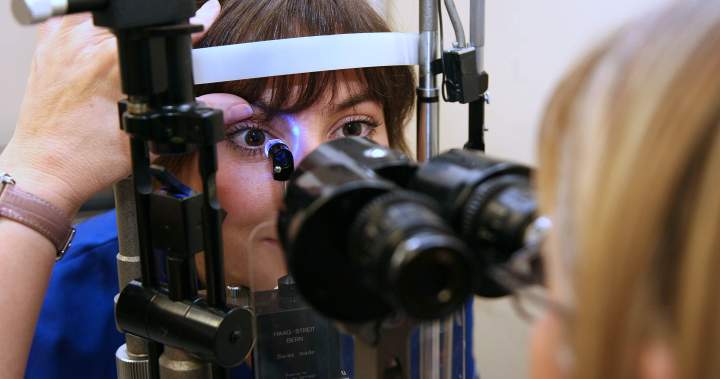
Eye specialists can test whether you’re at a high risk of developing the condition. asserted
you → test → condition
Ophthalmologists will watch for a condition called “crowding of the optic nerve,” Popovic said. asserted
Popovic → watch → nerve
“Essentially, the optic nerve is a cable that connects the eye to the brain,” he said. asserted
he → connect → brain
“If someone has a crowded optic disk or disk at-risk, you can think of them as many cables that are all trying to reach back into the brain,” he added. asserted
he → have → brain
Whether someone has a crowded optic disk depends on anatomy and the optic disk they were born with. asserted
they → depend → anatomy
In such cases, some nerves can swell and die, Popovic added. asserted
Popovic → swell → cases
- 3 in 4 Canadians can’t see their family doctor within a day, report finds - Long mental recovery for soldiers burned in CFB Wainwright fire: doctor - B.C. premier pledges to bolster health-care staffing as woman dies outside closed ER - Layoffs, programs cancelled as Calgary drops mental health funds from city budget People should not be alarmed or panic; they should talk with their healthcare providers about how vulnerable they are, Gerstein said. asserted
Gerstein → see → providers
While GLP-1 drugs can have many side effects, including nausea and gastrointestinal issues, a side effect such as NAOIN is very rare, said Mina Tadrous, an associate professor at the Leslie Dan Faculty of Pharmacy. asserted
Tadrous → have → Pharmacy
“This is an adverse event that occurs very rarely,” he said. asserted
he → occur → ?
In fact, the condition is so rare that researchers missed it as a potential side effect in the clinical trials. asserted
researchers → miss → trials
“The clinical trials were done in a couple of thousand people,” he said, adding that for a condition this rare a trial would have to be conducted for hundreds of thousands of people. asserted
trial → do → people
The condition is so rare that it only affects one in 10,000 people living with diabetes, Gerstein said. asserted
Gerstein → affect → diabetes
However, GLP-1 drugs can potentially raise the risk by 30 to 50 per cent, he said. “It’s anywhere between maybe 1.3 out of 10,000 people to maybe two out of 10,000 people (for those on GLP-1 drugs),” he added. asserted
he → raise → drugs
All drugs carry a risk of adverse effects, Gerstein said. asserted
Gerstein → carry → effects
“People can take an aspirin and (in rare cases) die of a life-threatening bleed,” he said. asserted
he → take → bleed
“When you take a drug, it’s always a balance of risks and benefit.” asserted
it → take → risks
However, it was important to talk to your doctor about what works for you. asserted
what → talk → you
GLP-1 drugs also carry immense benefits for some people, Tadrous said. asserted
Tadrous → carry → people
“We know from the clinical trials, especially for people living with diabetes, that the drug reduces the risk of heart attacks. asserted
drug → know → attacks
It helps overall health,” he said, cautioning against throwing the baby out with the bathwater. asserted
he → help → bathwater
…and 5 more, not listed.

Give feedback · no sign-in needed

No sign-in needed for now. Your note is sent without a name, so it cannot be answered.

History Support