Photo via Toronto Sun

Pension gap between government and private workers keeps widening: report

Read the original at Toronto Sun ↗
Cite

Passifiume, B. (2026, November 26). Pension gap between government and private workers keeps widening: report. Toronto Sun. https://torontosun.com/news/national/pension-gap-between-government-and-private-workers-keeps-widening-report

Dated from the outlet's own feed. Check the original for its byline.

Toronto Sun · collected 2026-11-26 · by Bryan Passifiume

Quick Summary

A new report by the Fraser Institute reveals that government workers receive nearly double the pension contributions compared to private-sector workers, with taxpayers covering more than half of government workers' pension costs. In 2024, the average government worker received $14,571 in pension contributions, while private-sector workers received $7,415. The report also highlights a significant disparity in pension plan coverage and type, with a much higher percentage of government workers enrolled in generous defined-benefit pension plans compared to the private sector.
Written by AI on 2026-11-27, from this article's own text only (the story summary below draws on all the coverage).

AI analysis

Story summary

According to a recent report by the Fraser Institute, the pension gap between government and private sector workers in Canada has widened significantly. In 2024, government workers received an average of $14,571 in pension contributions per worker, nearly double the $7,415 average for private-sector workers. Taxpayers covered more than half of the government workers' pension contributions, contributing $5,010 per private-sector worker's employer and employee combined. Additionally, the report highlights that the percentage of government workers enrolled in workplace pension plans rose from 78.5% in 1977 to 90.9% in 2024, while the private sector saw a decrease from 35.4% to 22.1% over the same period. This disparity underscores the growing inequality in pension benefits between public and private sector employees.

Written for “Pension Gap Widens” on 2026-11-27, grounded in this article and the 0 other(s) covering the same event.

Compared with similar articles

Nothing to compare against. No article is close enough to this one for the pipeline to have linked or judged the pair.

Story

Pension Gap Widens
Economy/Business · 1 article(s) covering the same event.
How this article was measured signals, leaning charts, publisher record, byline, topics and claims

Signals How these are calculated →

Claims extracted
12
sentences that state something as happening or true
Uncertain
17%
2 of 12 hedged ("reportedly", "may", "according to")
Leaning
Leans strongly right
of the writing, not the subject · beta estimate
Publisher signals
96/100
Toronto Sun's corrections and hedging, across everything collected from it. Not a measure of accuracy.
Outlets on this story
1
Economy/Business
Same framing elsewhere
1
articles that frame the event the way this one does
Analyzed 2026-11-27 · how these are computed

How this is being covered How these are calculated →

Article leaning vs. publisher reliability
Source leaning vs. consistency

Publisher

Toronto Sun · 938 article(s) · 0 correction(s) detected
No corrections detected for this publisher. That may mean careful reporting, or simply that nothing has been checked.

Who wrote this

Bryan Passifiume
26 article(s) here · 0 carrying a prediction
The law survived by a single vote — three of the court’s seven judges said they would’ve struck down Bill 21’s core provisions under the Charter’s guarantee of equality between the sexes, which they argued is beyond the scope of the notwithstanding clause.
Beginning on May 1, only e-bikes that meet provincial criteria will be permitted on public roads without the need to be registered or insured — or their driver properly licensed.
In their statement, both Ford and Payne say penalties will cost companies that build in Canada billions over the coming years, with most of that money leaving Canada as credits to automakers who don’t build cars and trucks here.
Torontonians hoping for a traditional snowy winter may be a bit disappointed.
Conservative defence critic James Bezan told the Sun he estimates those cuts amount to around $2.9 billion, warning that Canadian troops would be left “less ready and less trained” than they were previously.
New data released this week by the Canadian Federation of Independent Business (CFIB) shows 41% of small business owners consider Christmas as important to their bottom lines — with 73% saying if holiday shoppers get frugal this year, it would negatively impact sales.
The bill would also cut red tape and streamline permitting for new and expanded mines, as well as accelerate exploration by allowing single exploration permits and extending early exploration plans to three years in order to align with permits.
Just days after news broke that the Department of National Defence was grounding most cadet activities for the remainder of the fiscal year, a mid-afternoon announcement Monday from Defence Minister David McGuinty said money will be found to keep the programs running.
2026-11-23 · assertive framing · Cadet program boosted by feds after planned cuts
Poll suggests harm is a concern Also commissioned by the union was a Nanos Research poll of 551 nurses, in which 78% said they fear their patients could sustain harm because of heavy workloads keeping them from delivering timely care. Sixty-three per cent said they dread going to work, 80% report facing either verbal or physical abuse over the past year, and 49% said they’d had thoughts about leaving their jobs over the next year. Only nine per cent of those polled reported that their units were always fully staffed. “The Ford government prides itself that no one has ever invested more in the hospital system than their government, which is true in terms of nominal dollars,” said OCHU president Michael Hurley on Monday.
I might go far as to say an ‘act of resistance.'”
Also by Bryan Passifiume
Nothing else under this byline is closely related to this article, so these are simply their most recent.
All 26 articles by Bryan Passifiume →

Topics

Alberta OTTAWA Ontario the Fraser Institute the Toronto Sun

Subjects

Alberta GPE · 1× Fuss PERSON · 1× Jake Fuss PERSON · 1× Newfoundland and Labrador GPE · 1× OTTAWA GPE · 1× Ontario GPE · 1× the Fraser Institute ORG · 1× the Toronto Sun ORG · 1×

Narrative

The share of government workers enrolled in workplace pension plans increased from 78.5% in 1977 to 90.9% in 2024, while private-sector coverage fell from 35.4% to 22.1% over the same period. Defined-benefit plans rare in private sector Defined-benefit plans — a generous perk that guarantees a set retirement income regardless of how investments perform — tell a similar story. Just under 83% of public-sector workers are enrolled in a defined-benefit pension plan, compared to just 8.8% of private-sector workers. That’s down from 31.5% in 1977.
framing: assertive · carried by 1 article(s) · first seen 2026-11-27
2026-11-27 · Toronto Sun
Pension gap between government and private workers keeps widening: report · assertive framing

Claims (12 extracted, 2 hedged)

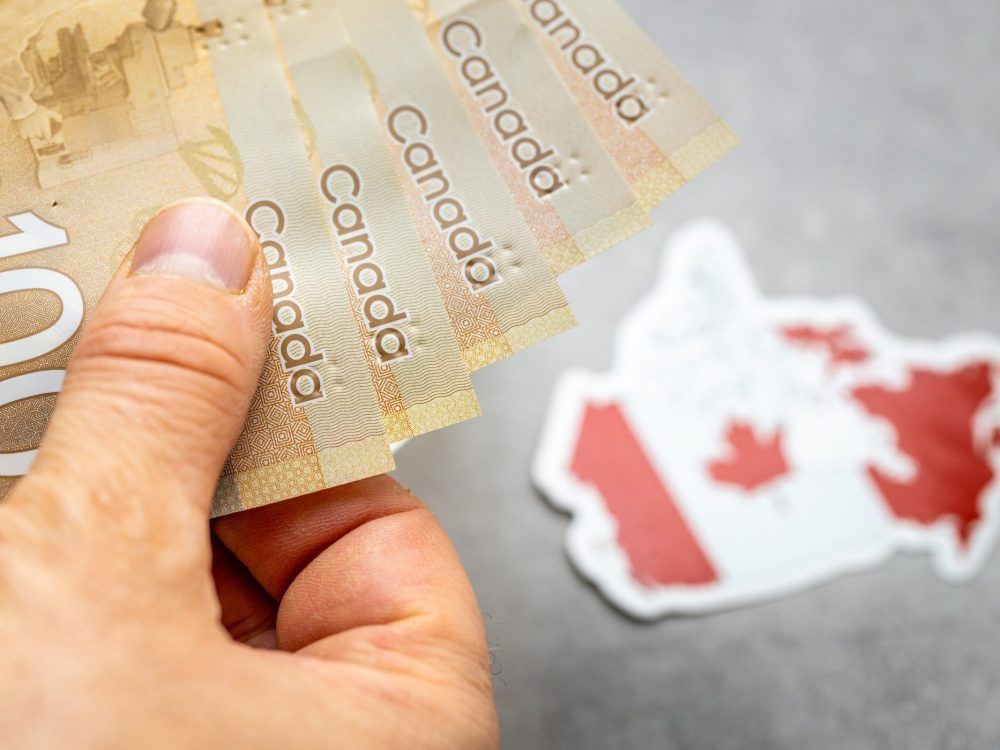
OTTAWA — Government workers are pulling in nearly twice as much in pension contributions as private-sector workers, with taxpayers footing more than half the bill. That’s according to a new report released Thursday by the Fraser Institute, which tracked registered pension plans from 1977 to 2024. “We found taxpayer-funded government pension contributions reached about $14,571 per worker on average in 2024, and that was nearly double the average contribution that was made for private-sector workers,” study co-author Jake Fuss told the Toronto Sun in an interview. uncertain
Fuss → pull → interview
In comparison, private-sector members saw an average of $7,415 per plan member, with $5,010 coming from their employers. asserted
5,010 → see → employers
That means taxpayers alone are putting more into the average government workers’ pension than private-sector employers and employees contribute combined. asserted
employers → mean → pension
The coverage gap, the study found, is just as stark. asserted
study → find → ?
The share of government workers enrolled in workplace pension plans increased from 78.5% in 1977 to 90.9% in 2024, while private-sector coverage fell from 35.4% to 22.1% over the same period. Defined-benefit plans rare in private sector Defined-benefit plans — a generous perk that guarantees a set retirement income regardless of how investments perform — tell a similar story. Just under 83% of public-sector workers are enrolled in a defined-benefit pension plan, compared to just 8.8% of private-sector workers. That’s down from 31.5% in 1977. asserted
That → enrol → 1977
According to the report, defined-benefit pensions fell out of favour among private-sector employers because of the costs. uncertain
pensions → accord → costs
Unlike governments, which can rely on taxpayer bailouts, businesses must cover shortfalls out of their own pockets. asserted
businesses → rely → pockets
The report specifically lists teacher and public-service pension plans in Ontario, Alberta and Newfoundland and Labrador as examples of programs requiring such bailouts. asserted
report → list → bailouts
A total of $59.2 billion went into government pension plans in 2024, with $32 billion coming directly from taxpayers. asserted
billion → go → taxpayers
By comparison, private-sector plans took in $24.4 billion. asserted
plans → take → billion
Fuss said private-sector workers are “paying for government workers to have higher wages than they do while working, but they’re also paying for government workers to have richer pensions in retirement.” asserted
workers → say → retirement
With governments across the country “struggling with deficits and growing debt,” he said, policymakers need to examine this compensation gap “as one potential area of reform.” asserted
policymakers → struggle → reform
Give feedback · no sign-in needed

No sign-in needed for now. Your note is sent without a name, so it cannot be answered.

History Support