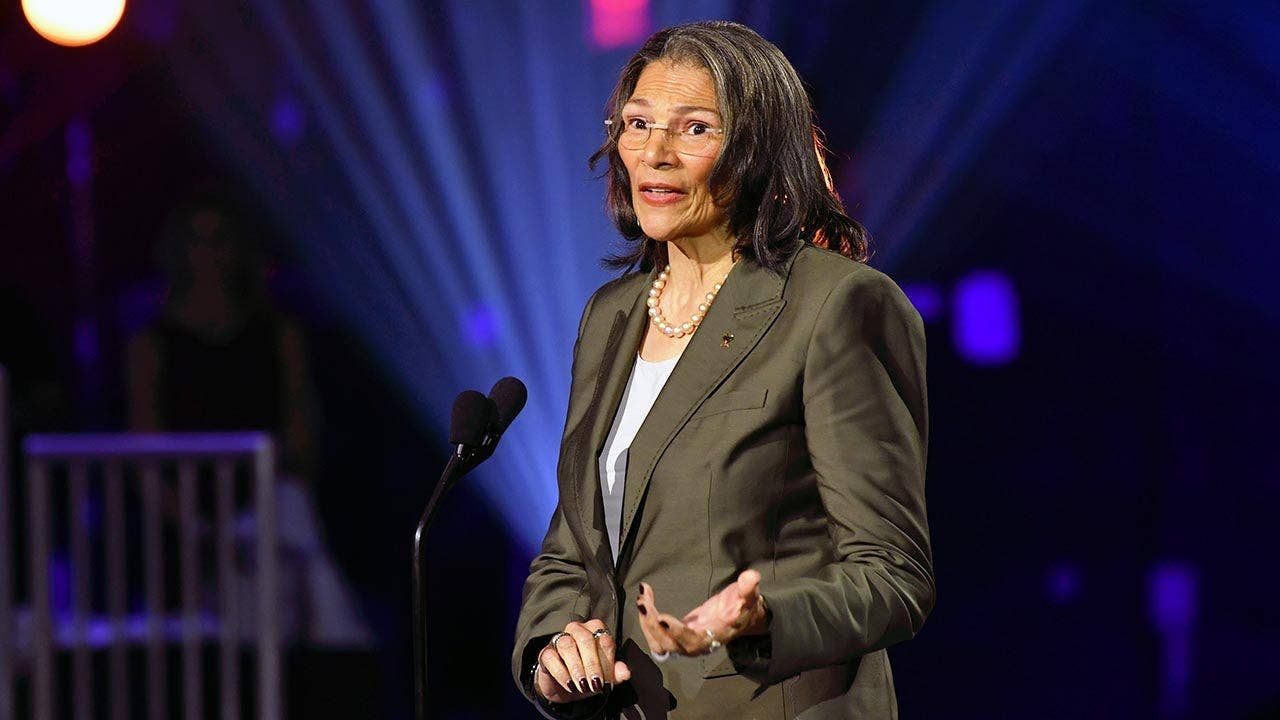
Anita DeFrantz, the rower who won Olympic bronze and went on to give women a long-lasting voice in the male-dominated world of Olympic policymaking, has died at 74.
asserted
who → win → 74
Announcements of her death on Thursday came from the international and U.S. Olympic committees, neither of which gave a cause.
asserted
neither → come → cause
Her health had been declining for the past few years.
asserted
health → decline → years
In 1986, DeFrantz became both the first American woman and the first Black American to join the International Olympic Committee.
asserted
DeFrantz → become → Committee
Eleven years later, in 1997, she became the first woman to serve as an IOC vice president.
asserted
she → become → president
She was also vice president of the organizing committee for the 1984 LA Olympics and spent 20 years as chair of the IOC's Women in Sport Commission.
asserted
She → organize → Commission
IOC President Kirsty Coventry, an Olympic swimmer who has credited DeFrantz with helping her rise to the most powerful spot in the Olympic hierarchy, called DeFrantz “a mentor, a friend and a true inspiration to me, and to so many others around the world.”
asserted
her → credit → world
She added: “From my earliest days in the Olympic Movement, she showed me what courageous leadership looked like, and what was possible for women in sport.”
asserted
what → add → sport
Boycott led to life of Olympic advocacy
Edwin Moses, the record-setting hurdler who was a contemporary of DeFrantz's, said “every woman who has a high-level position in sports today, they can thank Anita DeFrantz.”
asserted
they → lead → DeFrantz
Rowing entered her life at Connecticut College, where a group of rowing shells had been placed in front of an administration building to spark interest in the sport.
asserted
group → enter → sport
She took it up there, though she was never a star at the college.
asserted
she → take → college
It was only at law school at Penn that she began training on the Schuylkill River in Philadelphia, a venue teeming with Olympic-caliber rowers, and got a sense of what was possible.
asserted
what → begin → sense
“And she lit on fire," Bart Gullong, her coach at Connecticut College, said in a 1997 interview with the Hartford Courant.
asserted
Gullong → light → Courant
"She lost 45 to 50 pounds and really trained hard.
asserted
She → lose → pounds
She made the national team the following year.
asserted
She → make → team
And the following year she made the Olympic team.”
asserted
she → make → team
That set the stage for the bronze medal, then a life of Olympic advocacy.
asserted
That → set → advocacy
DeFrantz won that bronze at the 1976 Olympics in Montreal, as captain of the women's eight team.
asserted
DeFrantz → win → team
She trained for an Olympic return and, in 1980, gained a sense of the disconnect between athletes and the boardrooms that made decisions on their behalf.
asserted
that → train → behalf
She was part of the U.S. team that never made the trip to the boycotted Moscow Olympics.
asserted
that → make → Olympics
As spokeswoman for the U.S. athletes' advisory council, she led a lawsuit against the U.S. Olympic Committee, which, pressed by the Carter administration, had authorized the boycott.
asserted
which → lead → boycott
That was the first part of her push to be at the table where those decisions were made.
asserted
decisions → make → table
Moses said DeFrantz's depth of knowledge about the Ted Stevens Amateur Sports Act, which passed in 1978 and has governed the Olympics in the U.S. ever since, made hers the perfect lead voice for athletes who took a risk in fighting the 1980 boycott.
asserted
who → say → boycott
That, in turn, opened doors to the IOC.
asserted
That → open → IOC
DeFrantz got ‘a tremendous amount done’
asserted
amount → get → ?
“She got in the ring and squared up with everyone," Moses said.
asserted
Moses → get → everyone
“And because of her legal background and her temperament and ability to be a great moderator and negotiator, she was able to get a tremendous amount done.
asserted
amount → get → background
Not just for women, but for the athletes, Paralympics, all of the things that people were not thinking about at that time.”
asserted
people → think → time
In an interview in 2025, before being inducted into the Team USA Hall of Fame, DeFrantz recalled the feeling of realising how much work there was to be done when she attended her first IOC meeting in 1986.
asserted
she → induct → 1986
“I walked in and I thought, ‘This is odd,’” she said.
asserted
she → walk → ?
“We had to help people open their minds a little," she said.
asserted
she → have → minds
Change came slowly.
asserted
Change → come → ?
It took until 2024 for the Olympics to reach gender parity, with women making up half of the 10,500 athletes at the Paris Games.
asserted
women → take → Games
“She often stood for things and wasn't supported but plowed ahead anyway," said Donna de Varona, the gold-medal Olympic swimmer who served with DeFrantz on the IOC women's commission.
asserted
who → stand → commission
"In every sense of the word, she was a warrior as an athlete, and as someone who always fought for the right thing, even when the politics might not have been in her favor.”
uncertain
politics → fight → favor
DeFrantz's roles with the IOC also gave her a spot on the U.S. Olympic and Paralympic Committee's board of directors for decades.
asserted
roles → give → decades
In a statement, CEO Sarah Hirshland and chairman Gene Sykes called DeFrantz “one of the most consequential Olympians our nation has ever known.”
Gold-medal sprinter Allyson Felix, who was inducted alongside DeFrantz in the U.S. hall in 2025, said her advocacy work and her own position on the IOC wouldn't have been possible were it not for DeFrantz's work over decades.
“A game-changer,” Felix called her.
asserted
Felix → call → her
Sitting at a quiet corner in a restaurant for the interview in Colorado Springs, Colorado, in 2025, DeFrantz, her voice barely above a whisper, said she was flattered by all the attention she was receiving.
asserted
she → sit → attention
But, always pushing, she insisted there was still much work to be done.
asserted
she → push → ?
“It’s all about letting people have opportunities,” she said.
asserted
she → ’ → opportunities
…and 2 more, not listed.

 The Aporia