Photo via Global News

Restoring the bison population may be possible, ‘groundbreaking’ study finds

Read the original at Global News ↗
Cite

Dhillon, T. (2026, November 26). Restoring the bison population may be possible, ‘groundbreaking’ study finds. Global News. https://globalnews.ca/news/12167617/bison-dna-study-genetic-restoration/

Dated from the outlet's own feed. Check the original for its byline.

Global News · collected 2026-11-26 · by Tavi Dhillon

Quick Summary

A University of Saskatchewan-led study by the Bison Integrated Genome (BIG) project has found that the genetic makeup of modern bison differs significantly from ancient ones due to fragmentation between herds. By comparing the genomes of 115 ancient bison dating back 200 to 20,000 years with 45 modern bison, researchers identified key genetic differences. The study suggests that historical interbreeding among vast roaming herds provided genetic diversity, which has been compromised by human-induced isolation and translocations, leading to hybridization and the introduction of cattle diseases.
Written by AI on 2026-11-27, from this article's own text only (the story summary below draws on all the coverage).

AI analysis

Story summary

A University of Saskatchewan-led study, part of the Bison Integrated Genome (BIG) project, has found that it may be possible to genetically restore the American bison population in North America. The study compared the complete DNA sets of 115 ancient bison, dating back 200 to 20,000 years, with 45 modern bison. The research highlights a significant genetic difference: modern bison populations are highly fragmented compared to historical ones, which roamed freely across North America. This breakthrough could help in understanding and restoring bison biology, crucial for conservation efforts. Gregg Adams, a principal investigator with BIG and retired professor from the University of Saskatchewan’s Western College of Veterinary Medicine, emphasized the need to establish what pure plains and wood bison were before human interference altered their genetics.

Written for “Bison Population Restoration Possible” on 2026-11-27, grounded in this article and the 0 other(s) covering the same event.

Compared with similar articles

Nothing to compare against. No article is close enough to this one for the pipeline to have linked or judged the pair.

Story

Bison Population Restoration Possible
Science · 1 article(s) covering the same event.
How this article was measured signals, leaning charts, publisher record, byline, topics and claims

Signals How these are calculated →

Claims extracted
36
sentences that state something as happening or true
Uncertain
11%
4 of 36 hedged ("reportedly", "may", "according to")
Leaning
not political
takes no side on a contested political question
Publisher signals
63/100
Global News's corrections and hedging, across everything collected from it. Not a measure of accuracy.
Outlets on this story
1
Science
Same framing elsewhere
1
articles that frame the event the way this one does
Analyzed 2026-11-27 · how these are computed

How this is being covered How these are calculated →

Article leaning vs. publisher reliability
Source leaning vs. consistency

Publisher

Global News · 3841 article(s) · 13 correction(s) detected
Running correction rate · 13 correction(s)

Who wrote this

Tavi Dhillon
82 article(s) here · 1 carrying a prediction
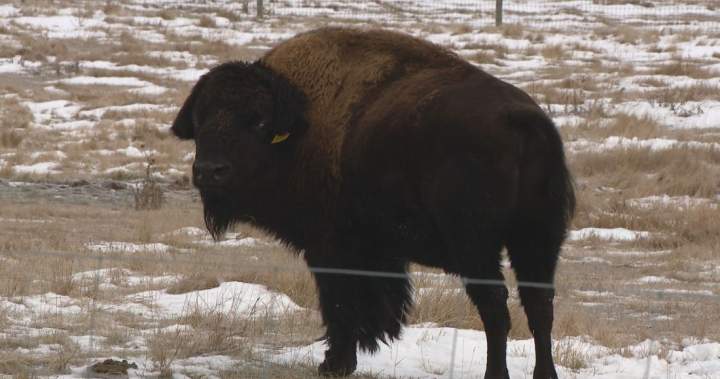
A University of Saskatchewan-led study may be the blueprint for genetically restoring the once-plentiful population of American bison in North America.
Conservation officials in Manitoba have euthanized 15 wild birds suspected of having avian flu, though some could not be immediately removed from the area.
“We believe, very strongly, that this was senseless and that Henry didn’t have to die.” Last week, the City of Regina confirmed to Global News that D.R. Andersons Holdings Inc., the owner of the apartment building where Marina and Sergio’s 11-year-old son died, is facing regulatory charges related to fire safety and construction code from the city. The case will be heard in bylaw court on Dec. 9.
Manitoba Possible employees have been bargaining with management since May and voted in favour of a strike mandate, meaning they are willing to strike if called upon by the union, Nov. 6, according to an MGEU news release.
The pickup truck may have damage to its front driver’s side headlamp and front end, police added.
The Saskatchewan government says its finances are improving but it’s still forecasting a deficit deep in the red.
If the measures are passed, people who fail a breath test and are deemed impaired may face immediate roadside penalties instead of criminal charges, the province said in a release.
Full transit service in Regina is expected to resume around 3 p.m. Tuesday, Nathan Luhning, the city’s director of transit, announced at a news conference that morning.
In response to that letter, Wanda Martin, director of Station 20 West, said the encampment would not be removed without a conversation with the city that results in a long-term solution for those living on the property.
A new agreement may create thousands of jobs in solar panel manufacturing in Manitoba and requires silica that could be mined in the province.
Also by Tavi Dhillon
Nothing else under this byline is closely related to this article, so these are simply their most recent.
All 82 articles by Tavi Dhillon →

Topics

American BIG University of Saskatchewan Western College of Veterinary Medicine the University of Saskatchewan’s

Subjects

Adams PERSON · 5× American NORP · 3× BIG ORG · 1× Canada GPE · 1× European NORP · 1× Gregg Adams PERSON · 1× Montana GPE · 1× University of Saskatchewan ORG · 1× Western College of Veterinary Medicine ORG · 1× the University of Saskatchewan’s ORG · 1×

Narrative

This occurred during the 1920 translocation of plain bison from northern Montana in the United States to a park in Wainwright, Alta., to Wood Buffalo National Park, located in northern Alberta and the southern Northwest Territories, when the animals bred with one another, Adams said. “That caused two serious, serious problems in conserving the bison.
framing: assertive · carried by 1 article(s) · first seen 2026-11-27
A University of Saskatchewan-led study may be the blueprint for genetically restoring the once-plentiful population of American bison in North America.

Claims (36 extracted, 4 hedged)

A University of Saskatchewan-led study may be the blueprint for genetically restoring the once-plentiful population of American bison in North America. uncertain
study → lead → America
The paleogenomic research was done by the Bison Integrated Genome (BIG) project. asserted
research → do → project
It compared the complete DNA set, or genomes, of 115 ancient, 200 to 20,000-year-old wood and plain bison, to 45 modern ones. asserted
It → compare → ones
“We’ve made huge progress in understanding bison biology,” Gregg Adams, one of the principal investigators with BIG, said. asserted
Adams → make → BIG
“We need to know what a pure plains bison is and what a pure wood bison is before we messed with the mix. asserted
we → need → mix
We thought if we get ancient DNA, we could get the gold standard of what they were and what they had evolved to over thousands and thousands of years. uncertain
they → think → years
And then we’d know how we can get back to that. asserted
we → know → that
In the paper, dozens of researchers found the most glaring difference of the genetic makeup of a modern American bison, when compared to the ancient animals, is the high degree of fragmentation between herds. asserted
difference → find → herds
Prior to the industrial revolution, bison travelled as a “monstrous, roaming herd across North America,” Adams said. asserted
Adams → travel → America
The various herds interacted and interbred during those journeys, creating genetic diversity, he added. asserted
he → interact → diversity
Bison were once populous in the Great Plains of North America, which spans into parts of Canada’s Prairie provinces and territories. asserted
which → span → provinces
That population of approximately 30 million began to dwindle in the 19th century as European settlers hunted the animals for their hides, meat or as sport until only hundreds remained. asserted
hundreds → begin → sport
“Despite this decline, genetic diversity remained stable, although subsequent drift and isolation led to the high degree of structure in bison herds today,” according to the study. uncertain
drift → remain → study
That “subsequent drift” was partly the result of the introduction of roads and railways, Adams said. asserted
Adams → say → roads
“There’s no way for those bison herds to move and so, they have become disconnected. asserted
they → ’ → ?
And when they’re disconnected, by definition, they’re in isolation,” he added. asserted
he → disconnect → isolation
“That isolation will eventually cause the demise of a small population.” Another consequence of that drift was the structural change in the ancestry of all modern wood bison, who now carry plains bison ancestry. asserted
who → cause → ancestry
This occurred during the 1920 translocation of plain bison from northern Montana in the United States to a park in Wainwright, Alta., to Wood Buffalo National Park, located in northern Alberta and the southern Northwest Territories, when the animals bred with one another, Adams said. “That caused two serious, serious problems in conserving the bison. asserted
That → occur → bison
One is that resulted in the immediate start of hybridization between plains bison and wood bison,” Adams added. asserted
Adams → result → bison
“The second, terrible, thing was it resulted in the introduction of cattle diseases.” asserted
it → result → diseases
- 15 birds euthanized in Manitoba over avian flu concerns, carcasses left overnight - asserted
carcasses → euthanize → concerns
Largest emissions spike in decade further sets back climate goals in Toronto area asserted
spike → set → area
Court setback for major mining project in B.C.’s Golden Triangle - Canada Olympic Park gets snow-making exemption from Calgary water restrictions Ultimately, the study concluded that as a result of their near extinction, there was a widespread loss of genetic diversity among the American bison – asserted
study → get → bison
though, it noted that that loss was not the result of interbreeding with cattle. asserted
loss → note → cattle
“Restoring gene flow across herds managed as a metapopulation could more closely mirror past population structure, while ensuring the maintenance of diversity and preventing the fixation of cattle alleles,” the study said. uncertain
study → restore → alleles
Allele fixation occurs when a specific gene is present in every single animal in a herd. asserted
gene → occur → herd
In news release, the University of Saskatchewan said this research can be used to inform project partners, including the Toronto Zoo and Parks Canada. asserted
research → say → Zoo
By bettering understandings of bison genetics, researchers can help to mitigate related challenges by introducing more genetic diversity to herds and decreasing the risk of disease transmission. asserted
researchers → better → transmission
“We got really what I think is a blueprint of what bison were before we messed it up. asserted
we → get → it
And that’s amazing,” Adams told Global News. asserted
Adams → ’ → News
He said now researchers can take the sperm and eggs of modern bison and determine “which herds are missing which genes or which herds are hybrid. asserted
herds → say → genes
“Every time I think about it, I get goosebumps. asserted
I → think → goosebumps
It really is groundbreaking,” Adams continued. asserted
Adams → continue → ?
“We are really in a position where we can do something. asserted
we → do → something
We can make an impact.” asserted
We → make → impact
Adams said the research can be used to help inform research models for other at-risk species. asserted
research → say → species

Give feedback · no sign-in needed

No sign-in needed for now. Your note is sent without a name, so it cannot be answered.

History Support