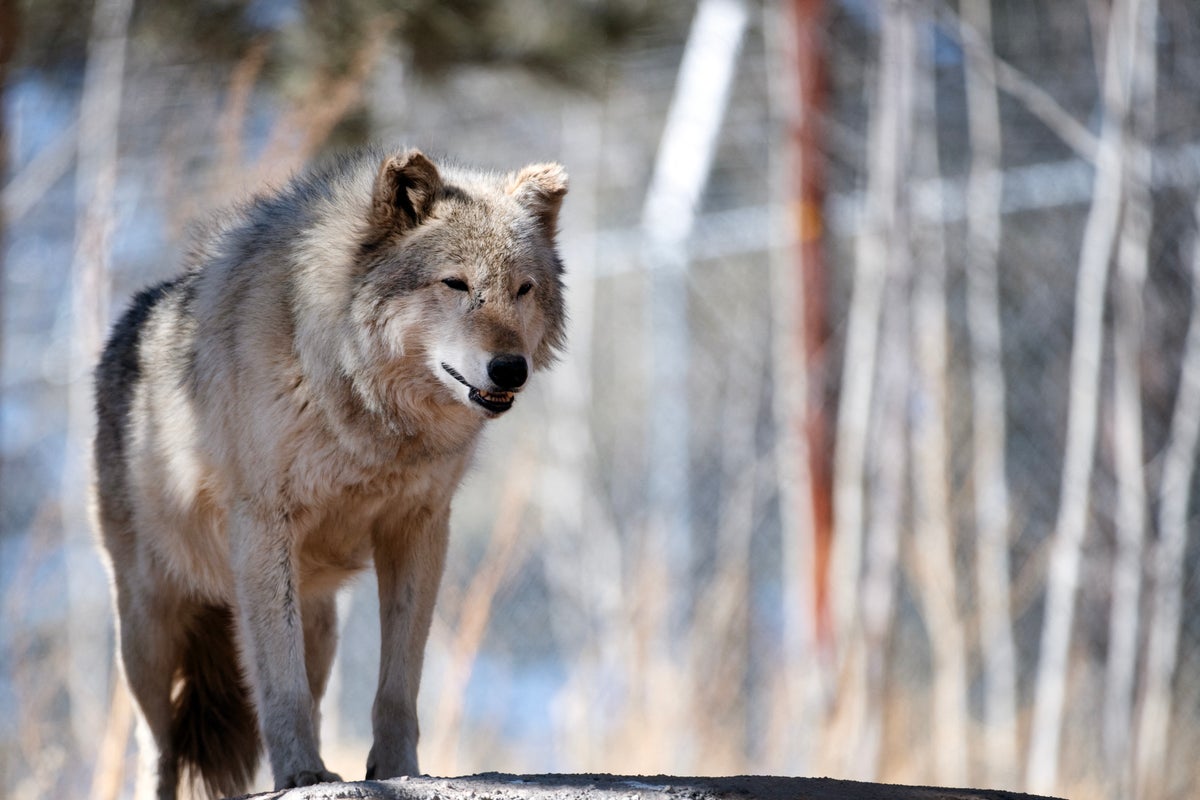
Photo via The Independent

Wolves are returning across Europe. Not everyone is happy about it

Read the original at The Independent ↗
Cite

Corder, M., Furtula, A., & Dejong, P. (2026, November 27). Wolves are returning across Europe. Not everyone is happy about it. The Independent. https://www.independent.co.uk/news/world/europe/wolf-return-europe-population-netherlands-b3092542.html

Dated from the outlet's own feed. Check the original for its byline.

The Independent · collected 2026-11-27 · by Mike Corder, Aleksandar Furtula, Peter Dejong

Quick Summary

Wolves have returned to the Netherlands after being extinct for about two centuries. The initial celebration of their comeback has turned into controversy due to attacks on livestock and human encounters. As of now, there are fewer than 150 wolves in the Netherlands, divided into around 15 packs. The Dutch government has proposed allowing the culling of certain wolves to reduce the risk of attacks on livestock and people. Farmers like Robertjan Feijen have lost hundreds of sheep to wolf attacks, leading to significant financial losses and emotional distress.
Written by AI on 2026-11-27, from this article's own text only (the story summary below draws on all the coverage).

AI analysis

Story summary

Wolves, which were hunted to extinction in the Netherlands about two centuries ago, have returned and are now causing controversy. Initially celebrated as a conservation success, their presence has led to fatal attacks on livestock and encounters with humans, exacerbating existing societal tensions. As of 2026, the wolf population in the Netherlands is estimated at fewer than 150 animals divided into around 15 packs, which is relatively small compared to other European Union nations where wolves have been established for longer. However, the wolves’ movement patterns are concerning; one wolf tracked by Wageningen University and Research covered more than 2,500 kilometers in just three months, crossing the entire country. This resurgence has sparked debates about how to balance the protection of wildlife with the needs of agriculture and human safety in a densely populated country like the Netherlands.

Written for “Wolves Returning Across Europe” on 2026-11-29, grounded in this article and the 0 other(s) covering the same event.

Compared with similar articles

Nothing to compare against. No article is close enough to this one for the pipeline to have linked or judged the pair.

Story

Wolves Returning Across Europe
Environment · 1 article(s) covering the same event.
How this article was measured signals, leaning charts, publisher record, byline, topics and claims

Signals How these are calculated →

Claims extracted
55
sentences that state something as happening or true
Uncertain
2%
1 of 55 hedged ("reportedly", "may", "according to")
Leaning
Leans right
of the writing, not the subject · beta estimate
Publisher signals
59/100
The Independent's corrections and hedging, across everything collected from it. Not a measure of accuracy.
Outlets on this story
1
Environment
Same framing elsewhere
1
articles that frame the event the way this one does
Analyzed 2026-11-27 · how these are computed

How this is being covered How these are calculated →

Article leaning vs. publisher reliability
Source leaning vs. consistency

Publisher

The Independent · 5241 article(s) · 11 correction(s) detected
Running correction rate · 11 correction(s)

Who wrote this

Mike Corder
12 article(s) here · 1 carrying a prediction
The opening of the trial is a major milestone for the 24-year-old court and will be a litmus test of its ability to prosecute national political leaders for alleged crimes committed while in office.
Wild sheep introduced from Cyprus and Corsica called mouflons used to graze on the young shoots before they could mature.
His lawyer, Luka Misetic, said on X that he would appeal.
Campaigners against data centers in Europe are expected to stage protests and other actions in several countries on Friday and Saturday, demanding a moratorium on large-scale developments to address social and environmental concerns around the energy-hungry behemoths.
Authorities have confirmed 37 deaths and say some 38 may still be trapped.
The International Criminal Court said Monday it will unseal arrest warrants against four senior Taliban leaders, accusing them of the crime against humanity of gender persecution against women, girls and members of the LGBTQI+ community in Afghanistan since the Taliban seized power in 2021.
Their remodeled teams served up a match with plenty of attacking intent, but short of quality finishing that could have produced a bigger score.
“For me as head coach, it is also valuable to observe them closely and get to know them better over the coming weeks, as we will be working together intensively for the first time,” he said in a statement.
Also by Mike Corder
Nothing else under this byline is closely related to this article, so these are simply their most recent.
All 12 articles by Mike Corder →
Aleksandar Furtula
2 article(s) here · 1 carrying a prediction
Wild sheep introduced from Cyprus and Corsica called mouflons used to graze on the young shoots before they could mature.
Also by Aleksandar Furtula
Nothing else under this byline is closely related to this article, so these are simply their most recent.
Peter Dejong
2 article(s) here · 1 carrying a prediction
Wild sheep introduced from Cyprus and Corsica called mouflons used to graze on the young shoots before they could mature.
Also by Peter Dejong
Nothing else under this byline is closely related to this article, so these are simply their most recent.

Topics

Dutch European Union Netherlands Wageningen Wageningen University and Research

Subjects

Netherlands GPE · 7× Dutch NORP · 2× Feijen PERSON · 2× Van Asselt PERSON · 2× Epe GPE · 1× European Union ORG · 1× Liesbeth van Asselt PERSON · 1× Robertjan Feijen PERSON · 1× Wageningen ORG · 1× Wageningen University and Research ORG · 1×

Narrative

Long seen as a bastion of tolerance, the Netherlands has been roiled in recent years by protesting farmers angry at government plans to rein in nitrogen emissions; by black-clad demonstrators seeking to prevent towns opening asylum-seeker centers; and by people demanding action on climate change.
framing: assertive · carried by 1 article(s) · first seen 2026-11-27
Wild sheep introduced from Cyprus and Corsica called mouflons used to graze on the young shoots before they could mature.
2026-11-27 · The Independent
Wolves are returning across Europe. Not everyone is happy about it · assertive framing

Claims (55 extracted, 1 hedged)

The return of wolves to the Netherlands, roughly two centuries after being hunted to extinction, was initially celebrated as a fairy-tale triumph for conservation. asserted
return → hunt → conservation
Yet the initial joy after a pair of wolves first bred in 2019 has rapidly turned sour. asserted
pair → breed → 2019
The resurgence of the apex predator has resulted in fatal attacks on livestock and troubling encounters with humans, inflaming existing societal tensions. asserted
resurgence → result → tensions
Wolf numbers are expanding right across Europe, though the population within the Netherlands remains modest — estimated at fewer than 150 animals divided into around 15 packs — compared to other European Union nations where they have been established for much longer. asserted
they → expand → longer
Even so, the densely populated nation of 18 million people, home to an influential, multi-billion-dollar agricultural sector, forms the backdrop to an increasingly contentious debate over how successfully a protected animal can coexist with humans and livestock. asserted
animal → form → humans
While established packs tend to stay in their territories, lone wolves drift right across the country. asserted
wolves → establish → country
Tracking data from the Wageningen University and Research institute revealed one wolf covered more than 2,500 kilometres (1,550 miles) in three months, twice swimming across a major river and traversing several motorways. asserted
wolf → track → motorways
The Dutch government announced this week that it intends to permit the culling of certain wolves, citing the need to reduce the risk of attacks on livestock and people. asserted
it → announce → livestock
A farmer keeps most sheep in his barn When Robertjan Feijen first began raising sheep in the rural northeast of the Netherlands about a decade ago, wild wolves were a distant memory. asserted
wolves → keep → Netherlands
His sheep grazed on other farmers’ fields and pastures that are submerged during the winter to create speed skating ovals. asserted
that → graze → ovals
Things changed fast. asserted
Things → change → ?
Since wolves returned to the Netherlands, the farmer has lost around 250-300 sheep in more than 50 wolf attacks. asserted
farmer → return → attacks
The worst feeling for Feijen is if he has helped deliver a lamb and then sees that animal maimed or, worse still, “you see it lying dead, completely ripped open and then looking around you, it’s a battlefield with dead animals in ditches,” he said. asserted
he → help → ditches
“It’s indescribable.” asserted
It → ’ → ?
Researchers at Wageningen reported wolves killed more than 3,300 animals last year in the Netherlands, almost all of them sheep, and farmers were paid nearly 1.5 million euros ($1.6 million) for their livestock losses. asserted
farmers → report → losses
Farmers can also get subsidies for protective measures like electric fences. asserted
Farmers → get → fences
But Feijen said the government support doesn’t come close to covering his losses. asserted
support → say → losses
He feels forced now to keep many of his sheep in his barn. asserted
He → force → barn
Photographer Liesbeth van Asselt has lived near the forests and heathlands that border the central town of Epe all of her 62 years and loves to walk the paths that crisscross shady groves of pine and oak. asserted
that → live → pine
Even though reports of wolves attacking dogs are rare, when Van Asselt walks with her dog, Raico, she wears a red whistle around her neck to scare off wolves that sometimes walk down the sandy roads near her garden. asserted
that → attack → garden
“I think we can have an amount of wolves in the Netherlands, but not in between our houses, walking in our streets and in our gardens,” Van Asselt said. asserted
Asselt → think → gardens
Long seen as a bastion of tolerance, the Netherlands has been roiled in recent years by protesting farmers angry at government plans to rein in nitrogen emissions; by black-clad demonstrators seeking to prevent towns opening asylum-seeker centers; and by people demanding action on climate change. asserted
towns → see → change
The debate about wolves opened up one more fault line. asserted
debate → open → line
In December, when animal welfare activists held a symbolic funeral procession for the only Dutch wolf to have been shot in an officially sanctioned hunt, they were threatened by villagers. asserted
they → hold → villagers
Activists said one opponent drove his car at them. asserted
opponent → say → them
Police intervened but made no arrests. asserted
Police → intervene → arrests
The wolf in question, nicknamed Bram by some locals, had menaced joggers and cyclists and was blamed for biting a child in a forest close to the university city of Utrecht. asserted
wolf → nickname → Utrecht
Maarten Jacobs, a polarization expert at Wageningen, said wolves are being exploited by agitators seeking to deepen rifts in society. asserted
wolves → say → society
“So there was existing polarization, and polarization needs fuel to keep the conflict going," he said. asserted
he → be → conflict
“And then the wolf arrived, and that’s perfect new fuel.” asserted
that → arrive → ?
At De Hoge Veluwe National Park, a tourist destination in the central Netherlands, the return of the wolf is having a potentially devastating effect on the protected landscape of inland drifting sands. asserted
return → have → sands
Head of operations at the park, Jakob Leidekker, points to countless Scots pine saplings sticking out of a sandy plain. asserted
Head → point → plain
Wild sheep introduced from Cyprus and Corsica called mouflons used to graze on the young shoots before they could mature. uncertain
they → introduce → shoots
“All the mouflons are gone now because they were killed by wolves,” Leidekker said. asserted
Leidekker → go → wolves
“And what you see now is that all these pines are getting up." asserted
pines → see → what
The park is home to the Kröller-Müller Museum and its jaw-dropping collection of Vincent van Gogh paintings and other artworks. asserted
park → drop → paintings
Some 570,000 people visited the park last year, many of them riding through forests and sand dunes on a fleet of white bicycles. asserted
many → visit → bicycles
Visitors are now handed a pamphlet explaining what to do if they encounter a wolf. asserted
they → hand → wolf
At least one wolf attacked a jogger and approached visitors. asserted
wolf → attack → visitors
The park sought permission to use paintball guns to scare it off. asserted
park → seek → it
…and 15 more, not listed.

Give feedback · no sign-in needed

No sign-in needed for now. Your note is sent without a name, so it cannot be answered.

History Support