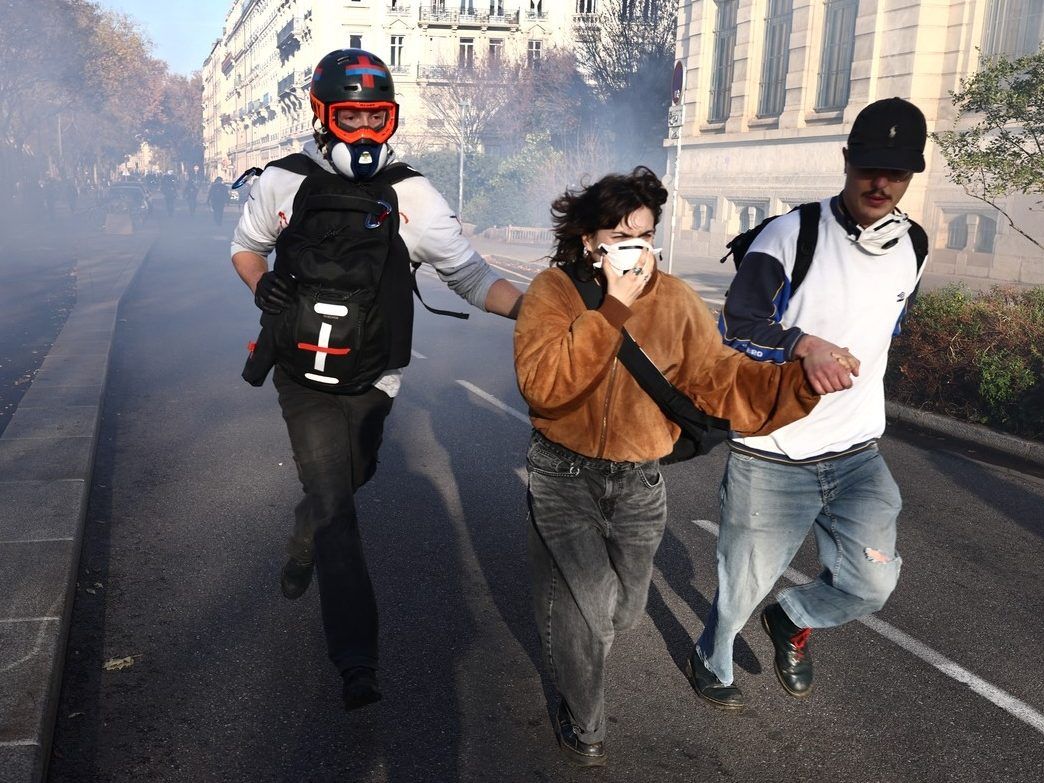
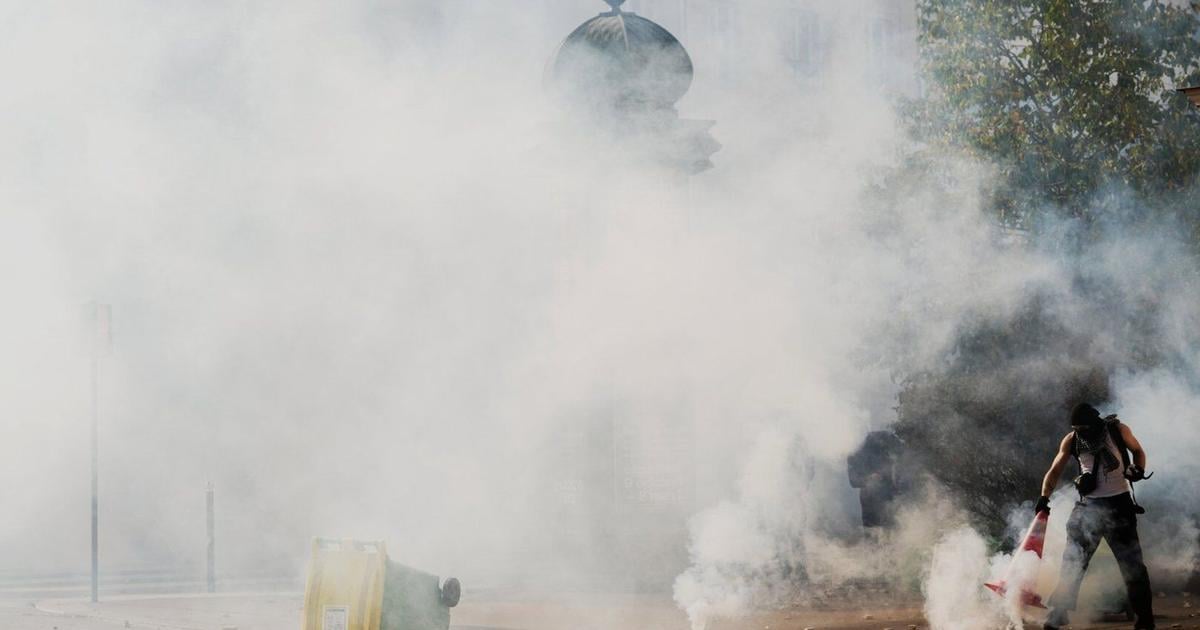
Photo via Daily Mail

Around 9,000 female activists report bleeding and miscarriages after French police used teargas - with fears thousands have suffered permanent damage to reproductive health

Read the original at Daily Mail ↗
Cite

Penty, S. (2026, November 27). Around 9,000 female activists report bleeding and miscarriages after French police used teargas - with fears thousands have suffered permanent damage to reproductive health. Daily Mail. https://www.dailymail.com/news/article-16326105/9000-female-activists-report-bleeding-miscarriages-French-police.html?ns_mchannel=rss&ns_campaign=1490&ito=1490

Dated from the outlet's own feed. Check the original for its byline.

Daily Mail · collected 2026-11-27 · by Sabrina Penty

Quick Summary

French police used around 22,000 tear gas grenades during protests on October 17, leading to over 9,200 female activists reporting severe reproductive health issues. Lacrymos de Sang, a feminist collective, documented testimonies of heavy bleeding, missed periods, and miscarriages, with 94% of respondents experiencing gynecological symptoms. The article highlights the potential long-term health impacts on women, particularly those under 20, with several cases of hospitalization and severe anemia.
Written by AI on 2026-11-27, from this article's own text only (the story summary below draws on all the coverage).
See how they differ ↓

AI analysis

Story summary

As of November 27, 2026, 9,200 women and girls have reported severe health issues such as bleeding and miscarriages after being exposed to tear gas used by French police during protests. Activists and health experts fear that thousands more may have suffered long-term reproductive health damage from the tear gas. Lacrymos de Sang, a feminist collective, collected testimonies from more than 9,200 individuals, with 94% reporting gynecological symptoms including severe uterine cramps and heavy menstrual bleeding. Some women required hospitalization for severe iron deficiency due to blood loss. The use of tear gas peaked on October 17, 2026, with 22,000 grenades fired by police, equivalent to two grenades every three seconds. This incident raises concerns about the long-term health impacts of tear gas exposure on women's reproductive health.

Written for “French Police Tear Gas Injures Activists” on 2026-11-28, grounded in this article and the 1 other(s) covering the same event.

How they differ

2 outlets covered “French Police Tear Gas Injures Activists”.

What each outlet says

One AI summary per outlet of its latest article on this story, written from that article alone and checked against it. Open the article for the outlet's own words.

Daily MailThis outlet27 Nov

French police used around 22,000 tear gas grenades during protests on October 17, leading to over 9,200 female activists reporting severe reproductive health issues. Lacrymos de Sang, a feminist collective, documented testimonies of heavy bleeding, missed periods, and miscarriages, with 94% of respondents experiencing gynecological symptoms. The article highlights the potential long-term health impacts on women…

Around 9,000 female activists report bleeding and miscarriages after French police used teargas - with fears thousands have suffered permanent damage to reproductive health (this article)
Toronto Sun27 Nov

French police use of tear gas during nationwide protests starting in mid-September has led to health issues for some women, including heavy bleeding and miscarriages. Activists and researchers report that at the peak of the protests on October 17, police fired 22,000 tear gas grenades, roughly two every three seconds. A feminist collective called Lacrymos de Sang gathered over 9,200 testimonies from women affected…

Protesting females report bleeding, miscarriages after French cops’ tear gas →

Compared with similar articles

This article reads leans strongly left and hedges 11% of its claims. Each row says how that neighbour differs.
Toronto Sun
Leans strongly left Hedges 6 of 18 claims Outlet record 96/100
Toronto Star
Leans right further right than this Hedges 3 of 37 claims Outlet record 64/100
“While both articles discuss concerns about tear gas exposure affecting women's reproductive health during protests in France, they refer to different stages of the issue, with Article A focusing on reports after the protests and Article B discussing the initial demands and concerns raised shortly after the protests.”

Story

French Police Tear Gas Injures Activists
Health · 2 article(s) covering the same event. See how they differ ↑
How this article was measured signals, leaning charts, publisher record, byline, topics and claims

Signals How these are calculated →

Claims extracted
36
sentences that state something as happening or true
Uncertain
11%
4 of 36 hedged ("reportedly", "may", "according to")
Leaning
Leans strongly left
of the writing, not the subject · beta estimate
Publisher signals
68/100
Daily Mail's corrections and hedging, across everything collected from it. Not a measure of accuracy.
Outlets on this story
2
Health
Same framing elsewhere
1
articles that frame the event the way this one does
Analyzed 2026-11-27 · how these are computed

How this is being covered How these are calculated →

Article leaning vs. publisher reliability
Source leaning vs. consistency

Publisher

Daily Mail · 13534 article(s) · 29 correction(s) detected
Running correction rate · 29 correction(s)

Who wrote this

Sabrina Penty
114 article(s) here · 1 carrying a prediction
Whether the extensive surgical procedure could have been avoided if the correct diagnosis had been made from the beginning is still unclear, according to Unilabs.
Sogand Moshtareki, from Iran's Kerman Province, was killed on November 6 after she had asked her 20-year-old husband if she could visit her family.
Her emotional reaction became a topic of discussion on social media, with several internet users speculating that she might have personally invested in stocks.
The move came after the Daily Mail reported in May 2025 that Barron struggled to adapt to college life and socialise with peers as he was strictly surrounded by Secret Service agents, giving potential friends no chance to even get close.
'We don't know what repeated exposure to tear gas could mean for their reproductive health in the long term,' the collective's founder Eva-Luna Tholance added.
Emilie Konig, who travelled to Syria in 2013 and was repatriated to France in 2022, is accused by French prosecutors of recruiting and spreading propaganda for ISIS. Appearing before the special court in the capital, the 41-year-old from Brittany will try to convince judges that she has been de-radicalised. Konig is believed to have lured more than 200 French women to Syria to join the terrorist group and was branded as a 'true icon' of ISIS by the National Anti-Terrorist Prosecutor's Office. She was also the first female jihadist to be placed on the blacklist of 'foreign terrorist fighters' drawn up by the CIA in 2015, while the United Nations placed her on its most dangerous fighters list.
But despite her turbulent early years, she would go on to shape an entire generation - becoming internationally known as Veruschka.
The Brit who recorded the video, who referenced Ms Bond in his post with the initials VB, wrote: 'Day 1 of the Patagonia O-Trek: also known as 15km of why the f**k did I fly 8,000 when I could've walked round Bodmin Moor in a light drizzle? '
Early reviews for the game have noted a greater emphasis on relationship building that goes beyond the violent stickups, bank robberies and mayhem that have long defined the franchise.
They also said certain cargoes, such as fresh produce, cannot survive the long journeys, as they remain stranded in China because Turkmen and Kazakh customs will not let them through.
Also by Sabrina Penty
Nothing else under this byline is closely related to this article, so these are simply their most recent.
All 114 articles by Sabrina Penty →

Topics

France French Lacrymos de Sang Paris

Subjects

French NORP · 4× Paris GPE · 2× Chloé Baroux PERSON · 1× Eva-Luna Tholance PERSON · 1× France GPE · 1× Lacrymos de Sang ORG · 1× Mélina Galland PERSON · 1× Solène Rougeux PERSON · 1×

Narrative

Thousands of women and girls have reported bleeding and miscarriages after French police used tear gas on them during protests (file image) A photojournalist is surrounded by tear gas during clashes at the end of demonstration against rising living costs in Paris, Saturday, Oct. 31, 2026 The research also recorded testimonies of pregnancy loss.
framing: assertive · carried by 1 article(s) · first seen 2026-11-27
'We don't know what repeated exposure to tear gas could mean for their reproductive health in the long term,' the collective's founder Eva-Luna Tholance added.

Claims (36 extracted, 4 hedged)

Thousands of women and girls have reported bleeding and miscarriages after French police used tear gas on them during protests. asserted
police → report → protests
Cops fired around 22,000 tear gas grenades at protesters on October 17, during the height of the nationwide protests that have rocked France. asserted
that → fire → France
Now, activists and health experts fear tens of thousands of women have suffered long-term damage to their reproductive health from being exposed to the tear gas. asserted
thousands → fear → gas
Lacrymos de Sang, a feminist collective founded to investigate the possible reproductive effects of tear gas, gathered the testimonies of more than 9,200 women and girls, including school students, who reported exposure to tear gas. asserted
who → found → gas
Of those, 94 per cent reported gynaecological symptoms, according to the collective. uncertain
cent → report → collective
The complaints included severe uterine cramps and unusually heavy or missed periods. asserted
complaints → include → cramps
Some women reported pain so severe that it prevented them from walking or going into work. asserted
it → report → work
Others reported bleeding for several weeks. asserted
Others → report → weeks
Two respondents said they were hospitalised with anaemia - a severe iron deficiency - after heavy blood loss. asserted
they → say → loss
Women who had gone through menopause, or who were taking hormonal contraception, also reported heavy bleeding. asserted
who → go → bleeding
Thousands of women and girls have reported bleeding and miscarriages after French police used tear gas on them during protests (file image) A photojournalist is surrounded by tear gas during clashes at the end of demonstration against rising living costs in Paris, Saturday, Oct. 31, 2026 The research also recorded testimonies of pregnancy loss. asserted
research → report → loss
Out of 47 pregnant respondents, 15 reported miscarriages. asserted
15 → report → miscarriages
Seventeen reported having contractions, pain and bleeding, while two said they had to seek emergency gynaecological care. asserted
they → report → care
One woman, who said she was exposed to tear gas while walking her dog, said she was left vomiting and bleeding heavily. asserted
she → say → dog
'I felt as though I was urinating. asserted
I → feel → ?
I lost my baby after seven months of pregnancy,' she said. asserted
she → lose → pregnancy
Women and girls under 20 were the most affected, according to the research. uncertain
Women → affect → research
Mélina Galland, 24, was working as an independent photographer during the October 17 protests in Paris that were marred by rioting and looting. asserted
that → work → rioting
She wore a double surgical mask along with a diving mask when tear gas grenades were fired. asserted
grenades → wear → mask
'Heading back home, I felt intense belly pain which was unusual because I never experienced pain that intense at that stage of my period,' she said. asserted
she → head → period
Chloé Baroux, 25, also a photographer, first noticed pain and irregular periods after covering protests against a security bill in 2020 and 2021. asserted
Baroux → notice → 2020
She said her menstrual cycles eventually became more regular, and she didn't think of a potential link to tear gas until she covered the recent protests, noting, 'over the past two months, it's become irregular again.' asserted
it → say → months
'Stress can disrupt menstrual cycles, causing periods to come earlier or later, but it cannot explain heavy bleeding in people who have gone through menopause, nor can it account for miscarriages,' Solène Rougeux, a doctoral researcher in neuroendocrinology who joined the collective, said. asserted
who → disrupt → collective
'We don't know what repeated exposure to tear gas could mean for their reproductive health in the long term,' the collective's founder Eva-Luna Tholance added. uncertain
founder → know → term
Tear gas grenades used by French police contain CS, a chemical irritant that affects the eyes, skin and respiratory tract. asserted
that → use → eyes
CS is a crystalline powder dispersed into the air as fine particles. asserted
CS → disperse → particles
Its effects depend on how much is used and how long people are exposed. asserted
people → depend → ?
Those exposed during the protests include peaceful demonstrators — such as children, pregnant women and older people — and residents near the sites of protest marches. asserted
Those → expose → marches
The figures come as French activists and lawmakers demanded the suspension of tear gas this week over concerns about its effects on menstrual cycles and other aspects of reproductive health. asserted
activists → come → health
Police used tear gas during student protests and demonstrations over the cost of living, some marred by violence. asserted
Police → use → violence
Opposition lawmakers are seeking a ban and independent research into possible health effects. asserted
lawmakers → seek → effects
Interior Minister Laurent Nuñez has rejected the calls, saying police use of tear gas is essential to crowd control as an alternative to using more dangerous weapons. asserted
use → reject → weapons
The Interior Ministry says no published scientific studies show that CS causes menstrual changes or miscarriages. asserted
CS → say → changes
It said other effects of tear gas generally resolve within hours, although it acknowledged that some longer-lasting symptoms affecting the skin and eyes 'cannot be ruled out. asserted
symptoms → say → skin
' Some other possible effects in the body 'have been suggested, but not demonstrated,' it said. uncertain
it → suggest → body
The ministry said it conducted several studies in 2021 and 2022 assessing individual exposure to tear gas, particularly among law enforcement personnel. asserted
it → say → personnel
Give feedback · no sign-in needed

No sign-in needed for now. Your note is sent without a name, so it cannot be answered.

History Support