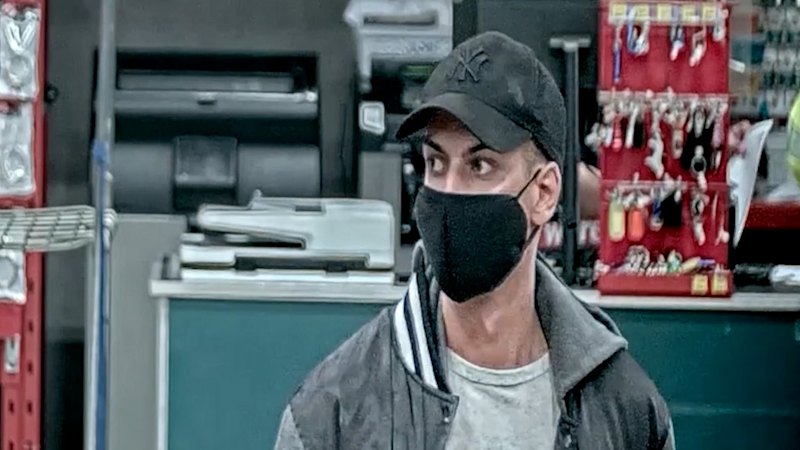
Photo via The Sydney Morning Herald

After the Lamarre-Condon guilty verdict, all eyes are on NSW Police

Read the original at The Sydney Morning Herald ↗
Cite

Baker, J. (2026, November 27). After the Lamarre-Condon guilty verdict, all eyes are on NSW Police. The Sydney Morning Herald. https://www.smh.com.au/national/nsw/after-the-lamarre-condon-guilty-verdict-all-eyes-are-on-nsw-police-20261127-p61hl2.html?ref=rss&utm_medium=rss&utm_source=rss_feed

Dated from the outlet's own feed. Check the original for its byline.

The Sydney Morning Herald · collected 2026-11-27 · by Jordan Baker

Quick Summary

The article discusses the conviction of Beau Lamarre-Condon for the murder of Jesse Baird and Luke Davies, two young men killed by a NSW Police constable in February 2024. The author reflects on the emotional impact of the trial on the victims' families, particularly the mothers, and emphasizes the responsibilities and challenges faced by journalists covering such sensitive cases. The piece highlights the Herald's reporting process, focusing on legal constraints and the rigorous efforts of their legal affairs reporter, Michaela Whitbourn, who has been documenting the trial's proceedings with care and precision.
Written by AI on 2026-11-27, from this article's own text only (the story summary below draws on all the coverage).

AI analysis

Story summary

In February 2024, Beau Lamarre-Condon, a NSW Police constable, was convicted of murdering Jesse Baird and Luke Davies. The trial concluded on Wednesday, marking 2½ years of legal proceedings. Lamarre-Condon used his service pistol to shoot the two young men, who were beloved by their families. Following the verdict, the mothers of the victims, Helen and Sandra, walked hand in hand from the courtroom, displaying dignity and bravery. Despite the conviction, the families remain devastated by the loss of their sons, who were cherished from childhood. The case has raised significant scrutiny over the NSW Police force.

Written for “Lamarre-Condon Guilty Verdict” on 2026-11-28, grounded in this article and the 0 other(s) covering the same event.

Compared with similar articles

This article reads unscored and hedges 5% of its claims. Each row says how that neighbour differs.
ABC News (AU)
Hedges 7 of 25 claims Outlet record 66/100
“Article A discusses the defense's argument for reasonable doubt in the trial, while Article B reports on the guilty verdict and its aftermath.”
The Sydney Morning Herald
Leans strongly right Hedges 2 of 30 claims Outlet record 61/100
“While both articles discuss the guilty verdict of Beau Lamarre-Condon, they describe different aspects of the same broader event: Article A focuses on the psychological analysis and diagnosis of the convicted individual, while Article B covers the emotional and social impact of the verdict.”
The Sydney Morning Herald
Leans left Hedges 1 of 35 claims Outlet record 61/100
“Article A discusses the alleged coercion of a former partner, while Article B focuses on the emotional aftermath of the guilty verdict and the impact on the victims' families.”
ABC News (AU)
Hedges 1 of 35 claims Outlet record 66/100
“Article A reports on the trial and verdict of Beau Lamarre-Condon, while Article B discusses the aftermath and reaction to the verdict.”
Daily Mail
Hedges 2 of 42 claims Outlet record 68/100
“While both articles discuss the same trial and verdict for Beau Lamarre-Condon, Article A describes the trial and verdict specifically, while Article B reflects on the event and its aftermath, including the emotional impact on the victims' families.”
The Sydney Morning Herald
Hedges 0 of 18 claims Outlet record 61/100
“Article A describes the trial and evidence presented during Beau Lamarre-Condon's murder trial, while Article B focuses on the emotional impact and aftermath of the guilty verdict.”
The Independent
Hedges 0 of 15 claims Outlet record 59/100
“While both articles discuss the conviction of Beau Lamarre-Condon for the murders of Jesse Baird and Luke Davies, Article A describes the trial and guilty verdict, whereas Article B reflects on the aftermath and impact of the verdict.”
Daily Mail
Hedges 3 of 35 claims Outlet record 68/100
“While both articles discuss the guilty verdict of Beau Lamarre-Condon for the murders of Jesse Baird and Luke Davies, they describe different aspects and emotions around the verdict, suggesting they cover related but distinct events or reactions to the same verdict.”
The Sydney Morning Herald
Leans strongly left Hedges 0 of 21 claims Outlet record 61/100
“While both articles discuss the conviction of Beau Lamarre-Condon for the murders of Jesse Baird and Luke Davies, they describe different stages or aspects of the incident and its aftermath, not the same specific event at the same time.”
The Guardian
Hedges 2 of 14 claims Outlet record 64/100
“Article A describes the prosecution's arguments during Beau Lamarre-Condon's murder trial, while Article B discusses the aftermath of the guilty verdict and its impact on the victims' families.”

Story

Lamarre-Condon Guilty Verdict
Crime & Law · 1 article(s) covering the same event.
How this article was measured signals, leaning charts, publisher record, byline, topics and claims

Signals How these are calculated →

Claims extracted
40
sentences that state something as happening or true
Uncertain
5%
2 of 40 hedged ("reportedly", "may", "according to")
Leaning
not political
takes no side on a contested political question
Publisher signals
61/100
The Sydney Morning Herald's corrections and hedging, across everything collected from it. Not a measure of accuracy.
Outlets on this story
1
Crime & Law
Same framing elsewhere
1
articles that frame the event the way this one does
Analyzed 2026-11-27 · how these are computed

How this is being covered How these are calculated →

Article leaning vs. publisher reliability
Source leaning vs. consistency

Publisher

The Sydney Morning Herald · 8628 article(s) · 19 correction(s) detected
Running correction rate · 19 correction(s)

Who wrote this

Jordan Baker
2 article(s) here · 1 carrying a prediction
Justice had been done, and yet nothing in the world will bring back the sons they loved so much, whose fingers had curled around theirs as babies, who’d cried on their laps as boys, who’d embraced them with their strong arms as men.
But after Monday’s attack, women who might be thinking of following in her footsteps would be forgiven for deciding that the cost of entering public life is too high.
2026-10-23 · assertive framing · When fear and loathing tip the scales
Also by Jordan Baker
When fear and loathing tip the scales
2026-10-23 · The Sydney Morning Herald
Nothing else under this byline is closely related to this article, so these are simply their most recent.

Topics

Herald NSW Police Whistler

Subjects

Michaela PERSON · 4× Helen PERSON · 2× Herald ORG · 2× Jesse PERSON · 2× Lamarre-Condon PERSON · 2× Luke PERSON · 2× Sandra PERSON · 2× Jesse Baird PERSON · 1× Luke Davies PERSON · 1× NSW Police ORG · 1×

Narrative

There are also strict legal requirements; the media must not report anything that is not put before a jury, so the reporter must try to forget everything they know about the case and focus only on what is said in the courtroom with the jury present.
framing: assertive · carried by 1 article(s) · first seen 2026-11-27
Justice had been done, and yet nothing in the world will bring back the sons they loved so much, whose fingers had curled around theirs as babies, who’d cried on their laps as boys, who’d embraced them with their strong arms as men.
2026-11-27 · The Sydney Morning Herald
After the Lamarre-Condon guilty verdict, all eyes are on NSW Police · assertive framing

Claims (40 extracted, 2 hedged)

In February 2024, I was part of the Herald team that covered the murder of Jesse Baird and Luke Davies by a NSW Police constable, who used his service pistol to shoot them. asserted
who → cover → them
This week, after 2½ years of hell for the victims’ families, Beau Lamarre-Condon was convicted. asserted
Condon → convict → families
For me, the most moving moment on Wednesday was when Jesse and Luke’s mothers, Helen and Sandra, walked from court hand in hand, so dignified and so brave. asserted
mothers → walk → hand
Justice had been done, and yet nothing in the world will bring back the sons they loved so much, whose fingers had curled around theirs as babies, who’d cried on their laps as boys, who’d embraced them with their strong arms as men. asserted
who → do → men
As I watched them, I recalled Jesse’s funeral, when his mother Helen remembered the little boy who’d been upset to leave her to go to camp. asserted
who → watch → camp
“When they say there’s nothing like a mother-son bond, no truer word has ever been spoken,” she said. asserted
she → say → bond
And I remembered Luke’s, where his mother Sandra was silent in her grief, and mourners watched a montage of his photographs; in front of the Eiffel Tower, on the slopes of Whistler, dancing along a cobblestone street in Europe. asserted
mourners → remember → Europe
For a journalist, covering a trial such as Lamarre-Condon’s is a weighty duty. asserted
covering → cover → Condon
Foremost in our minds, always, is our responsibility to respect the dead and their families. asserted
responsibility → respect → dead
There are also strict legal requirements; the media must not report anything that is not put before a jury, so the reporter must try to forget everything they know about the case and focus only on what is said in the courtroom with the jury present. asserted
what → be → jury
can result in the trial being aborted, and the families having to begin the horrendous process of listening to the evidence all over again. asserted
families → result → evidence
In these cases, the Herald is fortunate to be able to turn to Michaela Whitbourn, our legal affairs reporter, who is highly regarded not only by her peers, but also by the legal profession for her impeccable judgement and compelling storytelling. asserted
who → turn → judgement
Michaela, who has many years of experience covering court matters, has been covering the Lamarre-Condon case almost daily since September, supported by our crime and justice editor Andrew Forbes. asserted
who → have → editor
Many weeks of that were spent blogging evidence. asserted
that → spend → evidence
Blogs allow us to bring key moments to our readers quickly, but such coverage is complex. asserted
coverage → allow → readers
In a court context, it requires experience. asserted
it → require → experience
Journalists cannot record proceedings, so Michaela had to juggle taking notes and keeping track of exhibits with writing quick updates for the blog and ensuring she didn’t inadvertently tell the public something the jury didn’t know. asserted
jury → record → something
“You’re inserting exhibits to contextualise what you’re hearing,” she tells me. asserted
you → insert → me
Michaela has covered many trials, but this one was unusual. asserted
one → cover → trials
It is rare that the person accused of murder will agree to give evidence. asserted
person → accuse → evidence
“There were moments that were particularly chilling in that respect,” she says. asserted
she → be → respect
“We had evidence – CCTV, voice notes, text messages – all of which created an unsettling picture of the man sitting in the dock. asserted
all → have → dock
I haven’t often heard the accused giving an account of what happened – observing when he was emotional, when he was vague. asserted
he → hear → account
I don’t think many people would have left that trial without being unsettled by what they saw. asserted
they → think → what
In that respect, it was a trial that profoundly affected me and everyone who covered it.” asserted
who → affect → it
One striking aspect of that evidence was the speed with which Lamarre-Condon spoke. asserted
Condon → speak → which
Michaela could barely keep up. uncertain
Michaela → keep → ?
“It was consistent with him being desperate to deliver a story he had crafted around the evidence,” she says. asserted
she → deliver → evidence
The media was unable to photograph Lamarre-Condon. asserted
media → photograph → Condon
He was being held in custody, and allowed by Corrective Services NSW to put a blanket over his head as he was driven to the Supreme Court of NSW. asserted
he → hold → NSW
The only window we had into his expressions was thanks to artist Rocco Fazzari, who was in the courtroom most days and recorded Lamarre-Condon’s demeanour and expressions. asserted
who → have → demeanour
“There were times when I thought Rocco really captured a moment in time that no one else could with words,” says Michaela. uncertain
Michaela → be → words
“He really observes a person with no judgement, and faithfully records everything he’s seen. asserted
he → observe → everything
I think his emotional intelligence allows him to see people in a way others can’t. asserted
others → think → way
It was powerful, particularly when we can’t have any other images of the accused.” For Jesse and Luke’s families, the trial must have been excruciating. asserted
trial → have → families
There was silence in the courtroom when the jury filed in; when the guilty verdicts were announced, there were sobs, gasps and a collective release of breath from the courtroom. asserted
verdicts → be → courtroom
As Lamarre-Condon was escorted to the cells, the public gallery broke into applause. asserted
gallery → escort → applause
And then Helen and Sandra walked hand-in-hand from the court, supporting each other in the grief they will carry forever. asserted
they → walk → grief
The onus is now on the NSW Police Force to explain how a delusional narcissist like Lamarre-Condon was given a badge and a gun, and what it will do to ensure this never happens again. asserted
this → explain → what
Get a weekly wrap of views that will challenge, champion and inform your own. asserted
that → get → own

Give feedback · no sign-in needed

No sign-in needed for now. Your note is sent without a name, so it cannot be answered.

History Support