Photo via Toronto Star

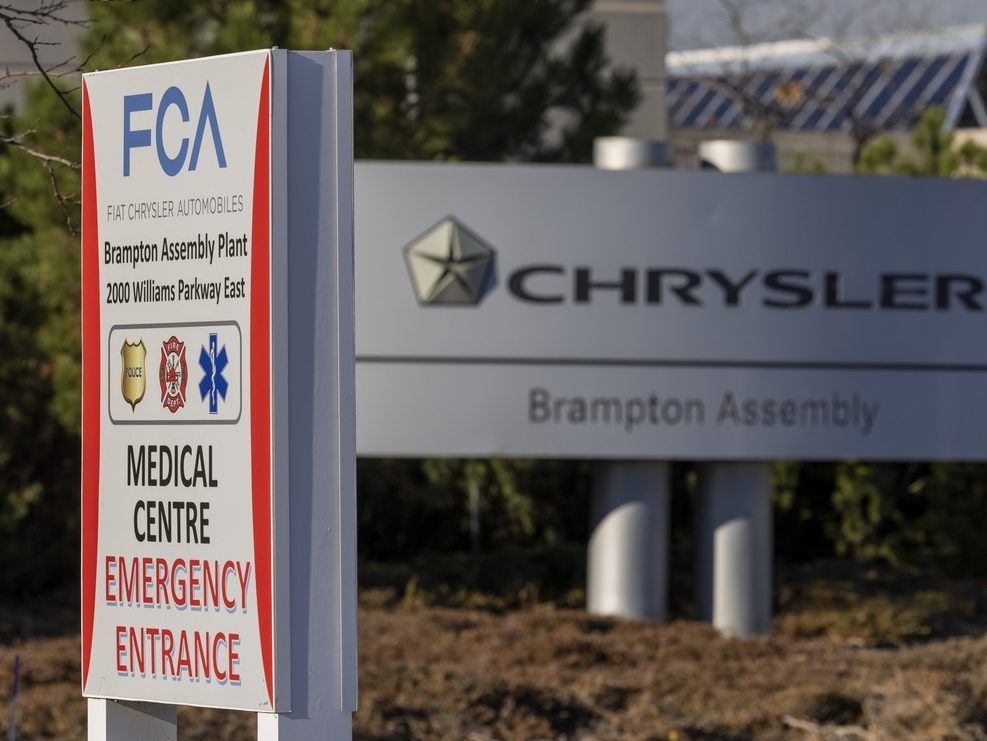
Stellantis is playing Doug Ford for a sucker. Will Carney also buy what it's selling?

Read the original at Toronto Star ↗
Cite

Radwanski, A. (2026, November 27). Stellantis is playing Doug Ford for a sucker. Will Carney also buy what it's selling? Toronto Star. https://www.thestar.com/business/stellantis-is-playing-doug-ford-for-a-sucker-will-carney-also-buy-what-it-s-selling/article_26e5b264-6d86-4e34-81e3-4a4300d5d53b.html

Dated from the outlet's own feed. Check the original for its byline.

Toronto Star · collected 2026-11-27 · by Adam Radwanski

Quick Summary

Stellantis, a major automaker, is seeking an exemption from Canadian tailpipe emissions rules, claiming it would reconsider selling its Brampton assembly plant to Roshel if granted. This request aligns with Ontario Premier Doug Ford's opposition to federal environmental policies and Unifor's interest in saving jobs. However, the article argues that Stellantis is exploiting the situation, as the exemption would primarily benefit its imported vehicles rather than those made in Canada. The author contends that Ottawa should not compromise its environmental regulations to accommodate Stellantis's needs.
Written by AI on 2026-11-27, from this article's own text only (the story summary below draws on all the coverage).

AI analysis

Story summary

Stellantis, a troubled automaker, is seeking an exemption from Canada's tailpipe emissions regulations, claiming that the regulations impose excessive costs on companies making cars in Canada. This demand is part of a broader strategy to reconsider the sale of its Brampton assembly plant to the defense contractor Roshel. Premier Doug Ford, who opposes most federal environmental policies, and Unifor, the union representing Brampton autoworkers, have issued a joint statement supporting Stellantis's request, arguing that the regulations could harm Canada's automotive industry. However, critics argue that Stellantis is not genuinely concerned about the costs but rather wants Canadians to pay higher fuel costs and pollute more while driving vehicles that are not made in the country. Adam Radwanski writes that Stellantis has already broken a funding agreement, and offering another subsidy to keep the plant open would set a terrible precedent.

Written for “Stellantis Deal With Ontario” on 2026-11-27, grounded in this article and the 0 other(s) covering the same event.

Compared with similar articles

This article reads leans strongly left and hedges 0% of its claims. Each row says how that neighbour differs.
The Guardian
Leans strongly left Hedges 2 of 29 claims Outlet record 64/100
“The articles discuss different topics related to fuel and automotive policies but do not describe the same specific event.”
Toronto Star
Hedges 0 of 2 claims Outlet record 64/100
“The first article reports on Stellantis filing a lawsuit against Unifor, while the second article discusses Stellantis' demand for an exemption from tailpipe emissions rules in relation to the sale of its Brampton assembly plant, which are different specific events.”
Toronto Star
Centre further right than this Hedges 0 of 2 claims Outlet record 64/100
“Article A reports on a joint statement from Premier Ford and Unifor regarding automaker penalties for tailpipe emissions, while Article B discusses Stellantis's motivations and lobbying efforts for similar regulations, but does not describe the same specific event.”
The Globe and Mail
Leans strongly right further right than this Hedges 0 of 35 claims Outlet record 52/100
“Article A reports on a joint statement by Premier Ford and Unifor leader calling for federal exemptions for automakers, while Article B critiques Stellantis' approach to the same issue but focuses more on the framing and motivations behind their demand.”
The Globe and Mail
Leans strongly right further right than this Hedges 0 of 14 claims Outlet record 52/100
“While both articles discuss similar issues related to automakers and emissions regulations, they focus on different aspects and are written from different perspectives. Article A is a direct report on a joint statement by Premier Ford and Unifor leader, while Article B is an opinion piece criticizing Stellantis' approach.”
Toronto Star
Leans strongly right further right than this Hedges 10 of 49 claims Outlet record 64/100
“The articles discuss different aspects of Stellantis's plans and the government's reaction over time, rather than the same specific event.”
Toronto Star
Leans left further right than this Hedges 1 of 48 claims Outlet record 64/100
“Article A discusses a specific meeting and the need for a written offer to be presented to Stellantis, while Article B critiques Stellantis's strategy and framing of its demands, without mentioning the same specific meeting or offer.”
Toronto Star
Hedges 1 of 2 claims Outlet record 64/100
“Article A discusses a meeting regarding the Brampton plant sale, while Article B critiques Stellantis's negotiation strategy and its request for an exemption from emissions rules, which are separate aspects of the broader situation.”
Global News
Hedges 0 of 19 claims Outlet record 63/100
“Article A describes a meeting between a government minister and a Stellantis envoy, while Article B discusses Stellantis's negotiations and demands regarding emissions rules and the sale of its Brampton plant, which is a different event.”
Toronto Sun
Leans strongly right further right than this Hedges 2 of 29 claims Outlet record 96/100
“The articles discuss different aspects of Stellantis's relationship with the Canadian government and do not describe the same specific incident.”

Story

Stellantis Deal With Ontario
Politics · 1 article(s) covering the same event.
How this article was measured signals, leaning charts, publisher record, byline, topics and claims

Signals How these are calculated →

Claims extracted
32
sentences that state something as happening or true
Uncertain
0%
0 of 32 hedged ("reportedly", "may", "according to")
Leaning
Leans strongly left
of the writing, not the subject · beta estimate
Publisher signals
64/100
Toronto Star's corrections and hedging, across everything collected from it. Not a measure of accuracy.
Outlets on this story
1
Politics
Same framing elsewhere
1
articles that frame the event the way this one does
Analyzed 2026-11-27 · how these are computed

How this is being covered How these are calculated →

Article leaning vs. publisher reliability
Source leaning vs. consistency

Publisher

Toronto Star · 18573 article(s) · 35 correction(s) detected
Running correction rate · 35 correction(s)
2026-11-17
Correction
2026-10-26
Correction
2026-10-24
Correction
2026-10-07
Correction
2026-09-24
Correction

Who wrote this

Adam Radwanski
10 article(s) here · 1 carrying a prediction
Stellantis wants Canadians to pay needlessly high fuel costs, and pollute more than they otherwise would, to drive vehicles that aren’t made in this country.
It may have been Donald Trump’s intervention that got Nvidia’s board to reluctantly reinstate Jensen Huang as chief executive officer, which was just the latest indication that there’s no bottom to the U.S. President’s stomping over ethical boundaries.
This weekend, Ontario Liberals will make one of the most consequential decisions in the party’s recent history.
The four candidates who will cross the finish line this weekend — former federal minister Navdeep Bains, MPPs Lee Fairclough and Stephanie Bowman, and former political staffer Dylan Marando — have gamely traversed the province, visiting ridings where their party’s membership is sometimes in the single digits.
You may have your own causes for alarm, at this week’s decision by the Bank of Canada to impose its first interest-rate increase in more than three years.
In fact, buried in the same announcement was a backtracking on Ottawa’s plans to toughen Canada’s rules on regulating vehicle emissions, which could further weaken the domestic EV market for the next few years.
The federal budget expected next month would be a good time for Mark Carney to start thinking small.
What could Canadians tangibly gain from our potential new partnership with the European Union?
And that’s long enough to scare off many would-be proponents from trying to get them built in the first place.
It doesn’t require a vivid imagination to foresee how much more poorly an event like this week’s, which may or may not become an annual thing, could play in future.
Also by Adam Radwanski
Nothing else under this byline is closely related to this article, so these are simply their most recent.
All 10 articles by Adam Radwanski →

Topics

Brampton Canada Ottawa Roshel Stellantis

Subjects

Stellantis PERSON · 6× Brampton GPE · 5× Canadians NORP · 3× Adam Radwanski PERSON · 2× Canada GPE · 2× Ottawa GPE · 2× Roshel ORG · 2× Donald Trump PERSON · 1× Doug Ford PERSON · 1× Unifor ORG · 1×

Narrative

Whatever the actual reason why Stellantis decided to offload its factory, you can be sure it didn’t have much to do with this particular policy — because it doesn’t actually affect most of the cars that it makes there, or would be making if it hadn’t been shuttered for three years.
framing: assertive · carried by 1 article(s) · first seen 2026-11-27
Stellantis wants Canadians to pay needlessly high fuel costs, and pollute more than they otherwise would, to drive vehicles that aren’t made in this country.

Claims (32 extracted, 0 hedged)

Stellantis wants Canadians to pay needlessly high fuel costs, and pollute more than they otherwise would, to drive vehicles that aren’t made in this country. asserted
that → want → country
That’s not, of course, the way the troubled automaker is pitching its latest demand of the federal government: an exemption from tailpipe emissions rules. asserted
automaker → ’ → rules
Instead, that concession is being framed — publicly by the company’s industry association, and no doubt privately in negotiations with Ottawa — as a condition for reconsidering the sale of its Brampton assembly plant to the defence contractor Roshel. asserted
concession → frame → contractor
It’s found a receptive audience in Doug Ford, whose government is predisposed to oppose almost all federal environmental policy, and in Unifor, which is desperate for any hint of relief for displaced Brampton autoworkers. asserted
which → find → autoworkers
On Thursday, the premier and the union issued an unusual joint statement claiming that the regulations impose untenable costs on companies which make cars here, warning that they’re an “own goal” while trying to fend off Donald Trump, and calling for them to be lifted. asserted
them → issue → Trump
The company has already broken one funding agreement, Adam Radwanski writes. asserted
Radwanski → break → agreement
Offering it another subsidy to stay in Brampton would set a terrible asserted
Offering → offer → terrible
The company has already broken one funding agreement, Adam Radwanski writes. asserted
Radwanski → break → agreement
Offering it another subsidy to stay in Brampton would set a terrible asserted
Offering → offer → terrible
It’s shocking that they don’t know better, or are pretending not to. asserted
they → ’ → ?
Whatever the actual reason why Stellantis decided to offload its factory, you can be sure it didn’t have much to do with this particular policy — because it doesn’t actually affect most of the cars that it makes there, or would be making if it hadn’t been shuttered for three years. asserted
it → decide → years
These are rules, in place for decades, that apply to vehicles that are sold in Canada, not that are made in Canada. asserted
that → apply → Canada
And in a typical year, well over 80 per cent, and perhaps even 90 per cent, of cars assembled by Stellantis in Ontario are exported. asserted
cent → assemble → Ontario
So the real reprieve, if those rules were weakened, would be for Stellantis imports from the United States which account for the overwhelming majority of the company’s Canadian sales. asserted
which → weaken → sales
You can understand why Stellantis would want to leverage the controversy around the Roshel sale to try to achieve that. asserted
Stellantis → understand → that
Even more so than its old Detroit Three brethren, General Motors and Ford, it’s missed the boat on selling electric or hybrid vehicles and still leans very heavily on gas guzzlers. asserted
it → miss → guzzlers
As a result, the most recent data shows it faring worse under the regulations (in which automakers whose fleets fail to achieve an average target for emissions per kilometre can buy credits from those that exceed it) than any of its competitors. asserted
that → show → competitors
But even if the quid pro quo were for Stellantis to (probably temporarily) recommit to Brampton, that’s not a trade-off that Ottawa should make. asserted
Ottawa → recommit → that
For one thing, it would represent an epic gutting of environmental measures, even by the Carney government’s standards. asserted
it → represent → standards
Already, it’s scrapped electric-vehicle sales requirements introduced under Justin Trudeau, while promising to instead toughen the tailpipe standards, which have existed for decades (and which the automakers all claimed to prefer). asserted
automakers → scrap → which
Then it backtracked again and froze the tailpipe standards at 2026 levels through 2029. asserted
it → backtrack → 2029
Were it to now stop enforcing them entirely, at least on some companies, it would set us back to somewhere around the 1970s. asserted
it → stop → 1970s
And unlike some of the other climate-policy rollbacks of the past couple of years, it couldn’t plausibly be presented as making Canadians’ life more affordable — quite the contrary. asserted
life → present → years
The more that the credit system rewards companies for selling cars that burn minimal amounts of gasoline, the more that consumers are likely to be offered those cars at an attractive price — and then save lots of money on fuel costs. asserted
consumers → reward → costs
Well, back in 2012 — under noted environmentalist Stephen Harper — the federal government projected that tailpipe rules would spare Canadians more than $30 billion in fuel costs over an eight-year period. asserted
rules → project → period
And given advances in EV and hybrid technology, plus soaring fossil-fuel costs, it seems a good bet those benefits would be greater now. asserted
benefits → give → technology
Maybe neither the planet nor the consumer savings would be worth antagonizing Canada’s most important incumbent automakers, if maintaining these rules actually did that. asserted
maintaining → antagonize → that
But you’ll note that neither Toyota nor Honda are demanding to be spared from them. asserted
Toyota → note → them
Those are the two companies that now account for roughly two-thirds of Ontario’s vehicle assembly. asserted
that → account → assembly
Also, a much greater share of the vehicles they sell in Canada are made here. asserted
they → sell → Canada
And both their manufacturing and their sales have dramatically shifted toward hybrids. asserted
manufacturing → shift → hybrids
To change the rules so that they’re not rewarded for that shift, in order to lease the affections of an automaker stuck in the twentieth century, would be bad for the planet, bad for drivers, and ultimately bad for our own industry. asserted
they → change → industry

Give feedback · no sign-in needed

No sign-in needed for now. Your note is sent without a name, so it cannot be answered.

History Support