Photo via Toronto Star

The engineering feat at the heart of Canada’s next big Arctic build

Read the original at Toronto Star ↗
Cite

The Canadian Press, Simes, J., & Giant, B. (2026, November 27). The engineering feat at the heart of Canada’s next big Arctic build. Toronto Star. https://www.thestar.com/news/canada/nunavut/the-engineering-feat-at-the-heart-of-canada-s-next-big-arctic-build/article_e8763cf2-0381-5da6-9b7f-92fc8e0cf1b9.html

Dated from the outlet's own feed. Check the original for its byline.

Toronto Star · collected 2026-11-27 · by The Canadian Press, Jeremy Simes, Be Giant

Quick Summary

In Kugluktuk, Nunavut, West Kitikmeot Resources Corp. plans to build an all-season road, deepwater port, and airfield in Grays Bay, a remote area currently accessible only by barge or ice road. The $1 billion, five-year megaproject aims to connect the region to international markets and spur mining activity. The company expects the project to unlock high-grade copper and zinc deposits and contribute significantly to Nunavut's economy. However, the undertaking involves significant logistical and environmental challenges, including sourcing 15 million cubic meters of rock for construction, equivalent to building the Great Pyramid of Giza six times. The project is currently under review by the Nunavut Impact Review Board and the federal major projects office.
Written by AI on 2026-11-27, from this article's own text only (the story summary below draws on all the coverage).
See how they differ ↓

AI analysis

Story summary

West Kitikmeot Resources Corp (WKR) is planning a massive infrastructure project in Grays Bay, a remote area in Nunavut’s northwestern Arctic coast. The company aims to construct an all-season gravel road, a deepwater port, and an airfield to facilitate the transportation of copper and zinc deposits in the region. Brendan Bell, WKR’s CEO, says the project would kickstart mining activities, potentially injecting hundreds of millions of dollars into the local economy. The project would also establish Canada's first deepwater seaport on the western Arctic coast, enhancing security and economic development in the North. Currently, the only access to Grays Bay is by barge during the few ice-free months or over an ice road.

Written for “Engineering Feat In Canada's Arctic Build” on 2026-11-28, grounded in this article and the 1 other(s) covering the same event.

How they differ

2 outlets covered “Engineering Feat In Canada's Arctic Build”.

What each outlet says

One AI summary per outlet of its latest article on this story, written from that article alone and checked against it. Open the article for the outlet's own words.

Toronto StarThis outlet27 Nov

In Kugluktuk, Nunavut, West Kitikmeot Resources Corp. plans to build an all-season road, deepwater port, and airfield in Grays Bay, a remote area currently accessible only by barge or ice road. The $1 billion, five-year megaproject aims to connect the region to international markets and spur mining activity. The company expects the project to unlock high-grade copper and zinc deposits and contribute significantly to…

The engineering feat at the heart of Canada’s next big Arctic build (this article)
Global News27 Nov

West Kitikmeot Resources Corp plans to construct an all-season gravel road, a deepwater port, and an airfield at Grays Bay in Nunavut, Canada, to facilitate copper and zinc mining. The project, known as Grays Bay Road and Port (GBRP), would cost over $1 billion and take five years to complete, covering 230 kilometers. Brendan Bell, CEO of WKR, emphasizes the project's economic potential, stating it would unlock…

The engineering feat at the heart of Canada’s next big Arctic build →

Compared with similar articles

This article reads unscored and hedges 6% of its claims. Each row says how that neighbour differs.
Global News
Hedges 5 of 78 claims Outlet record 63/100
Toronto Star
Hedges 6 of 23 claims Outlet record 64/100
“While both articles discuss the Grays Bay Road and Port Project in Nunavut, they appear to be reporting on different aspects of the project rather than the same specific event.”
Toronto Star
Hedges 20 of 146 claims Outlet record 64/100
“The articles describe different aspects of Nunavut's development plans, not the same specific incident or place.”

Story

Engineering Feat In Canada's Arctic Build
Technology · 2 article(s) covering the same event. See how they differ ↑
How this article was measured signals, leaning charts, publisher record, byline, topics and claims

Signals How these are calculated →

Claims extracted
82
sentences that state something as happening or true
Uncertain
6%
5 of 82 hedged ("reportedly", "may", "according to")
Leaning
not political
takes no side on a contested political question
Publisher signals
64/100
Toronto Star's corrections and hedging, across everything collected from it. Not a measure of accuracy.
Outlets on this story
2
Technology
Same framing elsewhere
2
articles that frame the event the way this one does
Analyzed 2026-11-27 · how these are computed

How this is being covered How these are calculated →

Article leaning vs. publisher reliability
Source leaning vs. consistency

Publisher

Toronto Star · 18915 article(s) · 35 correction(s) detected
Running correction rate · 35 correction(s)
2026-11-17
Correction
2026-10-26
Correction
2026-10-24
Correction
2026-10-07
Correction
2026-09-24
Correction

Who wrote this

The Canadian Press
758 article(s) here · 1 carrying a prediction
Canada will play for gold at the women’s world Para hockey championship in Newcastle, Australia.
“I’m not sure what it was but the only thing I could really do was try to manage it.”
In a report dated Nov. 10, coroner Steeve Poisson says Mimi St-Georges was taken by ambulance to Cité-de-la-Santé hospital in Laval, north of Montreal, on May 9 after experiencing chest pain.
Justice Dunlop said Onion Lake didn’t provide evidence to show that the potential for the act to be used to violate treaty rights meant it could be considered unconstitutional.
The 18-year-old Roberson used his leg to take down Windsor’s Thanasi Marentette during a fight, sending his helmetless opponent crashing backward onto the ice. Marentette, 19, was placed in concussion protocol. The OHL described Roberson’s actions as an unacceptable fighting tactic that could have resulted in a much more serious injury.
Premier Paul St-Pierre Plamondon says the provincial Finance Department will conduct the review.
Prime Minister Mark Carney said earlier this month that Russian players would not be permitted to compete in Canada as long as Russia’s war in Ukraine continues.
2026-11-27 · assertive framing · Ukraine sees Canada as model for Russian sport ban
— Section 28 of the Canadian Charter of Rights and Freedoms — “Parliament or the legislature of a province may expressly declare in an Act of Parliament or of the legislature, as the case may be, that the Act or a provision thereof shall operate notwithstanding a provision included in section 2 or sections 7 to 15 of this Charter.” — Section 33 of the Canadian Charter of Rights and Freedoms.
Under MLB’s agreement with Nippon Professional Baseball, the Blue Jays will pay the Seibu Lions a $13.875 million posting fee.
Environment Canada has dropped its rain and wind warnings, while alerts from the B.C. River Forecast Centre have been lifted for all but central Vancouver Island where a high streamflow advisory remains posted.
Wire or desk byline, not an individual reporter.
Also by The Canadian Press
Nothing else under this byline is closely related to this article, so these are simply their most recent.
All 758 articles by The Canadian Press →
Jeremy Simes
9 article(s) here · 1 carrying a prediction
The proposed Grays Bay Road and Port Project would be built in northwestern Nunavut at a cost of more than $1 billion.
Everything needed to build one – fuel, steel, heavy equipment and people – would have to arrive by barge in the few ice-free months, or by truck over a road made of ice.
But that could change.
The city imposed a lockout of about 380 transit workers days after the Amalgamated Transit Union Local 588 said employees would take job action by not working voluntary overtime.
The city locked out transit workers over the weekend, after the Amalgamated Transit Union Local 588 said employees would take job action by not working overtime.
Weedmark has also said it would have been difficult for him to drive to Lloydminster in time, so he chose to fly.
John Watson, group president with Bell, told reporters the first two halls are set to start operating in the first half of next year.
Also by Jeremy Simes
Nothing else under this byline is closely related to this article, so these are simply their most recent.
All 9 articles by Jeremy Simes →
Be Giant
3 article(s) here · 1 carrying a prediction
The proposed Grays Bay Road and Port Project would be built in northwestern Nunavut at a cost of more than $1 billion.
Everything needed to build one – fuel, steel, heavy equipment and people – would have to arrive by barge in the few ice-free months, or by truck over a road made of ice.
But that could change.
Also by Be Giant
Nothing else under this byline is closely related to this article, so these are simply their most recent.

Topics

Canada KUGLUKTUK Nunavut WKR West Kitikmeot Resources Corp

Subjects

WKR ORG · 4× Canada GPE · 3× Nunavut GPE · 3× Bell ORG · 2× - Ed Grozic PERSON · 1× Brendan Bell PERSON · 1× KUGLUKTUK GPE · 1× Mark Carney PERSON · 1× West Kitikmeot Resources Corp ORG · 1× the Nunavut Impact Review Board ORG · 1×

Narrative

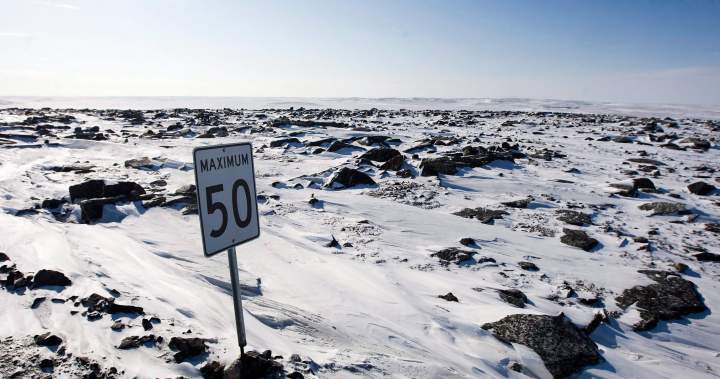
The goal, says Brendan Bell, WKR’s CEO, is to kickstart copper and zinc mining in the area, spurring development that would ultimately funnel hundreds of millions of dollars into the economy by enabling the movement of critical minerals to international markets.
framing: assertive · carried by 2 article(s) · first seen 2026-11-27
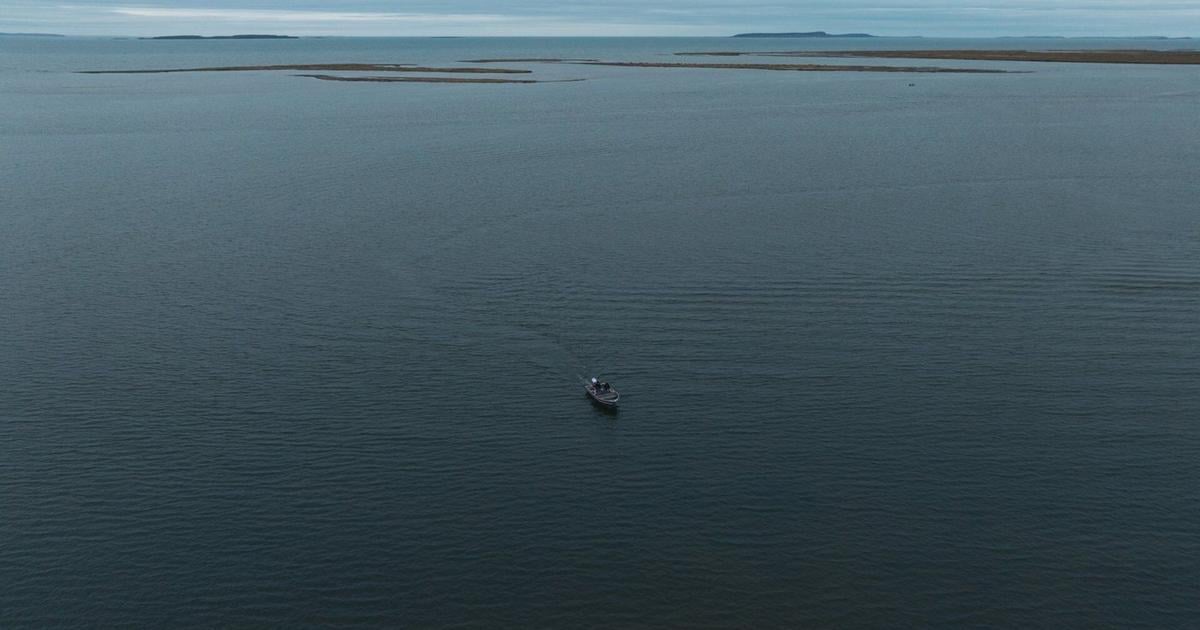
Everything needed to build one – fuel, steel, heavy equipment and people – would have to arrive by barge in the few ice-free months, or by truck over a road made of ice.
2026-11-27 · Toronto Star
The engineering feat at the heart of Canada’s next big Arctic build · assertive framing
2026-11-28 · Global News
The engineering feat at the heart of Canada’s next big Arctic build · assertive framing

Claims (82 extracted, 5 hedged)

KUGLUKTUK - Nobody lives at Grays Bay. asserted
Nobody → live → Bay
The deepwater inlet on Nunavut’s northwestern Arctic coast is ringed by treeless tundra, threaded with lakes, ponds and streams and scattered with boulders and the odd hunting cabin. asserted
inlet → ring → boulders
Everything needed to build one – fuel, steel, heavy equipment and people – would have to arrive by barge in the few ice-free months, or by truck over a road made of ice. asserted
Everything → need → ice
West Kitikmeot Resources Corp (WKR) plans to change that by building an all-season gravel road, a deepwater port and an airfield in a megaproject that would be a first step in connecting Nunavut by road to the rest of the country. asserted
that → plan → country
The company says it would also provide Canada with its first deepwater seaport on the western Arctic coast, bolstering security in the North and making Grays Bay one of Canada’s major economic gateways. asserted
Bay → say → gateways
The goal, says Brendan Bell, WKR’s CEO, is to kickstart copper and zinc mining in the area, spurring development that would ultimately funnel hundreds of millions of dollars into the economy by enabling the movement of critical minerals to international markets. asserted
that → say → markets
“There are a number of very high-grade copper and zinc deposits that are landlocked,” Bell says. asserted
Bell → be → deposits
“You can’t fly this material out of here – you need infrastructure to get to tidewater.” asserted
you → fly → tidewater
Starting close to the Nunavut-Northwest Territories border and stretching 230 kilometres north along several mining deposits, Grays Bay Road and Port (GBRP) would take an estimated five years to build and cost upward of $1 billion. asserted
Road → start → billion
The project is currently before the Nunavut Impact Review Board for assessment, and Prime Minister Mark Carney has referred it to the federal major projects office, which could fast-track its construction through the federal regulatory process. uncertain
which → refer → process
“I think Canada must do it, needs to do it,” Bell says. asserted
Bell → think → it
As director of Arctic engineering with Tetra Tech, he worked on the 138-kilometre Inuvik-Tuktoyaktuk Highway (ITH), which his firm helped plan, design and build before it opened in 2017. asserted
it → work → 2017
“It’s a big deal and a big challenge to complete,” he says of the GBRP. asserted
he → ’ → GBRP
It takes what he calls “alignments” – of labour, resources and equipment, but also of the people of Nunavut, governments, landowners, regulators and the environment. asserted
he → take → Nunavut
The proposed road needs 15 million cubic metres of rock – enough to build the Great Pyramid of Giza six times over – and nearly all of it has to come from land it is planned to cross. asserted
it → propose → land
In total, crews will open up to 40 new quarries along the route, blasting rock into pieces less than a metre across and crushing it into gravel. asserted
crews → open → gravel
Blasting would be timed to avoid sensitive periods for wildlife, fish and migratory birds, according to WKR’s filings with the review board. uncertain
Blasting → time → board
The road – about 10 metres wide to carry traffic in both directions – will traverse low-lying tundra and wind through a maze of lakes, ponds and streams, requiring about 230 bridges and culverts. asserted
road → carry → bridges
Those components would need to be prefabricated in the south and brought in by sealift or over a winter road, then installed when the ground and water are frozen. asserted
ground → need → road
And there are the workers – they’ll need hundreds of them. asserted
they → be → them
With no existing communities along the proposed route, the biggest challenges are likely to be staffing and accommodations. asserted
challenges → exist → route
In the first year, the company plans to set up a temporary work camp with supplies delivered by ship at the Grays Bay port site. asserted
company → plan → site
At the coastal end of the project, about a metre of sediment and loose rock will need to be dredged from the ocean floor. asserted
metre → need → floor
Crews also need to build a harbour breakwater and a boat launch to allow for the transportation of goods during the open-water season, from June to October. asserted
Crews → need → October
Due to sea ice, marine construction season is naturally shorter, says Elliot Holland, WKR’s chief operating officer. asserted
Holland → say → ice
“We have to account for the force of the ice pushing on the in-water wharf structures.” asserted
We → have → structures
Once winter arrives, crews would build a temporary airstrip and a pad for a permanent camp, a fuel station, the first quarries and a vital winter road. asserted
crews → arrive → camp
Rebuilt each year over ice and snow, the road would connect Jericho Station, a dormant diamond mine site at the south end of the Grays Bay road, to the Tibbitt to Contwoyto Winter Road in the Northwest Territories. asserted
road → rebuild → Territories
About 1,000 trucks would haul materials and equipment along the route each winter. asserted
trucks → haul → route
Construction would then start at both ends of the route, with crews working towards each other until they meet in the middle. asserted
they → start → middle
As the road advances, crews would move the camps every three months. asserted
crews → advance → camps
—- Beneath it all is melting permafrost – ground that’s at or below 0 C and held together by ice. asserted
that → melt → ice
When permafrost thaws, the ground shifts and sinks, buckling roads and tilting buildings; that’s why many homes in the North are built on pilings drilled deep into the ground. asserted
homes → thaw → ground
Designed to last 75 years, Grays Bay road needs to remain stable well into the 2100s, in a region warming several times faster than the global average. asserted
road → design → average
WKR plans to use fill-only construction where possible, adding gravel or other materials on top of the existing ground to minimize disruption, rather than using conventional cut-and-fill techniques. asserted
WKR → plan → techniques
As much as possible, the road would be routed on top of stable bedrock. asserted
road → rout → bedrock
Where that’s not practical, it would sit on a base of large rocks, preferably non-acid-generating granite. asserted
it → ’ → rocks
In either case, gravel goes on top. asserted
gravel → go → top
The road’s embankment would be thicker, with coarse materials such as sand and gravel acting as a blanket. asserted
materials → act → blanket
The company says this limits heat seeping into the ground, keeping the permafrost frozen. asserted
this → say → permafrost
…and 42 more, not listed.
Give feedback · no sign-in needed

No sign-in needed for now. Your note is sent without a name, so it cannot be answered.

History Support