Claims extracted
14
sentences that state something as happening or true
Uncertain
14%
2 of 14 hedged
("reportedly", "may", "according to")
Leaning
not political
takes no side on a contested political question
Publisher signals
60/100
Al Jazeera's corrections and
hedging, across everything collected from it. Not a measure of accuracy.
Outlets on this story
5
World
Same framing elsewhere
1
articles that frame the event the way this one does
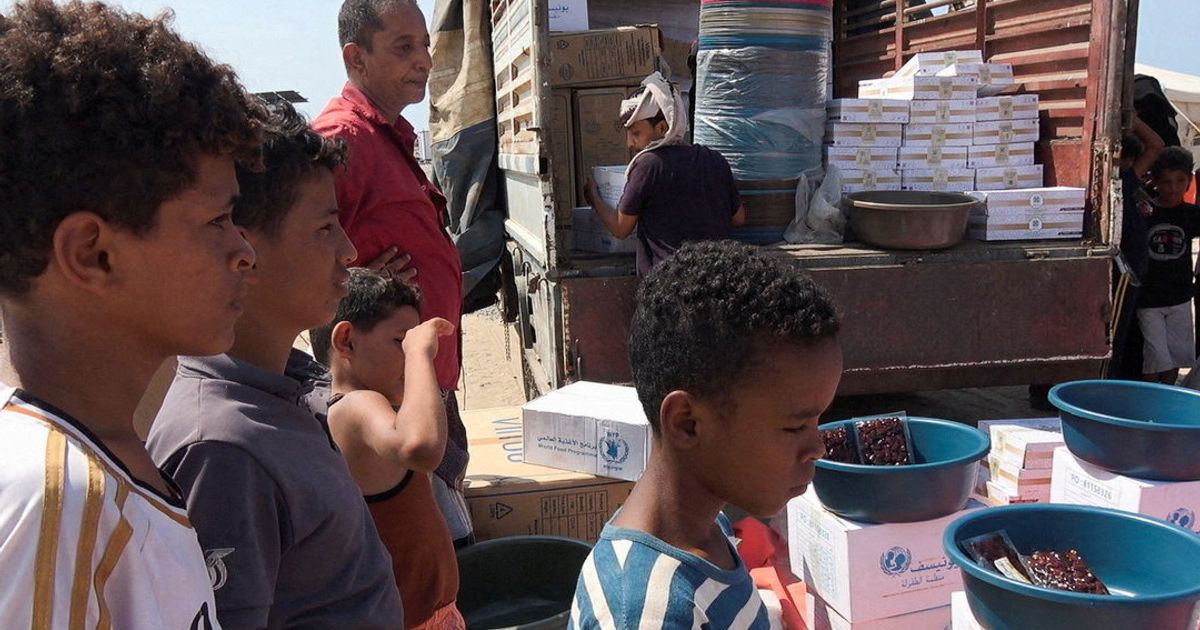
Hunger is set to worsen significantly in 16 global hotspots over the coming six months, mainly due to armed conflict and extreme climate events, two United Nations agencies said in a new report.
asserted
agencies → set → report
The Food and Agriculture Organization (FAO) and World Food Programme (WFP) warned on Friday that Sudan, South Sudan, Somalia, northern Nigeria and Yemen faced the gravest threats of famine, driven by violence, displacement, economic hardship and extreme weather, including the El Nino phenomenon.
asserted
Sudan → warn → phenomenon
Recommended Stories
list of 4 items- list 1 of 4As aid situation worsens, displaced Sudanese worry about warnings of famine
- list 2 of 4World Bank official says Lebanon reconstruction making slow progress
- list 3 of 4Siege fuels disease fears in Yemen’s Taiz
- list 4 of 4Wars choke global food routes, threatening aid for 7.3 million, WFP warns
Listings in the report, released twice a year through the Global Network Against Food Crises, have risen from 13 hotspots in June, with Chad, Uganda and parts of both Southern Africa and Central America added, while Lebanon was removed.
asserted
Lebanon → worsen → Africa
Armed conflict and violence were driving hunger in 12 of the 16 hotspots, the report said, as soaring food, energy and transport costs were eroding people’s ability to feed themselves.
asserted
costs → drive → themselves
El Nino, which is set to intensify to exceptional levels in the coming months according to the World Meteorological Organization (WMO), is a major driver behind three of the four newly identified hotspots: Southern Africa, the Central American Dry Corridor and northeastern Uganda.
uncertain
which → set → hotspots
Covering December 2026 to May 2027, the agencies warned that shrinking humanitarian funding was affecting efforts to avert catastrophe.
uncertain
funding → cover → catastrophe
In the five countries most at risk, all repeatedly cited on the hotspot list since 2022, humanitarian assistance has declined by nearly two-thirds over the 2022-2025 period, from $5.1bn to $2bn.
asserted
assistance → cite → 2bn
“While conflict, economic shocks, climate extremes and access constraints have remained the primary drivers of these crises, declining humanitarian resources have reduced the capacity to sustain gains and mitigate worsening conditions,” wrote the FAO and WFP.
asserted
FAO → remain → conditions
While past humanitarian assistance helped avert famine, “the gains proved fragile and of limited duration: severe acute food insecurity risks – including risk of famine – re-emerged within a few years.
asserted
risks → help → years
In Sudan, famine remains a risk in 13 areas of North Darfur and South Kordofan through January 2027, as fighting disrupts food production, markets and aid deliveries.
asserted
fighting → remain → production
The agencies also identified famine risks in parts of Somalia and South Sudan, where escalating violence has compounded an already desperate humanitarian situation.
asserted
violence → identify → situation
Afghanistan, Haiti, the Democratic Republic of the Congo and Gaza were also classified as areas of very great concern.
asserted
Afghanistan → classify → concern
Gaza was downgraded from the highest level of concern after small improvements in food security following the October 2025 “ceasefire”.
asserted
Gaza → downgrade → ceasefire
But agencies warned that conditions remained fragile in Gaza, while in the occupied West Bank, acute food insecurity is expected to worsen.
asserted
insecurity → warn → Bank

 The Aporia