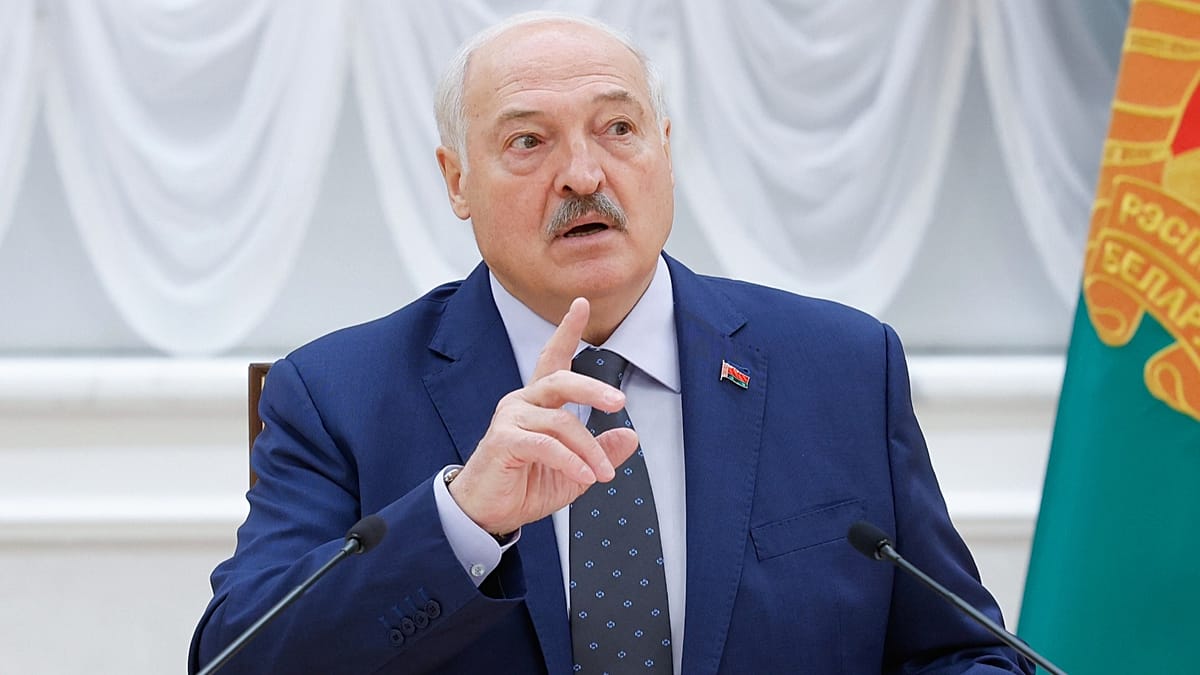
Photo via Euronews

By Putin's logic, Russia should go back to Mongolia, Belarus' Lukashenka says

Read the original at Euronews ↗
Cite

Doval, A. (2026, November 27). By Putin's logic, Russia should go back to Mongolia, Belarus' Lukashenka says. Euronews. https://www.euronews.com/2026/11/27/by-putins-logic-russia-should-go-back-to-mongolia-belarus-lukashenka-says

Dated from the outlet's own feed. Check the original for its byline.

Euronews · collected 2026-11-27 · by Alexei Doval

Quick Summary

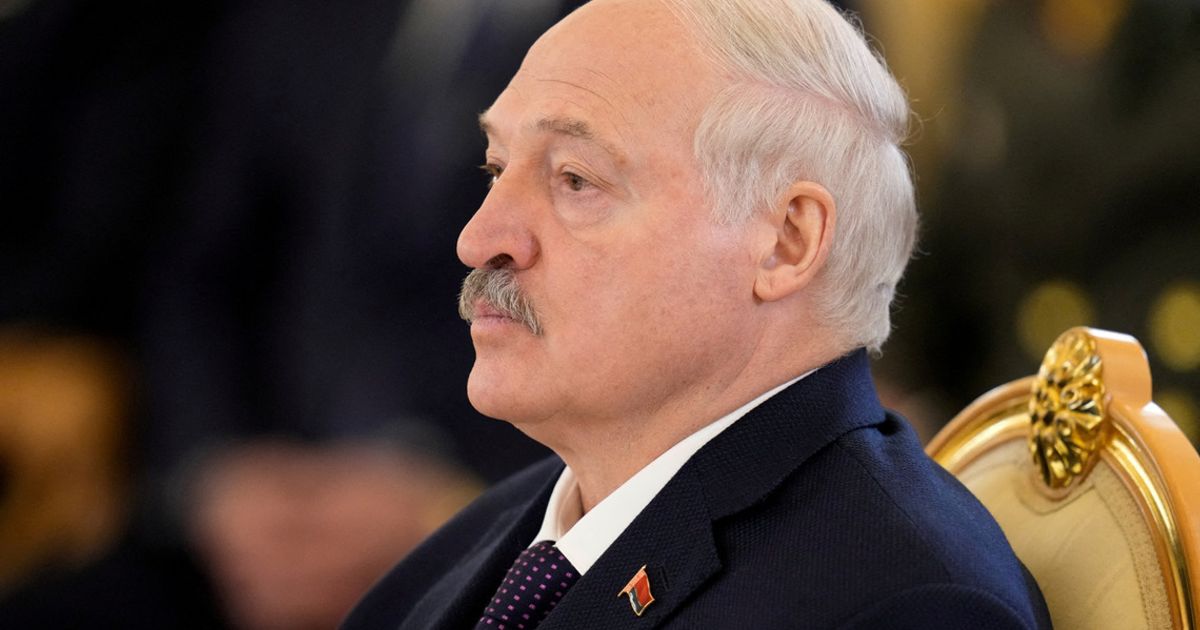
Belarusian President Aliaksandr Lukashenka criticized Russian President Vladimir Putin's historical justification for territorial claims in Ukraine, suggesting that by similar logic, Russia should be returned to Mongolia due to its past under Mongol rule. In an interview with French magazine Le Point, Lukashenka traced East Slavic statehood to Kyivan Rus' in Ukraine and argued that invoking medieval history to claim modern territories is inappropriate. However, Lukashenka later softened his stance, saying Putin understands his position and that he has been misinterpreted.
Written by AI on 2026-11-27, from this article's own text only (the story summary below draws on all the coverage).
See how they differ ↓

AI analysis

Story summary

Belarusian President Alexander Lukashenko criticized Russian President Vladimir Putin’s historical justification for the war in Ukraine, suggesting that if the logic were applied, Russia would have to return its land to Mongolia. In an interview with French magazine Le Point, Lukashenko mocked Putin’s claim that Ukraine belongs to “historical Russia,” pointing out that during the Middle Ages, Russian lands were under Mongol and Tatar rule. Lukashenko, who allowed Russian forces to use Belarusian territory for the February 2022 invasion of Ukraine, noted that by Putin’s reasoning, historical precedence would require Russia to cede its territory to Mongolia. This criticism marks an unusual public rebuke from Lukashenko, a key ally of Putin, reflecting a growing strain in their relationship over Ukraine.

Written for “Lukashenko Criticises Putin’s Logic” on 2026-11-27, grounded in this article and the 1 other(s) covering the same event.
Why this leaning score
The article's own words the score was based on. Each is quoted verbatim and was checked against the article text before being stored, so you can find it in the original.
Reading Leans strongly left (beta estimate) Confidence high
Leaning: leans strongly left for article 185128 (high confidence, 1 verified quote) · logged 2026-11-27

How they differ

2 outlets covered “Lukashenko Criticises Putin’s Logic”.

What each outlet says

One AI summary per outlet of its latest article on this story, written from that article alone and checked against it. Open the article for the outlet's own words.

EuronewsThis outlet27 Nov

Belarusian President Aliaksandr Lukashenka criticized Russian President Vladimir Putin's historical justification for territorial claims in Ukraine, suggesting that by similar logic, Russia should be returned to Mongolia due to its past under Mongol rule. In an interview with French magazine Le Point, Lukashenka traced East Slavic statehood to Kyivan Rus' in Ukraine and argued that invoking medieval history to claim…

By Putin's logic, Russia should go back to Mongolia, Belarus' Lukashenka says (this article)
The Independent26 Nov

Belarusian President Alexander Lukashenko criticized Russian President Vladimir Putin’s claim to Ukrainian land as historically Russian, using a sarcastic analogy about returning Russian land to Mongolia. In a rare rebuke of Putin, Lukashenko also suggested he could join Zelensky for trilateral talks with Putin to resolve the conflict, proposing a direct approach to end the war that he believes would be more…

Europe’s last dictator Lukashenko criticises Putin’s logic for war in Ukraine: ‘Do we give Russia back to Mongolia?’ →

Compared with similar articles

This article reads leans strongly left and hedges 23% of its claims. Each row says how that neighbour differs.
The Independent
Leans left further right than this Hedges 8 of 27 claims Outlet record 59/100
The Straits Times
Hedges 5 of 21 claims Outlet record 64/100
“The articles describe different statements made by Lukashenko in separate interviews, not the same specific incident.”

Story

Lukashenko Criticises Putin’s Logic
Politics · 2 article(s) covering the same event. See how they differ ↑
How this article was measured signals, leaning charts, publisher record, byline, topics and claims

Signals How these are calculated →

Claims extracted
22
sentences that state something as happening or true
Uncertain
23%
5 of 22 hedged ("reportedly", "may", "according to")
Leaning
Leans strongly left
of the writing, not the subject · beta estimate
Publisher signals
60/100
Euronews's corrections and hedging, across everything collected from it. Not a measure of accuracy.
Outlets on this story
2
Politics
Same framing elsewhere
1
articles that frame the event the way this one does
Analyzed 2026-11-27 · how these are computed

How this is being covered How these are calculated →

Article leaning vs. publisher reliability
Source leaning vs. consistency

Publisher

Euronews · 1710 article(s) · 1 correction(s) detected
Running correction rate · 1 correction(s)

Who wrote this

Alexei Doval
4 article(s) here · 1 carrying a prediction
He traced East Slavic statehood to the era of Kyivan Rus' in the 11th and 12th centuries — in what is now Ukraine — and said later historical periods could not be used to justify claims on today's independent states.
Moscow has signalled for the first time that it would not oppose a European representatives taking part in negotiations on Ukraine, thereby confirming about the possible participation of an EU delegation in the next round of peace talks. Kremlin spokesperson Dmitry Peskov said Moscow had no intention to dictate who should represent the EU at the negotiating table, even though it had previously insisted that EU representatives had "no business" there. "We cannot and do not want to set conditions for their negotiating team.
There is no image of the future, no understanding of what will happen in six months or a year," said Anastasia Burakova, a lawyer and founder of Kovcheg, a legal assistance project for Russians abroad.
The patient was put on a ventilator, but her life could not be saved.
Also by Alexei Doval
Nothing else under this byline is closely related to this article, so these are simply their most recent.

Topics

Mongol Russia Russian Ukraine Ukrainian

Subjects

Russian NORP · 8× Russia GPE · 6× Putin PERSON · 5× Ukraine GPE · 5× Lukashenka PERSON · 4× Belarus GPE · 3× Kremlin ORG · 3× Mongol NORP · 3× Ukrainian NORP · 3× Belarusian NORP · 2×

Narrative

The remarks echo a 2024 post by former Mongolian president Tsakhiagiin Elbegdorj, who published a "Mongolian historical map" from 1471 on X after Putin gave US conservative journalist Tucker Carlson an extended account of Russian history, showing a diminished Russia within a vast Mongol domain.
framing: mixed · carried by 1 article(s) · first seen 2026-11-27
He traced East Slavic statehood to the era of Kyivan Rus' in the 11th and 12th centuries — in what is now Ukraine — and said later historical periods could not be used to justify claims on today's independent states.

Claims (22 extracted, 5 hedged)

The Belarusian leader said medieval history cannot justify territorial claims, since Russian lands were themselves once under Mongol rule, and traced East Slavic statehood to Kyivan Rus'. uncertain
lands → say → Rus
He then appeared to soften the remarks, saying Putin "perfectly understands this" and is "misinterpreted". asserted
Putin → appear → this
Belarusian President Aliaksandr Lukashenka has questioned the logic behind Russia's claims to Ukrainian territory on historical grounds, saying in an interview that following the same reasoning Russia itself should be returned to Mongolia. uncertain
Russia → question → Mongolia
Speaking to French magazine Le Point, Lukashenka said that attempts to justify territorial claims by appealing to medieval history were misplaced, citing the period of Mongol domination over the Russian principalities between the 13th and late 15th centuries. uncertain
attempts → speak → centuries
"And today to say that these lands are Russian and have been since time immemorial… asserted
lands → say → time
But if you look more deeply, Russian lands themselves were once Mongol-Tatar, remember? asserted
lands → look → ?
Then we should hand over the whole of Russia to whom, Mongolia asserted
we → hand → whom
" Lukashenka said. asserted
Lukashenka → say → ?
He traced East Slavic statehood to the era of Kyivan Rus' in the 11th and 12th centuries — in what is now Ukraine — and said later historical periods could not be used to justify claims on today's independent states. uncertain
periods → trace → states
Lukashenka then appeared to soften the remarks, insisting that Putin "perfectly understands this" and does not dispute the existence of the Ukrainian people or Ukrainian statehood, and that he is simply "misinterpreted". asserted
he → appear → people
He added that he shares Moscow's position on "the need for a common future for the peoples of the region." asserted
he → add → region
The remarks echo a 2024 post by former Mongolian president Tsakhiagiin Elbegdorj, who published a "Mongolian historical map" from 1471 on X after Putin gave US conservative journalist Tucker Carlson an extended account of Russian history, showing a diminished Russia within a vast Mongol domain. asserted
Putin → echo → domain
We are a peaceful and free nation," Elbegdorj wrote. asserted
Elbegdorj → write → ?
On the eve of Russia's full-scale invasion of Ukraine on 24 February 2022, Putin invoked those historical claims explicitly, using them to deny Ukraine's legitimacy as an independent state and to frame the invasion as a correction of a historical injustice. uncertain
Putin → invoke → injustice
Historians and international observers have described the Kremlin's attempt to use this precedent as selective and ahistorical. asserted
Historians → describe → precedent
Lukashenka has ruled Belarus since 1994, making him Europe's longest-serving leader. asserted
him → rule → 1994
Following a disputed 2020 presidential election that triggered mass protests and a violent crackdown, he relied on the Kremlin's support to remain in power. asserted
he → follow → power
The EU and Western governments did not recognise the election result. asserted
EU → recognise → result
Thousands of protesters were arrested, and opposition figures were imprisoned or forced into exile. asserted
figures → arrest → exile
Belarus allowed Russia to use its territory to launch parts of its full-scale invasion of Ukraine, with Russian forces advancing toward Kyiv from the north before being repelled. asserted
forces → allow → north
Minsk has since remained a close military and political ally of Moscow, although it has stopped short of committing its own troops to the war. asserted
it → remain → war
Belarus has faced successive rounds of Western sanctions over both the crackdown on dissent and its role in the war. asserted
Belarus → face → war
Give feedback · no sign-in needed

No sign-in needed for now. Your note is sent without a name, so it cannot be answered.

History Support