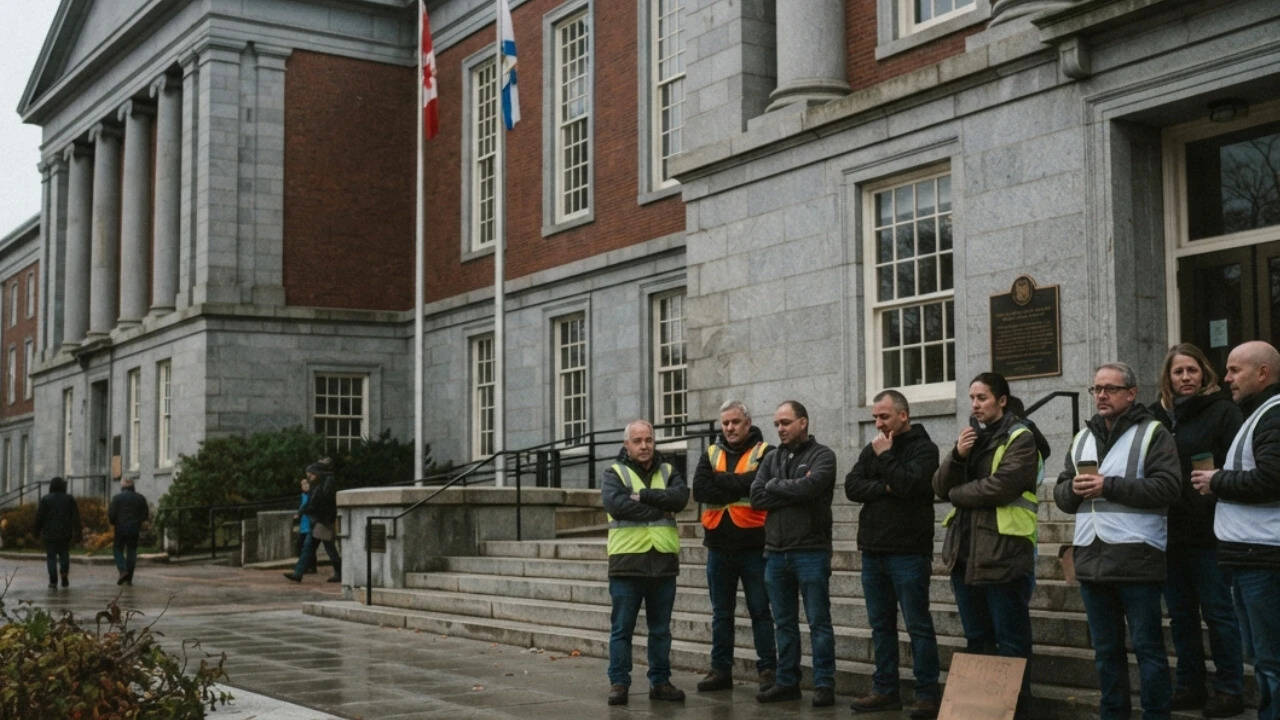
Thousands of public sector workers in Canada's Nova Scotia province are set to receive compensation after a court approved a C$470 million settlement over years of restricted pay increases.
asserted
court → set → increases
Eligible employees, including those who have since retired or left their jobs, could receive up to C$5,000 each.
uncertain
who → include → 5,000
Payments must be completed by December 31, 2027.
asserted
Payments → complete → December
The settlement brings an end to a long-running dispute over a 2015 law that limited salary increases for unionised government employees.
asserted
that → bring → employees
The legislation, known as Bill 148, prevented workers from receiving normal negotiated pay increases for four years and also affected their long-service benefits.
asserted
legislation → know → benefits
Local broadcaster Your South Shore reported that the provincial government expects to spend around C$470 million on the compensation.
asserted
government → report → compensation
The Nova Scotia Supreme Court declared the law unconstitutional in February.
asserted
law → declare → February
The ruling came after eight public sector unions challenged the legislation, arguing that it had weakened their ability to negotiate wages and working conditions for employees.
asserted
it → come → employees
Following the ruling, the provincial government and the unions worked out a compensation arrangement.
asserted
government → follow → arrangement
Justice Ann Smith approved their agreement and issued the final court order on November 9.
asserted
Smith → approve → November
According to the Nova Scotia Government and General Employees Union (NSGEU), around 81,000 workers are expected to qualify for payments linked to wage restrictions.
uncertain
workers → accord → restrictions
An estimated 55,000 could also receive compensation for the loss of future long-service awards or retirement benefits.
uncertain
55,000 → receive → awards
Why workers are receiving compensation
Bill 148 was brought in by the government led by former Premier Stephen McNeil.
asserted
Bill → receive → McNeil
It restricted salary increases across unionised public sector workplaces over a four-year period.
asserted
It → restrict → period
Workers received no increase in the first two years.
asserted
Workers → receive → years
The permitted rise was then limited to 1% in the third year and 1.5% in the fourth year, with another 0.5% allowed on its final day.
asserted
rise → permit → day
The law also stopped employees from building up additional service towards certain long-service awards and retirement allowances.
asserted
law → stop → awards
The restrictions became the subject of a legal challenge in 2017.
asserted
restrictions → become → 2017
Eight unions representing public sector employees argued that the government had taken away important areas of collective bargaining.
asserted
government → represent → bargaining
These included the ability to negotiate salary increases and certain employment benefits.
asserted
These → include → increases
The court agreed that the restrictions had interfered with the unions' bargaining rights.
asserted
restrictions → agree → rights
It found that removing wages from negotiations had reduced the unions' ability to represent their members effectively.
asserted
removing → find → members
The February ruling gave the government and unions time to agree on compensation.
asserted
ruling → give → compensation
Their eventual settlement provides payments to eligible workers for the impact of the law on their protected rights.
asserted
settlement → provide → rights
The money is not being treated as unpaid salary.
asserted
money → treat → salary
How much can an employee receive?
asserted
employee → receive → much
The amount depends on how many of the four restricted years an employee worked through.
asserted
employee → depend → years
The payment is fixed for each eligible year and does not depend on the person's salary, job title or number of working hours.
asserted
payment → fix → hours
An employee who qualifies for all four years can receive C$3,750.
asserted
who → qualify → 3,750
Those who also lost the opportunity to build up long-service awards or retirement allowances may receive another C$1,250.
uncertain
who → lose → 1,250
This takes the maximum payment to C$5,000 per person.
asserted
This → take → person
The rules also cover employees who worked for only a portion of an eligible year.
asserted
who → cover → year
They will receive the full payment for that year rather than an amount calculated according to the number of months or hours worked.
uncertain
They → receive → months
Part-time employees are covered by the same arrangement.
asserted
employees → cover → arrangement
Workers who changed public sector employers during the restricted period will not receive multiple payments for the same year.
asserted
who → change → year
The additional C$1,250 for long-service benefits is available to eligible current and former employees who would have accumulated further service towards these benefits if Bill 148 had not been introduced.
asserted
Bill → accumulate → benefits
However, the settlement does not bring back the discontinued awards or retirement allowances.
asserted
settlement → bring → awards
Which employees qualify?
asserted
employees → qualify → ?
The compensation covers eligible current and former unionised public sector employees who worked during at least one year of the four-year restriction period applicable to their workplace.
asserted
who → cover → workplace
This means that people who have retired or moved on from their previous jobs may still qualify.
uncertain
who → mean → jobs
…and 14 more, not listed.
 The Aporia