Photo via Dawn

Lahore ranked world's most polluted major city; Sargodha, Peshawar also record hazardous air

Read the original at Dawn ↗
Cite

Gabol, I. (2026, November 28). Lahore ranked world's most polluted major city; Sargodha, Peshawar also record hazardous air. Dawn. https://www.dawn.com/news/2047659/lahore-ranked-worlds-most-polluted-major-city-sargodha-peshawar-also-record-hazardous-air

Dated from the outlet's own feed. Check the original for its byline.

Dawn · collected 2026-11-28 · by Imran Gabol

Quick Summary

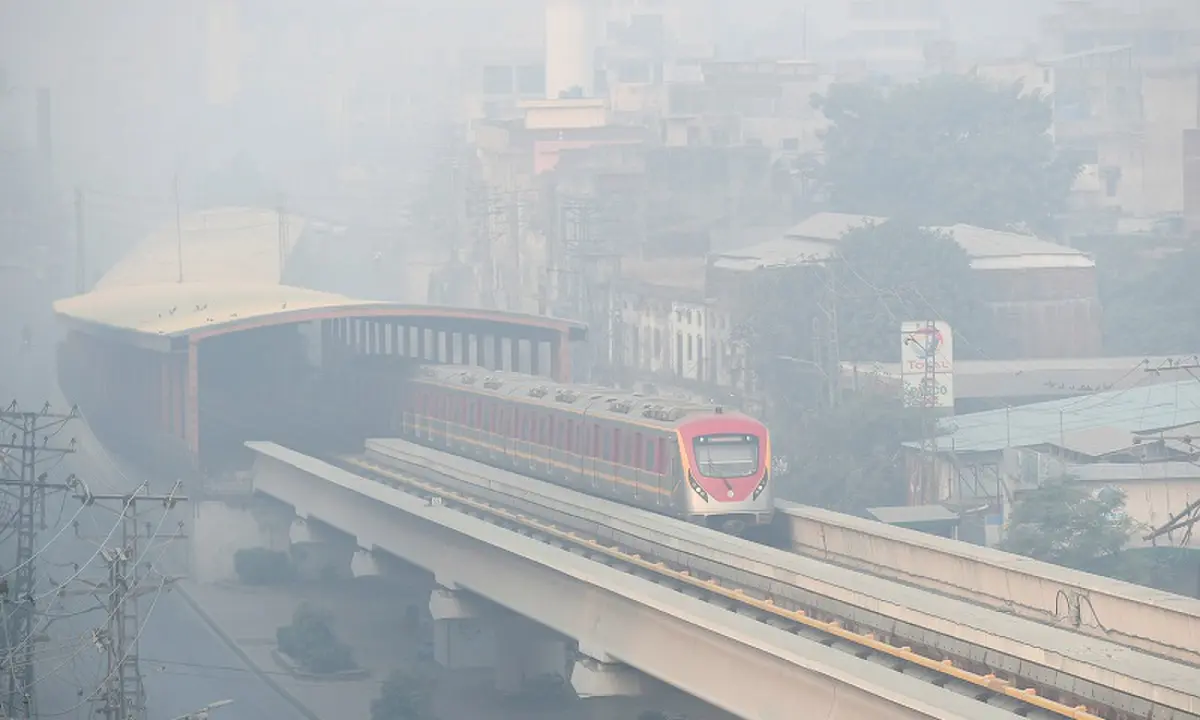
Lahore, Pakistan, was ranked the world's most polluted major city on November 28, with an air quality index (AQI) of 400, according to IQAir. This hazardous level of pollution, which can pose serious health risks, surpassed other major cities like Kabul and Delhi. Lahore's AQI later decreased to 293 by 1 PM, but several other Pakistani cities including Peshawar and Sargodha also recorded hazardous AQIs above 400. The pollution crisis is attributed to factors such as vehicular emissions, industrial activity, and crop residue burning, exacerbated by winter weather conditions.
Written by AI on 2026-11-28, from this article's own text only (the story summary below draws on all the coverage).

AI analysis

Story summary

As of Saturday morning on November 28, 2026, Lahore was ranked the world’s most polluted major city with an air quality index (AQI) of 400, according to monitoring firm IQAir. Peshawar and Sargodha also recorded AQIs above 400, indicating hazardous air quality. Lahore's AQI dropped to 293 by 1 PM, still in the "very unhealthy" category. The primary sources of pollution include vehicular emissions, industrial activity, and crop residue burning. Winter weather conditions exacerbate the situation by limiting the dispersal of pollutants. Lahore's ranking was followed closely by Kabul at 304 and Delhi at 238. Other cities in the region, such as Dubai, Kathmandu, Kolkata, and Karachi, also reported high pollution levels, with AQIs between 160 and 168. The hazardous air quality poses serious health risks, especially for children, older people, and those with respiratory or cardiovascular conditions.

Written for “Lahore Ranked Most Polluted City” on 2026-11-28, grounded in this article and the 0 other(s) covering the same event.

Compared with similar articles

Nothing to compare against. No article is close enough to this one for the pipeline to have linked or judged the pair.

Story

Lahore Ranked Most Polluted City
Environment · 1 article(s) covering the same event.
How this article was measured signals, leaning charts, publisher record, byline, topics and claims

Signals How these are calculated →

Claims extracted
20
sentences that state something as happening or true
Uncertain
10%
2 of 20 hedged ("reportedly", "may", "according to")
Leaning
not political
takes no side on a contested political question
Publisher signals
64/100
Dawn's corrections and hedging, across everything collected from it. Not a measure of accuracy.
Outlets on this story
1
Environment
Same framing elsewhere
1
articles that frame the event the way this one does
Analyzed 2026-11-28 · how these are computed

How this is being covered How these are calculated →

Article leaning vs. publisher reliability
Source leaning vs. consistency

Publisher

Dawn · 3882 article(s) · 8 correction(s) detected
Running correction rate · 8 correction(s)

Who wrote this

Imran Gabol
25 article(s) here · 0 carrying a prediction
“The government should come to its senses; if they are not released immediately, the Punjab government will be held responsible for the consequences,” the post quoted party spokesperson Aslam Ghouri as saying.
Under the system, students’ handwritten answer scripts will be scanned using advanced scanners and uploaded to a digital platform, where examiners assess them online through a real-time dashboard. Punjab Minister for School and Higher Education Rana Sikandar Hayat announced the initiative in a post on X on Sunday, saying facial recognition technology would be used to verify examiners’ identities.
His contributions will always be remembered.”
2026-11-22 · assertive framing · Veteran journalist Husain Naqi passes away in Lahore
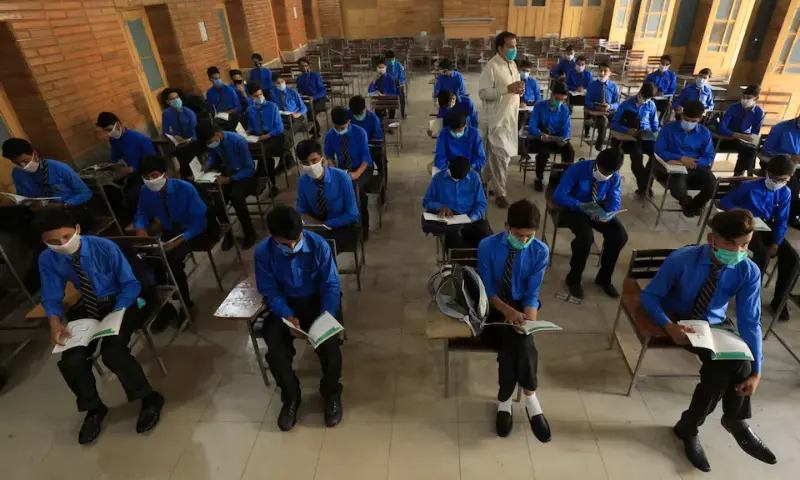
The department also appealed to the public to identify shopkeepers selling cigarettes and vapes to children, warning that cases would be registered against those suspected to be involved and they would be arrested in accordance with the law.
Meanwhile, the remaining vehicle owners in Punjab will have to pay between Rs500 and Rs2,000 for emission testing, with the fee determined by engine capacity.
Forward-trajectory modelling indicated that air released across the border on Diwali night could reach Lahore from Amritsar in approximately two hours, Faisalabad in 12 hours and Multan in around 11 hours, demonstrating the potential for trans-boundary pollution to affect cities located far inland from the international boundary.
The report noted that pollution transported from across the border would be expected to cause a greater increase in border areas than in cities farther inland.
Using ERA5 atmospheric reanalysis data, it estimated that the average mixing height over Lahore falls from around 830 to 860 metres in May and June to about 400 metres in October and 260 metres in November.
However, the analysis could not establish the individual contribution of each factor.
The report noted that these districts lie around Lahore, meaning smoke from agricultural fires across different parts of the province could contribute to the city’s deteriorating air quality, depending on wind direction.
Also by Imran Gabol
Nothing else under this byline is closely related to this article, so these are simply their most recent.
All 25 articles by Imran Gabol →

Topics

IQAir LAHORE Peshawar Punjab Sargodha

Subjects

LAHORE GPE · 9× IQAir ORG · 3× Peshawar GPE · 3× Punjab GPE · 3× Sargodha GPE · 3× Delhi GPE · 1× Dubai GPE · 1× Kabul GPE · 1× Kathmandu GPE · 1× Swiss NORP · 1×

Narrative

Vehicular emissions, industrial pollution and crop residue burning are among the major sources contributing to smog, while winter weather conditions can restrict dispersal of pollutants and allow them to accumulate near the ground.
framing: assertive · carried by 1 article(s) · first seen 2026-11-28

Claims (20 extracted, 2 hedged)

Lahore was ranked the world’s most polluted “major city” on Saturday morning as its air quality index (AQI) reached 400, while Peshawar and Sargodha also recorded AQIs above 400, according to monitoring firm IQAir. uncertain
Peshawar → rank → IQAir
The Swiss air quality monitoring organisation placed Lahore at the top of its ranking for global major cities for the 9am to 10am period on Nov 28, with Kabul second at an AQI of 304 and Delhi third at 238. asserted
Delhi → place → 238
The ranking at that time showed other cities in the region reporting high pollution levels, with Dubai at an AQI of 168, Kathmandu 166, Kolkata 161 and Karachi 160. asserted
Karachi → show → 160
Cairo, Chengdu and Kampala also featured among the 10 most polluted major cities. asserted
Cairo → feature → cities
Lahore’s AQI of 400 fell in the hazardous category, according to IQAir’s scale, which ranks AQI above 300 as such. uncertain
which → fall → 300
Exposure to such pollution can pose serious risks, particularly to children, older people and those with respiratory or cardiovascular conditions. asserted
Exposure → pose → conditions
The deteriorated air quality comes as smog continues to affect several parts of Punjab, with pollution levels remaining elevated across major urban centres. asserted
levels → come → centres
By 1pm, Lahore’s AQI had declined to 293, falling in the “very unhealthy” category. asserted
AQI → decline → category
The concentration of PM2.5 — particulate matter so small they can be absorbed into the bloodstream upon inhalation — was “43.6 times the World Health Organisation annual PM2.5 guideline value”, IQAir noted. asserted
IQAir → absorb → inhalation
Within Lahore, pollution levels varied considerably between localities, with several monitoring stations recording readings substantially higher than the citywide level. asserted
stations → vary → level
For 9-10am, Allama Iqbal Town recorded an AQI of 680, the highest among the listed monitoring stations, followed by ARM at 557 and ARC at 461. asserted
Town → record → 461
Bedia Thethar Road recorded 416, while A Block, Model Town, reported 392. asserted
Block → record → 392
Barki Road, among the relatively less polluted locations in the city, still recorded an AQI of 208, indicating “very unhealthy” air quality. asserted
Road → record → quality
The pollution crisis extended beyond Lahore, with several cities across Punjab and Khyber Pakhtunkhwa reporting very unhealthy to hazardous air quality. asserted
cities → extend → quality
An IQAir ranking of Pakistani cities, for 9-10am, placed Peshawar at the top with an AQI of 414, followed by Sargodha at 404, Gujranwala at 388 and Faisalabad at 384. asserted
ranking → place → 384
Lahore ranked fifth nationally with an AQI of 363, followed by Multan at 347, Rahim Yar Khan at 328, Sialkot at 301, Bahawalpur at 280 and Muzaffargarh at 259. asserted
Lahore → rank → 259
By 1pm, Sargodha had overtaken Peshawar — which now had 327 AQI — with an AQI of 412, and Lahore had declined to 293. asserted
Lahore → overtake → 293
Residents were advised to limit outdoor exposure, remain indoors where possible and use N95 masks if outdoor activities cannot be avoided. asserted
activities → advise → masks
Vehicular emissions, industrial pollution and crop residue burning are among the major sources contributing to smog, while winter weather conditions can restrict dispersal of pollutants and allow them to accumulate near the ground. asserted
them → contribute → ground
With winter setting in, the recurring smog crisis has raised concerns over public health and the effectiveness of measures aimed at reducing pollution across Punjab. asserted
crisis → set → Punjab

Give feedback · no sign-in needed

No sign-in needed for now. Your note is sent without a name, so it cannot be answered.

History Support