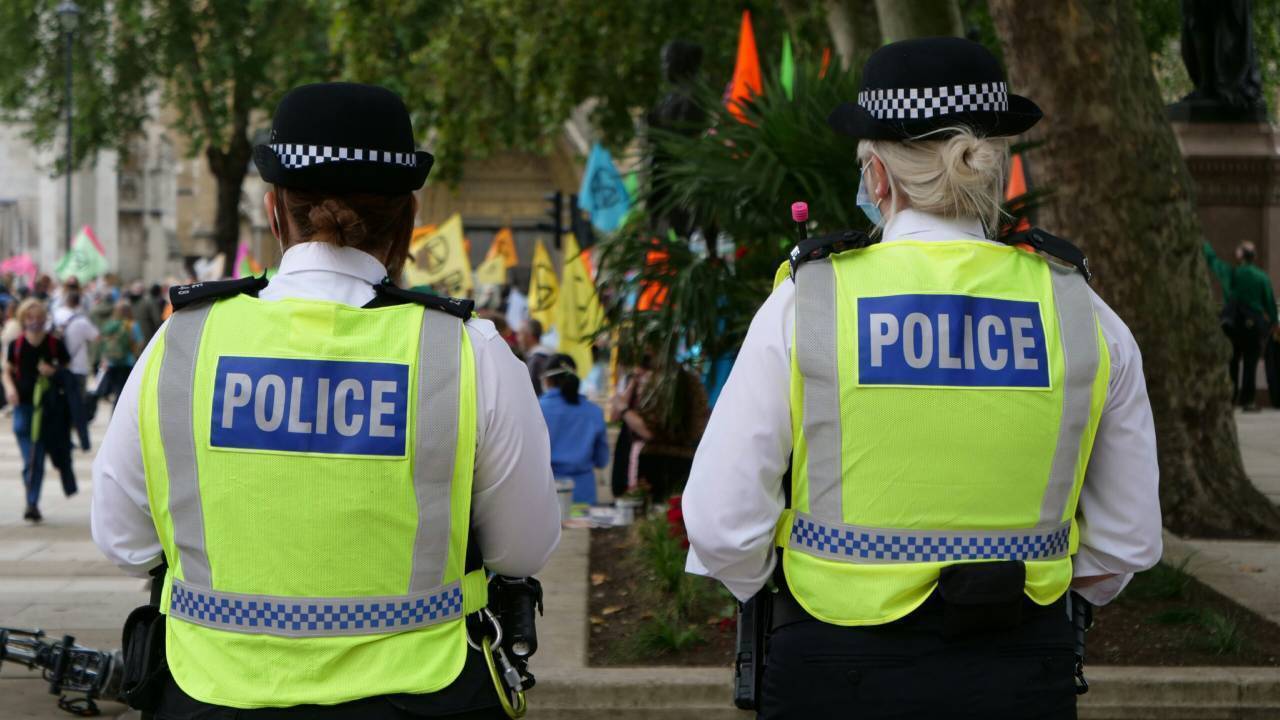
Female police officers in the UK have been advised to dress modestly and consider cultural sensitivities when interacting with Muslim men, as part of official guidance issued by the National Police Chiefs' Council (NPCC).
asserted
officers → advise → Council
The recommendations, which also address how officers should conduct themselves inside Muslim households and mosques, have triggered a political backlash, with Reform UK leader Nigel Farage and Shadow Home Secretary Chris Philp questioning the approach.
asserted
Farage → address → approach
The toolkit advises officers to consider religious practices when communicating with members of the opposite sex, suggesting that a same-sex officer may be better placed to interact with a Muslim individual in certain situations.
uncertain
officer → advise → situations
Farage has described the guidance as “outrageous”, calling it further evidence of what he termed “institutional two-tier policing”.
asserted
he → describe → what
What does the UK police guidance say about female officers and Muslim men?
asserted
guidance → say → officers
According to The Telegraph, the recommendations appear in the NPCC's National Faith Toolkit, which was published to provide practical guidance to police officers working with Britain's diverse religious communities.
uncertain
which → accord → communities
Under its Islam section, the document states that “cultural factors should be considered when interacting with the opposite sex”.
asserted
factors → state → sex
It clarifies that this applies to both physical interaction and verbal communication, adding: “In some situations, someone from the same sex would be best placed to interact with a Muslim individual.”
asserted
someone → clarify → individual
The guidance also advises officers visiting Muslim households and mosques to avoid entering areas designated for members of the opposite sex.
asserted
guidance → advise → sex
Female officers are advised to dress modestly when visiting such premises, while police are also told to consider avoiding the use of dogs when operating in Muslim areas.
asserted
police → advise → areas
Another recommendation concerns forensic examinations of deceased Muslim women.
asserted
recommendation → concern → women
The toolkit says female Muslim forensic officers should ideally conduct these examinations to reflect Islamic guidelines.
asserted
officers → say → guidelines
Nigel Farage calls it proof of 'institutional two-tier policing'
asserted
Farage → call → policing
Reacting to the recommendations, Reform UK leader Nigel Farage accused police chiefs of accommodating religious practices at the expense of equality.
asserted
Farage → react → equality
“This is outrageous and yet more proof of institutional two-tier policing,” he told The Telegraph.
asserted
he → tell → Telegraph
Farage added that the police “should not be bending over backwards to placate sexist and outdated cultures”.
asserted
police → add → cultures
“If the police actually believed in equality before the law, the NPCC would remove this immediately and those responsible would be fired,” he insisted.
asserted
he → believe → this
Chris Philp demands withdrawal of the faith toolkit
Shadow Home Secretary Chris Philp also criticised the recommendations, describing the guidance as “dangerous ideology” that “belongs in the bin”.
He argued that police officers should treat everyone equally, irrespective of their faith or ethnicity, and questioned the need for separate instructions based on religious identity.
“We cannot continue to treat people differently because of their faith or skin colour, in policing or anywhere else.
asserted
We → demand → policing
It is morally wrong and ends in disaster,” Philp said.
asserted
Philp → end → disaster
He also called for the toolkit to be withdrawn, comparing it with the Police Race Action Plan, which he has previously criticised.
asserted
he → call → which
Why has the Islam section attracted scrutiny?
asserted
section → attract → scrutiny
The NPCC's National Faith Toolkit provides guidance on interacting with 23 religious communities across Britain.
asserted
Toolkit → provide → Britain
One of the main points of contention is that the toolkit's guidance on Islam is longer and more detailed than the sections covering the other 22 religions and belief systems.
asserted
guidance → cover → religions
It also contains a specific requirement to report anti-Muslim hate, an instruction that is not similarly replicated across the other religious sections.
asserted
that → contain → sections
The document identifies terrorist attacks and international developments, including elections, as situations in which Muslim communities may be particularly vulnerable.
uncertain
communities → identify → which
Its recommendations have prompted questions about whether religious sensitivities are being addressed consistently across different communities.
asserted
sensitivities → prompt → communities
What does the toolkit say about other religions?
asserted
toolkit → say → religions
The National Faith Toolkit covers 23 faiths and belief systems, including Christianity, Judaism, Sikhism, Buddhism, Catholicism, Scientology, Zoroastrianism, Baha'i and Rastafarianism.
asserted
Toolkit → cover → Christianity
Some of its recommendations also address gender-specific religious practices.
asserted
Some → address → practices
For instance, women officers are advised to dress modestly when visiting Buddhist temples, while guidance for Orthodox synagogues tells male officers not to enter the women's gallery and female officers to avoid the men's section.
asserted
guidance → advise → section
The Paganism section discusses religious objects, including the Athame used by Wiccans, the Boline associated with Druids and the Seax used by Heathens.
asserted
section → discuss → Heathens
It explains that some Pagans may have a legal defence for carrying such objects for religious purposes, although the position is acknowledged as a potential legal grey area.
uncertain
position → explain → area
The toolkit also covers Sikh religious weaponry and ceremonial knives, alongside guidance on religious practices surrounding death and post-mortem examinations.
asserted
toolkit → cover → examinations
NPCC defends its approach
asserted
NPCC → defend → approach
The toolkit was developed through collaboration between the NPCC, the College of Policing and national organisations representing different faith groups and police staff, including the National Association of Muslim Police, the Christian Police Association, the National Sikh Police Association and the British Association for Women in Policing.
asserted
toolkit → develop → Policing
In her introduction, Rachel Kearton, the NPCC's chair for race, inclusion, religion and belief and former Suffolk Constabulary chief constable, said understanding the cultural and religious contexts in which officers operate was essential.
asserted
officers → say → which
She also stressed that collaboration with faith communities could help police protect vulnerable individuals and strengthen relationships with the public.
uncertain
police → stress → public
Responding to the criticism, an NPCC spokesperson said the same process had been followed for every faith group included in the toolkit, with broadly similar areas covered across all 23 religions and beliefs.
asserted
areas → respond → religions
“Policing serves and protects everyone regardless of faith, background or belief.
asserted
Policing → serve → faith
The law applies equally to all,” the spokesperson said.
asserted
spokesperson → apply → all
…and 1 more, not listed.
 The Aporia