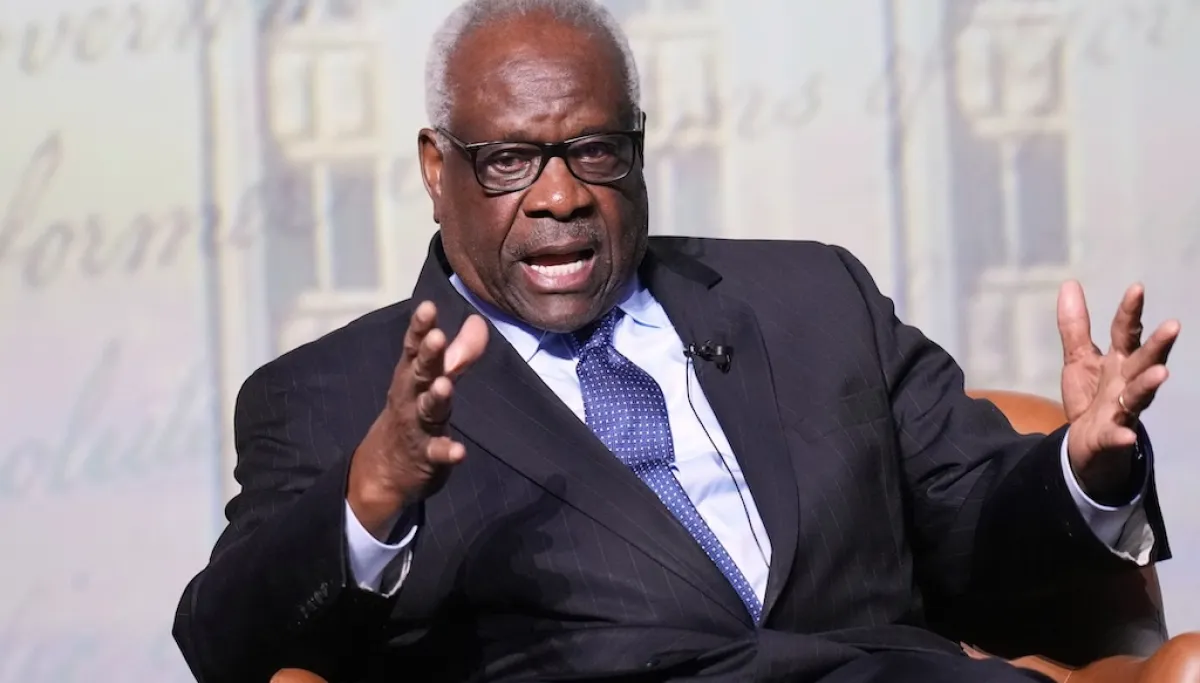
Photo via Washington Examiner

Muslim doctors sue Illinois over state’s assisted suicide law

Read the original at Washington Examiner ↗
Cite

Birle, J. (2026, September 18). Muslim doctors sue Illinois over state’s assisted suicide law. Washington Examiner. https://www.washingtonexaminer.com/news/justice/4733771/muslim-doctors-sue-illinois-over-assisted-suicide-law/

Dated when The Aporia collected the article, usually within hours of publication. Check the original for its exact date and byline.

Washington Examiner · collected 2026-09-18 · by Jack Birle

Quick Summary

Muslim doctors are suing the state of Illinois over its recent End-of-Life Options Act, which mandates that physicians inform patients about options related to assisted suicide, even if they personally object on religious grounds. The lawsuit, filed earlier this week in U.S. District Court for the Northern District of Illinois and supported by the Becket Fund for Religious Liberty, argues that the law violates their constitutional rights to practice medicine without participating in or promoting practices against their sincerely held Islamic beliefs. Four Muslim doctors involved in the suit contend that the law forces them to choose between complying with medical regulations and adhering to their religious convictions, potentially facing legal penalties if they do not comply.
Written by AI on 2026-09-18, from this article's own text only (the story summary below draws on all the coverage).
See how they differ ↓

AI analysis

Story summary

Four Muslim physicians sued Illinois officials on Wednesday, alleging that the state’s new assisted-suicide law violates their religious beliefs by requiring them to provide patients with information about medical aid in dying and, in some circumstances, facilitate access to the drugs. The Becket Fund filed the federal complaint on behalf of Drs. Akbar Ali, Asim Babar, Omar Hussain, and Umar Shakur in the US District Court for the Northern District of Illinois. The End-of-Life Options for Terminally Ill Patients Act (also known as Deb’s Law), which took effect on September 12, allows residents who are at least 18 years old, mentally capable of making medical decisions, and diagnosed with a terminal illness expected to result in death within six months to obtain medication they can self-administer to end their lives. The physicians argue that complying with the law's provisions for referrals and transferring medical records would conflict with their religious beliefs against assisted suicide.

Written for “Muslim Doctors Sue Illinois Over Assisted Suicide Law” on 2026-11-21, grounded in this article and the 1 other(s) covering the same event.

How they differ

2 outlets covered “Muslim Doctors Sue Illinois Over Assisted Suicide Law”.

What each outlet says

One AI summary per outlet of its latest article on this story, written from that article alone and checked against it. Open the article for the outlet's own words.

Washington ExaminerThis outlet18 Sep

Muslim doctors are suing the state of Illinois over its recent End-of-Life Options Act, which mandates that physicians inform patients about options related to assisted suicide, even if they personally object on religious grounds. The lawsuit, filed earlier this week in U.S. District Court for the Northern District of Illinois and supported by the Becket Fund for Religious Liberty, argues that the law violates their…

Muslim doctors sue Illinois over state’s assisted suicide law (this article)
New York Post18 Sep

Four Muslim physicians have filed a federal lawsuit against Illinois officials, claiming that the new End-of-Life Options for Terminally Ill Patients Act violates their religious freedom by requiring them to provide patients with information about medical aid in dying and sometimes facilitate access to drugs. The law, which took effect on September 12, allows terminally ill adults to obtain medication to end their…

Muslim doctors sue Illinois over controversial new assisted-suicide law →

Compared with similar articles

This article reads leans left and hedges 29% of its claims. Each row says how that neighbour differs.
New York Post
Hedges 0 of 9 claims Outlet record 66/100
The Independent
Leans left Hedges 4 of 83 claims Outlet record 59/100
“The articles describe different aspects of the Illinois assisted suicide law; one focuses on Muslim doctors suing over religious rights, while the other discusses a terminally ill patient's personal story and application of the law.”
Toronto Star
Leans left Hedges 3 of 41 claims Outlet record 64/100
“While both articles discuss the legal changes in Illinois regarding assisted suicide, Article A describes a lawsuit filed by Muslim doctors against the law, while Article B provides general information and reactions to the new laws without mentioning the specific lawsuit.”

Story

Muslim Doctors Sue Illinois Over Assisted Suicide Law
Politics · 2 article(s) covering the same event. See how they differ ↑
How this article was measured signals, leaning charts, publisher record, byline, topics and claims

Signals How these are calculated →

Claims extracted
14
sentences that state something as happening or true
Uncertain
29%
4 of 14 hedged ("reportedly", "may", "according to")
Leaning
Leans left
of the writing, not the subject · beta estimate
Publisher signals
67/100
Washington Examiner's corrections and hedging, across everything collected from it. Not a measure of accuracy.
Outlets on this story
2
Politics
Same framing elsewhere
1
articles that frame the event the way this one does
Analyzed 2026-09-18 · how these are computed

How this is being covered How these are calculated →

Article leaning vs. publisher reliability
Source leaning vs. consistency

Publisher

Washington Examiner · 5251 article(s) · 11 correction(s) detected
Running correction rate · 11 correction(s)

Who wrote this

Jack Birle
55 article(s) here · 1 carrying a prediction
The Supreme Court ruled 6-3 earlier this year in Trump v. Slaughter that the president could fire officials at most independent agencies within the executive branch, but held 5-4 in the case Trump v. Cook that the Federal Reserve was uniquely insulated from the broad at-will firing power the president enjoys over the executive branch.
The Supreme Court will hear a major Second Amendment case over state assault weapons bans next month, but Justice Clarence Thomas is calling on the high court to consider another major legal war over gun laws in the coming terms.
“Implicit bias training” is a type of diversity, equity, and inclusion program, which proponents argue educates people about bias they may have against different races or people of the opposite sex, while opponents claim it pushes a hard-left view of race and sex.
President Donald Trump has touted plans to renovate East Potomac Golf Links and build a “World Class Championship Golf Course,” posting plans last month that would remove the popular public access and paths along the golf course on Hains Point.
The Supreme Court announced Friday it will hear a case over the legality of President Donald Trump’s January 2025 executive order that largely barred people from applying for asylum at the southern border.
A Utah judge ruled on Monday that Tyler Robinson will go to trial in 2028 on murder charges related to the September 2025 killing of conservative activist Charlie Kirk.
As Sen. Cindy Hyde-Smith (R-MS) narrowly trails her Democratic challenger Scott Colom by just a few hundred votes in the unexpectedly close Senate race in Mississippi, Republicans are now hoping a Supreme Court loss on late-arriving mail ballots earlier this year will help save their senator from being the latest victim of the blue tsunami.
President Donald Trump’s first term in office was highlighted by the avalanche of judicial nominees he was able to get confirmed to the bench, but with Democrats set to take control of the Senate in January, the race is on to push through nominations before time runs out next year.
The coalition of Catholic schools argued that asking them to admit families who do not follow Catholic teachings would sacrifice their beliefs, which they say violates their First Amendment rights.
Also by Jack Birle
Nothing else under this byline is closely related to this article, so these are simply their most recent.
All 55 articles by Jack Birle →

Topics

Illinois Muslim the Becket Fund for Religious Liberty the End-of-Life Options for Terminally Ill Patients the Prairie State

Subjects

Muslim NORP · 7× Illinois GPE · 6× Catholics NORP · 2× Muslims NORP · 2× District Court ORG · 1× Islamic NORP · 1× U.S. GPE · 1× the Becket Fund for Religious Liberty ORG · 1× the Northern District of Illinois GPE · 1× the Prairie State GPE · 1×

Narrative

“In passing the Act, Illinois has stripped that very choice away from Plaintiffs and their patients—denying the choice of a dignified death to the many residents of Illinois who, following their sincere religious beliefs, wish to die naturally, secure in the knowledge that they will not be urged by their physicians to consider cutting short their life through suicide,” the lawsuit from the Muslims doctors said, urging the federal court to strike down the law.
framing: mixed · carried by 1 article(s) · first seen 2026-09-18
“In passing the Act, Illinois has stripped that very choice away from Plaintiffs and their patients—denying the choice of a dignified death to the many residents of Illinois who, following their sincere religious beliefs, wish to die naturally, secure in the knowledge that they will not be urged by their physicians to consider cutting short their life through suicide,” the lawsuit from the Muslims doctors said, urging the federal court to strike down the law.
2026-09-18 · Washington Examiner
Muslim doctors sue Illinois over state’s assisted suicide law · mixed framing

Claims (14 extracted, 4 hedged)

A group of Muslim doctors is suing Illinois over a state law mandating that doctors inform patients about assisted suicide options, claiming the controversial law violates their constitutionally protected religious rights. asserted
law → sue → rights
Illinois passed the End-of-Life Options for Terminally Ill Patients Act last year despite pushback from medical and religious groups, allowing terminally ill residents of the Prairie State to seek assisted suicide. asserted
residents → pass → suicide
The law, which went into effect earlier this month, allows doctors to opt out of performing the assisted suicide procedures but requires doctors to tell patients about those options and thus still participate in some parts of the process. asserted
doctors → go → process
The lawsuit, filed by four Muslim doctors and backed by the Becket Fund for Religious Liberty, claims the law violates their sincerely held Islamic belief against assisted suicide by forcing them to inform and facilitate the practice or face fines and other penalties. uncertain
law → file → fines
The law still requires doctors who opt out for religious reasons to “inform terminal patients about the ‘legal treatment’ of suicide, including its ‘benefits,'” according to the lawsuit filed in the U.S. District Court for the Northern District of Illinois earlier this week. uncertain
who → require → Illinois
Lawyers for the Muslim doctors claim the exemptions “are also among the narrowest in the nation,” noting that states including California, Washington, and Oregon allow doctors to opt out completely of assisted suicide for religious reasons. uncertain
doctors → claim → reasons
“In passing the Act, Illinois has stripped that very choice away from Plaintiffs and their patients—denying the choice of a dignified death to the many residents of Illinois who, following their sincere religious beliefs, wish to die naturally, secure in the knowledge that they will not be urged by their physicians to consider cutting short their life through suicide,” the lawsuit from the Muslims doctors said, urging the federal court to strike down the law. asserted
lawsuit → pass → law
The four Muslim doctors each said they believe the law forces them to make an impossible choice between continuing to do their job lawfully and following their religious and personal beliefs. asserted
law → say → beliefs
“I became a doctor because I felt called to heal those in pain. asserted
I → become → pain
I cannot betray that calling—or my Muslim faith—by pushing patients down the path of suicide,” Dr. Omar Hussain, a pulmonary specialist in Libertyville, Illinois, and one of the four doctors suing the state over the law, said in a statement. asserted
Hussain → betray → statement
“The court should ensure that Muslim doctors like me may keep serving our neighbors without violating our religious convictions.” uncertain
doctors → ensure → convictions
While the lawsuit filed earlier this week was brought by Muslim doctors, healthcare professionals of other faiths have also expressed concern and filed lawsuits against the controversial Illinois law. asserted
professionals → file → law
Earlier this month, a federal judge ordered the state not to enforce the law against a group of Catholics over their religious objections to assisted suicide. asserted
judge → order → suicide
Assisted suicide for terminally ill people has become legalized in several states in recent years, despite fierce pushback from mostly religious groups ranging in faith from Catholics to Muslims, who have moral objections to voluntarily ending life. asserted
who → assist → life

Give feedback · no sign-in needed

No sign-in needed for now. Your note is sent without a name, so it cannot be answered.

History Support