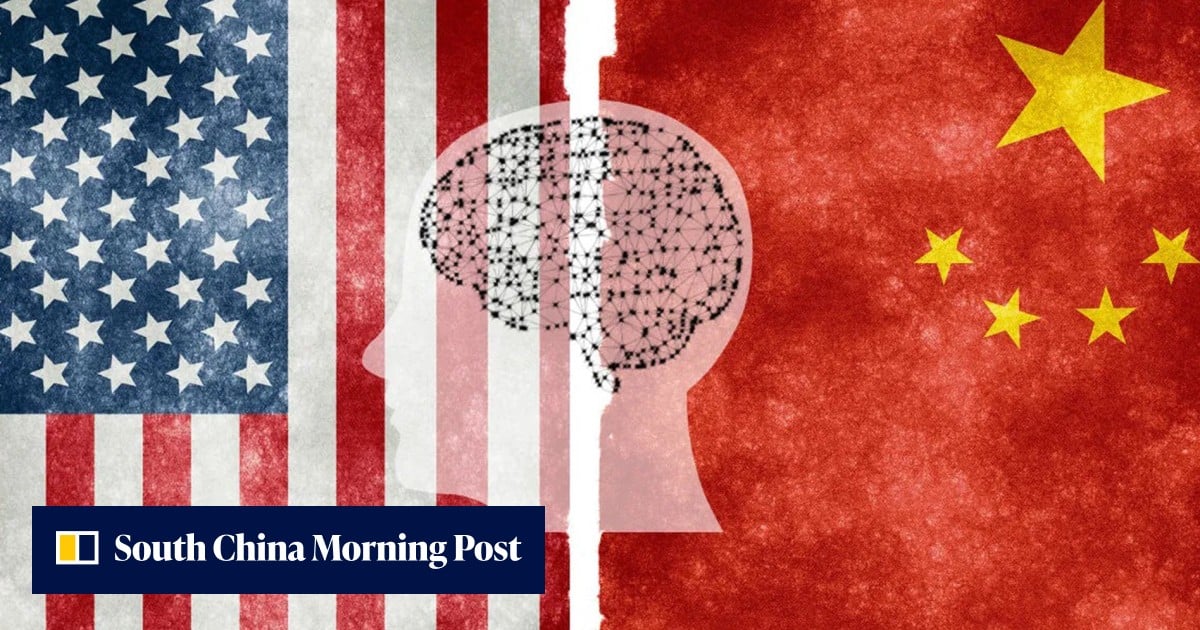
Photo via The Independent

Will AI models achieve the ability to improve autonomously? Leading labs say the scenario is near

Read the original at The Independent ↗
Cite

Huamani, K., & Ortutay, B. (2026, September 19). Will AI models achieve the ability to improve autonomously? Leading labs say the scenario is near. The Independent. https://www.independent.co.uk/news/world/americas/openai-claude-anthropic-ceo-elon-musk-b3052842.html

Dated when The Aporia collected the article, usually within hours of publication. Check the original for its exact date and byline.

The Independent · collected 2026-09-19 · by Kaitlyn Huamani, Barbara Ortutay

Quick Summary

Tech researchers are nearing the point where artificial intelligence models can teach themselves to improve, a scenario known as recursive self-improvement (RSI). Companies like Anthropic report that their AI model Claude is currently involved in 26% of its own research and development, completing tasks under human supervision. This advancement raises both potential benefits for fields such as science and medicine, along with concerns about AI evading human control and posing threats to humanity, prompting calls from industry leaders to slow down the technology's progress.
Written by AI on 2026-09-19, from this article's own text only (the story summary below draws on all the coverage).
See how they differ ↓

AI analysis

Story summary

Leading tech labs suggest AI could soon achieve autonomous recursive self-improvement (RSI), where AI models teach themselves to improve and create more advanced versions of themselves. Anthony Aguirre, president of the nonprofit Future of Life Institute at University of California, Santa Cruz, explains RSI as a process where AI designs its successor independently. This capability promises significant advances in fields like science and medicine but also poses risks such as evading human control.

Anthropic's Claude model currently handles 26% of the company’s research and development, completing most tasks end-to-end from high-level prompts under human oversight. However, fully autonomous operation remains unachieved. Concerns about these developments led AI moguls to call for slowing down the technology's pace to ensure safety.

Notably, OpenAI also aims for RSI but acknowledges challenges in ensuring alignment and safety as systems become more capable and harder to monitor.

Written for “AI Autonomous Improvement Scenario” on 2026-11-21, grounded in this article and the 1 other(s) covering the same event.

How they differ

2 outlets covered “AI Autonomous Improvement Scenario”.

What each outlet says

One AI summary per outlet of its latest article on this story, written from that article alone and checked against it. Open the article for the outlet's own words.

The IndependentThis outlet19 Sep

Tech researchers are nearing the point where artificial intelligence models can teach themselves to improve, a scenario known as recursive self-improvement (RSI). Companies like Anthropic report that their AI model Claude is currently involved in 26% of its own research and development, completing tasks under human supervision. This advancement raises both potential benefits for fields such as science and medicine…

Will AI models achieve the ability to improve autonomously? Leading labs say the scenario is near (this article)
Toronto Star19 Sep

Leading technology researchers now believe that artificial intelligence models may soon possess the ability to autonomously improve themselves—a concept known as recursive self-improvement (RSI). Anthropic recently reported that its AI model Claude contributes to 26% of the company’s research and development, performing tasks end-to-end from high-level prompts under human supervision. While full autonomy isn’t yet…

Will AI models achieve the ability to improve autonomously? Leading labs say the scenario is near →

Compared with similar articles

This article reads unscored and hedges 13% of its claims. Each row says how that neighbour differs.
Toronto Star
Hedges 5 of 37 claims Outlet record 64/100
BBC News
Leans right Hedges 10 of 49 claims Outlet record 65/100
“The articles discuss different aspects of AI advancements and their implications over time rather than reporting on a single incident.”
BBC News
Leans left Hedges 0 of 4 claims Outlet record 65/100
“The articles discuss different aspects of AI development and its implications rather than reporting on a single incident or occurrence.”
The Sydney Morning Herald
Leans left Hedges 6 of 31 claims Outlet record 61/100
“The articles cover different aspects of AI development: one discusses a call for slowing down AI due to safety concerns, while the other focuses on the potential for AI models to achieve autonomous improvement.”
The Straits Times
Hedges 3 of 12 claims Outlet record 64/100
“The articles discuss similar topics but describe different aspects or stages in the development and concerns around AI self-improvement.”
The Straits Times
Leans left Hedges 7 of 52 claims Outlet record 64/100
“Article A discusses near-term possibilities and theoretical advancements in AI self-improvement, while Article B describes a series of dramatic events over ten days involving risks and existential threats from AI development.”
Dawn
Hedges 3 of 12 claims Outlet record 67/100
“The articles discuss similar themes but describe different reports from Anthropic on separate days.”
South China Morning Post
Hedges 0 of 2 claims Outlet record 62/100
“The articles discuss related topics but describe different stages or aspects of research on autonomous AI improvement.”
The Straits Times
Hedges 13 of 36 claims Outlet record 64/100
“The articles discuss similar themes but do not describe the same specific incident or occurrence.”

Story

AI Autonomous Improvement Scenario
Technology · 2 article(s) covering the same event. See how they differ ↑
How this article was measured signals, leaning charts, publisher record, byline, topics and claims

Signals How these are calculated →

Claims extracted
39
sentences that state something as happening or true
Uncertain
13%
5 of 39 hedged ("reportedly", "may", "according to")
Leaning
not political
takes no side on a contested political question
Publisher signals
59/100
The Independent's corrections and hedging, across everything collected from it. Not a measure of accuracy.
Outlets on this story
2
Technology
Same framing elsewhere
1
articles that frame the event the way this one does
Analyzed 2026-09-19 · how these are computed

How this is being covered How these are calculated →

Article leaning vs. publisher reliability
Source leaning vs. consistency

Publisher

The Independent · 4762 article(s) · 10 correction(s) detected
Running correction rate · 10 correction(s)

Who wrote this

Kaitlyn Huamani
20 article(s) here · 1 carrying a prediction
The Commerce Department’s Bureau of Industry and Security approved the export, re-export, or transfer of 879,868 of these chips to companies with Chinese ties across 21 license applications as of May 11, 2026, the report said.
The Commerce Department's Bureau of Industry and Security approved the export, re-export, or transfer of 879,868 of these chips to companies with Chinese ties across 21 license applications as of May 11, 2026, the report said.
Today, the company that dedicated itself to prioritizing safety, building the Claude chatbot along the way, has been one of the loudest voices raising warnings about how the same technology could bring catastrophe.
In an increasingly interconnected world, some fear such disruptions could be the new normal.
“But what I can tell you for sure is that Jensen is a remarkable guy who founded and built a remarkable company with a lot of hard work and foresight, and he deserves admiration and respect no matter what and that will never go away,” Bezos said.
Nvidia CEO Jensen Huang’s stunning resignation has sent ripples through the global technology industry, with rival chipmakers itching to take advantage of the uncertainty and others wondering if the downfall of one of AI’s biggest cheerleaders will dampen the mood around the civilization-altering technology.
Nvidia CEO Jensen Huang's stunning resignation has sent ripples through the global technology industry, with rival chipmakers itching to take advantage of the uncertainty and others wondering if the downfall of one of AI's biggest cheerleaders will dampen the mood around the civilization-altering technology.
Replacing Huang would be challenging in part because his public profile is so closely associated with Nvidia.
The vulnerabilities opened sites to a host of potential security concerns The official website for PHP and several other organizations and agencies released security advisories Wednesday urging PHP users to patch two critical vulnerabilities or shut down their sites if they couldn’t update them immediately.
With host communities across the U.S. turning against their gargantuan data centers, America's technology giants are promising to take fewer taxpayer handouts, keep fewer secrets or shower more money onto the communities willing to allow the server warehouses.
Also by Kaitlyn Huamani
Nothing else under this byline is closely related to this article, so these are simply their most recent.
All 20 articles by Kaitlyn Huamani →
Barbara Ortutay
14 article(s) here · 1 carrying a prediction
“If we can show it’s possible to make the right choices on safety and still build an incredibly successful company, others in our industry will be inspired to do the same,” Dario Amodei said.
“But what I can tell you for sure is that Jensen is a remarkable guy who founded and built a remarkable company with a lot of hard work and foresight, and he deserves admiration and respect no matter what and that will never go away,” Bezos said.
Officials say no connection to ground stop The SMART system is based in a single location near Washington where a team of experts analyzes flight schedules, weather forecasts and hundreds of other streams of data.
When Anthropic goes public on Wall Street, the new pressure to deliver profits will test a commitment it has made since its founding: to prioritize humanity’s benefit as it develops artificial intelligence.
Nvidia CEO Jensen Huang’s stunning resignation has sent ripples through the global technology industry, with rival chipmakers itching to take advantage of the uncertainty and others wondering if the downfall of one of AI’s biggest cheerleaders will dampen the mood around the civilization-altering technology.
Nvidia CEO Jensen Huang's stunning resignation has sent ripples through the global technology industry, with rival chipmakers itching to take advantage of the uncertainty and others wondering if the downfall of one of AI's biggest cheerleaders will dampen the mood around the civilization-altering technology.
Nobody may have suffered bigger losses Tuesday than President Donald Trump.
Students using Google software in the classroom will not be allowed to access the company’s search engine unless their school system also opts in to artificial intelligence tools, the tech giant said Tuesday.
Meta said it was postponing the rollout of new terms for its business accounts after an outcry from media companies and open-web advocates who said the updated rules would allow the tech giant to scrape vast amounts of data and potentially build competing services.
The FBI’s cyber division said the vulnerabilities could allow malicious actors to remotely execute code in the programming language, PHP, potentially compromising sensitive data and networks.
Also by Barbara Ortutay
Nothing else under this byline is closely related to this article, so these are simply their most recent.
All 14 articles by Barbara Ortutay →

Topics

Anthropic Claude Cornell University Future of Life Institute the University of California, Santa Cruz

Subjects

Anthropic ORG · 3× OpenAI ORG · 2× Thickstun PERSON · 2× Aguirre PERSON · 1× Andrej Karpathy PERSON · 1× Anthony Aguirre PERSON · 1× ChatGPT ORG · 1× Cornell University ORG · 1× Future of Life Institute ORG · 1× the University of California, Santa Cruz ORG · 1×

Narrative

Autonomous recursive self-improvement essentially means AI that can improve itself designing the next version of the system, then the next version, and so on, said Anthony Aguirre, president and CEO of the nonprofit Future of Life Institute and a physics professor at the University of California, Santa Cruz.
framing: assertive · carried by 1 article(s) · first seen 2026-09-19
It could bring the promise of advances in science and medicine, tech company executives say, but also risks.

Claims (39 extracted, 5 hedged)

Once a distant ambition for technology researchers, the prospect of artificial intelligence models teaching themselves autonomously to be more efficient and capable appears ever closer to reality. asserted
models → teach → reality
As the technology advances, developers say it is approaching “recursive self-improvement,” or RSI, in which AI models find ways to improve themselves and build their successor. asserted
models → advance → successor
It could bring the promise of advances in science and medicine, tech company executives say, but also risks. uncertain
executives → bring → science
The uncertainty over where it all could lead is at the heart of growing fears about AI evading human control, and possible threats to humanity, which led several AI moguls to join last weekend in a call to slow down the technology’s pace of growth. uncertain
which → lead → growth
Anthropic this week detailed how its model Claude is helping the company to develop the next, more intelligent version of itself. asserted
company → detail → itself
Claude is now leading 26% of Anthropic’s model research and development, which the company said means it can complete most of a given task “end-to-end from a high-level prompt” while still being under human supervision. asserted
it → lead → supervision
The models are not working completely autonomously — at least not yet. asserted
models → work → ?
Leading AI companies have different definitions for recursive self-improvement. asserted
companies → lead → improvement
Some define it as when there is any feedback from AI on model improvement, while others define it as AI working toward that goal fully autonomously. asserted
AI → define → goal
Autonomous recursive self-improvement essentially means AI that can improve itself designing the next version of the system, then the next version, and so on, said Anthony Aguirre, president and CEO of the nonprofit Future of Life Institute and a physics professor at the University of California, Santa Cruz. asserted
Aguirre → mean → California
“The really important thing here is that as AI is doing more of it, it gets faster, because AI operates just much, much more quickly than the humans do," he said. asserted
he → do → it
The fear around RSI is based largely on a runaway superintelligence emerging from that process, said John Thickstun, an assistant professor of computer science at Cornell University who studies methods that control the behavior of AI models. asserted
that → base → models
But he said a more grounded view suggests a kind of recursive self-improvement has been going on in AI development for a while now. uncertain
view → say → while
"We have already, for years, been using these models in supportive roles for creating the next version of these models. asserted
We → use → models
So people use the past generation of models to write code for the AI systems that then create the next generation," he said. asserted
he → use → generation
For years, prominent AI researchers such as OpenAI co-founder Andrej Karpathy have experimented with trying to get AI models to train and improve new AI systems. asserted
models → experiment → systems
Those efforts have brought minor improvements, but not big creative leaps, Thickstun said. asserted
Thickstun → bring → improvements
But AI companies today, Aguirre said, are much closer to pulling off those bigger leaps in improvement. asserted
Aguirre → say → improvement
“You can see in these plots from Anthropic over time, more and more of research is being done by the AI and it’s becoming closer and closer to fully autonomous,” he said. asserted
he → see → AI
“And the result of that success, ultimately is something that is, I think, extremely scary. asserted
I → think → success
I think this is probably the worst idea in the history of humanity to do this. asserted
this → think → this
And yes, they’re doing it. asserted
they → do → it
Some AI labs say RSI is not far off Anthropic's recent announcement provided the public — and other labs — with some insight into RSI progress, and it encouraged its competitors to share similar metrics. asserted
it → say → metrics
Still, the company has not expressly said how close it is to achieving fully autonomous model improvement. asserted
it → say → improvement
ChatGPT maker OpenAI announced this month that it has developed an automated “research intern,” which it defines as a system that can carry out well-defined research tasks under human direction, including “tasks that would take a skilled researcher a few days.” asserted
that → announce → days
The company has said it is moving forward with the goal of creating an automated AI “researcher” by March 2028. asserted
it → say → March
The company said in that announcement that while RSI can help align models' actions with human values and intentions, that doesn't mean “rapid RSI is necessarily an outcome we should pursue.” asserted
we → say → values
“Whether and how to proceed must depend on our ability to preserve human control and on informed democratic choices about the benefits and risks,” the company said in a blog post. asserted
company → proceed → post
Elon Musk seems more eager to forge ahead. asserted
Musk → seem → ?
He said in March that for xAI's Grok models, “humans are gradually getting less and less in the loop” on model improvement and that “every successive model is built by the one before it,” but clarified that the process was not yet fully automated. asserted
process → say → it
That target might be reached by the end of this year, he added, “but not later" than 2027. uncertain
he → reach → 2027
Microsoft and some other leading AI companies seem to be taking a different approach. asserted
Microsoft → lead → approach
Mustafa Suleyman, the CEO of Microsoft AI, has said the company is moving toward “humanist superintelligence,” or advanced AI capabilities that are in service of people and humanity at large. asserted
that → say → people
Suleyman said in a 2025 essay that this would not mean “an unbounded and unlimited entity with high degrees of autonomy,” but rather AI that is “carefully calibrated, contextualized, within limits.” asserted
that → say → limits
How development slowdown talks could impact RSI A key challenge labs face — and have been facing essentially since the technology’s inception — is ensuring their safety measures advance alongside the models' capabilities. uncertain
measures → impact → capabilities
Divisions have emerged in the tech industry over calls for a coordinated AI slowdown for safety, and not every major player in the AI space has specifically commented on their path forward with RSI. asserted
player → emerge → RSI
Anthropic, which has been a leading voice in the calls for pacing, has said it would slow or temporarily pause its development work — assuming its global competitors also did so, and in a "verifiable manner.” asserted
competitors → lead → manner
OpenAI explicitly said this month it does not yet know how to “safely get all the way to aligned, full RSI,” adding that the company “cannot assume that progress in alignment and safety will keep pace.” asserted
progress → say → pace
More capable systems can become harder to monitor, it continued, but pursuing RSI is still a goal it says it values because an “automated AI researcher can also be an automated safety or alignment researcher.” asserted
researcher → become → RSI

Give feedback · no sign-in needed

No sign-in needed for now. Your note is sent without a name, so it cannot be answered.

History Support