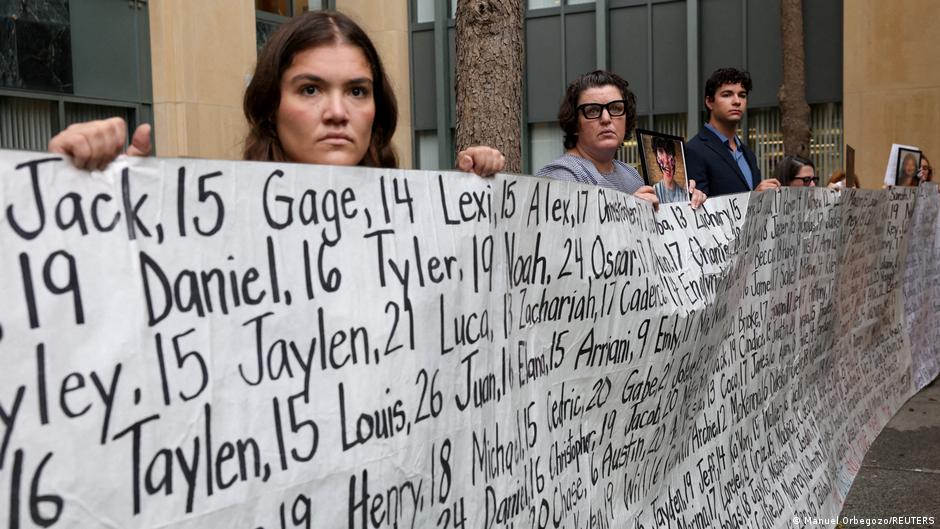
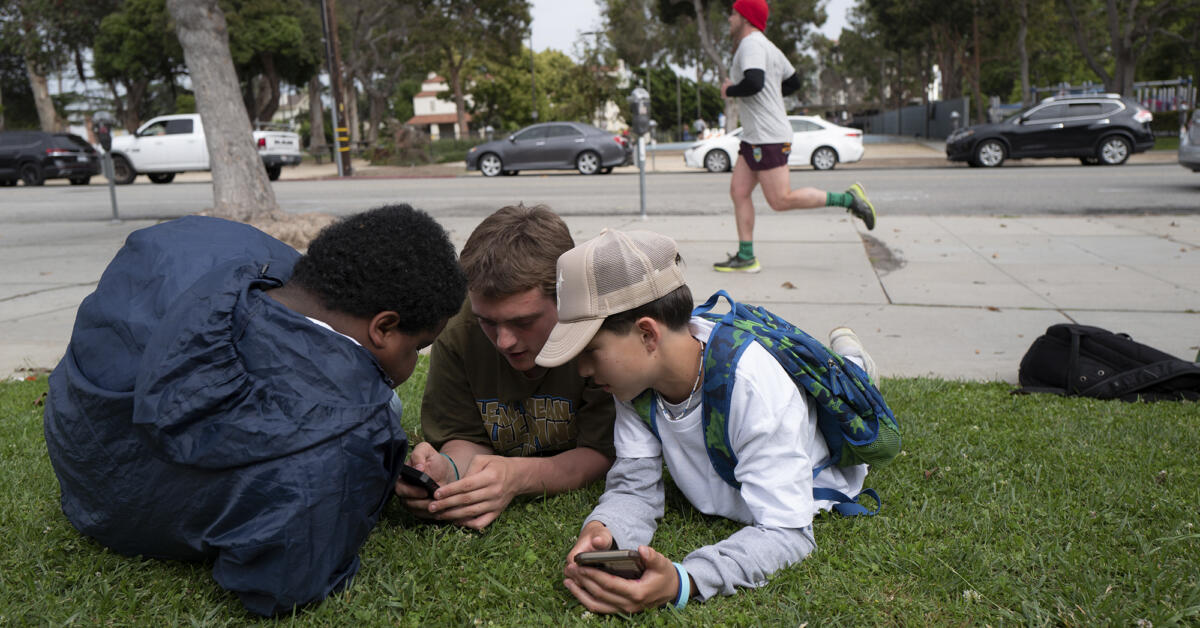
Photo via Platformer

Meta settles with the states over child safety failures

Read the original at Platformer ↗
Cite

Newton, C. (2026, August 27). Meta settles with the states over child safety failures. Platformer. https://www.platformer.news/meta-child-safety-settlement-instagram-facebook-youtube-tiktok/

Dated when The Aporia collected the article, usually within hours of publication. Check the original for its exact date and byline.

Platformer · collected 2026-08-27 · by Casey Newton

Quick Summary

A former employee of Meta's teen mental well-being team testified in federal court that the company prioritized its own interests over teen safety. A settlement has been reached between Meta and 47 US states, the District of Columbia, and US territories for up to $17.1 billion, following allegations that Meta violated child privacy and consumer protection laws. The terms of the agreement require Meta to limit teenage users' screen time and restrict access to certain features during school hours, among other measures. Additionally, a separate settlement with Texas for about $1 billion has also been announced, but Meta still faces numerous other lawsuits over similar allegations.
Written by AI on 2026-08-27, from this article's own text only (the story summary below draws on all the coverage).
See how they differ ↓

AI analysis

Story summary

Meta, the parent company of Facebook and Instagram, has agreed to pay up to $18 billion as part of a settlement with 47 US states over allegations that its social media platforms have contributed to teen addiction. The deal, which still needs court approval, would be the largest legal action against the tech giant and marks a significant shift in Meta's approach to child safety on its platforms.

As part of the agreement, Meta has promised to make changes to its apps, including imposing two-hour time limits for teens, stopping notifications during school hours, removing "like" counts and cosmetic filters, and limiting teen usage between midnight and 6 a.m. The company will also expand parental controls aimed at harmful content.

The settlement comes as part of a growing trend in which governments are taking action to address concerns about social media's impact on children's mental health. California Attorney General Rob Bonta has praised the agreement, saying it "will put an end to these dangerous practices and deliver meaningful relief that will protect children from online harm."

In related news, Brazil has implemented strict regulations on social media companies to protect children's data and prevent the sale of their information without parental consent. This regulatory solution is being cited as a potential model for other countries, including the US.

The settlement with Meta is seen as a significant step forward in addressing concerns about teen addiction and child safety online. However, critics argue that more needs to be done to hold social media companies accountable for their role in promoting addictive features and collecting data on children without parental consent.

Written for “Meta Teen Safety Settlements” on 2026-11-21, grounded in this article and the 8 other(s) covering the same event.

How they differ

9 outlets covered “Meta Teen Safety Settlements”.

What each outlet says

One AI summary per outlet of its latest article on this story, written from that article alone and checked against it. Open the article for the outlet's own words.

PlatformerThis outlet27 Aug

A former employee of Meta's teen mental well-being team testified in federal court that the company prioritized its own interests over teen safety. A settlement has been reached between Meta and 47 US states, the District of Columbia, and US territories for up to $17.1 billion, following allegations that Meta violated child privacy and consumer protection laws. The terms of the agreement require Meta to limit…

Meta settles with the states over child safety failures (this article)
The Markup24 Aug

California has passed a series of laws aimed at protecting children's online data, including requiring parental permission for kids under 13 and forcing companies to obtain consent from teens aged 13-16 before collecting their data. These regulations are considered stronger than the federal Children's Online Privacy Protection Act (COPPA) and have led other states to consider similar measures. Meanwhile, Brazil has…

Brazil gives parents social media controls for their kids. Should the US? →
Mother Jones27 Aug

Meta has reached a settlement with 52 attorneys general to pay around $18 billion over 10 years and make its apps safer for teenagers. The company's changes include a default two-hour limit on teenage users' screen time and "night" and "school" modes to block notifications during certain times. This comes as Meta faces losses in court, including a recent trial in New Mexico where the jury found that the company…

Meta Doesn’t Want to Be a Social Media Company Anymore →
Deutsche Welle27 Aug

Meta has agreed to pay up to $16.7 billion and impose new limits on how teenagers use its social media sites as part of a lawsuit brought by 47 US states in California. The settlement, which still requires court approval, includes introducing a "hard cap" on daily time spent on Meta's platforms at 2 hours, suspending underage users between midnight and 6 a.m., and muting notifications during school hours. Meta will…

Meta settles in US states lawsuit on teen user addiction →
The Free Press27 Aug

Meta, the owner of Facebook and Instagram, announced a $18 billion settlement with 48 states, Washington D.C., and three U.S. territories, requiring changes to its social media platforms, including time limits for teens and removal of certain features. The company has agreed to implement these measures over an unspecified period of time. Critics argue that Meta's changes are too little, too late, as the company has…

Meta’s Social Media Settlement Is Not Enough →
Los Angeles Times27 Aug

Meta has agreed to pay up to $17 billion as part of a settlement with 47 states over allegations that its Facebook and Instagram platforms are addictive and harm children's mental health. The settlement requires Meta to adopt new child-safety rules, including daily time caps, notification bans during school hours, and expanded parental controls. California is expected to receive between $1.5 billion to $2.1 billion…

Meta to pay $17 billion, overhaul Facebook and Instagram in teen addiction settlement →
Show 2 more outlets
Evening Standard27 Aug

UK Minister for Culture, Communications and Sport Mr McFadden stated that the government does not want young people in the US to have better protections than those in the UK, despite Meta's new protections being implemented in the US as part of a settlement worth up to 13.3 billion pounds. The protections will include major new safeguards for teenage users on Facebook and Instagram, but it is unclear if these will…

Government expects Meta’s new protections for teenagers in US to apply in UK →
CBC28 Aug

Meta has agreed to pay up to $18 billion over 10 years to resolve claims that its platforms Instagram and Facebook harmed youth. Changes are coming for teen users under 18, including daily time limits, blackout periods, more control over feeds, limits on social comparison features, and stronger age verification. Canadian tech analyst Carmi Levy says this is a significant turning point for the industry and expects…

How teen accounts on Instagram and Facebook are changing after Meta's $18B US settlement →

Where they agree and split

The full story: what happened, how it changed, and all 9 articles →

Compared with similar articles

This article reads unscored and hedges 8% of its claims. Each row says how that neighbour differs.
Mother Jones
Leans right Hedges 3 of 28 claims Outlet record 60/100
Deutsche Welle
Leans left Hedges 1 of 32 claims Outlet record 95/100
The Free Press
Leans strongly left Hedges 1 of 12 claims Outlet record 96/100
Los Angeles Times
Leans left Hedges 9 of 47 claims Outlet record 95/100
CBC News
Hedges 5 of 39 claims Outlet record 72/100
The Markup
Leans left Hedges 9 of 78 claims Outlet record 94/100
“Article A discusses new laws passed in California to protect kids online, while Article B is about a Meta settlement over child safety failures, likely related but not the same specific event”
Evening Standard
Leans right Hedges 0 of 16 claims Outlet record 64/100
“Article A describes testimony in federal court about Meta's child safety failures, while Article B reports on a settlement and new protections for teenagers, without mentioning a specific court case or incident”

Story

Meta Teen Safety Settlements
Technology · 9 article(s) covering the same event. Compare every outlet's account →
How this article was measured signals, leaning charts, publisher record, byline, topics and claims

Signals How these are calculated →

Claims extracted
71
sentences that state something as happening or true
Uncertain
8%
6 of 71 hedged ("reportedly", "may", "according to")
Leaning
withheld
no quote in the article backed the model's score
Publisher signals
96/100
Platformer's corrections and hedging, across everything collected from it. Not a measure of accuracy.
Outlets on this story
9
Technology
Same framing elsewhere
1
articles that frame the event the way this one does
Analyzed 2026-08-27 · how these are computed

How this is being covered How these are calculated →

Article leaning vs. publisher reliability
Source leaning vs. consistency

Publisher

Platformer · 42 article(s) · 0 correction(s) detected
No corrections detected for this publisher. That may mean careful reporting, or simply that nothing has been checked.

Who wrote this

Casey Newton
33 article(s) here · 1 carrying a prediction
Colette Kress, Nvidia’s longtime chief financial officer, will serve as CEO while the board searches for a permanent replacement.
On Tuesday, America voted to give Democrats control over both houses of Congress, punishing Republicans for the abandoned promises of the second Trump administration and raising hopes that a decade of MAGA misery might be coming to an end.
2026-11-06 · assertive framing · The AI backlash needs a plan
The company noted that its traffic from search had fallen meaningfully, and that by the fourth quarter daily users might decline by a low double-digit percentage.
2026-10-30 · assertive framing · What Google and Reddit's bad days have in common
While these cases against OpenAI may be the most significant to date, they are far from the first: there are now dozens of private suits against the company, and governments are taking notice as well.
2026-10-15 · assertive framing · The states come for OpenAI
The other is recent blog posts from OpenAI and Anthropic outlining their progress toward recursive self-improvement: AI systems that can research and train their successors, leading to ever-faster releases and increased risk that the systems will escape their control.
2026-10-07 · assertive framing · Does intelligence need a hard cap?
Writing on his blog, Gates predicted that the age of apps was coming to an end.
2026-09-30 · assertive framing · OpenAI connects the Dots
At the time, Silicon Valley had been consumed by an interest in bots, which its boosters hoped would shift more and more internet activity to messaging apps.
2026-09-25 · assertive framing · Can Muse make us forget the metaverse?
Once a fringe obsession of Bay Area rationalists, existential risk is suddenly all anyone is talking about Frontier labs make for lousy messengers on AI safety — but it would be foolish to ignore them
2026-09-23 · assertive framing · Muse is having a moment
When Kevin and I pitched Hard Fork in 2021, Silicon Valley was in the throes of crypto mania, and we assumed that the podcast would cover the effort to rebuild our existing internet on the blockchain.
2026-09-18 · assertive framing · What was Hard Fork?
“Jacob is correct here—we really do earnestly believe AI could kill all humans!” Hubinger wrote.
2026-09-11 · assertive framing · The AI safety vibe shift
Also by Casey Newton
Jensen wants to come back
2026-11-18 · Platformer
The AI backlash needs a plan
2026-11-06 · Platformer
Nothing else under this byline is closely related to this article, so these are simply their most recent.
All 33 articles by Casey Newton →

Topics

Bloomberg Facebook Instagram Meta the District of Columbia

Subjects

Meta ORG · 13× Instagram ORG · 4× Facebook ORG · 2× Bloomberg ORG · 1× Cecilia Kang PERSON · 1× Eli Tan PERSON · 1× George Volichenko PERSON · 1× Volichenko PERSON · 1× the District of Columbia GPE · 1× the New York Times ORG · 1×

Narrative

Meta’s extensive internal records documenting its actual knowledge of its under-13 Instagram users and collection of data from those users include the following: (1) charts boasting Instagram’s penetration into 11- and 12-year-old demographic cohorts; (2) an internal report presented to Zuckerberg regarding the four million under-13 users on Instagram; (3) emails and policies documenting Meta’s mishandling of known under-13 user accounts; (4) discussions among Meta’s researchers taking pains to avoid uncovering Instagram’s under-13 users through their studies; (5) documents admitting that Instagram’s registration process regularly elicits false self-reported ages from its under-13 users; and (6) data from Meta’s age-estimation algorithms confirming that millions of individual Instagram accounts belong to children under the age of 13.
framing: assertive · carried by 1 article(s) · first seen 2026-08-27
The states filed their agreement with Meta on Wednesday morning in that court, where Judge Yvonne Gonzalez Rogers is expected to approve it.
2026-08-27 · Platformer
Meta settles with the states over child safety failures · assertive framing

Claims (71 extracted, 6 hedged)

For just under a year from 2022 to 2023, George Volichenko had what I have come to think of as the median experience of working in trust and safety at Meta. asserted
I → have → Meta
Hired to work on Instagram’s “teen mental well-being team,” the data scientist soon found that Meta made it difficult to ship features that meaningfully addressed the problem. asserted
that → hire → problem
“I was not happy with the limited freedom that the team was given to actually devise and test and launch features that were actually moving the needle and helping teens,” Volichenko testified in federal court Monday, as part of the states’ blockbuster lawsuit against Meta alleging violations of consumer protection and privacy laws. asserted
Volichenko → give → laws
For example, he observed that after Instagram introduced an opt-in feature that prompted teens to take a 10-minute break after extended scrolling, just 0.165% of them enabled it. asserted
% → observe → it
When he brought up the low adoption of safety features with his manager, Bloomberg reported, “he was told that he shouldn’t worry about the adoption figures being low for the tools ‘because the team exists partially to protect the company against the upcoming lawsuits.’ asserted
team → bring → lawsuits
On Wednesday, whatever legal cover Meta’s Potemkin well-being teams were meant to provide fell to a settlement of up to $17.1 billion with 47 US states, the District of Columbia, and US territories. asserted
meant → mean → Columbia
In a dramatic capitulation, the owner of Facebook and Instagram agreed to the financial penalties for violating federal child privacy and states’ consumer protection laws, the states announced. asserted
states → agree → privacy
Meta also agreed to limit how long teenagers can spend on its platforms and to bans on features that stoke mental health issues, striking at the heart of the company’s business of engagement for advertising. asserted
that → agree → advertising
The settlement effectively ends a bellwether federal trial in the US Northern District of California in Oakland, where California, Colorado, Kentucky and New Jersey were seeking roughly $200 billion over accusations that Meta harmed children. asserted
Meta → end → children
The states filed their agreement with Meta on Wednesday morning in that court, where Judge Yvonne Gonzalez Rogers is expected to approve it. asserted
Rogers → file → it
Separately, Meta said on Wednesday that it settled with Texas for about $1 billion over similar allegations. asserted
it → say → allegations
The company still faces numerous other lawsuits from school districts and individuals, some of which are scheduled for trial in the coming months. asserted
some → face → months
For the most part, the agreement requires Meta to honor terms that you may be surprised are not yet required by US law: limiting teens to a cumulative two hours across Facebook and Instagram per day, blocking access to most app features between midnight and 6 a.m., and muting push notifications — except for direct messages and account-security or safety alerts — from 8 a.m. to 3 p.m. on school days. uncertain
you → require → days
(Also, the take-a-break prompts that saw such minimal adoption are now enabled by default, triggering after every 15 minutes.) In another reversal, Meta will also now hide like counts for teens by default. asserted
Meta → take → default
The move revives as a default an experiment known as “Project Daisy” that the company ran in January 2020 after research suggested that getting fewer likes on their posts was associated with worse mental health for some teen users, particularly girls. uncertain
getting → revive → users
The company has long maintained the results from the study were inconclusive. asserted
results → maintain → study
Nevertheless, evidence presented by the attorneys general alleged that Meta estimated hiding like counts would reduce its advertising revenue by 1 percent and then declined to make the setting the default. asserted
setting → present → percent
More interesting is an agreement to establish an “independent social media research foundation,” which Meta will share data with (from users who consent) with researchers to better understand how social media use affects well-being. asserted
use → establish → being
Meta dramatically curtailed internal research and data sharing in the wake of the Frances Haugen revelations in 2021. asserted
Meta → curtail → 2021
Any effort to enable truly independent research in this space would be a welcome one, though it remains to be seen how much freedom researchers here are actually afforded. asserted
researchers → enable → freedom
But Meta’s legally mandated goodwill will only go so far. asserted
goodwill → mandate → ?
Frustrated that its rivals are not being punished on equal terms, the company has also threatened to undo some of its safety features sooner if YouTube and TikTok do not follow suit. asserted
YouTube → punish → suit
The two-hour time limit and block on push notifications in the middle of the night will remain in place for only five years unless YouTube and TikTok adopt the same restrictions, in which case the duration will be extended to 10 years. asserted
duration → remain → years
Meta also says it will change its screen time restriction to one hour per app and expand “Night Mode” from six hours per night to nine. asserted
it → say → nine
And it will pay the full $17.1 billion only if YouTube, TikTok and Snap also settle their cases and agree to product changes. asserted
YouTube → pay → changes
Whether American teenagers should be harassed after 10 p.m. by engagement-baiting push notifications ought to be a matter for Congress, not the social media cartel. asserted
harassed → harass → Congress
But with characteristic gall, Meta is seeking to position its game of prisoner’s dilemma with YouTube and TikTok as moral leadership. asserted
Meta → seek → leadership
In “An Open Letter to TikTok and YouTube to Join Us in Supporting Teens,” Meta describes the settlement it signed under extreme pressure as “building on our longstanding efforts to empower parents and support teens.” asserted
it → join → teens
“We want to ensure teens benefit from this new industry standard, but we cannot do it alone,” the unsigned letter reads. asserted
letter → want → it
“These protections will only be truly effective if we work with our peers — TikTok and YouTube — to put the same measures in place.” asserted
we → work → place
It’s true that Meta’s rivals do largely employ the same cocktail of video formats, recommendation algorithms, and push notifications to continuously derail their users’ attention. asserted
rivals → ’ → attention
Meta shouldn’t be the only company that has to make these changes. asserted
that → have → changes
At the same time, the company’s plans to publish this letter as a full-page ad in national newspapers made me roll my eyes into the back of my head. asserted
me → publish → head
After all, when this case was first filed in 2023, a Meta spokesman told me the company was “disappointed that instead of working productively with companies across the industry to create clear, age-appropriate standards for the many apps teens use, the attorneys general have chosen this path.” asserted
attorneys → file → path
Now, having been forced to make a series of changes to avoid damages that Meta warned could reach 1.4 trillion, and while still refusing to admit any wrongdoing, the company seeks to position itself as the industry leader in child safety. uncertain
company → force → safety
“As a parent, I’m proud of both the work Meta has done to protect kids historically, and of this new groundbreaking agreement,” Meta chief legal officer C.J. Mahoney said in a blog post. asserted
Mahoney → ’m → post
“But its success depends on all other social media platforms following Meta’s lead.” asserted
platforms → depend → lead
About those “historical” protections for kids: I was initially skeptical of the AGs’ lawsuit, which seemed likely to get thrown out on First Amendment or Section 230 grounds. asserted
which → seem → grounds
But first, judges and juries have begun to accept the argument that platform design is not covered by either of those, and companies can be punished for harmful features. asserted
companies → begin → features
And second, I hadn’t yet read the unredacted version of the complaint. asserted
I → read → complaint
…and 31 more, not listed.

Give feedback · no sign-in needed

No sign-in needed for now. Your note is sent without a name, so it cannot be answered.

History Support