Photo via New York Post

NASA set to launch next-generation telescope to unlock universe’s deepest mysteries

Read the original at New York Post ↗
Cite

Weather, F. (2026, August 28). NASA set to launch next-generation telescope to unlock universe’s deepest mysteries. New York Post. https://nypost.com/2026/08/28/science/nasa-spacex-set-to-launch-next-generation-telescope-to-unlock-universes-deepest-mysteries/

Dated when The Aporia collected the article, usually within hours of publication. Check the original for its exact date and byline.

New York Post · collected 2026-08-28 · by FOX Weather

Quick Summary

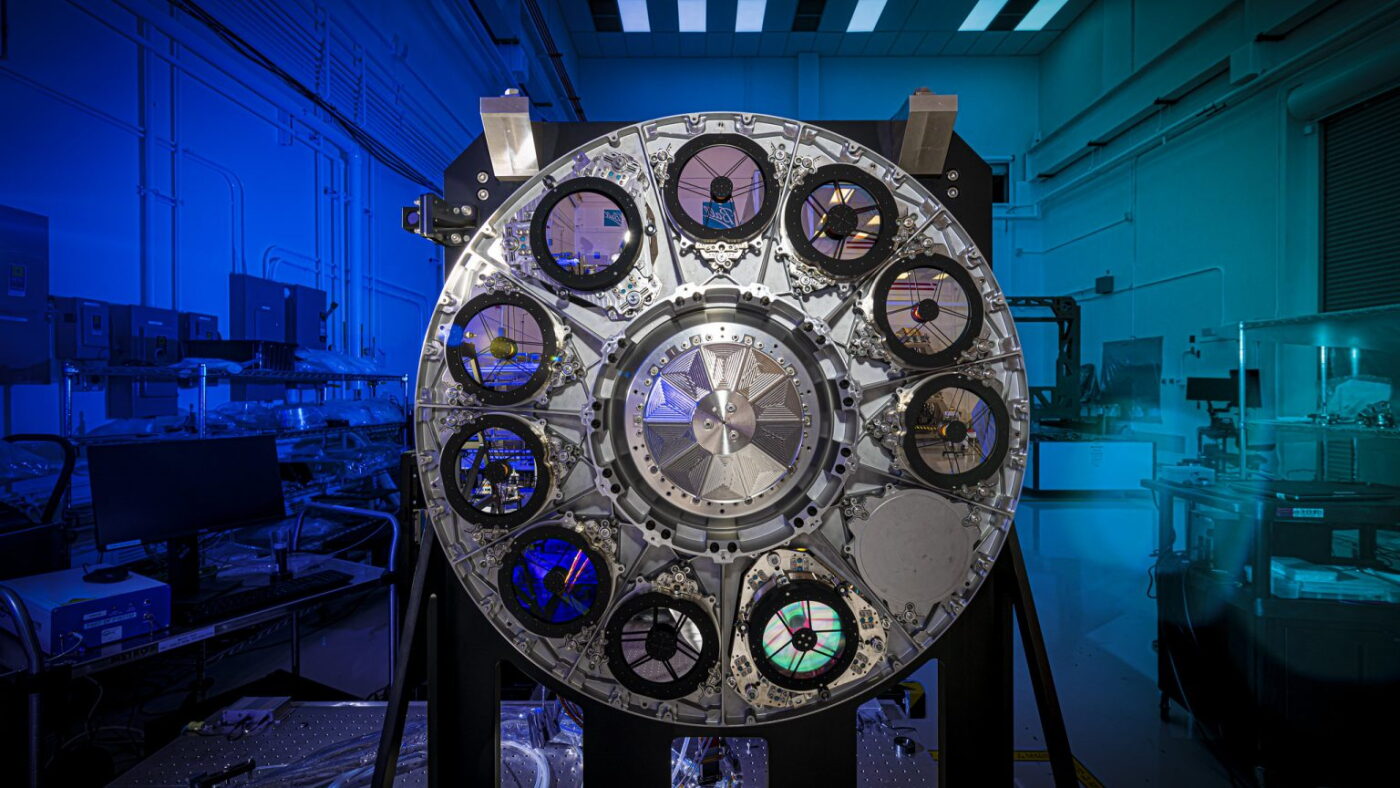
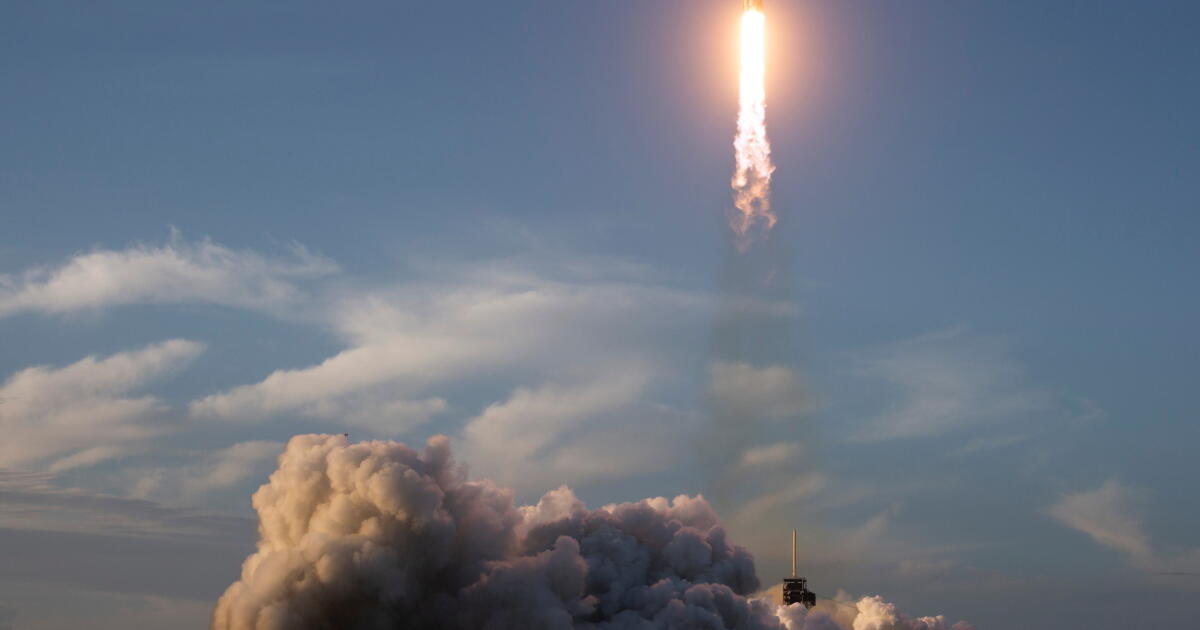
NASA plans to launch the Nancy Grace Roman Space Telescope on Sunday aboard a SpaceX Falcon Heavy rocket from Florida's Kennedy Space Center at 7:26 a.m. EDT. The mission aims to study dark matter and dark energy, map billions of galaxies, and examine black holes. The telescope will have a field of view at least 100 times larger than that of the Hubble Space Telescope and is designed to travel about one million miles from Earth over its five-year lifetime. Named after NASA's first chief astronomer, Nancy Grace Roman, the telescope is set to work alongside the James Webb Space Telescope to give scientists a broader view of the universe.
Written by AI on 2026-08-28, from this article's own text only (the story summary below draws on all the coverage).
See how they differ ↓

AI analysis

Story summary

NASA's Nancy Grace Roman Space Telescope, a $4.3 billion observatory, launched on August 30 aboard a SpaceX Falcon Heavy rocket from Kennedy Space Center in Florida. The telescope is expected to revolutionize our understanding of the universe by mapping billions of galaxies, studying dark matter and dark energy, and discovering thousands of new planets beyond our solar system. Its surveys will also help scientists better understand the expansion of the universe and the mysterious force called dark energy that's causing it to expand. With an unprecedented field of view 100 times larger than the Hubble Space Telescope, Roman will be able to see distant objects in infrared light, including stars and galaxies that are invisible to human eyes. The telescope is named after Nancy Grace Roman, NASA's first chief astronomer, who played a crucial role in the development of the Hubble Space Telescope. Over the next three months, the Roman Space Telescope will deploy its antenna, adjust its course, and power on its two instruments: JPL's planet hunter and a night-sky surveyor called the Wide Field Instrument. Once fully operational, Roman is expected to vastly expand our knowledge of planets outside our solar system, increasing it from about 6,300 planets to more than 100,000.

Written for “NASA's New Space Telescope Launch” on 2026-11-21, grounded in this article and the 3 other(s) covering the same event.

How they differ

3 outlets covered “NASA's New Space Telescope Launch”.

What each outlet says

One AI summary per outlet of its latest article on this story, written from that article alone and checked against it. Open the article for the outlet's own words.

New York PostThis outlet28 Aug

NASA plans to launch the Nancy Grace Roman Space Telescope on Sunday aboard a SpaceX Falcon Heavy rocket from Florida's Kennedy Space Center at 7:26 a.m. EDT. The mission aims to study dark matter and dark energy, map billions of galaxies, and examine black holes. The telescope will have a field of view at least 100 times larger than that of the Hubble Space Telescope and is designed to travel about one million…

NASA set to launch next-generation telescope to unlock universe’s deepest mysteries (this article)
Los Angeles Times31 Aug

NASA's new space telescope, the Nancy Grace Roman Space Telescope, is set to launch Sunday morning atop a SpaceX Falcon Heavy rocket and will aid in the search for "Earth twins" and help scientists understand the universe's fate. The $4.3-billion telescope has been developed by massive teams of engineers and scientists over a decade, with personnel from Caltech and NASA's Jet Propulsion Laboratory contributing…

NASA's new space telescope will aid hunt for 'Earth twins' and seek the fate of the universe →2 articles from Los Angeles Times on this story
NPR28 Aug

NASA is about to launch the $4.3-billion Nancy Grace Roman Space Telescope on August 30, which could change our understanding of the universe by discovering more exploding stars and multitudes of planets orbiting distant stars. The telescope has an unusual history, having been repurposed from a surveillance satellite that was previously used for downward-facing observations. Cosmologist Daniel Scolnic at Duke…

NASA is about to launch a space telescope that could change how we see the universe →

Where they agree and split

Framing

How the first headlines put it

Stated as fact2
The headlines (2)

NASA is about to launch a space telescope that could change how we see the universe NPR · stated as fact

NASA set to launch next-generation telescope to unlock universe’s deepest mysteries New York Post · stated as fact

The full story: what happened, how it changed, and all 4 articles →

Compared with similar articles

This article reads unscored and hedges 0% of its claims. Each row says how that neighbour differs.
NPR
Hedges 4 of 32 claims Outlet record 60/100
Los Angeles Times
Hedges 6 of 51 claims Outlet record 95/100
Los Angeles Times
Hedges 1 of 43 claims Outlet record 95/100

Story

NASA's New Space Telescope Launch
Technology · 4 article(s) covering the same event. Compare every outlet's account →
How this article was measured signals, leaning charts, publisher record, byline, topics and claims

Signals How these are calculated →

Claims extracted
15
sentences that state something as happening or true
Uncertain
0%
0 of 15 hedged ("reportedly", "may", "according to")
Leaning
not political
takes no side on a contested political question
Publisher signals
66/100
New York Post's corrections and hedging, across everything collected from it. Not a measure of accuracy.
Outlets on this story
4
Technology
Same framing elsewhere
1
articles that frame the event the way this one does
Analyzed 2026-08-28 · how these are computed

How this is being covered How these are calculated →

Article leaning vs. publisher reliability
Source leaning vs. consistency

Publisher

New York Post · 21675 article(s) · 41 correction(s) detected
Running correction rate · 41 correction(s)

Who wrote this

FOX Weather
25 article(s) here · 1 carrying a prediction
Millions of people along much of Florida’s Atlantic Coast will face a weeklong flash flood threat that NOAA’s Weather Prediction Center said has similar atmospheric conditions to the event that produced historic flooding in parts of Brevard County earlier this month.
A nor’easter is expected to lash the I-95 corridor with heavy rain and gusty winds beginning Thursday, while dumping the season’s first significant snow across higher elevations of upstate New York and northern New England into the weekend.
Torrential rain triggered Flash Flood Emergencies across Polk County, Tennessee, and Fannin County, Georgia, along the state line early Thursday after storms fired along the southern end of a massive cross-country storm that will move into the East Coast through the day.
The massive system will reach the East Coast Thursday and is expected to have impacted more than 35 states and 120 million people by the end of the week.
It’s the first time since 2020 that Halloween is on a Saturday, and Americans from coast to coast will be making the most of the weekend to celebrate.
With the colossal collapse occurring on the final day of the 2026 season, the park said it will assess the site and determine its next steps during the offseason.
A powerful nor’easter spinning off the North Carolina coast is expected to bring coastal flooding, beach erosion, gusty winds, dangerous surf and rip currents to parts of the Mid-Atlantic and Southeast coasts through Thursday.
Video shows Barker and Beckett landing the helicopter as close to the AirTag ping as they could.
Some of these wolves could have the opportunity to be released into the wild down the line, so it’s very important to maintain their fear of people.
Once they’ve healed from their surgery, the squirrels will be put into an outdoor enclosure with lots of climbing opportunities to see how they handle their lack of tail in a large space as a test for being in the wild.
Also by FOX Weather
Nothing else under this byline is closely related to this article, so these are simply their most recent.
All 25 articles by FOX Weather →

Topics

Falcon Heavy Florida NASA SWNS SpaceX

Subjects

NASA ORG · 10× SpaceX ORG · 3× Roman NORP · 2× Florida GPE · 1× Nancy Grace Roman PERSON · 1× Reuters Connect ORG · 1× SWNS ORG · 1× Sydney Rohde PERSON · 1× USA TODAY Network ORG · 1×

Narrative

The agency, in collaboration with SpaceX, plans to launch the Nancy Grace Roman Space Telescope no earlier than 7:26 a.m. EDT aboard a SpaceX Falcon Heavy rocket from Launch Complex 39A at NASA’s Kennedy Space Center in Florida.
framing: assertive · carried by 1 article(s) · first seen 2026-08-28
NASA is set to launch its own next-generation telescope into space on Sunday, to explore some of the universe’s biggest mysteries.

Claims (15 extracted, 0 hedged)

NASA is set to launch its own next-generation telescope into space on Sunday, to explore some of the universe’s biggest mysteries. asserted
NASA → set → mysteries
The agency, in collaboration with SpaceX, plans to launch the Nancy Grace Roman Space Telescope no earlier than 7:26 a.m. EDT aboard a SpaceX Falcon Heavy rocket from Launch Complex 39A at NASA’s Kennedy Space Center in Florida. asserted
agency → plan → Florida
The mission aims to uncover more information about some of the universe’s greatest mysteries, including dark energy. asserted
mission → aim → energy
Roman was known as the “mother of Hubble” for her decades of work at NASA helping pave the way for the Hubble Space Telescope. asserted
Roman → know → Telescope
She played a fundamental role in NASA’s early era of space exploration after joining the agency in 1959 and becoming its chief astronomer in 1960. asserted
She → play → 1960
Roman worked at NASA for decades before retiring in 1997. asserted
Roman → work → 1997
NASA said the Nancy Grace Roman Space Telescope was built to pair sharp infrared vision with a field of view at least 100 times larger than that of the Hubble Space Telescope. asserted
Telescope → say → Telescope
Its new surveys will help scientists study dark matter and dark energy, map billions of galaxies, examine black holes and explore objects ranging from our own solar system to the edge of the observable universe. asserted
scientists → help → universe
Once in space, the telescope will travel about one million miles from Earth. asserted
telescope → travel → Earth
The mission has a five-year lifetime, with a goal of operating for 10 years. asserted
mission → have → years
Roman’s science data will also be made publicly available after it is processed. asserted
it → make → ?
Roman will work alongside the James Webb Space Telescope, which is already operating in space, to give scientists an even broader view of the universe. asserted
which → work → universe
NASA and SpaceX are launching the Nancy Grace Roman Space Telescope to probe the universe’s biggest mysteries. asserted
NASA → launch → mysteries
The new telescope boasts infrared vision 100 times wider than Hubble, aiming to map galaxies and study dark energy. asserted
telescope → boast → energy
Named after NASA’s first chief astronomer, Nancy Grace Roman, the telescope will travel one million miles from Earth. asserted
telescope → name → Earth
Give feedback · no sign-in needed

No sign-in needed for now. Your note is sent without a name, so it cannot be answered.

History Support