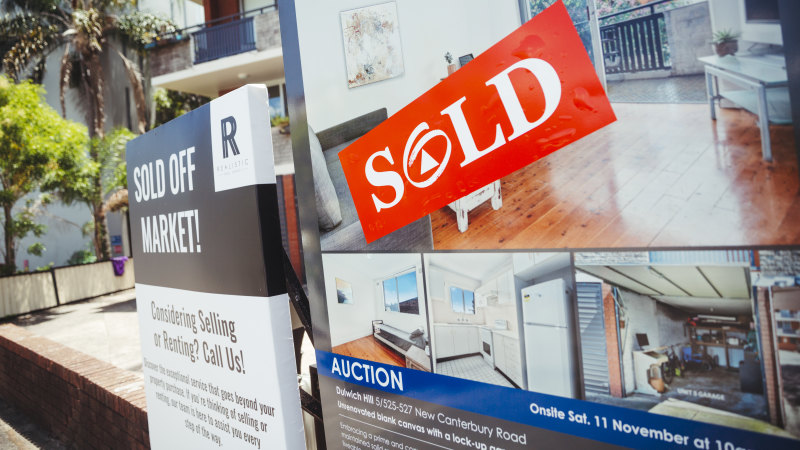
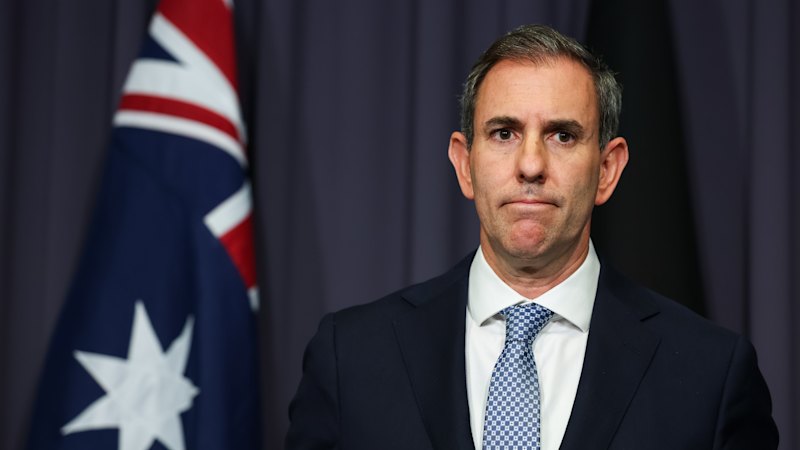
Photo via The Sydney Morning Herald

Housing affordability craters to record low despite fall in prices

Read the original at The Sydney Morning Herald ↗
Cite

Wright, S. (2026, September 4). Housing affordability craters to record low despite fall in prices. The Sydney Morning Herald. https://www.smh.com.au/politics/federal/housing-affordability-craters-to-record-low-despite-fall-in-prices-20260904-p60ugb.html?ref=rss&utm_medium=rss&utm_source=rss_feed

Dated when The Aporia collected the article, usually within hours of publication. Check the original for its exact date and byline.

The Sydney Morning Herald · collected 2026-09-04 · by Shane Wright

Quick Summary

Financial markets expect another interest rate rise at the Reserve Bank's meeting in September. Two measures of housing affordability have fallen to record lows, with median-income households able to afford just 12% of homes sold in some areas, despite a slight drop in house prices. According to realestate.com.au, it now takes over six years for an average household to save a 20% deposit on a median-priced home, up from three years at the turn of the century. Affordability has deteriorated across all capital cities except Sydney and Melbourne, with some smaller capitals hit particularly hard by falling incomes and rising mortgage costs.
Written by AI on 2026-09-04, from this article's own text only (the story summary below draws on all the coverage).

AI analysis

Story summary

Housing affordability has reached a record low, despite house prices falling in recent times. According to two separate measures, including one by realestate.com.au and another by the Housing Industry Association (HIA), housing affordability worsened in the June quarter. The decline is attributed to three interest rate hikes by the Reserve Bank of Australia (RBA), which pushed the cash rate from 3.6% to 4.35%. This has made it difficult for people, especially those earning a median income of $125,000 per year, to afford homes. In fact, such households can now only afford 12% of all homes sold in the 2025-26 financial year. The cities of Sydney and Melbourne remain the least affordable, with Sydney being the worst. Victoria is the most affordable state, but even there, only 16% of homes are within financial reach, down from 19% last year.

Written for “Housing Affordability Crisis” on 2026-11-20, grounded in this article and the 0 other(s) covering the same event.

Compared with similar articles

This article reads leans left and hedges 17% of its claims. Each row says how that neighbour differs.
The Guardian
Leans left Hedges 2 of 9 claims Outlet record 64/100
“Article A discusses a record low in housing affordability due to interest rate rises, while Article B focuses on falling property prices and potential further declines”
ABC News (AU)
Leans right further right than this Hedges 13 of 58 claims Outlet record 67/100
“Article A discusses a decline in housing affordability and interest rate rises, while Article B is about a Liberal senator's proposal for building 'basic' homes to reduce costs”
BBC News
Leans right further right than this Hedges 0 of 21 claims Outlet record 65/100
“The two articles report on different topics: housing affordability in Australia vs mortgage rates in the UK.”

Story

Housing Affordability Crisis
Economy/Business · 1 article(s) covering the same event.
How this article was measured signals, leaning charts, publisher record, byline, topics and claims

Signals How these are calculated →

Claims extracted
30
sentences that state something as happening or true
Uncertain
17%
5 of 30 hedged ("reportedly", "may", "according to")
Leaning
Leans left
of the writing, not the subject · beta estimate
Publisher signals
61/100
The Sydney Morning Herald's corrections and hedging, across everything collected from it. Not a measure of accuracy.
Outlets on this story
1
Economy/Business
Same framing elsewhere
1
articles that frame the event the way this one does
Analyzed 2026-09-04 · how these are computed

How this is being covered How these are calculated →

Article leaning vs. publisher reliability
Source leaning vs. consistency

Publisher

The Sydney Morning Herald · 7761 article(s) · 16 correction(s) detected
Running correction rate · 16 correction(s)

Who wrote this

Shane Wright
30 article(s) here · 1 carrying a prediction
Treasurer Jim Chalmers is promising a “Goldilocks” mid-year budget update that will be focused on savings large enough ease inflation pressures but which will not hurt the overall economy.
The Greens could get in the way of Treasurer Jim Chalmers’ plans to overhaul capital gains tax by the end of the year, backing an inquiry into a separate proposal from independent MP Allegra Spender.
The CEOs of two of the nation’s largest banks have backed cuts in government spending to bring down inflation and make housing more affordable amid warnings the AI building boom could push up the cost of suburban homes as they compete for electricians and plumbers.
The federal government’s budget overhaul of negative gearing and capital gains tax has been blamed for the biggest fall in home loans taken out by investors on record, with warnings the property market will struggle well into next year.
The AI building boom that is powering the global economy could force interest rates to remain higher, the Reserve Bank’s chief economist has warned, while revealing there are few signs the new technology will eat into the job prospects of young Australians.
But it wasn’t accompanied by a surge in unemployment which would peak at 7.4 per cent.
It may not be an official recession, but the Reserve Bank knows it may feel like one for plenty of Australians after it delivered another dose of monetary policy punishment to the country.
The last time the RBA board split was in May when 8 voted in favour of a rate hike with one holding out.
The Reserve Bank is being warned it could drive Australia into a recession and leave tens of thousands of people out of work with a Melbourne Cup Day interest rate rise that will lift pressure on Treasurer Jim Chalmers to cut deeper into government spending.
The nationwide slump in house values has spread to Brisbane and Perth with no signs the property downturn is close to ending, amid fears it could get worse if the Reserve Bank pushes ahead with another interest rate hike this week.
Also by Shane Wright
Chalmers reveals plan for ‘Goldilocks’ budget update
2026-11-16 · The Sydney Morning Herald
Nothing else under this byline is closely related to this article, so these are simply their most recent.
All 30 articles by Shane Wright →

Topics

HIA Melbourne RBA Sydney the Reserve Bank’s

Subjects

Sydney GPE · 4× Australian NORP · 2× HIA ORG · 2× Melbourne GPE · 2× RBA ORG · 2× NSW GPE · 1× South Australia GPE · 1× Victoria GPE · 1× the Housing Industry Association’s ORG · 1× the Reserve Bank’s ORG · 1×

Narrative

The federal government has been accused by the Coalition of actively trying to push down house prices and “destroy” the wealth of Australian families. But Housing Minister Clare O’Neil said the government’s budget changes to property taxation, such as negative gearing, on top of its efforts to build more public and social housing, were recognition that homes were out of the reach of ordinary people.
framing: assertive · carried by 1 article(s) · first seen 2026-09-04
According to realestate.com.au, a median-income household earning $125,000 a year could afford just 12 per cent of all homes sold in the 2025-26 financial year.
2026-09-04 · The Sydney Morning Herald
Housing affordability craters to record low despite fall in prices · assertive framing

Claims (30 extracted, 5 hedged)

Housing affordability has slumped to its lowest level on record, two separate measures have revealed, with falling house prices not enough to offset the financial hit delivered by the Reserve Bank’s three interest rate rises. asserted
prices → slump → rises
Both realestate.com.au and the Housing Industry Association’s affordability indicators slipped in the June quarter, with some of the biggest hits to people hoping to buy in smaller capitals, while Sydney remains the nation’s least affordable city and Melbourne’s market goes sideways. asserted
market → slip → capitals
The indicators cover the period in which the RBA lifted the cash rate from 3.6 per cent to 4.35 per cent. asserted
RBA → cover → cent
Financial markets put the chance of another quarter-percentage-point increase at the bank’s late September meeting at four in five. asserted
markets → put → five
According to realestate.com.au, a median-income household earning $125,000 a year could afford just 12 per cent of all homes sold in the 2025-26 financial year. uncertain
household → accord → year
There had been a slight improvement the previous year as official interest rates fell. asserted
rates → fall → ?
South Australia, which has gone through a surge in property prices over the past two years, is now the least affordable state, overtaking NSW, which has held that position since 2011. asserted
which → go → 2011
A median-income household in SA could afford just 7 per cent of homes sold across the state. uncertain
household → afford → state
It now takes just over six years for an average household to save a 20 per cent deposit on a median-priced home. asserted
household → take → home
At the turn of the century, it took three years. asserted
it → take → years
Senior economist with realestate.com.au, Angus Moore, said the February, March and May rate increases delivered by the Reserve Bank had added to the pressure facing people wanting to buy a home. uncertain
increases → say → home
“Looking ahead, affordability may improve marginally if home prices continue to soften, but this is unlikely to be a turning point for many buyers,” he said. uncertain
he → look → buyers
“Without a meaningful increase in housing supply, affordability will remain a significant challenge, particularly for lower-income households.” Figures released this week by property analytics firm Cotality showed house values have fallen for five consecutive months. asserted
values → remain → months
The Commonwealth Bank is expecting price falls of up to 13 per cent in Sydney by April. asserted
Bank → expect → April
The HIA’s dwelling-price-to-earnings measure has fallen in Sydney, Canberra and Melbourne since March, each city having experienced drops in prices since the RBA started lifting rates. asserted
RBA → fall → rates
But affordability deteriorated in all other capital cities, with Brisbane and Perth almost as difficult to buy into as Sydney. asserted
Brisbane → deteriorate → Sydney
Both cities have experienced price rises of more than 20 per cent over the past two years, though they are now starting to fall. asserted
they → experience → years
HIA senior economist Tom Devitt said the recent lift in interest rates meant mortgage costs were climbing faster than incomes, reducing the affordability of the entire housing market. asserted
costs → say → market
He said buyers, particularly investors, had pulled back from the market, which had led to the recent drop in prices that would probably continue through the rest of 2026. asserted
that → say → 2026
“This will not be the makings of a sustainable improvement in affordability because it does not address the fundamental demand-supply mismatch that persists in Australian housing,” he said. asserted
he → address → housing
“When established home prices fall but the cost of land, labour, materials, infrastructure, finance and regulation does not, fewer new housing projects are financially viable.” asserted
projects → establish → land
The drop in housing affordability may be feeding into the jobs market. uncertain
drop → feed → market
Figures released by the Australian Bureau of Statistics on Friday showed a record 1.05 million people now have a second job, an 11 per cent jump over the past 12 months. asserted
people → release → months
More than one in 14 people holds down at least two jobs, the highest rate since the bureau started tracking the data in 1994. asserted
bureau → hold → 1994
The federal government has been accused by the Coalition of actively trying to push down house prices and “destroy” the wealth of Australian families. But Housing Minister Clare O’Neil said the government’s budget changes to property taxation, such as negative gearing, on top of its efforts to build more public and social housing, were recognition that homes were out of the reach of ordinary people. asserted
homes → accuse → people
O’Neil, who on Friday opened a 285-home development in Melbourne’s south-east made up of social, affordable and market rent properties partly financed by the federal government, noted the drop in affordability was not due to the government’s budget measures. asserted
drop → open → measures
“The challenge we face is that Australian house prices have increased by around 400 per cent since 2000. asserted
prices → face → 2000
If that happens again over the next generation, Australia will become a fundamentally less equal country where home ownership is beyond the reach of too many young people,” she said. asserted
she → happen → people
“The Coalition are the only ones remaining defending a broken status quo.” asserted
Coalition → remain → quo
Subscribers can sign up to our weekly Inside Politics newsletter. asserted
Subscribers → sign → newsletter

Give feedback · no sign-in needed

No sign-in needed for now. Your note is sent without a name, so it cannot be answered.

History Support