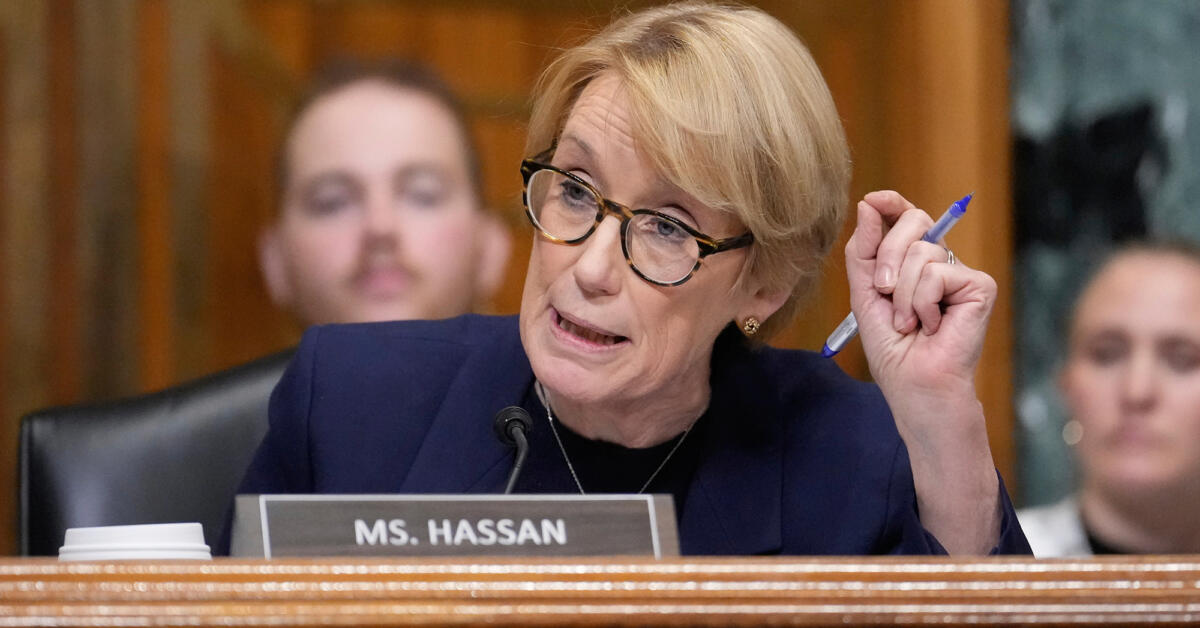
Photo via The Markup

‘We’re basically pushers:’ How a battle over kids on social media is unfolding in two California courtrooms

Read the original at The Markup ↗
Cite

Lecher, C. (2026, September 5). ‘We’re basically pushers:’ How a battle over kids on social media is unfolding in two California courtrooms. The Markup. https://themarkup.org/privacy/2026/01/30/were-basically-pushers-how-a-battle-over-kids-on-social-media-is-unfolding-in-two-california-courtrooms

Dated when The Aporia collected the article, usually within hours of publication. Check the original for its exact date and byline.

The Markup · collected 2026-09-05 · by Colin Lecher

Quick Summary

A California-based lawsuit alleges that social media companies knowingly put profits over kids' mental health by marketing their products to teenagers. The suit, which also targets YouTube, TikTok, and Snap, seeks monetary damages and changes to business practices. Internal documents reveal alarming conversations among company employees, including a 2016 email from Mark Zuckerberg suggesting that Facebook's live videos feature be kept hidden from parents and teachers. A key figure in the case is a Meta researcher who described Instagram as a "drug" that exploits users' addiction, allegedly writing that the company was "pushers" causing Reward Deficit Disorder in teenagers.
Written by AI on 2026-09-05, from this article's own text only (the story summary below draws on all the coverage).
See how they differ ↓

AI analysis

Story summary

Meta, the parent company of Facebook and Instagram, has agreed to a settlement with 47 states and Washington D.C. worth up to $17.1 billion. The settlement resolves claims that features on Instagram and Facebook encouraged compulsive use among children, contributing to mental health harms. As part of the agreement, Meta will make significant changes to its platforms, including implementing default two-hour daily limits, a midnight-to-6 a.m. Night Access Mode, and limiting certain features such as filters and algorithmic feeds.

This settlement marks a major shift in how social media companies are held accountable for their impact on users' mental health. While some see it as a step in the right direction, others argue that therapy is not the best use of funds from this settlement, and that $420 million should be directed towards addressing underlying issues rather than just treating symptoms.

The agreement also highlights concerns about social media addiction, with some likening it to a form of "digital tobacco", where companies prioritize profits over user safety. This has sparked renewed calls for regulation and stricter safeguards on social media use, particularly among children.

Written for “Social Media and Teen Safety Concerns” on 2026-11-20, grounded in this article and the 8 other(s) covering the same event.

How they differ

7 outlets covered “Social Media and Teen Safety Concerns”.

What each outlet says

One AI summary per outlet of its latest article on this story, written from that article alone and checked against it. Open the article for the outlet's own words.

The MarkupThis outlet5 Sep

A California-based lawsuit alleges that social media companies knowingly put profits over kids' mental health by marketing their products to teenagers. The suit, which also targets YouTube, TikTok, and Snap, seeks monetary damages and changes to business practices. Internal documents reveal alarming conversations among company employees, including a 2016 email from Mark Zuckerberg suggesting that Facebook's live…

‘We’re basically pushers:’ How a battle over kids on social media is unfolding in two California courtrooms (this article)
Washington Examiner6 Sep

The article discusses Meta's $16.7 billion settlement with 47 state attorneys general over allegations that its platforms harmed minors through addiction and mental health issues. The settlement requires Meta to implement age-based segregation on its platforms, including restrictions on content, time limits, and data collection for verification purposes. This measure is likely to reduce digital privacy for all…

Meta lost $16.7 billion. You just lost your digital privacy →3 articles from Washington Examiner on this story
The Dispatch3 Sep

Forty-seven states, Washington D.C., and several U.S. territories have collectively settled a lawsuit against Meta with combined damages potentially totaling hundreds of billions of dollars. The settlement requires Meta to pay up to $17.1 billion and make significant changes to Instagram and Facebook. This outcome was reached in a single agreement encompassing all 47 states and the other plaintiff jurisdictions. The…

Forty-Seven States Couldn’t Stop Meta’s Algorithm →
Fox News3 Sep

The author reflects on the irony of a documentary portraying Hasidic restrictions on technology as "backward" after Meta agreed to a proposed settlement worth up to $17 billion to address allegations that Facebook and Instagram harmed children through addictive design. The author contrasts their own childhood spent outdoors in rural California with modern kids' excessive screen time, which can be more compelling…

America mocked the Amish and other groups over technology. Maybe they were right →
The Free Press4 Sep

A judge ordered Meta to pay $567 million in penalties, with $420 million allocated towards teen therapy due to their addiction and mental health issues from using Facebook and Instagram. Meta has also agreed to a separate settlement of up to $18 billion with 47 states and the District of Columbia, which will direct money towards counseling for teens as well. The article's authors argue that therapy may not be the…

Meta Will Spend Millions for Teen Therapy. It’s a Mistake. →
The Guardian4 Sep

The author, Joan Donovan, argues in an opinion piece that Mark Zuckerberg should resign from Meta due to the company's prioritization of profit over user safety. A settlement of up to $18bn has been reached between Meta and US states accusing it of harming children with addictive products. The settlement includes design restrictions on teen accounts, such as limiting screen time and notification access, but Donovan…

It’s time for Mark Zuckerberg to resign from Meta | Joan Donovan →
Show 1 more outlets
Los Angeles Times6 Sep

Meta has agreed to pay up to $17 billion over 10 years and make changes to Facebook and Instagram to address allegations that the platforms were designed to addict and harm kids, as part of a landmark settlement with 47 states. The new rules include default two-hour daily limits, a midnight-to-6 a.m. Night Access Mode, and other child-safety measures, requiring parental overrides for certain features. Parents and…

Meta's 'Big Tobacco moment' leaves parents asking if social media is too dangerous for kids →

Where they agree and split

Framing

How the first headlines put it

Stated as fact2
The headlines (2)

Forty-Seven States Couldn’t Stop Meta’s Algorithm The Dispatch · stated as fact

America mocked the Amish and other groups over technology. Maybe they were right Fox News · stated as fact

The full story: what happened, how it changed, and all 9 articles →

Compared with similar articles

This article reads leans strongly left and hedges 26% of its claims. Each row says how that neighbour differs.
Washington Examiner
Leans strongly left Hedges 8 of 38 claims Outlet record 67/100
Fox News
Leans right further right than this Hedges 3 of 66 claims Outlet record 66/100
“Article A mentions a settlement between Meta and states, while Article B discusses internal Meta research, but there is no clear indication that both articles are describing the same specific incident or time frame.”
Los Angeles Times
Leans strongly left Hedges 4 of 52 claims Outlet record 95/100
A new dark age? Different event
Dawn
Leans strongly right further right than this Hedges 3 of 60 claims Outlet record 67/100
“The articles discuss related topics, but do not describe a shared specific happening; one is an excerpt from investigative reporting on social media addiction and the other is a book review about the impact of technology on society”
404 Media
Hedges 3 of 47 claims Outlet record 95/100
“Article A discusses a16z's article about NYU Professor Ruby Thelot arguing against 'enshittification', while Article B mentions a Meta researcher's statement about Instagram causing addiction, but does not mention the specific discussion in Article A”
Los Angeles Times
Leans left further right than this Hedges 7 of 80 claims Outlet record 95/100
“Article A describes a legislative package to regulate AI and social media, while Article B focuses on a conversation between Meta researchers about Instagram's addictive nature in a California courtroom”
Washington Examiner
Leans strongly left Hedges 0 of 35 claims Outlet record 67/100
“Article A mentions a Meta researcher's internal email, while Article B discusses a $17 billion settlement between Meta and 47 state attorneys general”
NPR
Hedges 2 of 13 claims Outlet record 60/100
“Article A discusses a researcher's statement about Instagram causing Reward Deficit Disorder, while Article B announces government-proposed laws to give users choice over algorithms in Australia”

Story

Social Media and Teen Safety Concerns
Health · 9 article(s) covering the same event. Compare every outlet's account →
How this article was measured signals, leaning charts, publisher record, byline, topics and claims

Signals How these are calculated →

Claims extracted
58
sentences that state something as happening or true
Uncertain
26%
15 of 58 hedged ("reportedly", "may", "according to")
Leaning
Leans strongly left
of the writing, not the subject · beta estimate
Publisher signals
94/100
The Markup's corrections and hedging, across everything collected from it. Not a measure of accuracy.
Outlets on this story
9
Health
Same framing elsewhere
1
articles that frame the event the way this one does
Analyzed 2026-09-05 · how these are computed

How this is being covered How these are calculated →

Article leaning vs. publisher reliability
Source leaning vs. consistency

Publisher

The Markup · 21 article(s) · 0 correction(s) detected
No corrections detected for this publisher. That may mean careful reporting, or simply that nothing has been checked.

Who wrote this

Colin Lecher
10 article(s) here · 1 carrying a prediction
Doctoralia said it would conduct a detailed review of its online practices but noted it does not monetize patient data.
The upshot, some believe, could be new forms of regulation, including at the federal level.
In a press conference this week on New York City’s $12 billion budget gap, Mayor Zohran Mamdani zeroed in on the previous administration’s artificial intelligence chatbot as one of “a number of different things we’re going to pursue for savings.”
But The Markup and CalMatters’ August story examined how several data brokers used code called the “no-index” tag on pages where consumers could exercise their right to opt out.
Kevin DeLuca, an assistant professor of political science at Yale University who has studied similar news sites, sometimes called “pink slime” news, told The Markup and CalMatters earlier this year that such sites may not be outright lying.
A new audit has found that websites across the internet may be failing to abide by California privacy law, ignoring a requirement to not track visitors who set a privacy control.
Meanwhile, the Defense Department has signed off on the earliest contracts for the “Golden Dome,” a proposal to build a missile-defense system above the United States that may eventually cost hundreds of billions of dollars.
The “no-index” code tells search engines like Google not to catalog those pages, making it less likely that anyone would see them.
If you don’t live in California, but have friends or family in California who would be interested in helping us investigate, please share this article with them.
This story was produced in partnership with Agência Pública as part of a series on how regulatory solutions adopted in Brazil could point the way for the U.S.
Also by Colin Lecher
Nothing else under this byline is closely related to this article, so these are simply their most recent.
All 10 articles by Colin Lecher →

Topics

California Facebook Instagram Meta YouTube

Subjects

Meta ORG · 5× Facebook ORG · 4× Instagram ORG · 4× YouTube ORG · 4× California GPE · 2× CalMatters ORG · 1× Klaxon ORG · 1× Los Angeles Superior Court ORG · 1× Markup ORG · 1× TikTok ORG · 1×

Narrative

Condensing complaints from hundreds of school districts and state attorneys general, including California’s, the suit alleges that social media companies knew about risks to children and teens but pushed ahead with marketing their products to them, putting profits above kids’ mental health.
framing: mixed · carried by 1 article(s) · first seen 2026-09-05
The upshot, some believe, could be new forms of regulation, including at the federal level.

Claims (58 extracted, 15 hedged)

The Markup, now a part of CalMatters, uses investigative reporting, data analysis, and software engineering to challenge technology to serve the public good. asserted
Markup → use → good
Sign up for Klaxon, a newsletter that delivers our stories and tools directly to your inbox. asserted
that → sign → inbox
“oh my gosh yall IG is a drug,” the user experience specialist allegedly wrote to a colleague, referring to the social media platform Instagram. uncertain
specialist → write → platform
We are causing Reward Deficit Disorder bc people are binging on IG so much they can’t feel reward anymore.” asserted
they → cause → reward
The researcher concluded that users’ addiction was “biological and psychological” and that company management was keen to exploit the dynamic. asserted
management → conclude → dynamic
“The top down directives drive it all towards making sure people keep coming back for more,” the researcher added. asserted
researcher → drive → more
The conversation was included recently as part of a long-simmering lawsuit in a California-based federal court. asserted
conversation → include → court
Condensing complaints from hundreds of school districts and state attorneys general, including California’s, the suit alleges that social media companies knew about risks to children and teens but pushed ahead with marketing their products to them, putting profits above kids’ mental health. asserted
companies → condense → health
The suit seeks monetary damages and changes to companies’ business practices. asserted
suit → seek → practices
The suit, and a similar one filed in Los Angeles Superior Court, targets Facebook, Instagram, YouTube, TikTok, and Snap. asserted
suit → file → Facebook
The cases are exposing embarrassing internal conversations and findings at the companies, particularly Facebook and Instagram owner Meta, further tarnishing their brands in the public eye. asserted
cases → expose → eye
They are also testing a particular vector of attack against the platforms, one that targets not so much alarming content as design and marketing decisions that accelerated harms. asserted
that → test → harms
The upshot, some believe, could be new forms of regulation, including at the federal level. uncertain
some → believe → level
One document discussed during a hearing this week included a 2016 email from Mark Zuckerberg about Facebook’s live videos feature. asserted
document → discuss → feature
In the email, the Meta chief wrote, “we’ll need to be very good about not notifying parents / teachers” about teens’ videos. asserted
we → write → videos
“If we tell teens’ parents about their live videos, that will probably ruin the product from the start,” he wrote, according to the email. uncertain
he → tell → email
In slides summarizing internal tech company documents, released this week as part of the litigation, an internal YouTube discussion suggested that accounts from minors in violation of YouTube policies were actively on the platform for years, producing content an average of “938 days before detection – giving them plenty of time to create content and continue putting themselves and the platform at risk.” uncertain
accounts → summarize → risk
A spokesperson for Meta didn’t immediately respond to requests for comment. asserted
spokesperson → respond → comment
A YouTube spokesperson, José Castañeda, described the slide released this week as “a cherry-picked view of a much larger safety framework” and said the company uses more than one tool to detect underage accounts, while taking action every time it finds an underage account. asserted
it → describe → account
In court, the companies have argued that they are making editorial decisions permitted by the First Amendment,. asserted
they → argue → Amendment
That trial is set for June. asserted
trial → set → June
The state court litigation moved into jury selection this week, increasing the pressure on social media companies. asserted
litigation → move → companies
While the state and federal cases differ slightly, the core argument is the same: that social media companies deliberately designed their products to hook young people, leading to disastrous but foreseeable consequences. asserted
companies → differ → consequences
“It’s led to mental health issues, serious anxiety, depression, for many. asserted
It → lead → many
For some, eating disorders, suicidality,” said Previn Warren, co-lead counsel on the case in federal court. asserted
Warren → say → court
“For the schools, it’s been lost control over the educational environment, inability of teachers to really control their classrooms and teach. asserted
it → lose → classrooms
Meta and other companies have faced backlash for years over their treatment of kids on their platforms, including Facebook and Instagram. asserted
Meta → face → Facebook
Parents, lawmakers and privacy advocates have argued that social media contributed to a mental health crisis among young people and that tech companies failed to act when that fact became clear. asserted
fact → argue → people
Those allegations gained new scrutiny last month when a brief citing still-sealed documents in the federal suit became public. asserted
brief → gain → suit
While the suit also names TikTok, Snap, and Google as defendants, the filing includes allegations against Meta that are especially detailed. asserted
that → name → Meta
In the more than 200-page filing, for example, the plaintiffs argue that Meta deliberately misled the public about how damaging their platforms were. asserted
platforms → argue → public
The BreakdownPrivacy We Tested Kids’ Smart Toys for Privacy. asserted
We → test → Privacy
Here’s How You Can, Too asserted
Here → ’ → ?
All you need: your computer or smartphone, some free tools, and your child’s internet- or Bluetooth-connected toy Warren pointed to claims in the brief that Meta researchers found that 55% of Facebook users had “mild” problematic use of the platform, while 3.1 percent had “severe” problems. uncertain
percent → need → problems
Zuckerberg, according to the brief, pointed out that 3% of billions would still be millions of people. uncertain
% → accord → people
But the brief claims the company published research noting only that “we estimate (as an upper bound) that 3.1% of Facebook users in the US experience problematic use.” uncertain
% → claim → use
“That’s a lie,” Warren said. asserted
Warren → ’ → ?
In response to recent interest in the suits, Meta published a blog post this month arguing that the litigation “oversimplifies” the issue of youth mental health, and pointed to past instances where it has worked with parents and families with features to protect kids. asserted
it → publish → kids
The federal case faced a key hearing this week, as the defendants argued that a judge should summarily dismiss the case. asserted
judge → face → case
A decision on that motion is likely coming in the next few weeks, Warren said. asserted
Warren → come → weeks
…and 18 more, not listed.

Give feedback · no sign-in needed

No sign-in needed for now. Your note is sent without a name, so it cannot be answered.

History Support