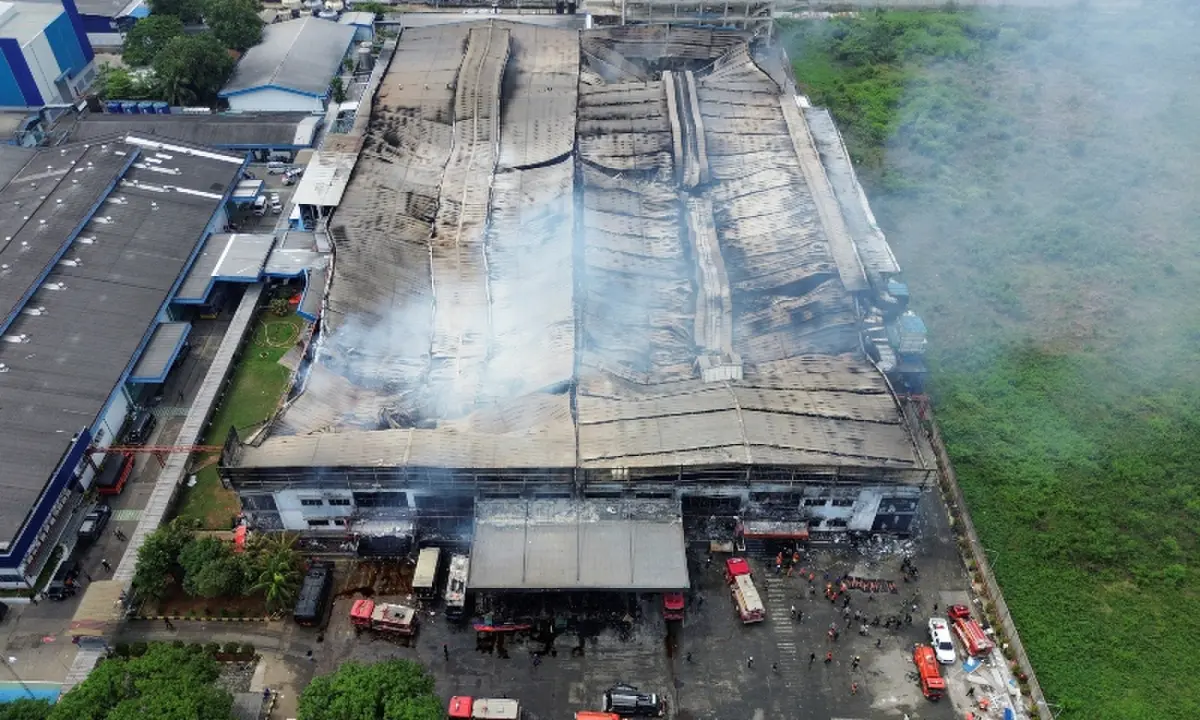
Photo via The Hindu

West Asian crude oil exports exceed pre-war levels but tanker attacks increase

Read the original at The Hindu ↗
Cite

Reuters. (2026, October 5). West Asian crude oil exports exceed pre-war levels but tanker attacks increase. The Hindu. https://www.thehindu.com/news/international/west-asian-crude-oil-exports-exceed-pre-war-levels-but-tanker-attacks-increase/article71545667.ece

Dated when The Aporia collected the article, usually within hours of publication. Check the original for its exact date and byline.

The Hindu · collected 2026-10-05 · by Reuters

Quick Summary

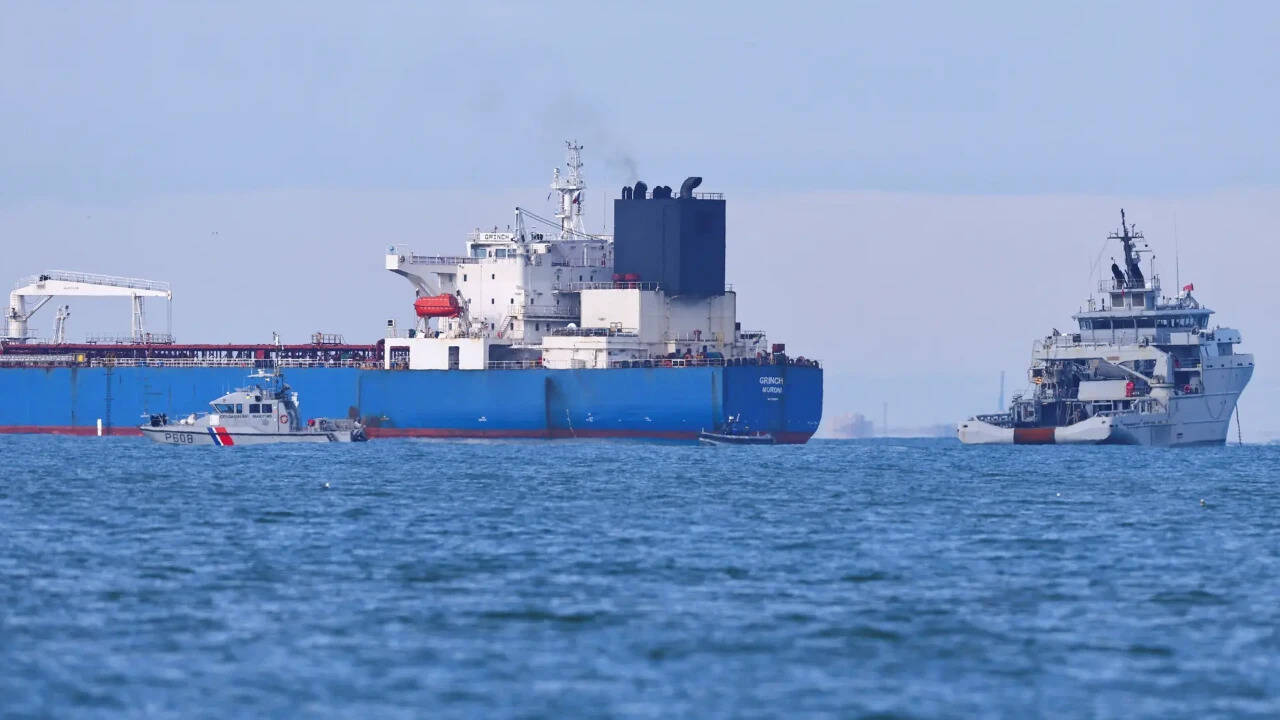
West Asian crude oil exports surpassed pre-war levels for four days in the final week of September 2026, reaching between 19.5 million to 22.5 million barrels per day, according to shipping data from Kpler. Despite this increase, tanker attacks have intensified, with at least seven incidents reported around the Strait of Hormuz by Marisks, including a fire aboard the Kazimah III on October 1st.
Written by AI on 2026-10-05, from this article's own text only (the story summary below draws on all the coverage).
See how they differ ↓

AI analysis

Story summary

Crude oil exports from West Asia exceeded pre-war levels in four out of seven days at the end of September 2026, according to provisional data from ship-tracking firm Kpler. Despite ongoing tanker attacks, including one incident involving an unknown projectile hitting a large crude carrier (VLCC) named Kazimah III near the Strait of Hormuz on October 1st, which caused onboard fires and injuries to crew members. Before the war started in February 2026 between the U.S.-Israeli coalition and Iran, the region's exports averaged about 18 million barrels per day (bpd). During September, however, Kpler recorded peak daily export volumes ranging from 19.5 million bpd to 22.5 million bpd. This resurgence comes despite claims by senior Islamic Revolutionary Guard Corps commander Ali Fadavi that only 3-4 million bpd are currently moving through the route compared to pre-war traffic, dismissing this amount as "negligible." The increase is attributed partly to increased ship-to-ship transfers reducing risks of Iranian missile or drone strikes.

Written for “Oil Exports Amid Attacks” on 2026-11-22, grounded in this article and the 4 other(s) covering the same event.

How they differ

3 outlets covered “Oil Exports Amid Attacks”.

What each outlet says

One AI summary per outlet of its latest article on this story, written from that article alone and checked against it. Open the article for the outlet's own words.

The HinduThis outlet5 Oct

West Asian crude oil exports surpassed pre-war levels for four days in the final week of September 2026, reaching between 19.5 million to 22.5 million barrels per day, according to shipping data from Kpler. Despite this increase, tanker attacks have intensified, with at least seven incidents reported around the Strait of Hormuz by Marisks, including a fire aboard the Kazimah III on October 1st.

West Asian crude oil exports exceed pre-war levels but tanker attacks increase (this article)
Al Jazeera6 Oct

Oil exports from the Gulf have increased significantly despite a rise in attacks on ships around the Strait of Hormuz. According to maritime intelligence firm Kpler, Gulf oil flows excluding Iran recovered to more than 81 percent of pre-war levels in September. However, shipping companies face higher costs due to security concerns and recent incidents include an attack on a Panama-flagged tanker that injured 12 crew…

Hormuz ship attacks surge: Are increased oil exports sustainable? →3 articles from Al Jazeera on this story
New York Post5 Oct

Gulf oil exporters exceeded pre-war export levels for half of September, shipping around 18.3 million barrels per day on September 30 according to Kpler data. However, ongoing attacks on tankers and logistical challenges threaten sustained high flows. For instance, the Kazimah III VLCC faced an attack in the Strait of Hormuz causing a fire, while another tanker, Lipsi, was damaged by an unknown projectile near Oman…

Gulf oil exports tops pre-war levels amid ships facing ‘unpredictable’ threats →

Where they agree and split

Framing

How the first headlines put it

Stated as fact3
The headlines (3)

West Asian crude oil exports exceed pre-war levels but tanker attacks increase The Hindu · stated as fact

Middle East oil exports surpass pre-war levels despite tensions, data shows Al Jazeera · stated as fact

Gulf oil exports tops pre-war levels amid ships facing ‘unpredictable’ threats New York Post · stated as fact

The full story: what happened, how it changed, and all 5 articles →

Compared with similar articles

This article reads unscored and hedges 21% of its claims. Each row says how that neighbour differs.
BBC News
Leans left Hedges 1 of 15 claims Outlet record 65/100
“The articles discuss different aspects of oil markets and policies without overlapping in time, place, or outcome.”
Times of India
Hedges 1 of 7 claims Outlet record 58/100
“Article A describes the resumption of oil loading at Yanbu after a pipeline attack, while Article B discusses overall crude oil export levels and tanker attacks in West Asia over a broader timeframe.”
CBS News
Hedges 1 of 2 claims Outlet record 66/100
“The articles discuss different time periods and aspects of oil exports, with Article A focusing on a general recovery to prewar levels and Article B providing detailed data on recent increases despite ongoing attacks.”
The Sydney Morning Herald
Leans right Hedges 7 of 26 claims Outlet record 61/100
“The articles discuss different aspects of the economic impacts of the Middle East conflict, but describe distinct occurrences: one focuses on Australian gas industry revenue increases due to LNG price surges; the other reports on crude oil export levels and tanker attacks in West Asia.”
ABC News (AU)
Hedges 1 of 20 claims Outlet record 67/100
“The articles describe different aspects of the global oil market and do not report on a single specific incident.”
Al Jazeera
Leans left Hedges 2 of 10 claims Outlet record 60/100
New York Post
Hedges 2 of 23 claims Outlet record 66/100
Al Jazeera
Leans left Hedges 7 of 75 claims Outlet record 60/100
“The articles discuss different aspects of oil trade and supply issues, one focusing on increased West Asian crude oil exports despite tanker attacks in the Strait of Hormuz, while the other focuses on Central Asian countries turning to Iranian oil due to Russia's fuel crisis.”
The Straits Times
Leans right Hedges 0 of 8 claims Outlet record 64/100
“The articles describe different aspects of activities in the Strait of Hormuz: one focuses on crude oil export levels despite attacks, while the other discusses an Iranian official's statement about blocking illegal routes.”
The Guardian
Hedges 4 of 17 claims Outlet record 63/100
“The articles discuss different aspects of the situation involving West Asian oil exports and tensions with Iran, but they do not describe the same specific incident.”

Story

Oil Exports Amid Attacks
Economy/Business · 5 article(s) covering the same event. Compare every outlet's account →
How this article was measured signals, leaning charts, publisher record, byline, topics and claims

Signals How these are calculated →

Claims extracted
19
sentences that state something as happening or true
Uncertain
21%
4 of 19 hedged ("reportedly", "may", "according to")
Leaning
not political
takes no side on a contested political question
Publisher signals
60/100
The Hindu's corrections and hedging, across everything collected from it. Not a measure of accuracy.
Outlets on this story
5
Economy/Business
Same framing elsewhere
1
articles that frame the event the way this one does
Analyzed 2026-10-05 · how these are computed

How this is being covered How these are calculated →

Article leaning vs. publisher reliability
Source leaning vs. consistency

Publisher

The Hindu · 907 article(s) · 2 correction(s) detected
Running correction rate · 2 correction(s)

Who wrote this

Reuters
1227 article(s) here · 1 carrying a prediction
At least 14 people may still be trapped under the rubble of a residential building that was struck by a Russian drone on Sunday (November 22, 2026) morning in Ukraine's Kyiv region, President Volodymyr Zelenskyy said.
One body bag might contain body parts from several people, police said.
Piastri, who started 17th, could only agree.
The former president is clinically stable and conscious, but there is no forecasted discharge at this time.
Iran’s Foreign Minister Abbas Araghchi said Tehran still hoped diplomacy could end its war with the United States, while U.S. President Donald Trump said Iran wanted a deal but one that was not acceptable to him.
The Borsellino family have repeatedly called for clarity, and reacted with dismay to news of De Gennaro’s death. “Another piece of the truth may have gone (with him),” said Manfredi Borsellino, the magistrate’s son.
Around 100 countries backed this position, but big arms-producing nations like the U.S., Russia, and Israel opposed this, resulting in a watered-down agreement that left open the question of whether future measures would be legally binding.
The Indian Youth Congress posted warnings on X that it would “storm your offices across the country and stage protests” unless Instagram accounts of its leaders are restored.
Asked separately about the possibility of Ukraine joining NATO at the end of the war, Mr. Zelenskiy said that although the topic had been raised at this week’s Coalition of the Willing meeting in Berlin, it was not currently clear to Kyiv whether it would be able to join the alliance, something it has long sought.
Democrats basking in their Nov 3 election wins will soon unveil an ambitious legislative agenda for the first 100 days and beyond, in a test of progressives’ influence and Republicans’ willingness to cooperate, as they take control of the US Congress on Jan 3.
2026-11-21 · assertive framing · Democrats won big in the US midterms. Now what?
Wire or desk byline, not an individual reporter.
Also by Reuters
Nothing else under this byline is closely related to this article, so these are simply their most recent.
All 1227 articles by Reuters →

Topics

Iran Kazimah III Kpler Marisks U.S.-Israeli

Subjects

Marisks ORG · 4× Kpler ORG · 3× Iran GPE · 2× Kuwait Oil Tanker Company ORG · 1× Kuwaiti NORP · 1× Maritime Trade Operations ORG · 1× Oman GPE · 1× Ras Markaz GPE · 1× U.S.-Israeli GPE · 1× United Kingdom GPE · 1×

Narrative

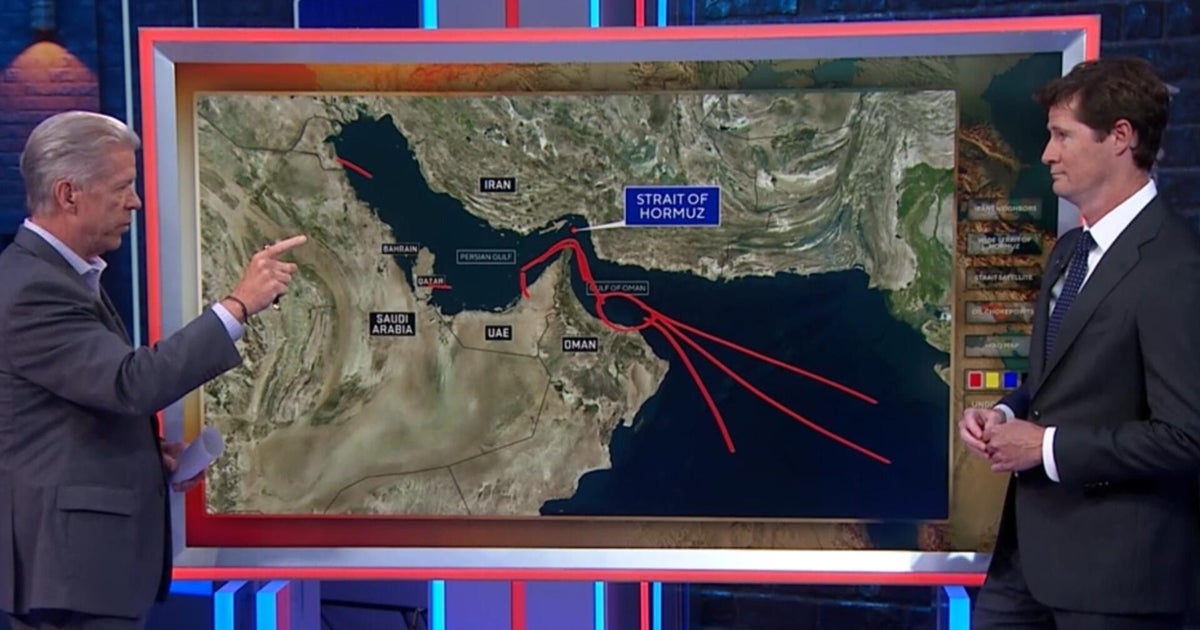
Before the Iran war started on February 28, the strait typically handled about 125 large commercial vessels per day, including tankers, gas carriers, bulkers and container vessels, accounting for some 20% of the world’s daily crude oil and LNG supply.
framing: mixed · carried by 1 article(s) · first seen 2026-10-05
The figures exclude any vessels that might have crossed the strait with their Automatic Identification System transponders turned off to avoid detection.

Claims (19 extracted, 4 hedged)

Crude oil exports from West Asia rose above pre-war levels in four of the seven days of the final week of September, shipping data showed on Monday (October 5, 2026), despite attacks on vessels passing through the Strait of Hormuz. asserted
data → rise → Hormuz
Crude exports from the region exceeded pre-war levels on September 24 and between September 27 and 29, rising to between 19.5 million barrels per day and 22.5 million bpd, provisional data from ship-tracking firm Kpler showed. asserted
data → exceed → Kpler
Exports averaged 18 million bpd between March 2025 and February this year before the U.S.-Israeli war with Iran began. asserted
war → average → Iran
The 7-day moving average for crude exports was at 18.5 million bpd on October 1, the data showed. asserted
data → move → October
These include transits via the Strait of Hormuz, the Red Sea, exports from terminals and ship-to-ship transfers in the Gulf of Oman. asserted
These → include → Oman
The overall tally for crude, oil products, chemicals and non-gas liquids averaged 22.4 million bpd in the seven days to September 30, Kpler data showed. asserted
data → average → September
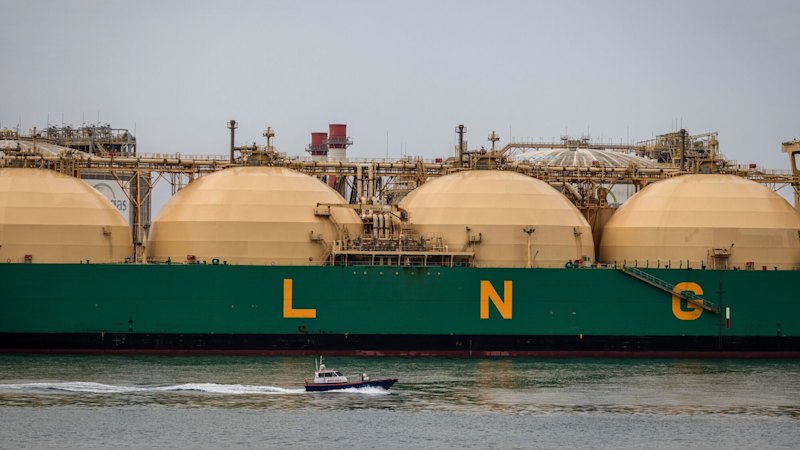
The number of liquefied natural gas cargoes exiting the Strait of Hormuz also rose in September to its highest monthly level since February. asserted
number → liquefy → February
The figures exclude any vessels that might have crossed the strait with their Automatic Identification System transponders turned off to avoid detection. uncertain
transponders → exclude → detection
Before the Iran war started on February 28, the strait typically handled about 125 large commercial vessels per day, including tankers, gas carriers, bulkers and container vessels, accounting for some 20% of the world’s daily crude oil and LNG supply. asserted
strait → start → supply
However, attacks on tankers continued in and around the Strait of Hormuz, with at least seven incidents reported, shipping intelligence firm Marisks said in a report on Saturday (October 3). asserted
Marisks → continue → Saturday
The very large crude carrier Kazimah III was reportedly struck on October 1 by an unknown projectile while operating in the strait, causing a fire onboard the tanker, it added. uncertain
it → strike → tanker
"All crew members were reported safe and were subsequently evacuated from the vessel," Marisks said. asserted
Marisks → report → vessel
Kazimah III was last seen discharging 2 million barrels of Kuwaiti crude at the Ras Markaz port on the coast of Oman on September 17, Kpler data showed. asserted
data → see → September
Its owner, Kuwait Oil Tanker Company, did not immediately respond to a request for comment outside office hours. asserted
owner → respond → hours
The United Kingdom Maritime Trade Operations agency has reported at least one attack a day in the Strait of Hormuz or in the Gulf of Aden since October 2. asserted
agency → report → October
Marisks said merchant vessels transiting the Strait of Hormuz face a "heightened and increasingly unpredictable kinetic threat" given the recent sharp increase in traffic. asserted
vessels → say → traffic
"Current intelligence suggests that the recent pattern of incidents may not necessarily represent deliberate targeting of individually selected merchant vessels," Marisks said. uncertain
Marisks → suggest → vessels
"Instead, available information indicates the possibility that Iranian forces are launching missiles into a predetermined engagement area or 'kill box', with weapons potentially acquiring and locking onto available radar signatures within that area. asserted
weapons → indicate → area
" Physical presence within the engagement zone at the relevant time could itself represent the primary exposure, it added. uncertain
it → represent → exposure
Give feedback · no sign-in needed

No sign-in needed for now. Your note is sent without a name, so it cannot be answered.

History Support