Photo via Washington Examiner

Flock isn’t the only player in the license plate reader market — meet its Motorola rival

Read the original at Washington Examiner ↗
Cite

Carter, C. (2026, October 6). Flock isn’t the only player in the license plate reader market — meet its Motorola rival. Washington Examiner. https://www.washingtonexaminer.com/policy/technology/4752797/flock-license-plate-reader-motorola-rival-data-sharing-system-surveillance-market/

Dated when The Aporia collected the article, usually within hours of publication. Check the original for its exact date and byline.

Washington Examiner · collected 2026-10-06 · by Claire Carter

Quick Summary

Senators Bernie Sanders and Jeff Merkley along with Representative Alexandria Ocasio-Cortez have introduced legislation called the Ban Flock Act that would restrict federal agencies from using or accessing data collected by automated license plate readers (ALPRs), also prohibiting grants to states and local governments that employ such technology. The bill targets Atlanta-based company Flock Safety, which contracts with numerous law enforcement agencies. However, Motorola Solutions is another significant player in the ALPR market, offering various technologies including national data-sharing systems for public safety use. While concerns over privacy and misuse of ALPRs have led many cities to terminate or reject Flock contracts, this has created opportunities for competitors like Motorola.
Written by AI on 2026-10-06, from this article's own text only (the story summary below draws on all the coverage).
See how they differ ↓

AI analysis

Story summary

On Friday, Rep. Alexandria Ocasio-Cortez (D-NY), Sen. Bernie Sanders (I-VT), and Sen. Jeff Merkley (D-OR) introduced the Ban Flock Act, aimed at prohibiting federal agencies from using or accessing data collected by automated license plate reader cameras (ALPRs) made by Flock Safety. The legislation would also prevent federal grants to state and local governments that use this technology. Critics argue that Flock's widespread network of approximately 120,000 cameras infringes on privacy rights, as the company monitors vehicle movements without public consent. Flock has faced backlash over reported misuse by police departments using their data for surveillance beyond official purposes.

Written for “Ban Flock License Plate Readers” on 2026-11-21, grounded in this article and the 3 other(s) covering the same event.

How they differ

3 outlets covered “Ban Flock License Plate Readers”.

What each outlet says

One AI summary per outlet of its latest article on this story, written from that article alone and checked against it. Open the article for the outlet's own words.

Washington ExaminerThis outlet6 Oct

Senators Bernie Sanders and Jeff Merkley along with Representative Alexandria Ocasio-Cortez have introduced legislation called the Ban Flock Act that would restrict federal agencies from using or accessing data collected by automated license plate readers (ALPRs), also prohibiting grants to states and local governments that employ such technology. The bill targets Atlanta-based company Flock Safety, which contracts…

Flock isn’t the only player in the license plate reader market — meet its Motorola rival (this article)2 articles from Washington Examiner on this story
The Independent2 Oct

Congresswoman Alexandria Ocasio-Cortez and Senator Bernie Sanders have introduced the Ban Flock Act, aiming to prohibit federal agencies from using automatic license-plate readers (ALPRs) due to concerns over misuse by law enforcement. The bill would also restrict state and local authorities from utilizing ALPR technology by cutting off federal funding for those who do not comply. According to recent reports, at…

AOC and Bernie Sanders introduce bill to ban license plate readers: ‘Flock is always watching’ →
404 Media6 Oct

Lawmakers including Senator Bernie Sanders, Representative Alexandria Ocasio-Cortez, and Senator Jeff Merkley have introduced the Ban Flock Act, which would prohibit federal agencies from using automatic license plate readers (ALPRs) and restrict funding to state and local governments that employ these technologies. The legislation also allows citizens to sue the government for ALPR violations. This move follows…

Lawmakers Introduce Multiple Laws to Curb Flock After 404 Media Coverage →

Where they agree and split

Framing

How the first headlines put it

Stated as fact2
The headlines (2)

AOC, Sanders, Merkley roll out bill to ban Flock cameras Washington Examiner · stated as fact

AOC and Bernie Sanders introduce bill to ban license plate readers: ‘Flock is always watching’ The Independent · stated as fact

The full story: what happened, how it changed, and all 4 articles →

Compared with similar articles

This article reads leans left and hedges 9% of its claims. Each row says how that neighbour differs.
404 Media
Hedges 2 of 25 claims Outlet record 95/100
404 Media
Hedges 0 of 13 claims Outlet record 95/100
“The articles discuss different aspects of license plate reader technology and scrutiny, with Article A focusing on Flock Safety and proposed legislation, while Article B centers on Senator Ron Wyden's demand for information regarding the HIDTA program.”
Reason
Hedges 2 of 7 claims Outlet record 67/100
“The articles describe different aspects of issues related to Flock Safety's license plate readers but do not cover the same specific incident.”
New York Post
Leans left Hedges 1 of 12 claims Outlet record 66/100
“The articles describe different legislative actions: one focuses on Sens. Bernie Sanders and Jeff Merkley's Ban Flock Act, while the other discusses House Republicans' plans to introduce their own legislation targeting Flock surveillance cameras.”
Washington Examiner
Hedges 0 of 13 claims Outlet record 67/100
“Article A describes the introduction of the Ban Flock Act on a specific date, while Article B provides background information and mentions the legislation but does not specify the timing as a new event.”
The Independent
Hedges 2 of 23 claims Outlet record 59/100
“Article A describes the introduction of the Ban Flock Act by AOC, Bernie Sanders, and Jeff Merkley, while Article B discusses broader scrutiny of automated license plate readers and mentions the Ban Flock Act but does not focus on its specific introduction.”

Story

Ban Flock License Plate Readers
Politics · 4 article(s) covering the same event. Compare every outlet's account →
How this article was measured signals, leaning charts, publisher record, byline, topics and claims

Signals How these are calculated →

Claims extracted
66
sentences that state something as happening or true
Uncertain
9%
6 of 66 hedged ("reportedly", "may", "according to")
Leaning
Leans left
of the writing, not the subject · beta estimate
Publisher signals
67/100
Washington Examiner's corrections and hedging, across everything collected from it. Not a measure of accuracy.
Outlets on this story
4
Politics
Same framing elsewhere
1
articles that frame the event the way this one does
Analyzed 2026-10-06 · how these are computed

How this is being covered How these are calculated →

Article leaning vs. publisher reliability
Source leaning vs. consistency

Publisher

Washington Examiner · 5254 article(s) · 11 correction(s) detected
Running correction rate · 11 correction(s)

Who wrote this

Claire Carter
201 article(s) here · 1 carrying a prediction
The agency sent a message to its over 1,000 employees who were working in the building Wednesday evening, informing them that the space would be fumigated Thursday.
Davies will replace Sean Cairncross as national cyber director, a position responsible for coordinating cybersecurity strategy across federal agencies and protecting critical infrastructure from digital threats.
President Donald Trump will hold a press conference on Friday at noon following his trip to China, during which he met with Chinese President Xi Jinping and Russian President Vladimir Putin.
The documents, released Thursday, show the department’s Bureau of Industry and Security approved 21 export licenses covering 879,868 chips manufactured by Nvidia and AMD as of May 11.
Rep. Jamie Raskin (D-MD) on Thursday raised the possibility that President Donald Trump’s “pardon brokers” could be subject to Democrats‘ sweeping investigations planned for the new Congress.
Bonta said in a press release that his office has served the chipmaker an investigative subpoena and the investigation will focus on whether Huang’s relationship with Alice Huang, who worked for Megaspeed, a Singapore-based artificial intelligence infrastructure company, led to China obtaining privileged information.
Sen. John Kennedy (R-LA), who has echoed Scott’s calls for Lutnick to testify, asked the Senate banking committee chairman during a nomination hearing whether Bessent could be invited to the December hearing with Lutnick and Jeffrey Kessler, who leads the Commerce Department’s Bureau of Industry and Security.
Vance was scheduled to sit for an interview at the summit on Tuesday, but reportedly canceled just minutes before he was set to take the stage.
In his first interview since the midterm elections, Vance was asked about working with el Sayed after the Democrat reveled in the fact that the vice president will have to swear him in as the two frequently traded jabs in the weeks leading up to the 2026 elections.
The Federal Emergency Management Agency will conduct a nationwide test of its Emergency Alert System on Tuesday, briefly interrupting television and radio programming across the country to ensure the system is prepared for a national emergency.
Also by Claire Carter
Nothing else under this byline is closely related to this article, so these are simply their most recent.
All 201 articles by Claire Carter →

Topics

Flock Flock Safety Motorola Motorola Solutions Razr

Subjects

Motorola ORG · 11× Flock ORG · 8× Motorola Solutions ORG · 3× Brown PERSON · 2× Alexandria Ocasio-Cortez PERSON · 1× Atlanta GPE · 1× Bernie Sanders PERSON · 1× Flock Safety ORG · 1× Jeff Merkley PERSON · 1× Sens. PERSON · 1×

Narrative

The company says it provides tools consistent with FBI Criminal Justice Information Services security standards, but “it is the client agency’s responsibility to perform the audit process” using those tools. Stanley said it’s better for Motorola and similar companies to have such guardrails in place, but cautioned against taking those measures as anything more than suggestions. “It is better to have these accountability measures than not to have them,” he said.
framing: assertive · carried by 1 article(s) · first seen 2026-10-06
Sens. Bernie Sanders (I-VT), Jeff Merkley (D-OR), and Rep. Alexandria Ocasio-Cortez (D-NY) have introduced the Ban Flock Act, which would bar federal agencies from using or accessing data collected by automated license plate readers, or ALPRs.

Claims (66 extracted, 6 hedged)

Congressional scrutiny of automated license plate readers has ramped up in recent weeks, with criticism mostly aimed at Flock Safety over the large number of law enforcement agencies it contracts with. asserted
it → automate → agencies
Sens. Bernie Sanders (I-VT), Jeff Merkley (D-OR), and Rep. Alexandria Ocasio-Cortez (D-NY) have introduced the Ban Flock Act, which would bar federal agencies from using or accessing data collected by automated license plate readers, or ALPRs. asserted
which → introduce → readers
It would also prohibit federal grants from going to state and local governments that use the technology. asserted
that → prohibit → technology
While the legislation to prohibit ALPRs draws its name from the Atlanta-based company, Flock is not the only player in the ALPR game, with one of its major competitors more closely associated with the flip phones of the early 2000s: Motorola Solutions. asserted
one → prohibit → 2000s
The backlash against Flock has also created an opening for its competitors as cities reconsider their license plate reader contracts. asserted
cities → create → contracts
Dozens of communities have deactivated Flock cameras, rejected proposed deals, or canceled contracts amid concerns about privacy, data sharing, and law enforcement misuse. asserted
Dozens → deactivate → privacy
Flock being in the hot seat has created an opportunity for companies such as Motorola to swoop in. asserted
companies → create → Motorola
Motorola offers law enforcement a variety of technologies, including ALPRs, software systems, and a national data-sharing system. asserted
Motorola → offer → ALPRs
Its technology is also available to commercial and enterprise customers, including parking enforcement operations, while license plate information collected by repossession vehicles feeds a separate commercial database. asserted
information → include → database
Jay Stanley, senior policy counsel at the American Civil Liberties Union, said that while Flock is a giant in the ALPR space, particularly in its use of artificial intelligence, Motorola has its own privacy risks. asserted
Motorola → say → risks
“Flock is dominant in many ways,” he said. asserted
he → say → ways
“I think Flock is pushing AI the hardest, which is a serious matter. asserted
which → think → AI
But Motorola has big problems of its own. asserted
Motorola → have → own
It seems to be very large in terms of its plate reads.” asserted
It → seem → reads
From Razr phones to public safety technology Motorola’s path from cellphones to police surveillance is not as direct as the familiar name might suggest. uncertain
name → suggest → surveillance
Motorola Inc., the company behind the iconic Razr flip phone, split into two independent companies in 2011. asserted
Inc. → split → 2011
Motorola Mobility took over the consumer cellphone business, while Motorola Solutions inherited the company’s commercial and government operations. asserted
Solutions → take → operations
At the time of the division, Motorola Solutions was already focused on public safety communications. asserted
Solutions → focus → communications
The company had decades of experience selling radio communications equipment to government agencies and increasingly expanded its business into software, video security, and other public safety technology. asserted
company → have → software
Behind the split was CEO Greg Brown, who previously said he had always seen public safety as being the “jewel” of the franchise. asserted
he → say → franchise
With Brown at the helm, the company grew through organic and inorganic investment. asserted
company → grow → investment
Those inorganic investments, meaning the expansion came from external capital, were the acquisitions of other companies that were already in the public sphere. asserted
that → mean → sphere
By 2017, Motorola had invested $1.7 billion to take over or support companies that make body cameras, facial recognition tools, and other technologies. asserted
that → invest → cameras
In doing so, Motorola consolidated a corner of the surveillance technology market. asserted
Motorola → do → market
A closer look at Motorola’s ALPRs License plate readers became a significant part of Motorola’s portfolio in 2019, two years after Flock was founded. asserted
Flock → become → 2019
The company paid $445 million to acquire VaaS International Holdings, a vehicle-location data and image analytics company whose subsidiaries included Vigilant Solutions for law enforcement and Digital Recognition Network for commercial customers. asserted
subsidiaries → pay → customers
Motorola’s acquisition of VaaS brought fixed and mobile license plate cameras into Motorola’s portfolio, but it also gave the company something possibly more valuable: access to an established system for searching and sharing vehicle-location information. At the time, Brown said the acquisition would expand the company’s command center software with what he described as the “largest shareable database of vehicle location information.” uncertain
he → bring → information
Today, Motorola sells its license plate reader program as the “most comprehensive license plate recognition system available.” asserted
Motorola → sell → system
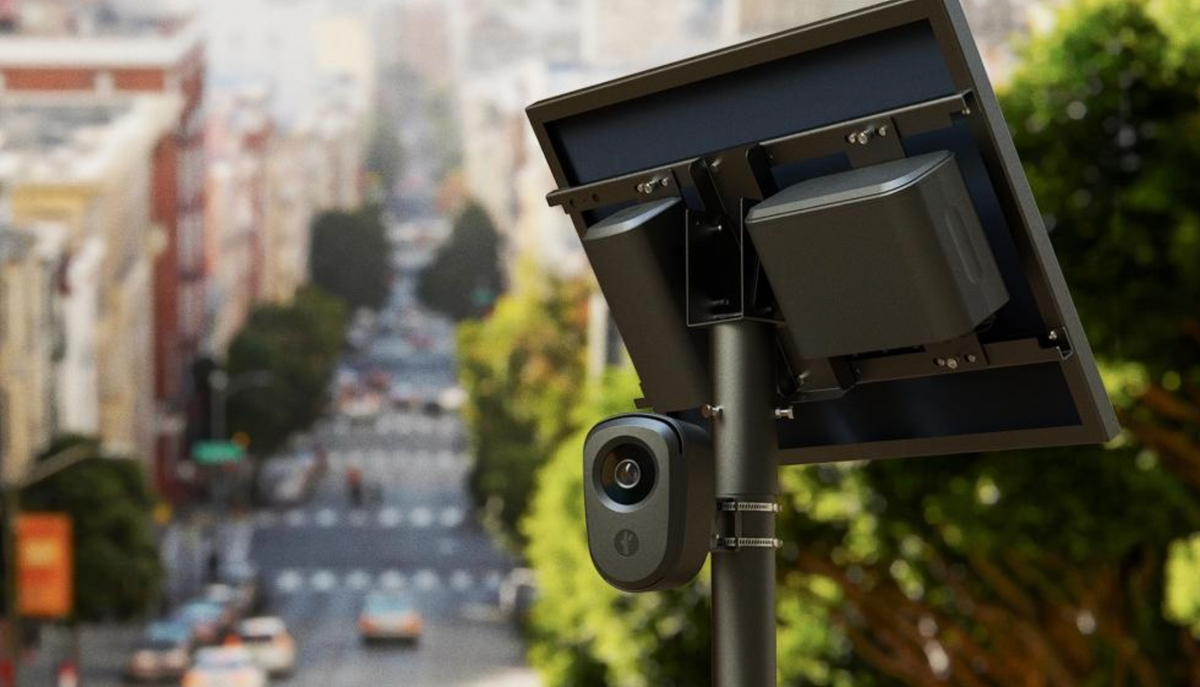
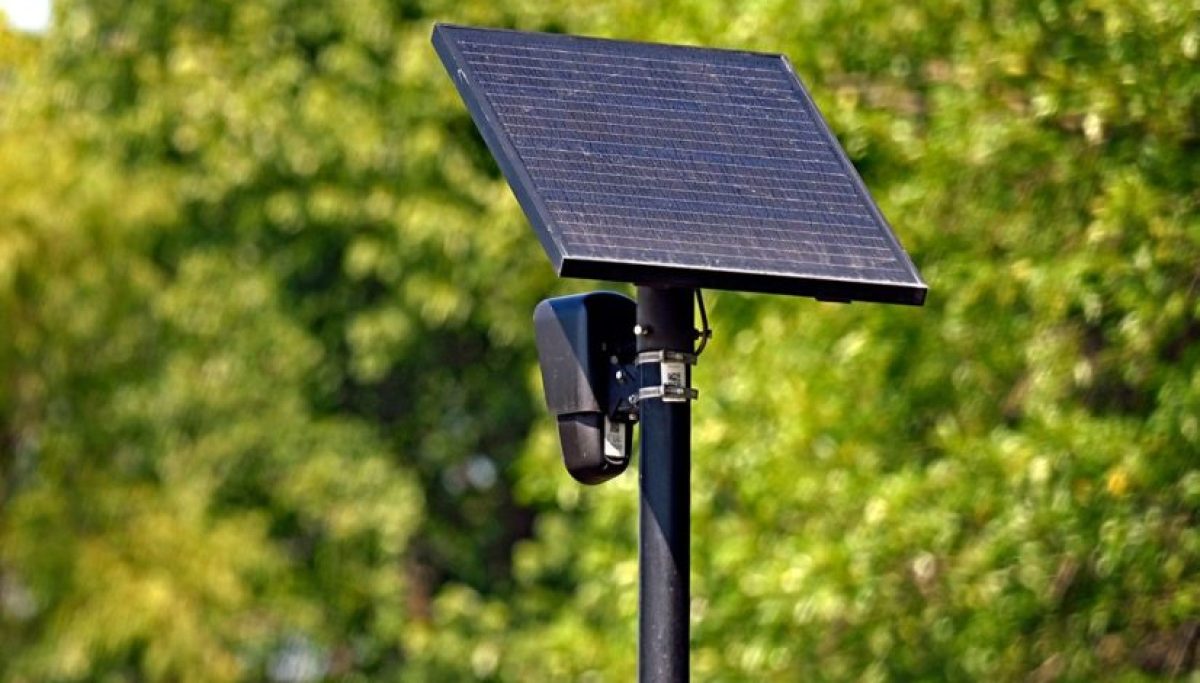
Motorola’s ALPRs can be affixed to posts, as Flock’s are commonly seen, or mounted to police vehicles. asserted
Flock → affix → vehicles
Additionally, Motorola’s ALPRs capture the “make, model, color, accessories and even unique vehicle features like damage or bumper stickers” on vehicles that pass by, which is then put into a database that makes data searchable. asserted
data → capture → database
While Motorola Solutions is now a separate entity from the cellphone maker, Stanley said it’s unclear how that name association can affect people’s perception of the ALPR company. uncertain
association → say → company
“It’s still a brand name that’s familiar to a lot of consumers because they sold consumer-facing goods, and I don’t know what extent that has,” Stanley said. asserted
Stanley → ’ → extent
“I don’t know if that’s had any effect in insulating them from public suspicion. asserted
that → know → suspicion
Most of the police law enforcement [contracts are] under the brand name Vigilant as well … but for whatever reason, they haven’t become the target in the way that Flock has, but they deserve to be.” asserted
they → become → way
How Motorola’s data-sharing system works According to Motorola, law enforcement agencies can access information collected by enterprise customers when those customers choose to share it, as well as a separate commercial database containing license plate detections collected by repossession vehicles. uncertain
customers → work → vehicles
The flow of information is asymmetric, however, as Motorola says enterprise customers can elect to share their information with law enforcement but cannot access police information. asserted
customers → say → information
The company says it physically separates law enforcement and enterprise data to prevent police data from passing into its enterprise systems. asserted
it → say → systems
Stanley said data sharing between commercial and law-enforcement customers raises questions about how that data is being used by police. asserted
data → say → police
Compared to Flock, Stanley said civilian and law enforcement data crossover “goes beyond anything that Flock is involved in.” asserted
Flock → compare → that
“I think that that data is being used to make judgments about individual consumers in automobile insurance and other areas, and we don’t know how it’s being used,” he said. asserted
he → think → insurance
…and 26 more, not listed.
Give feedback · no sign-in needed

No sign-in needed for now. Your note is sent without a name, so it cannot be answered.

History Support