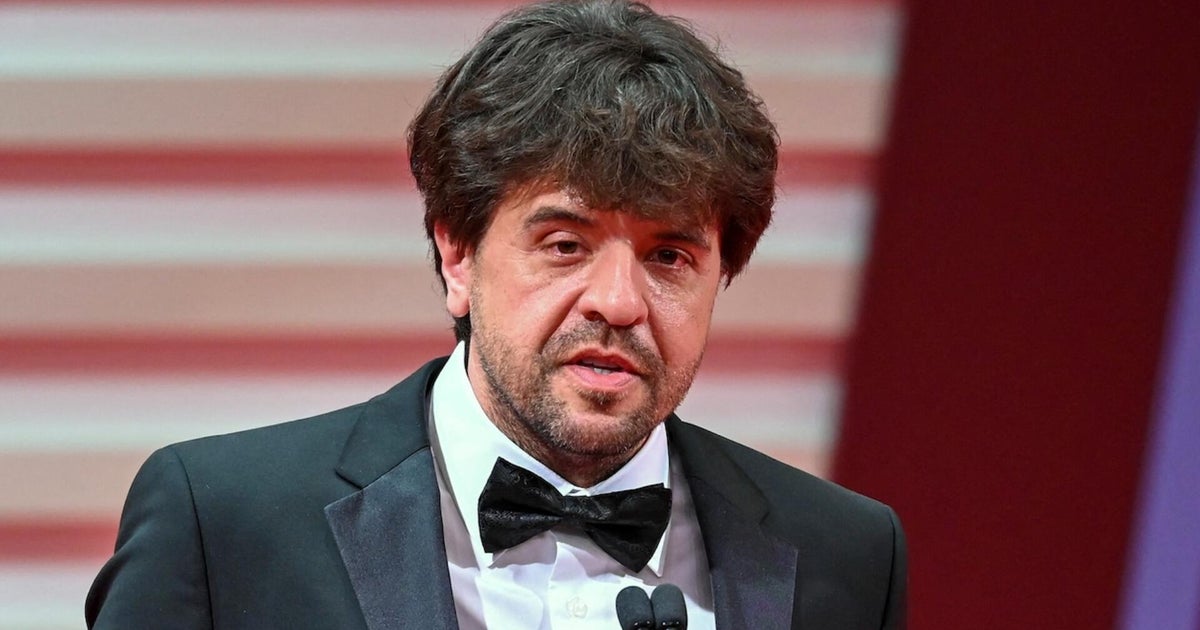
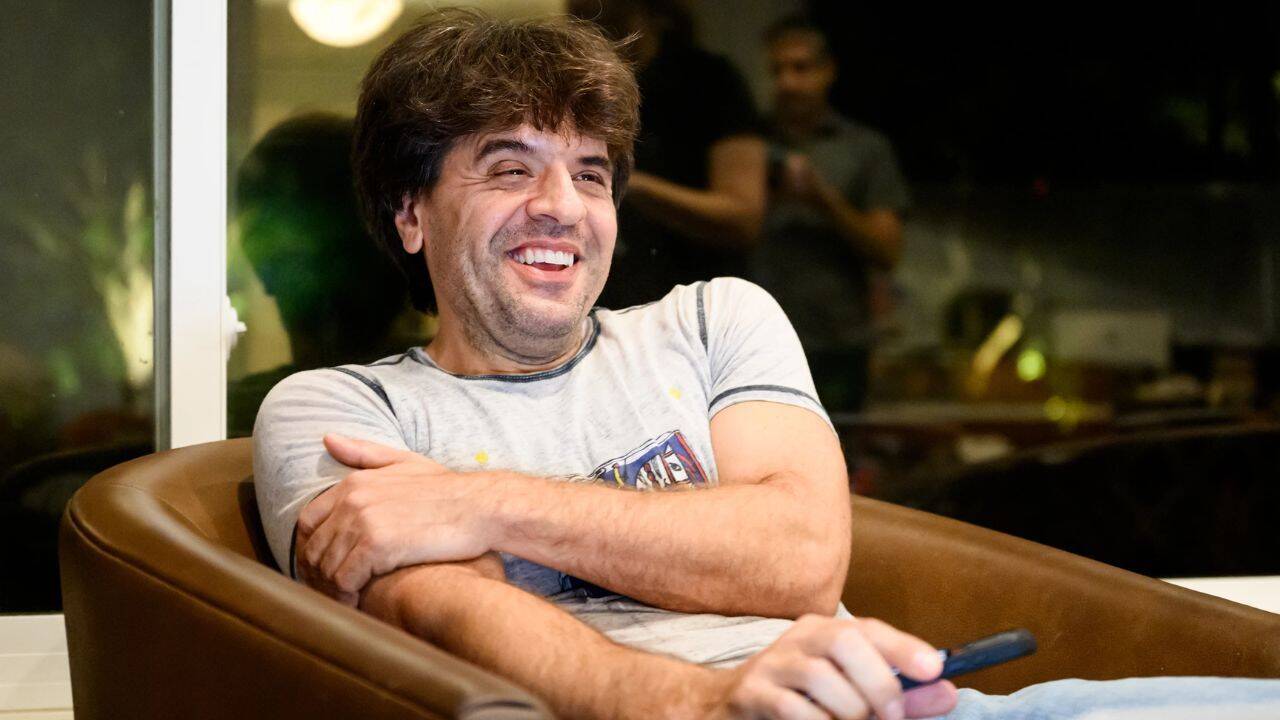
Photo via Times of India

Stanford Nobel winner pauses celebration to make lunch for his children

Read the original at Times of India ↗
Cite

TOI Science Desk. (2026, October 8). Stanford Nobel winner pauses celebration to make lunch for his children. Times of India. https://timesofindia.indiatimes.com/science/discovery/stanford-scientist-wins-nobel-prize-in-medicine-for-controlling-brain-cells-with-light-pauses-celebration-to-make-lunch-for-his-school-going-children-putting-fatherhood-first/articleshow/134788379.cms

Dated when The Aporia collected the article, usually within hours of publication. Check the original for its exact date and byline.

Times of India · collected 2026-10-08 · by TOI Science Desk

Quick Summary

Stanford University professor Karl Deisseroth, who won the 2026 Nobel Prize in Physiology or Medicine along with German researchers Peter Hegemann and Georg Nagel for their work on optogenetics, paused his celebration to make lunch for his children. After receiving congratulatory calls early on October 5th, Deisseroth needed to attend to this daily family task as his children prepared for school. The article highlights the juxtaposition between international scientific recognition and everyday domestic responsibilities, emphasizing the human side of such achievements.
Written by AI on 2026-10-08, from this article's own text only (the story summary below draws on all the coverage).
See how they differ ↓

AI analysis

Story summary

Dr. Karl Deisseroth, a scientist at Stanford University in California, won the 2026 Nobel Prize in Physiology or Medicine for his groundbreaking work in optogenetics. After receiving congratulatory calls from journalists and well-wishers during the early hours of Monday morning, October 5th, Dr. Deisseroth needed to take a break to make school lunches for his children who were asleep at home in Stanford. His research, which combines light with genes to control neurons in living brains, was recognized alongside German researchers Peter Hegemann and Georg Nagel, marking a significant advancement in brain science. Despite the accolades, Dr. Deisseroth prioritized his family responsibilities by preparing meals for his children before they headed off to school that morning.

Written for “Nobel Prize Winner Makes Lunch” on 2026-11-21, grounded in this article and the 3 other(s) covering the same event.

How they differ

4 outlets covered “Nobel Prize Winner Makes Lunch”.

What each outlet says

One AI summary per outlet of its latest article on this story, written from that article alone and checked against it. Open the article for the outlet's own words.

Times of IndiaThis outlet8 Oct

Stanford University professor Karl Deisseroth, who won the 2026 Nobel Prize in Physiology or Medicine along with German researchers Peter Hegemann and Georg Nagel for their work on optogenetics, paused his celebration to make lunch for his children. After receiving congratulatory calls early on October 5th, Deisseroth needed to attend to this daily family task as his children prepared for school. The article…

Stanford Nobel winner pauses celebration to make lunch for his children (this article)
Toronto Star5 Oct

Dr. Karl Deisseroth, a scientist from California, received news early Monday that he won the Nobel Prize for medicine for his work on optogenetics. After handling numerous congratulatory calls and interviews throughout the morning, Dr. Deisseroth requested some time off to prepare school lunches for his children, who were still asleep at home in Stanford.

California scientist wins a Nobel Prize, then makes school lunches for his kids →
The Guardian7 Oct

Stanford University released a video showing Karl Deisseroth informing his family about winning the Nobel Prize in Medicine. After receiving congratulatory calls early Monday morning, Deisseroth paused to make lunches for his sleeping children at home in Stanford. The prize was awarded to Deisseroth and two German researchers for their contributions to optogenetics, which uses light and genes to control neurons in…

Moment Karl Deisseroth tells his family he won the Nobel prize in medicine – video →
CBC8 Oct

Dr. Karl Deisseroth, a scientist and physician, shared on The National how his children reacted with overwhelming excitement upon learning that he was awarded the 2026 Nobel Prize in Physiology or Medicine. The article focuses specifically on the emotional and joyful reaction of Dr. Deisseroth's kids to this significant achievement.

Kids flip out over dad's Nobel Prize | The Moment →

Where they agree and split

The full story: what happened, how it changed, and all 4 articles →

Compared with similar articles

This article reads unscored and hedges 14% of its claims. Each row says how that neighbour differs.
Toronto Star
Hedges 0 of 2 claims Outlet record 64/100
The Guardian
Hedges 0 of 5 claims Outlet record 64/100
CBC News
Hedges 0 of 1 claims Outlet record 72/100
“The articles describe different moments in Dr. Deisseroth's day—one about his children's reaction to his winning the Nobel Prize and another about him preparing lunch for them.”
CBS News
Hedges 1 of 3 claims Outlet record 66/100
“Article A describes the awarding of the Nobel Prize in Physiology or Medicine to Karl Deisseroth and two German scientists, while Article B focuses on a separate incident where Deisseroth makes lunch for his children after receiving news of his Nobel win.”
10/5: CBS Evening News Different event
CBS News
Hedges 0 of 1 claims Outlet record 66/100
“Article A mentions American and German winners of the Nobel Prize but does not specify who they are or mention Dr. Karl Deisseroth specifically, while Article B focuses on a personal moment after Deisseroth's Nobel win.”
ABC News (AU)
Hedges 0 of 3 claims Outlet record 67/100
“Article A reports on the awarding of the Nobel Prize in Medicine to three scientists, while Article B focuses on one of those winners (Dr Karl Deisseroth) preparing lunch for his children after receiving the news.”

Story

Nobel Prize Winner Makes Lunch
Science · 4 article(s) covering the same event. Compare every outlet's account →
How this article was measured signals, leaning charts, publisher record, byline, topics and claims

Signals How these are calculated →

Claims extracted
42
sentences that state something as happening or true
Uncertain
14%
6 of 42 hedged ("reportedly", "may", "according to")
Leaning
not political
takes no side on a contested political question
Publisher signals
59/100
Times of India's corrections and hedging, across everything collected from it. Not a measure of accuracy.
Outlets on this story
4
Science
Same framing elsewhere
1
articles that frame the event the way this one does
Analyzed 2026-10-08 · how these are computed

How this is being covered How these are calculated →

Article leaning vs. publisher reliability
Source leaning vs. consistency

Publisher

Times of India · 5445 article(s) · 6 correction(s) detected
Running correction rate · 6 correction(s)

Who wrote this

TOI Science Desk
330 article(s) here · 1 carrying a prediction
The study, conducted by the Beaver Trust and the University of Exeter, confirmed 349 territories and identified 56 more that may be occupied, bringing the total to as many as 405.
Although its external lettered dials could still turn, nobody had managed to find the correct combination since its discovery.
It states that, while they may be small, they are still extremely venomous, and that its experienced reptile team is handling them under the highest safety and care protocols.
Elephants are known for their strong family bonds and complex social relationships, but declining populations may be putting these connections at risk.
Individually, such objects might seem small; together, they provide strong evidence that the outpost was active during the Sui period.
Who knew one animal could change an entire landscape?
The snakes were temporarily brought to the San Francisco Zoo, where they could give birth in a controlled environment.
Scientists have drawn a treasure map of where fossils of ancient sea life may still be waiting to be found.
The newly excavated channels, along with additional connections to Darby Creek, are expected to improve tidal circulation overall.
We have often wondered what animals might be trying to tell us, whether it is a dog barking at the postman or birds calling out to one another from the trees.
Wire or desk byline, not an individual reporter.
Also by TOI Science Desk
Nothing else under this byline is closely related to this article, so these are simply their most recent.
All 330 articles by TOI Science Desk →

Topics

AP News California German Stanford Stanford University

Subjects

Deisseroth PERSON · 8× Stanford ORG · 7× AP News ORG · 4× California GPE · 3× Michelle Monje-Deisseroth PERSON · 3× KLCC ORG · 2× Karl Deisseroth PERSON · 2× NPR ORG · 2× German NORP · 1× Stanford University ORG · 1×

Narrative

The California scientist made school lunches after winning a Nobel Prize Deisseroth, 54, shared the 2026 Nobel Prize in Physiology or Medicine with German researchers Peter Hegemann and Georg Nagel.
framing: assertive · carried by 1 article(s) · first seen 2026-10-08
Deisseroth told Stanford staff that he needed an hour-long break beginning at 6:30 a.m. His children would soon wake up and need lunch before heading to school.
2026-10-08 · Times of India
Stanford Nobel winner pauses celebration to make lunch for his children · assertive framing

Claims (42 extracted, 6 hedged)

Dr Karl Deisseroth had barely begun processing the news that he had won the 2026 Nobel Prize in Physiology or Medicine when an ordinary family responsibility came into view. asserted
responsibility → begin → view
The Stanford University professor and California scientist had spent the early hours speaking with journalists and receiving congratulatory calls after the announcement. asserted
professor → spend → announcement
Then he needed to step away and prepare school lunches for his children. asserted
he → need → children
The small domestic task came after a night of major scientific recognition for work that has changed how researchers study the living brain. asserted
researchers → come → brain
According to AP News, Deisseroth was due to make the lunches after his children woke up. uncertain
children → accord → lunches
The California scientist made school lunches after winning a Nobel Prize Deisseroth, 54, shared the 2026 Nobel Prize in Physiology or Medicine with German researchers Peter Hegemann and Georg Nagel. asserted
Deisseroth → make → researchers
Their work on optogenetics helped create a way of using light to control activity in specific brain cells. asserted
work → help → cells
AP News reported that the three scientists were recognised for research into light-gated ion channels and optogenetics, a field that has become an important tool for studying the brain. asserted
that → report → brain
The Nobel announcement came early on Monday, 5th October, while Deisseroth was at his home in Stanford, California. asserted
Deisseroth → come → Stanford
The Associated Press reported that he had been working late before the call arrived from the Nobel Assembly in Stockholm. asserted
call → report → Stockholm
Deisseroth is known for being a night owl, and the timing of the announcement fitted his usual routine. asserted
timing → know → routine
The Nobel call came just as he was settling between wakefulness and sleep, leaving him unsure for a moment whether the news was real. asserted
news → come → moment
In an interview reported by NPR affiliate KLCC, he described the experience as disorienting and unexpected. asserted
he → report → experience
The Nobel news quickly turned the family's Stanford home into an unusually busy place. asserted
news → turn → place
According to AP News, an Associated Press photographer arrived at around 3:30 a.m. and initially saw only one light on inside, with Halloween decorations outside. uncertain
light → accord → decorations
Deisseroth's wife, Dr Michelle Monje-Deisseroth, answered the door and welcomed the photographer inside. asserted
wife → answer → photographer
While her husband took calls from the sofa, she helped make coffee for Stanford communications staff who had joined the early-morning celebration. asserted
who → take → celebration
Yet the most relatable part of the morning came after the interviews. asserted
part → come → interviews
Deisseroth told Stanford staff that he needed an hour-long break beginning at 6:30 a.m. His children would soon wake up and need lunch before heading to school. asserted
children → tell → school
AP confirmed that this was the point when the newly announced Nobel laureate had to turn his attention from international recognition to a familiar morning responsibility. asserted
laureate → confirm → responsibility
The moment offered a striking contrast without diminishing the importance of his achievement. asserted
moment → offer → achievement
Deisseroth had spent the night discussing a discovery that has reshaped the study of brain activity, yet his immediate schedule still included one of the everyday jobs of family life. asserted
schedule → spend → life
His wife appeared equally unfazed by the unusual night. asserted
wife → appear → night
When someone from Stanford wondered whether the neighbours might object to the late-night activity, she pointed out that the family lived in faculty housing and that there were plenty of Nobel laureates in the neighbourhood, according to AP News. uncertain
family → wonder → News
Karl Deisseroth, one of the three recipients of the 2026 Nobel Prize in medicine, talks to his wife Michelle Monje-Deisseroth at home Monday, Oct. 5, 2026. asserted
Deisseroth → talk → home
Image Credit: AP Photo/Noah Berger What does optogenetics allow scientists to do Optogenetics gives researchers a way to control selected cells in the brain with light. asserted
Optogenetics → allow → light
Rather than simply using light to observe activity, the method allows scientists to make targeted brain cells respond to it. asserted
cells → use → it
Speaking to NPR through KLCC, Deisseroth explained that researchers can make cells sensitive to light by introducing a gene from single-celled algae. asserted
cells → speak → algae
That gene produces a light-responsive flow of charged particles, allowing light to create electrical activity in the cells carrying it. asserted
light → produce → it
This gives researchers much more direct control over particular parts of the brain. asserted
This → give → brain
The approach has helped scientists examine how individual groups of brain cells contribute to behaviour. asserted
groups → help → behaviour
Deisseroth explained that actions and priorities are controlled by networks of connected nerve cells, and optogenetics makes it possible to study those circuits more precisely. asserted
it → explain → circuits
That can help researchers understand why particular behaviours occur and how specific parts of the brain influence them. asserted
parts → help → them
For Deisseroth, the importance of the work also comes from his medical background. asserted
importance → come → background
AP News reported that he described himself as both a physician-scientist and a psychiatrist, with patients who have conditions including autism and depression. asserted
who → report → autism
Importance of this research for patients The work has already moved beyond lab studies. asserted
work → move → studies
In the KLCC interview, Deisseroth pointed to its use in people with retinitis pigmentosa, a condition involving the loss of light-sensitive cells through neurodegeneration. asserted
Deisseroth → point → neurodegeneration
Optogenetics has been used to restore light sensitivity and allow some affected people to see things they could not previously see. uncertain
they → use → things
He also sees a wider possibility for psychiatric medicine. asserted
He → see → medicine
Understanding which cells matter in a particular brain process could eventually help researchers design treatments aimed at those specific cells. uncertain
researchers → understand → cells
…and 2 more, not listed.
Give feedback · no sign-in needed

No sign-in needed for now. Your note is sent without a name, so it cannot be answered.

History Support