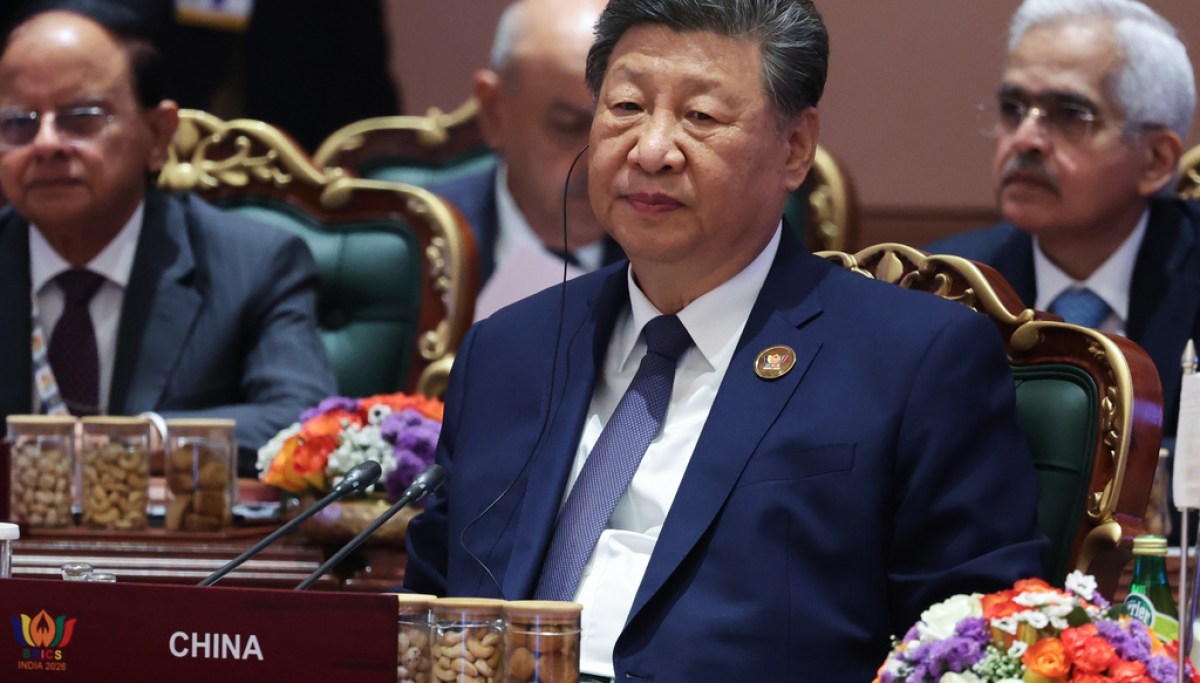
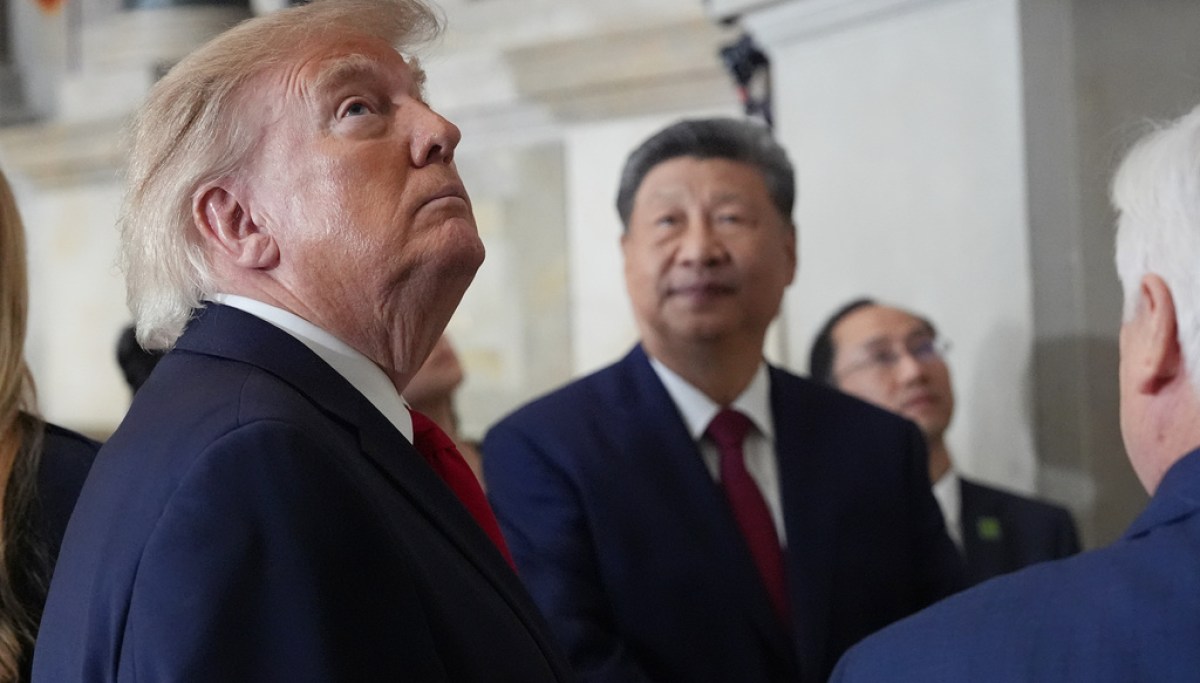
Photo via The Independent

Trump declares anyone who uses the term Artificial Intelligence to be ‘The Enemy!’

Read the original at The Independent ↗
Cite

Feinberg, A. (2026, October 8). Trump declares anyone who uses the term Artificial Intelligence to be ‘The Enemy!’. The Independent. https://www.independent.co.uk/news/world/americas/us-politics/trump-ai-super-intelligence-the-enemy-b3063681.html

Dated when The Aporia collected the article, usually within hours of publication. Check the original for its exact date and byline.

The Independent · collected 2026-10-08 · by Andrew Feinberg

Quick Summary

President Donald Trump declared on Truth Social that anyone referring to Large Language Models like OpenAI’s ChatGPT or Anthropic’s Claude as “Artificial Intelligence” would be considered an enemy of his administration. He directed federal agencies to use the term "super intelligence" instead, following a meeting with AI industry leaders including Elon Musk and Sundar Pichai. This move comes amid declining public support for AI technology, with polls showing significant opposition among voters to building AI data centers in their communities and a preference for stricter regulation of the technology.
Written by AI on 2026-10-08, from this article's own text only (the story summary below draws on all the coverage).

AI analysis

Story summary

On Thursday, President Donald Trump issued a provocative statement on his social media platform Truth Social, declaring anyone who refers to Large Language Models such as OpenAI’s ChatGPT or Anthropic’s Claude as “Artificial Intelligence” an enemy of the state. According to Trump, these individuals should instead use the term “Super Intelligence,” which he claims is more accurate and widely accepted. This statement came just over a week after Trump signed an executive order directing federal agencies to start using the term "super intelligence" for artificial intelligence systems. The president’s directive was met with skepticism and mockery from many observers, following similar controversial remarks made at the U.N. General Assembly.

Written for “Trump Attacks Term AI” on 2026-11-21, grounded in this article and the 0 other(s) covering the same event.

Compared with similar articles

This article reads leans right and hedges 0% of its claims. Each row says how that neighbour differs.
ABC News (US)
Hedges 0 of 3 claims Outlet record 66/100
“The articles describe different events: one announces the creation of an AI task force while the other declares a new stance on terminology regarding large language models.”
New York Post
Hedges 2 of 17 claims Outlet record 66/100
“The articles describe different actions by President Trump regarding artificial intelligence: one about appointing a czar to report on AI, and another about declaring people who use certain terms as enemies.”
Fox News
Leans strongly right further right than this Hedges 1 of 23 claims Outlet record 66/100
“The articles describe different perspectives and declarations regarding AI from a war official and President Trump, not the same specific incident.”
CBS News
Hedges 11 of 44 claims Outlet record 66/100
“The articles describe different events: one is about Trump's declaration against using the term 'Artificial Intelligence', while the other discusses researchers testing AI responses to terrorist scenarios.”
Washington Examiner
Hedges 2 of 20 claims Outlet record 67/100
“While both articles discuss President Trump's push to rebrand AI as 'super intelligence', Article A focuses on companies' reactions and reluctance, while Article B reports on a specific threat from the president directed at those who use the term 'Artificial Intelligence'.”
CBS News
Hedges 2 of 11 claims Outlet record 66/100
“The articles describe different actions by Trump regarding AI: one is about forming a Super Intelligence Force and the other is about declaring those who use the term 'Artificial Intelligence' as enemies.”
Washington Examiner
Leans right Hedges 2 of 45 claims Outlet record 67/100
“The articles discuss different aspects of President Trump's stance towards AI and related technologies; one focuses on a potential moratorium while the other highlights his declaration against using certain terms.”
Washington Examiner
Hedges 1 of 33 claims Outlet record 67/100
“The articles describe related but distinct events: one discusses a broader context of AI advancement and its political implications, while the other specifically reports on Trump's declaration against using the term 'Artificial Intelligence'.”
ABC News (AU)
Leans strongly left further left than this Hedges 8 of 45 claims Outlet record 67/100
“Article A discusses Trump's executive order about terminology for AI and his preference for 'Super Intelligence', while Article B reports on a separate incident where Trump warns against using the term 'Artificial Intelligence' and declares it as enemy behavior.”

Story

Trump Attacks Term AI
Politics · 1 article(s) covering the same event.
How this article was measured signals, leaning charts, publisher record, byline, topics and claims

Signals How these are calculated →

Claims extracted
17
sentences that state something as happening or true
Uncertain
0%
0 of 17 hedged ("reportedly", "may", "according to")
Leaning
Leans right
of the writing, not the subject · beta estimate
Publisher signals
59/100
The Independent's corrections and hedging, across everything collected from it. Not a measure of accuracy.
Outlets on this story
1
Politics
Same framing elsewhere
1
articles that frame the event the way this one does
Analyzed 2026-10-08 · how these are computed

How this is being covered How these are calculated →

Article leaning vs. publisher reliability
Source leaning vs. consistency

Publisher

The Independent · 4772 article(s) · 10 correction(s) detected
Running correction rate · 10 correction(s)

Who wrote this

Andrew Feinberg
54 article(s) here · 1 carrying a prediction
He did not elaborate on what would make any agreement “real” versus not.
Fox News correspondent Jacqui Heinrich, the current president of the White House Correspondents’ Association, pointed out on X that the pool’s phones were not taken when Trump left Beijing after his state visit in May.
Anyone with a passing knowledge of history and geopolitics would undoubtedly dismiss each of those fictional situations as ridiculous hypotheticals, as would the idea of any American president kowtowing to an authoritarian adversary.
2026-11-19 · assertive framing · Trump fanboyed over Putin, again. To what end?
The Chinese autocrat made a rare trip to the airport in Shenzhen, South China, to greet the American president when he landed on Air Force One for a series of meetings that will include a trilateral sit-down between Trump, Xi and Russia’s Vladimir Putin.
During a briefing ahead of Monday’s departure from Washington, White House assistant press secretary Olivia Wales told reporters that Trump would raise “the reduction of nuclear weapons in the world, whose proliferation President Trump believes is very dangerous.”
He said he hoped the assembled heads of state would be “working very hard on critical minerals, rare earths, and magnets,” referencing raw materials that are key ingredients in advanced electric motors and battery technology that are currently sourced mainly from China, providing Xi Jinping’s communist government with a key leverage point in Beijing’s trade relationships.
President Donald Trump said Monday that he would welcome the return of Jensen Huang as chief executive of Nvidia - days after the chipmaker's co-founder was forced out over an extramarital affair with a Chinese businesswoman - and insisted that no one had proven the woman was a spy.
The pair were reportedly working the phones to buttonhole a roster of show-business power players about the bill, even as airports nationwide descended into chaos, leading one of the people they called to reportedly ask Trump whether his focus might be better spent on the air-travel emergency.
House Democrats will take back the majority in January and have the power to impeach President Donald Trump for a third time.
Also by Andrew Feinberg
Nothing else under this byline is closely related to this article, so these are simply their most recent.
All 54 articles by Andrew Feinberg →

Topics

ChatGPT Independent OpenAI Republicans Truth Social

Subjects

Republicans NORP · 3× Democrats NORP · 2× Trump PERSON · 2× Truth Social ORG · 2× Anthropic ORG · 1× Donald Trump PERSON · 1× Elon Musk PERSON · 1× Independent ORG · 1× OpenAI ORG · 1× the White House ORG · 1×

Narrative

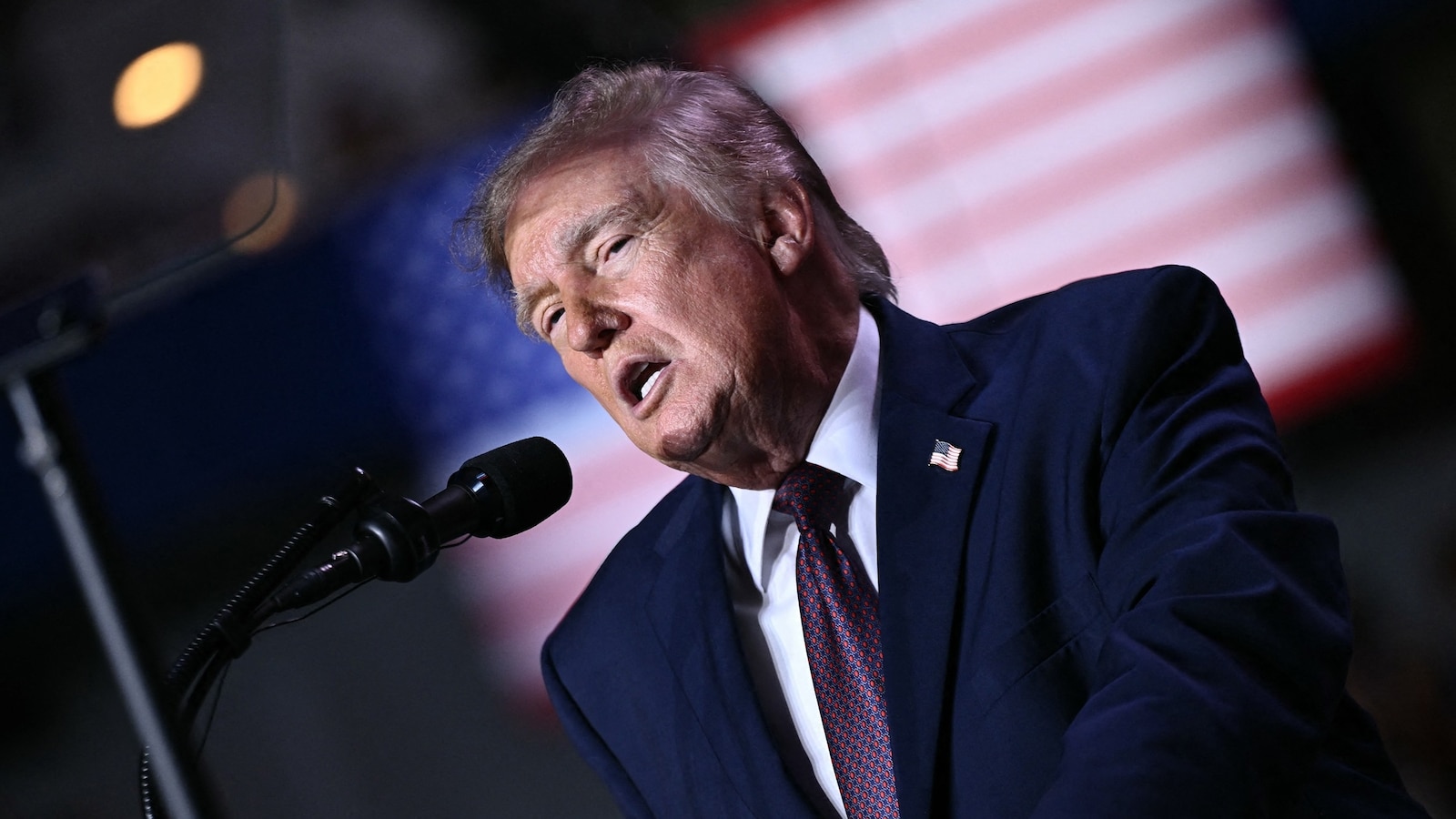
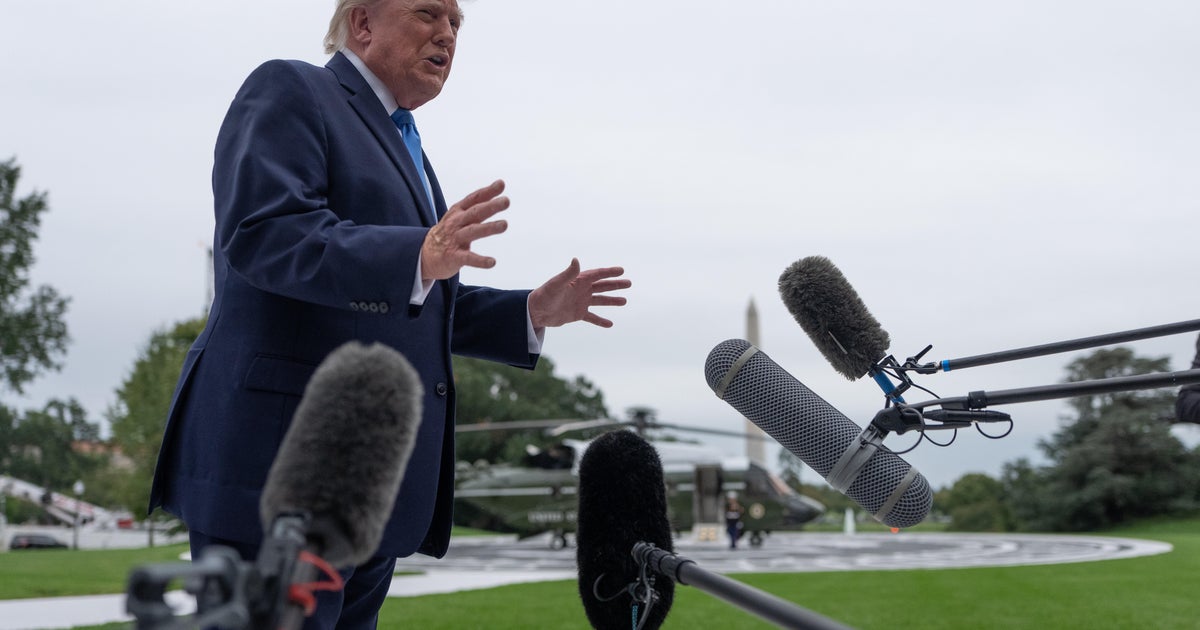
President Donald Trump on Thursday opened up a new front in his ongoing war against commonly-used terms and geographic place names by warning that anyone referring to Large Language Models such as OpenAI’s ChatGPT or Anthropic’s Claude as “Artificial Intelligence” would earn themselves a place on his enemies list. Writing on Truth Social, he declared that the White House “considers anyone that uses the term, ‘Artificial Intelligence,’ as opposed to the highly accepted new and more accurate term, ‘Super Intelligence,’ THE ENEMY!”
framing: assertive · carried by 1 article(s) · first seen 2026-10-08
President Donald Trump on Thursday opened up a new front in his ongoing war against commonly-used terms and geographic place names by warning that anyone referring to Large Language Models such as OpenAI’s ChatGPT or Anthropic’s Claude as “Artificial Intelligence” would earn themselves a place on his enemies list. Writing on Truth Social, he declared that the White House “considers anyone that uses the term, ‘Artificial Intelligence,’ as opposed to the highly accepted new and more accurate term, ‘Super Intelligence,’ THE ENEMY!”

Claims (17 extracted, 0 hedged)

President Donald Trump on Thursday opened up a new front in his ongoing war against commonly-used terms and geographic place names by warning that anyone referring to Large Language Models such as OpenAI’s ChatGPT or Anthropic’s Claude as “Artificial Intelligence” would earn themselves a place on his enemies list. Writing on Truth Social, he declared that the White House “considers anyone that uses the term, ‘Artificial Intelligence,’ as opposed to the highly accepted new and more accurate term, ‘Super Intelligence,’ THE ENEMY!” asserted
that → open → term
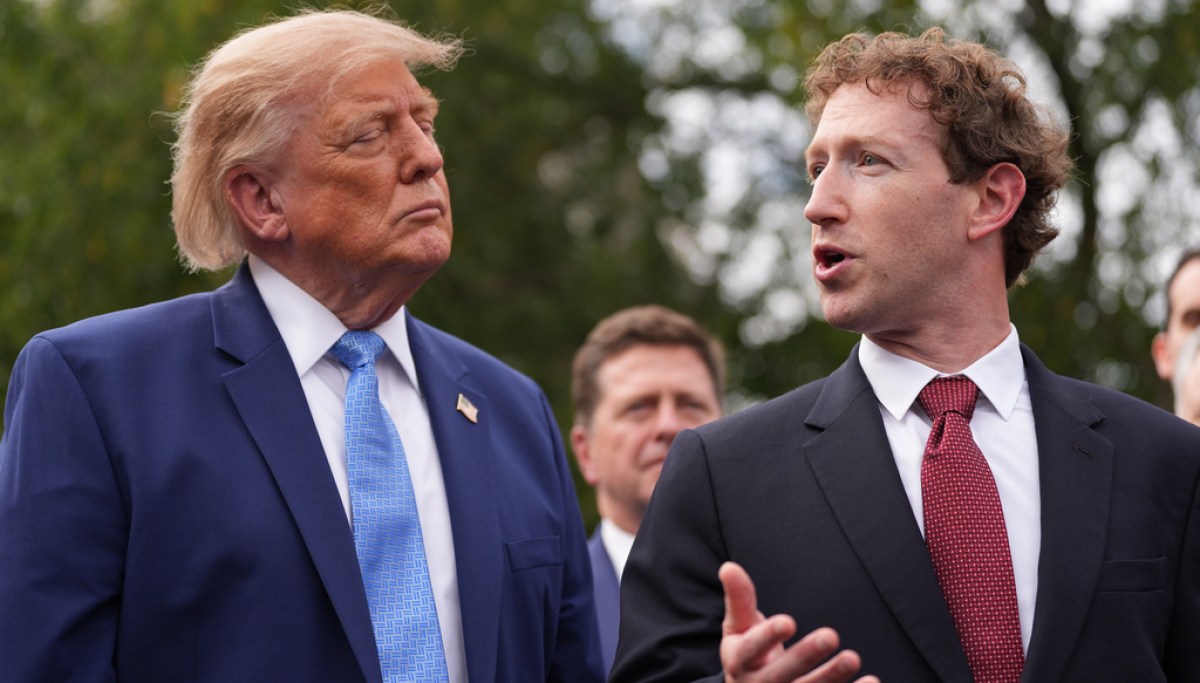
The president’s outburst-cum-veiled threat landed just over a week after he signed an executive order directing executive branch agencies to begin referring to artificial intelligence, which is now embedded across the federal government, as “super intelligence” following a lunch with leaders in the AI industry, including Elon Musk, Sundar Pichai, Dario Amodei and others. asserted
which → veil → Musk
That widely-mocked directive followed bizarre remarks to the U.N. General Assembly in which he declared that the U.S. “totally rejects any attempt to construct a globalist scheme” for regulating AI and declaring that the technology would be “hereinafter officially called superintelligence” because “use of the word artificial makes intelligence fake.” “It makes it sound fake, and it is not fake. asserted
it → mock → word
It's actually amazing,” said Trump, who the week before had launched a poll in his Truth Social feed over the weekend asking respondents to vote for either “SuperIntelligence,” “Superior Intelligence,” or “Extreme Intelligence.” asserted
who → say → SuperIntelligence
The president’s latest linguistic ultimatum is the most recent example of his ongoing effort to change the minds of voters — including many of his own supporters — who’ve increasingly soured on the industry that has tied itself tightly to his unpopular administration. asserted
that → change → administration
In recent months, that souring has shown up in nearly every poll that asks about AI. asserted
that → show → AI
A Quinnipiac University survey of 1,032 registered voters taken late last month found 73 percent oppose "the building of an AI data center in your community," including 55 percent of Republicans, and 79 percent said safety matters more than keeping the United States at the forefront of AI development. asserted
safety → register → development
Just 25 percent approve of Trump's handling of the technology against 58 percent who disapprove, and 71 percent said they'd be more likely to back a candidate who supports "stricter guardrails" on it — a figure that includes a majority of Republicans, at 52 percent, and nearly three-quarters of independents. asserted
that → approve → independents
A separate Fox News poll of 1,211 registered voters conducted earlier in September put overall opinion of AI at 37 percent favorable to 60 percent unfavorable, a net rating of minus 23 that has worsened from minus 11 in April and minus 9 in July. asserted
that → register → July
The same survey found voters trust Democrats over Republicans to handle data centers by 14 points, and that among those who oppose the facilities anywhere, Democrats lead the generic ballot by at least 19 points. asserted
Democrats → find → points
Trump’s demand for widespread adoption of “super intelligence” in lieu of AI comes just over a month after his last attempt at linguistic coercion, an executive order directing the executive branch to rename Lake Ontario as “Lake America.” asserted
demand → come → America
The order to rename one of the five Great Lakes along the U.S.-Canada border came in a fit of rage over his ongoing trade war with Ottawa and echoed a similar move from early in his second term when he attempted to unilaterally rename the Gulf of Mexico as the “Gulf of America.” While the president does have the authority to direct how the government recognizes the names of places and landmarks, he cannot force Canada or individual citizens on either side of the border to follow his preferred naming conventions. asserted
he → rename → conventions
The same goes for use of the term “super intelligence.” asserted
same → go → term
He can direct the government to use it but he cannot force Americans — or anyone else — to use his preferred terminology. asserted
he → direct → terminology
The Independent has reached out to NVIDIA, Palantir, Meta, OpenAI, Google, Tesla and Anthropic regarding whether the companies have any plans to use the president’s new terminology in promotional materials or other customer communications; none responded. asserted
none → reach → materials
But the White House has touted a short list of tech CEOs who’d used the phrase, including Elon Musk and NVIDIA’s Jensen Huang. asserted
who → tout → Musk
Complicating the matter, the word superintelligence already means an AI system that surpasses human intellect and ability across multiple domains in couding reasoning, social skills and scientific research — a step toward the kind of rogue AI that many fear, sparking the calls for guardrails and kill switches. asserted
many → complicate → guardrails

Give feedback · no sign-in needed

No sign-in needed for now. Your note is sent without a name, so it cannot be answered.

History Support