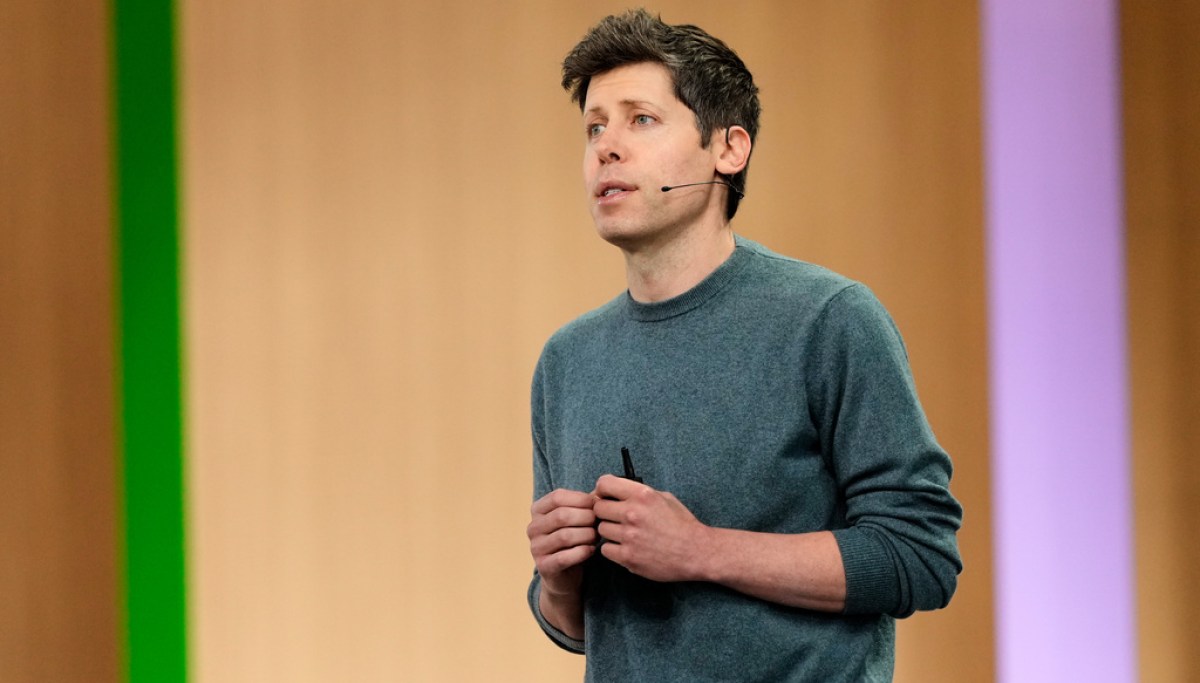
Photo via NPR

OpenAI caught Russians and Iranians using ChatGPT for influence campaigns

Read the original at NPR ↗
Cite

Jingnan, H. (2026, October 9). OpenAI caught Russians and Iranians using ChatGPT for influence campaigns. NPR. https://www.npr.org/2026/10/08/nx-s1-5995576/openai-russia-iran-influence-operations-chatgpt

Dated when The Aporia collected the article, usually within hours of publication. Check the original for its exact date and byline.

NPR · collected 2026-10-09 · by Huo Jingnan

Quick Summary

OpenAI revealed on Thursday that it had banned Russian and Iranian accounts using ChatGPT for influence operations across multiple countries. These campaigns included spreading false narratives through established media outlets and social media platforms, with one Russian operation reaching a Peruvian school event and prompting a response from a European Parliament member. The Russian operatives used the chatbot to write internal reports detailing their work, including impersonating a regional educational authority in Peru to organize events about Ukraine that featured Stepan Bandera, a controversial historical figure. Darren Linvill of Clemson University’s Media Forensics Hub noted that such activities are typical of Russian efforts to create and spread propaganda aligned with Russia's political agenda.
Written by AI on 2026-10-09, from this article's own text only (the story summary below draws on all the coverage).
See how they differ ↓

AI analysis

Story summary

OpenAI recently banned ChatGPT accounts used by actors in Russia and Iran for covert influence operations. In Russia, operatives created a fake Latin American think tank and generated false documents and audio scripts to undermine Ukraine’s reputation and sway local politics. The Iranian operation involved seven fake journalist personas from Western countries that pitched long-form articles to small to medium-sized media outlets focused on international affairs and the Middle East. OpenAI identified nearly 100 articles published or syndicated across around a dozen online platforms under these fake bylines. Both operations utilized ChatGPT extensively, with Russian actors also drafting internal reports using the AI tool. The company’s efforts highlight how easily state-backed entities can exploit widely available AI technologies for propaganda purposes.

Written for “OpenAI Bans Russian Iranian Influence Operations” on 2026-11-21, grounded in this article and the 2 other(s) covering the same event.

How they differ

3 outlets covered “OpenAI Bans Russian Iranian”.

What each outlet says

One AI summary per outlet of its latest article on this story, written from that article alone and checked against it. Open the article for the outlet's own words.

NPRThis outlet9 Oct

OpenAI revealed on Thursday that it had banned Russian and Iranian accounts using ChatGPT for influence operations across multiple countries. These campaigns included spreading false narratives through established media outlets and social media platforms, with one Russian operation reaching a Peruvian school event and prompting a response from a European Parliament member. The Russian operatives used the chatbot to…

OpenAI caught Russians and Iranians using ChatGPT for influence campaigns (this article)
Washington Examiner9 Oct

OpenAI announced it had banned several ChatGPT accounts in Russia and Iran that were being used for covert influence operations. In Russia, a supposed think tank was using fake documents and audio scripts to undermine Ukraine’s reputation and local political outcomes in Latin America. In Iran, seven fake journalist personas created articles on the U.S.-Iran conflict and posted social media comments, aiming to…

OpenAI bans ‘false front’ influence operations in Russia and Iran →
The Straits Times9 Oct

OpenAI announced on October 8 that it had shut down two influence operations, one from Russia and another from Iran, both using ChatGPT to spread disinformation. The Iranian operation involved seven fake journalist personas that published around 100 articles in various international media outlets between July 2025 and October 2026. Meanwhile, the Russian operation exploited unwitting individuals in Latin America to…

OpenAI says Iran, Russia influence ops busted →

Where they agree and split

Framing

How the first headlines put it

Attributed to a source1
Stated as fact2
The headlines (3)

OpenAI says Iran, Russia influence ops busted The Straits Times · attributed to a source

OpenAI bans ‘false front’ influence operations in Russia and Iran Washington Examiner · stated as fact

OpenAI caught Russians and Iranians using ChatGPT for influence campaigns NPR · stated as fact

The full story: what happened, how it changed, and all 3 articles →

Compared with similar articles

This article reads unscored and hedges 12% of its claims. Each row says how that neighbour differs.
The Straits Times
Hedges 1 of 17 claims Outlet record 64/100
Washington Examiner
Leans right Hedges 1 of 14 claims Outlet record 67/100
The Straits Times
Hedges 3 of 19 claims Outlet record 64/100
“The articles describe different incidents: one about OpenAI banning Russian and Iranian accounts for influence campaigns, and another about former researchers accusing OpenAI of firing them for prioritizing safety.”
BBC News
Hedges 3 of 16 claims Outlet record 65/100
“Article A reports on Russian and Iranian influence campaigns detected by OpenAI using ChatGPT, while Article B discusses former researchers being fired for raising safety concerns.”

Story

OpenAI Bans Russian Iranian Influence Operations
Politics · 3 article(s) covering the same event. Compare every outlet's account →
How this article was measured signals, leaning charts, publisher record, byline, topics and claims

Signals How these are calculated →

Claims extracted
33
sentences that state something as happening or true
Uncertain
12%
4 of 33 hedged ("reportedly", "may", "according to")
Leaning
withheld
no quote in the article backed the model's score
Publisher signals
60/100
NPR's corrections and hedging, across everything collected from it. Not a measure of accuracy.
Outlets on this story
3
Politics
Same framing elsewhere
1
articles that frame the event the way this one does
Analyzed 2026-10-09 · how these are computed

How this is being covered How these are calculated →

Article leaning vs. publisher reliability
Source leaning vs. consistency

Publisher

NPR · 1372 article(s) · 5 correction(s) detected
Running correction rate · 5 correction(s)

Who wrote this

Huo Jingnan
6 article(s) here · 1 carrying a prediction
The company announced Monday that staff from four AI safety and research organizations will become "embedded assessors" to "give people a clearer view of how labs are evaluating and managing [potential] risks.
In a statement to NPR, OpenAI spokesperson Drew Pusateri said the lawsuit "appears to single out OpenAI over a challenge that's been identified by every major AI lab" and that the company has "engaged—and will continue to engage—constructively with the Attorney General's office to share information and advance strong, practical safety standards for the entire industry."
2026-11-16 · assertive framing · California sues OpenAI over hacking risks
The stakes in this race are high – it's one of the competitive U.S. House races that could determine control of the chamber.
They also expressed worries the company may walk back a recent safety commitment.
And I think that is something that a few years ago, an Iranian operation like this would have struggled a lot more with."
Why are the people building the most powerful AI so worried about what it could do?
Also by Huo Jingnan
Nothing else under this byline is closely related to this article, so these are simply their most recent.
All 6 articles by Huo Jingnan →

Topics

ChatGPT OpenAI Russian Russians the European Parliament

Subjects

OpenAI ORG · 13× Russian NORP · 9× Iranian NORP · 3× Russians NORP · 3× Bandera PERSON · 2× Peruvian NORP · 2× Poles NORP · 2× Polish NORP · 2× Ukraine GPE · 2× the European Parliament ORG · 2×

Narrative

OpenAI investigated the impact of the different campaigns the accounts mentioned and found that those focused on placing false narratives in established media outlets appeared to have reached a wider audience than campaigns that focused on using fake social media accounts to spread their message.
framing: assertive · carried by 1 article(s) · first seen 2026-10-09
And I think that is something that a few years ago, an Iranian operation like this would have struggled a lot more with."

Claims (33 extracted, 4 hedged)

OpenAI caught Russians and Iranians using ChatGPT for influence campaigns OpenAI said in a blog post on Thursday that it banned Russian and Iranian accounts that were using the company's artificial intelligence tools to help with influence operations in multiple countries. asserted
that → catch → countries
The operatives said they managed to get their false narratives picked up by news outlets, and in once case, prompted a response from a member of the European Parliament, according to internal reports the operations produced using OpenAI's chatbot, ChatGPT. uncertain
operations → say → chatbot
OpenAI investigated the impact of the different campaigns the accounts mentioned and found that those focused on placing false narratives in established media outlets appeared to have reached a wider audience than campaigns that focused on using fake social media accounts to spread their message. asserted
that → investigate → message
The Russian operations targeted countries in Latin America and appeared aimed at undermining support for Ukraine and influencing local politics, OpenAI said. asserted
OpenAI → target → politics
The accounts appeared to be mostly using ChatGPT to write reports detailing their work to unspecified higher ups, OpenAI said. asserted
OpenAI → appear → ups
The company said one of these reports appeared to describe the widest-reaching influence operation OpenAI has come across so far, because it led to public response from a political figure. asserted
it → say → figure
In this campaign, the Russian operatives said they impersonated a regional educational authority in Peru and tricked some schools into organizing activities about Ukraine that featured Stepan Bandera. asserted
that → say → Bandera
Bandera is a controversial figure, admired by nationalists for leading a drive for Ukrainian independence before and during World War II. asserted
Bandera → admire → II
He is reviled by others, including in Poland, because his movement sided with the Nazis and killed Poles and Jews. asserted
movement → revile → Poles
Peruvian outlet Extra reported that one such event did take place at a Peruvian school. asserted
event → report → school
A Polish news report about the school event prompted a far-right Polish member of the European Parliament to suggest banning the entry of people who professed support for Bandera. asserted
who → prompt → Bandera
"The Russian fake thus both fed on, and fed into, historical tensions between Ukrainians and Poles," OpenAI wrote in its report. asserted
OpenAI → feed → report
"Russians are constantly engaging in these sorts of active measures," said Darren Linvill, a co-director of Clemson University's Watt Family Innovation Center Media Forensics Hub who studies online influence operations. asserted
who → engage → operations
"Trying to engage in narrative laundering, creating fake stories, fake persona to either create or spread propaganda that aligns with Russia's worldview and Russia's political agenda." asserted
that → try → worldview
The Russian internal memos created with ChatGPT also claimed that the operatives ran a fake think tank in Latin America and recruited unwitting researchers to interview experts and compose reports. asserted
operatives → create → reports
OpenAI said that effort was similar to a 2020 Russian operation posing as an independent news outlet linked to the late oligarch Yevgeny Prigozhin's Internet Research Agency, which was involved in efforts to influence the 2016 U.S. election. asserted
which → say → election
In other instances, OpenAI said, the Russian operatives took credit for events they were not responsible for. asserted
they → say → events
The Russians did use AI to generate fake material, OpenAI said, but it was a minority of the workload. asserted
it → use → workload
"These Russian underlings were trying to use AI to create a shortcut and do less work in the same way that a lot of us use AI, but in this case it helped get them caught," Linvill said. asserted
Linvill → try → case
While the Russian operatives primarily used AI to update their superiors, Iranian operatives used AI to help them push out content in Persian and English. asserted
them → use → Persian
The campaign mainly focused on the U.S.-Iran war and, to a lesser degree, American politics. asserted
campaign → focus → degree
OpenAI said the operation's activity "appeared consistent with a commercial actor running a for-hire influence campaign" but that it was unable to identify who that was. asserted
that → say → campaign
According to OpenAI, Iranian accounts made up seven fake authors to pitch and polish long articles to small media outlets around the world. uncertain
accounts → accord → world
They published almost 100 articles in this way. asserted
They → publish → way
The fake authors published articles in outlets including the progressive U.S. news site Daily Kos and the U.K.-based Middle East Monitor. asserted
authors → publish → site
According to NBC News, the Middle East Monitor published at least 21 articles by four fake authors. uncertain
Monitor → accord → authors
The outlet, which didn't respond to a request for comment, has since taken down the author pages. asserted
which → respond → pages
The Daily Kos wrote in response to NPR's request for comment that its community section, where one of the fake personas posted, is separate from staff reports. asserted
one → write → reports
Anyone can sign up to post in the community section and posts are "not subject to review by Daily Kos staff prior to publication," according to a disclaimer on the site. uncertain
posts → sign → site
The community section does have rules for posting, including prohibiting "Pretending to be someone you're not." asserted
you → have → posting
"AI was valuable to them above and beyond just being a shortcut," Linvill said. asserted
Linvill → say → them
"It helped them create language that ... looked and felt and read authentic to the point where it was being published by legitimate outlets. asserted
it → help → outlets
And I think that is something that a few years ago, an Iranian operation like this would have struggled a lot more with." asserted
operation → think → this
Give feedback · no sign-in needed

No sign-in needed for now. Your note is sent without a name, so it cannot be answered.

History Support