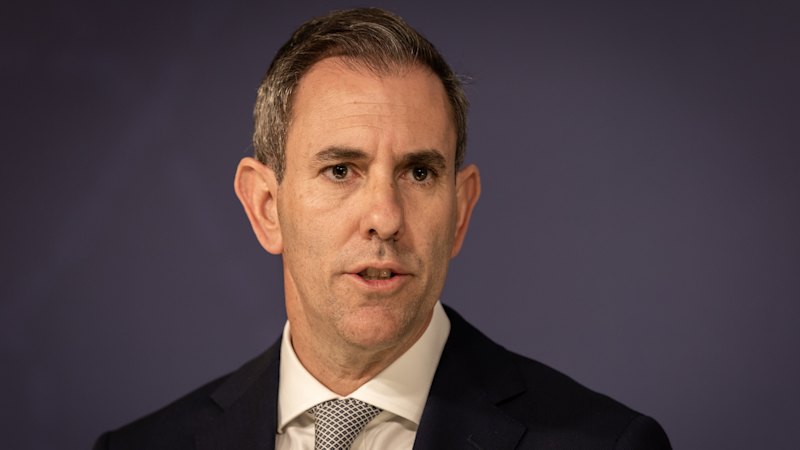
Photo via The Guardian

Jim Chalmers delays ATO’s controversial ban on credit card payments following business outcry

Read the original at The Guardian ↗
Cite

Ikonomou, T. (2026, October 9). Jim Chalmers delays ATO’s controversial ban on credit card payments following business outcry. The Guardian. https://www.theguardian.com/australia-news/2026/oct/09/chalmers-delays-controversial-credit-card-ban-business-tax

Dated when The Aporia collected the article, usually within hours of publication. Check the original for its exact date and byline.

The Guardian · collected 2026-10-09 · by Tess Ikonomou

Quick Summary

Treasurer Jim Chalmers has delayed a planned ban by the Australian Tax Office (ATO) on credit card payments for tax bills until June 2027, following criticism from small businesses. The ATO originally intended to stop accepting these payments from November due to high costs—nearly $200 million annually—but will continue to accept them via third parties and other low-fee methods like debit cards and bank transfers until the end of June. This decision aims to support small business cash flow needs, as some businesses rely on credit card payments to manage tax liabilities.
Written by AI on 2026-10-09, from this article's own text only (the story summary below draws on all the coverage).
See how they differ ↓

AI analysis

Story summary

Treasurer Jim Chalmers delayed the Australian Taxation Office's (ATO) plan to ban credit card payments for tax bills, originally set to take effect on November 30. This decision came after significant backlash from small businesses and opposition parties. The ATO had argued that continuing to accept credit cards would cost taxpayers about $200 million annually due to fees associated with merchant services. Chalmers announced additional funding to support a year-long transition period, pushing back the ban until June 30 of the following year. This move aims to allow more consultation and better engagement with small businesses impacted by the change.

Written for “ATO Credit Card Ban Delayed” on 2026-11-20, grounded in this article and the 6 other(s) covering the same event.

How they differ

4 outlets covered “ATO Credit Card Ban Delayed”.

What each outlet says

One AI summary per outlet of its latest article on this story, written from that article alone and checked against it. Open the article for the outlet's own words.

The GuardianThis outlet9 Oct

Treasurer Jim Chalmers has delayed a planned ban by the Australian Tax Office (ATO) on credit card payments for tax bills until June 2027, following criticism from small businesses. The ATO originally intended to stop accepting these payments from November due to high costs—nearly $200 million annually—but will continue to accept them via third parties and other low-fee methods like debit cards and bank transfers…

Jim Chalmers delays ATO’s controversial ban on credit card payments following business outcry (this article)
Sydney Morning Herald9 Oct

Treasurer Jim Chalmers intervened to halt the Australian Taxation Office's ban on credit card payments for small businesses, allocating additional funds until June next year. The ATO planned to stop accepting credit card payments due to high fees, but this decision faced criticism from various sectors and exposed the government’s poor consultation with small businesses before implementing the policy. Chalmers…

Chalmers’ credit card back-down unedifying and concerning →3 articles from Sydney Morning Herald on this story
Daily Mail9 Oct

Treasurer Jim Chalmers has delayed the ban on credit card payments to the Australian Taxation Office (ATO) from November 30 until June 30, 2027, after facing criticism from small businesses. The ATO originally planned to stop accepting credit cards due to high merchant fees, which would have cost them nearly $200 million annually. Chalmers announced additional funding for the ATO to help manage this transition…

Treasurer Jim Chalmers backflips on ATO credit card payment ban after small business outcry →2 articles from Daily Mail on this story
ABC News (AU)9 Oct

The Australian Taxation Office (ATO) has delayed its plan to ban credit card payments for tax bills, originally set to start in December, after facing backlash from small businesses. Treasurer Jim Chalmers announced that the government will cover surcharge costs until the end of the financial year to allow more time for consultations with affected businesses. The ATO had initially argued that absorbing these fees…

Breaking: ATO credit card ban delayed as government backs down after business backlash →

Where they agree and split

Framing

How the first headlines put it

Stated as fact4
The headlines (4)

Chalmers steps in: ATO credit card ban delayed a year after business uproar Sydney Morning Herald · stated as fact

Breaking: ATO credit card ban delayed as government backs down after business backlash ABC News (Australia) · stated as fact

Jim Chalmers delays ATO’s controversial ban on credit card payments following business outcry The Guardian · stated as fact

Albo celebrating getting rid of card surcharges with a cutesy video. Now the law of unintended consequences (and pure incompetence) has bitten him and Jim Chalmers on the bum: PETER VAN ONSELEN Daily Mail · stated as fact

The full story: what happened, how it changed, and all 7 articles →

Compared with similar articles

This article reads leans left and hedges 0% of its claims. Each row says how that neighbour differs.
The Sydney Morning Herald
Hedges 2 of 21 claims Outlet record 61/100
The Sydney Morning Herald
Outlet record 61/100
Daily Mail
Hedges 1 of 22 claims Outlet record 69/100
ABC News (AU)
Hedges 0 of 20 claims Outlet record 67/100
The Sydney Morning Herald
Hedges 9 of 95 claims Outlet record 61/100
“Article A discusses the implementation and effects of a ban on credit card fees, while Article B reports on a delay in implementing a ban due to business criticism.”
The Sydney Morning Herald
Outlet record 61/100
“Article A does not specify a change in policy, while Article B reports on Treasurer Jim Chalmers delaying the controversial ban announced by the ATO.”
ABC News (AU)
Hedges 0 of 18 claims Outlet record 67/100
“Article A discusses Labor's concerns about the ATO's decision, while Article B reports on the Treasurer delaying and reversing that decision in response to business outcry.”
The Guardian
Hedges 2 of 23 claims Outlet record 64/100
“Article A reports on Jim Chalmers announcing a delay to the credit card ban, while Article B focuses on denying that he was overruled by Anthony Albanese regarding the same decision. Although related, they describe different specific events in time.”
ABC News (AU)
Hedges 0 of 35 claims Outlet record 67/100
“While both articles discuss the government's response to ATO payment changes, Article B specifically mentions a six-month delay in the ban following business outcry, which is a different event or update from what Article A describes.”

Story

ATO Credit Card Ban Delayed
Economy/Business · 7 article(s) covering the same event. Compare every outlet's account →
How this article was measured signals, leaning charts, publisher record, byline, topics and claims

Signals How these are calculated →

Claims extracted
14
sentences that state something as happening or true
Uncertain
0%
0 of 14 hedged ("reportedly", "may", "according to")
Leaning
Leans left
of the writing, not the subject · beta estimate
Publisher signals
64/100
The Guardian's corrections and hedging, across everything collected from it. Not a measure of accuracy.
Outlets on this story
7
Economy/Business
Same framing elsewhere
1
articles that frame the event the way this one does
Analyzed 2026-10-09 · how these are computed

How this is being covered How these are calculated →

Article leaning vs. publisher reliability
Source leaning vs. consistency

Publisher

The Guardian · 3728 article(s) · 8 correction(s) detected
Running correction rate · 8 correction(s)

Who wrote this

Tess Ikonomou
10 article(s) here · 1 carrying a prediction
As Labor considers copyright changes in an AI policy suite including datacentres, online safety, energy resources and economic benefits, the South Australian backbencher added weight to mooted constitutional challenges as to whether watering down copyright law would be an illegal acquisition of property.
A key recommendation is for the attorney general’s department, the Australian federal police and home affairs to consider reforming the law to introduce “penalties for egregious regulatory non-compliance” and a “failure to prevent” offence which would criminalise developing an AI model that engaged in harmful conduct while failing “to take reasonable steps to prevent that harm”.
The Nationals leader, Matt Canavan, will run in a lower house Queensland seat at the next federal election, in a move that may see him face off with Pauline Hanson’s chief of staff.
In a statement posted on social media, Pauline Hanson claimed the move, which would cost taxpayers as much as $200,000 in additional salary, was an attempt to “exert undue political influence” over politicians.
The Australian federal police acting deputy commissioner Sandra Booth told the hearing on Wednesday that, while radicalisation had traditionally taken years or months, that process could now happen within days.
“I would have just thought that if those people, and especially those men in there, if they had any front whatsoever, what they do is ask her to remove that effective immediately,” she told ABC’s RN.
Labor’s bid to cut the private health insurance rebate for over-65s has been blocked in parliament, with the Greens insisting they will withhold support unless pensioners receive a carve-out from the new rules.
A controversial credit card ban for payments on tax bills will be delayed by six months as extra funding is announced for the Australian Tax Office.
“We have challenges, but I have come with a lot of goodwill in order to try and make a positive change in the relationship, perhaps even reset the relationship and return both sides to the initial historical traditional friendship,” the Israeli ambassador told Guardian Australia.
Also by Tess Ikonomou
Nothing else under this byline is closely related to this article, so these are simply their most recent.
All 10 articles by Tess Ikonomou →

Topics

ATO Australian Chamber of Commerce and Industry the Australian Tax Office the Reserve Bank’s

Subjects

ATO ORG · 5× Andrew McKellar PERSON · 1× Australian Chamber of Commerce and Industry ORG · 1× Jim Chalmers PERSON · 1× Rob Heferen PERSON · 1× the Australian Tax Office ORG · 1× the Reserve Bank’s ORG · 1×

Narrative

The tax office will continue to accept credit card payments via third parties as well as other free and low-fee payment methods like debit card and bank transfers from July 2027.
framing: assertive · carried by 1 article(s) · first seen 2026-10-09
A controversial credit card ban for payments on tax bills will be delayed by six months as extra funding is announced for the Australian Tax Office.

Claims (14 extracted, 0 hedged)

A controversial credit card ban for payments on tax bills will be delayed by six months as extra funding is announced for the Australian Tax Office. asserted
funding → delay → Office
Treasurer Jim Chalmers announced on Friday extra funding for the ATO to halt the change until the end of June. asserted
ATO → announce → June
“This decision is about putting small business first,” he said in a statement. asserted
he → put → statement
The backflip follows criticism from small businesses in response to the ATO’s plan which was to stop accepting credit card payments for tax bills from the end of November. asserted
which → follow → November
The tax office will continue to accept credit card payments via third parties as well as other free and low-fee payment methods like debit card and bank transfers from July 2027. asserted
office → continue → July
On 1 October, the tax commissioner, Rob Heferen, announced moves to stop accepting credit card payments for tax bills from 1 December. asserted
commissioner → announce → December
He said continuing to accept card payments would cost the ATO almost $200m a year, as those costs can no longer be passed on to card users. asserted
costs → say → users
But some business owners, particularly smaller operators, use credit card payments as a cashflow tool, managing their liabilities by using credit when required. asserted
owners → use → credit
The tax office said continuing to accept card payments would cost the ATO almost $200m a year under the Reserve Bank’s ban surcharges for credit card payments. asserted
continuing → say → payments
Because tax liabilities are legislated by federal parliament, the ATO says it cannot build card payment costs into charges paid by taxpayers. asserted
it → legislate → taxpayers
Estimates suggest about 5% of small businesses use credit card payments for tax bills. asserted
% → suggest → bills
“Small business needs this facility in place,” the Australian Chamber of Commerce and Industry boss, Andrew McKellar, said this week. asserted
boss → need → Commerce
“They’ve got to manage cash flow. asserted
They → get → flow
What they are looking for is for one clear, consistent approach and solution from government.” asserted
looking → look → government
Give feedback · no sign-in needed

No sign-in needed for now. Your note is sent without a name, so it cannot be answered.

History Support