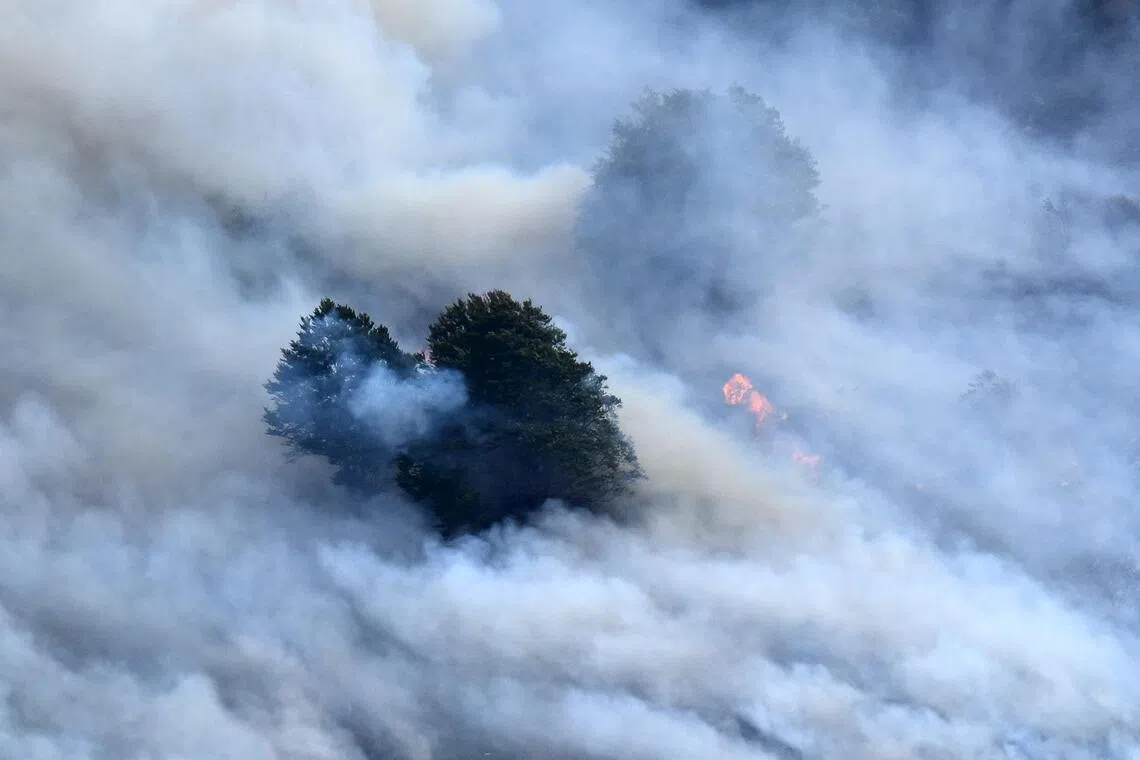
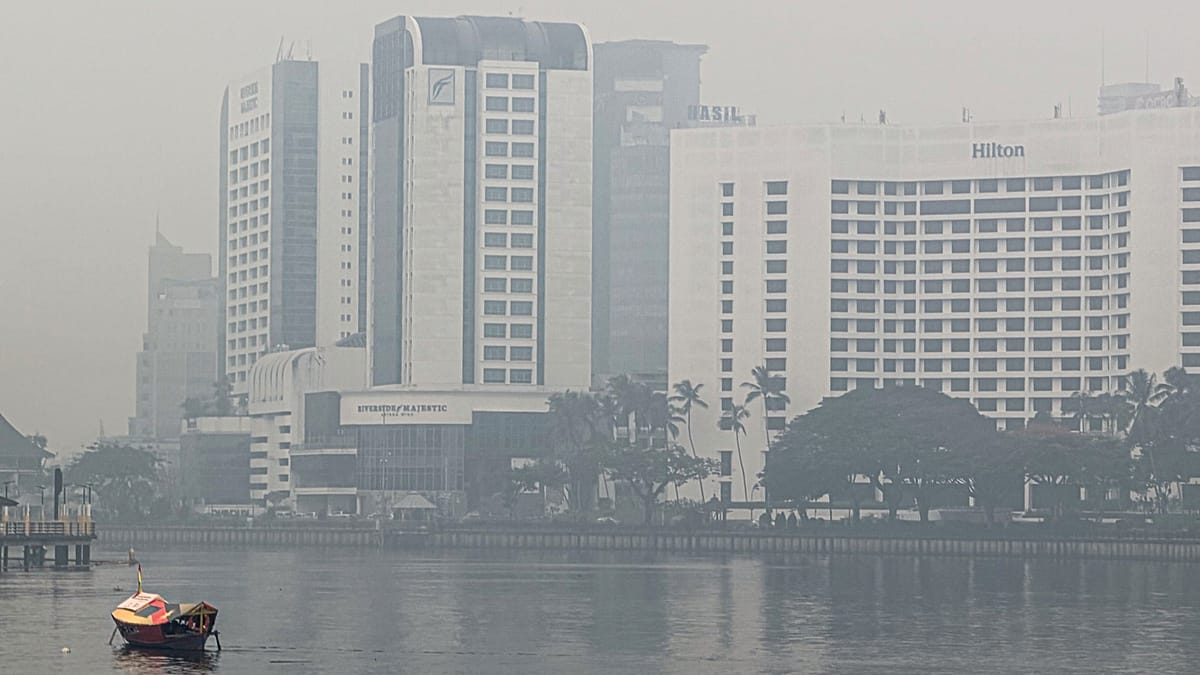
Photo via The Hindu

UN warns wildfires, heatwaves threaten air quality and health

Read the original at The Hindu ↗
Cite

AFP. (2026, September 7). UN warns wildfires, heatwaves threaten air quality and health. The Hindu. https://www.thehindu.com/sci-tech/energy-and-environment/un-warns-wildfires-heatwaves-threaten-air-quality-and-health/article71437455.ece

Dated when The Aporia collected the article, usually within hours of publication. Check the original for its exact date and byline.

The Hindu · collected 2026-09-07 · by AFP

Quick Summary

The World Meteorological Organization (WMO) has warned that wildfires and heatwaves are threatening air quality and human health globally, citing links between air pollution and climate change. According to the WMO's latest annual Air Quality and Climate Bulletin, extreme wildfires have increased by a significant margin since the 1990s, leading to thousands of additional deaths per year. The organization reports that exposure to fire-related PM2.5 emissions has increased despite regulations in Europe and North America reducing industrial and transport emissions. Scientists emphasize that wildfire smoke is particularly toxic and its impact on health is often underestimated.
Written by AI on 2026-09-07, from this article's own text only (the story summary below draws on all the coverage).
See how they differ ↓

AI analysis

Story summary

On September 7, the World Meteorological Organization (WMO) warned that wildfires and heatwaves are threatening to undermine global efforts to improve air quality and protect human health. The organization, which is part of the United Nations, noted that climate change is making it harder to meet international air quality goals. According to Lorenzo Labrador, a scientific officer at the WMO, wildfires can pollute clean regions, even if they are located far away from the fires themselves. This is because pollutants from wildfires can be carried by the wind and affect air quality in distant areas. The report also stated that regulations have reduced emissions from industry and transport in many developed countries, but this has been offset by an increase in exposure to fire-related pollution.

Written for “Air Quality Threats Mounting” on 2026-11-21, grounded in this article and the 1 other(s) covering the same event.

How they differ

2 outlets covered “Air Quality Threats Mounting”.

What each outlet says

One AI summary per outlet of its latest article on this story, written from that article alone and checked against it. Open the article for the outlet's own words.

The HinduThis outlet7 Sep

The World Meteorological Organization (WMO) has warned that wildfires and heatwaves are threatening air quality and human health globally, citing links between air pollution and climate change. According to the WMO's latest annual Air Quality and Climate Bulletin, extreme wildfires have increased by a significant margin since the 1990s, leading to thousands of additional deaths per year. The organization reports…

UN warns wildfires, heatwaves threaten air quality and health (this article)
The Straits Times7 Sep

The World Meteorological Organization (WMO) has warned that increasing wildfires and heatwaves are threatening global air quality efforts due to climate change. According to the WMO's annual report, extreme wildfires are becoming a growing source of harmful pollution, which could undermine efforts to meet international air quality goals by making it harder to meet the World Health Organization's guidelines. The…

Wildfires, heatwaves threaten to undermine air quality: UN weather agency →

Compared with similar articles

This article reads unscored and hedges 9% of its claims. Each row says how that neighbour differs.
The Straits Times
Leans left Hedges 2 of 13 claims Outlet record 64/100
Daily Mail
Hedges 5 of 26 claims Outlet record 69/100
“Article A specifically mentions a map showing wildfires from July 1 to August 31, while Article B discusses a general trend of increasing heatwaves and wildfires with no specific time frame mentioned”
Euronews
Leans left Hedges 2 of 17 claims Outlet record 60/100
“Article A reports on Malaysia declaring an air quality emergency due to haze from Indonesian fires, while Article B is a general warning about wildfires and heatwaves threatening air quality and health without mentioning the specific incident in Malaysia.”
BBC News
Hedges 1 of 53 claims Outlet record 65/100
“Although both articles mention wildfires and air pollution on September 7, 2026, they appear to be discussing broader topics (wildfires and heatwaves) rather than a specific incident or location.”

Story

Air Quality Threats Mounting
Environment · 2 article(s) covering the same event. See how they differ ↑
How this article was measured signals, leaning charts, publisher record, byline, topics and claims

Signals How these are calculated →

Claims extracted
22
sentences that state something as happening or true
Uncertain
9%
2 of 22 hedged ("reportedly", "may", "according to")
Leaning
withheld
no quote in the article backed the model's score
Publisher signals
60/100
The Hindu's corrections and hedging, across everything collected from it. Not a measure of accuracy.
Outlets on this story
2
Environment
Same framing elsewhere
1
articles that frame the event the way this one does
Analyzed 2026-09-07 · how these are computed

How this is being covered How these are calculated →

Article leaning vs. publisher reliability
Source leaning vs. consistency

Publisher

The Hindu · 907 article(s) · 2 correction(s) detected
Running correction rate · 2 correction(s)

Who wrote this

AFP
1298 article(s) here · 1 carrying a prediction
“I would love to see him be back.
A full written argument would be extremely long, he said, adding that he had not yet mastered all of the mathematics involved and planned to write it up properly.
US federal prosecutors alleged that an Indian intelligence officer, who remains at large, directed the plot and recruited Gupta in May 2023 to hire a hitman to carry out the murder.
Huang resigned as chief of the chip giant at the centre of the artificial intelligence (AI) revolution after revelations of extramarital affairs, including one with an alleged Chinese spy who may have funnelled restricted chips to that country.
Mr. Kobir said Dhaka would deal with attacks "very firmly".
They were referring to recursive self-improvement (RSI) — a term the industry uses to describe building advanced AI models that can autonomously create newer versions of themselves, which critics worry will hasten doomsday scenarios.
And Ukraine fears this winter could be the worst yet.
World champions Spain will face France while England will play Norway in the quarterfinals of the UEFA Nations League after the draw took place on Friday.
In March, South Korea’s then-prime minister Kim Min-seok said that Trump thought a meeting with Kim would be “good”.
Rohingya refugees will undergo a Technical and Vocational Education and Training (TVET) programme in Turkiye which would last three to six months.
2026-11-20 · assertive framing · Malaysia plans to resettle 10,000 Rohingya in Turkiye
Wire or desk byline, not an individual reporter.
Also by AFP
Nothing else under this byline is closely related to this article, so these are simply their most recent.
All 1298 articles by AFP →

Topics

AFP Global Atmosphere Watch The United Nations’ WMO the World Meteorological Organization

Subjects

WMO ORG · 7× the WMO Bulletin ORG · 2× AFP ORG · 1× China GPE · 1× Global Atmosphere Watch ORG · 1× Labrador GPE · 1× Lorenzo Labrador PERSON · 1× The United Nations’ ORG · 1× United States GPE · 1× the World Meteorological Organization ORG · 1×

Narrative

They can alter the way the atmosphere reflects sunlight, change the chemical properties of land and water, and pollute otherwise clean environments. “One example is the deposition of black carbon, or soot, on snow and ice, which reduces the amount of sunlight reflected by these surfaces and in turn can hasten the melting process,” the WMO explained.
framing: assertive · carried by 1 article(s) · first seen 2026-09-07
“They damage the health of people and wildlife living far from the fire itself because they are carried by the wind, but their poisonous effect is not sufficiently taken into account in air quality assessments,” Labrador said. “Conventional risk models based on total PM2.5 concentrations may underestimate wildfire-attributable mortality by up to 93%,” the WMO said.
2026-09-07 · The Hindu
UN warns wildfires, heatwaves threaten air quality and health · assertive framing

Claims (22 extracted, 2 hedged)

Wildfires and heatwaves, which generate microscopic airborne pollutants, risk undermining international efforts to improve air quality, protect human health and safeguard nature, the World Meteorological Organization (WMO) said on Monday (September 7, 2026). asserted
Organization → generate → Monday
The United Nations’ weather and climate agency underlined the links between air pollution and climate change, which scientists say is leading to more frequent and more intense heatwaves and wildfires. asserted
scientists → underline → heatwaves
“Extreme wildfires are increasing, leading to big health consequences because of the high toxicity of smoke,” the WMO said in a statement accompanying its latest annual Air Quality and Climate Bulletin. asserted
WMO → increase → Bulletin
“Whilst regulations in Europe and North America have reduced industrial and transport PM2.5 emissions, exposure to fire-related PM2.5 has increased.” the statement added. asserted
statement → reduce → PM2.5
Particulate matter PM2.5 is composed of microscopic particles and droplets of less than 2.5 micrometres in diameter, which is a health hazard because it can penetrate deep into the lungs and bloodstream. asserted
it → compose → lungs
It is emitted by fossil fuel-driven industrial activities, farming, domestic heating and transport, as well as by wildfires and dust storms. asserted
It → emit → wildfires
The report said the world needs to better monitor air pollutants such as aerosol, including black carbon and microplastics, fine particles and ground-level ozone. asserted
world → say → carbon
These pollutants “are not sufficiently monitored even though they are widespread and are potentially harmful to ecosystems”, the WMO said. asserted
WMO → monitor → ecosystems
“(We need) complementary and coordinated policies on air quality and climate because they cannot be dealt with in isolation.” asserted
they → need → isolation
Toxic wildfire smoke “Air quality and climate change can’t be dealt with separately. asserted
quality → deal → smoke
If one worsens, the other does too,” Lorenzo Labrador, from the WMO’s Global Atmosphere Watch network of scientists, told AFP. asserted
Labrador → worsen → AFP
“In places where there are relatively powerful forest fires, we find a lot of fine particle pollution,” he said. asserted
he → be → pollution
“Microparticles generated by burning vegetation are much more toxic than those emitted by other sources, even car exhaust,” he stressed. asserted
he → generate → sources
“They damage the health of people and wildlife living far from the fire itself because they are carried by the wind, but their poisonous effect is not sufficiently taken into account in air quality assessments,” Labrador said. “Conventional risk models based on total PM2.5 concentrations may underestimate wildfire-attributable mortality by up to 93%,” the WMO said. uncertain
WMO → damage → %
One study cited in the WMO Bulletin says extreme fire-smoke events have tripled globally since the 1990s, contributing to nearly 100,000 additional deaths per year between 2010 and 2018, although this may be an underestimate. uncertain
this → cite → 2010
Ozone, microplastics Another source of air pollution that carries major health risks is ground-level ozone, which accumulates when temperatures rise, atmospheric conditions stagnate and solar radiation is intense, as seen during recent heatwaves in China, Europe and the southeastern United States. asserted
radiation → carry → China
“This increased exposure to ozone pollution has the potential to lead to tens of thousands of additional premature deaths,” particularly due to respiratory diseases, the WMO warned. asserted
WMO → increase → diseases
Another growing concern is aerosol particles, which can also travel to oceans and continents far from their source. asserted
which → grow → source
They can alter the way the atmosphere reflects sunlight, change the chemical properties of land and water, and pollute otherwise clean environments. “One example is the deposition of black carbon, or soot, on snow and ice, which reduces the amount of sunlight reflected by these surfaces and in turn can hasten the melting process,” the WMO explained. asserted
WMO → alter → process
Another example is microplastics, formed when plastics break down because of sunlight or other factors, and found virtually everywhere, in the air, the soil and the oceans. asserted
plastics → form → air
One simulation in the WMO Bulletin estimates there are “51 million tonnes for land and 22 million tonnes for the ocean, which are in turn a source of microplastics for the atmosphere”. asserted
which → estimate → atmosphere
“As plastic production and, critically, mismanaged plastic waste continues to increase, monitoring the airborne paths that carry microplastics from their source and dump them in remote environments will be crucial”, the report said. asserted
report → mismanage → environments
Give feedback · no sign-in needed

No sign-in needed for now. Your note is sent without a name, so it cannot be answered.

History Support