Photo via Silver Bulletin

Could Minnesota spoil the blue wave?

Read the original at Silver Bulletin ↗
Cite

Silver, N. (2026, October 9). Could Minnesota spoil the blue wave? Silver Bulletin. https://www.natesilver.net/p/could-minnesota-spoil-the-blue-wave

Dated when The Aporia collected the article, usually within hours of publication. Check the original for its exact date and byline.

Silver Bulletin · collected 2026-10-09 · by Nate Silver commentary

Quick Summary

Silver Bulletin discusses the likelihood that Republicans could maintain control of the U.S. Senate despite Democrats' current momentum. According to their model, there's about a one-in-four probability that Republicans will hold onto the Senate by either limiting Democratic gains or flipping some Democratic-held seats. The article notes historical examples where significant seat changes occurred in both directions during midterms but emphasizes recent trends showing fewer competitive races and less ticket-splitting due to increased political polarization.
Written by AI on 2026-10-09, from this article's own text only (the story summary below draws on all the coverage).

AI analysis

Story summary

Democrats currently have an edge in winning control of the Senate, according to Silver Bulletin's analysis. The model predicts that Republicans still have a roughly 25% chance of maintaining their current status by either preventing Democrats from gaining the necessary four seats or flipping one or more Democratic-held seats. Historically, Senate races used to see significant back-and-forth between parties; for instance, in the 1978 election, Republicans gained eight seats while Democrats flipped five, resulting in a net gain of three Republican seats despite Democrats retaining overall control. However, recent trends indicate fewer competitive states and less ticket-splitting, making race outcomes more predictable based on presidential voting patterns and weakening "candidate effects" like incumbency.

Written for “Minnesota Election Outcome” on 2026-11-21, grounded in this article and the 0 other(s) covering the same event.

Compared with similar articles

This article reads leans left and hedges 11% of its claims. Each row says how that neighbour differs.
Fox News
Leans left Hedges 15 of 125 claims Outlet record 66/100
“The articles discuss different aspects of political polls and forecasts, not a single specific incident.”
The Dispatch
Hedges 1 of 2 claims Outlet record 61/100
“The articles discuss different aspects of political scenarios and forecasts, not a single specific event.”
Washington Examiner
Leans left Hedges 3 of 32 claims Outlet record 67/100
“The articles discuss different aspects of election forecasts and strategies rather than a single specific incident.”
Fox News
Hedges 8 of 42 claims Outlet record 66/100
“The articles discuss different aspects of upcoming elections and do not describe the same specific incident or occurrence.”
The Bulwark
Leans left Hedges 1 of 12 claims
“The articles discuss different states and do not refer to the same specific incident or occurrence.”
Washington Examiner
Leans left Hedges 4 of 22 claims Outlet record 67/100
“The articles discuss different Senate races and forecasts, with Article A focusing on shifts in Alaska and South Carolina, while Article B discusses broader probabilistic scenarios for Republicans keeping the Senate.”
Fox News
Leans strongly right further right than this Hedges 7 of 31 claims Outlet record 66/100
“The articles discuss different aspects of political forecasts and do not describe a single specific incident.”
CBC News
Leans strongly left further left than this Hedges 10 of 49 claims Outlet record 72/100
“The articles discuss different aspects of the midterms and do not focus on the same specific incident or outcome.”
Fox News
Leans strongly right further right than this Hedges 5 of 39 claims Outlet record 66/100
“The articles discuss different aspects of the midterm elections, with Article A focusing on national security implications and Article B discussing probabilistic forecasts for Senate control.”
Fox News
Hedges 1 of 42 claims Outlet record 66/100
“The articles discuss different aspects of the Senate race outcomes and probabilities in the context of midterm elections, not the same specific incident.”

Story

Minnesota Election Outcome
Politics · 1 article(s) covering the same event.
How this article was measured signals, leaning charts, publisher record, byline, topics and claims

Signals How these are calculated →

Claims extracted
27
sentences that state something as happening or true
Uncertain
11%
3 of 27 hedged ("reportedly", "may", "according to")
Leaning
Leans left
expected in commentary, which argues a position · beta estimate
Publisher signals
not measured
these signals count newsroom corrections; Commentary has none to count
Outlets on this story
1
Politics
Same framing elsewhere
1
articles that frame the event the way this one does
Analyzed 2026-10-09 · how these are computed

How this is being covered How these are calculated →

Article leaning vs. publisher reliability
Source leaning vs. consistency

Publisher

Silver Bulletin · 72 article(s) · 0 correction(s) detected
No corrections detected for this publisher. That may mean careful reporting, or simply that nothing has been checked.

Who wrote this

Nate Silver
49 article(s) here · 1 carrying a prediction
And I don’t think it should be, although maybe I’d feel differently if I were stranded on the tarmac at LaGuardia at the time.
2026-11-19 · assertive framing · The White House needs a ground stop
We would consider a full-time and/or more experienced hire for an exceptional candidate who can persuade us of the value they’d bring to the site.
2026-11-17 · assertive framing · Silver Bulletin is hiring an editor and a developer
As you may know, I’m fond of finding different ways to classify Democrats.
2026-11-15 · assertive framing · Fighters vs. uniters and the big blue future
The timing might lead one to downplay the magnitude of the Nvidia story.
2026-11-13 · assertive framing · The NVIDIA story is a BFD
After considering how the extraordinary midterm landslide might affect Democrats’ 2028 plans, we turned to Republicans this time.
2026-11-12 · assertive framing · JD Vance and the VP curse
Since it’s a mostly progressive audience, we figure we’ll spend most of our time talking about how Democrats might respond in the wake of their extraordinary night.
We also may be doing some hiring.
2026-11-04 · assertive framing · After an extraordinary wave, what comes next?
Since we’ve recently published some very detailed analysis of basically every race that might matter, I’m not going to go through them state-by-state.
2026-11-03 · assertive framing · It's Judgment Day for Trump (and for pollsters)
One more newsletter for you before we publish our final FLIPR forecast shortly after midnight.
2026-11-03 · assertive framing · How to judge an election model
Our election-night page will go live at silverbulletin.com before coverage begins.
2026-11-02 · assertive framing · Election Night Live with Silver Bulletin and guests
Also by Nate Silver
The White House needs a ground stop
2026-11-19 · Silver Bulletin
Fighters vs. uniters and the big blue future
2026-11-15 · Silver Bulletin
The NVIDIA story is a BFD
2026-11-13 · Silver Bulletin
Nothing else under this byline is closely related to this article, so these are simply their most recent.
All 49 articles by Nate Silver →

Topics

Democrats GOP North Dakota Republicans Senate

Subjects

Democrats NORP · 12× Senate ORG · 10× GOP ORG · 3× Florida GPE · 2× Indiana GPE · 2× Missouri GPE · 2× North Dakota GPE · 2× Republicans NORP · 2× FLIPR ORG · 1× the U.S. House ORG · 1×

Narrative

Perpetually increasing polarization means that: 1) fewer states are competitive; 2) there’s less and less ticket-splitting, so races for Congress are more predictable based on presidential voting and 3) “candidate effects,” including incumbency, are weaker, so there’s less opportunity for a candidate with strong personal qualities to overcome the partisan tide.
framing: assertive · carried by 1 article(s) · first seen 2026-10-09
Although our critics might disagree, we seek to avoid false equivocation at Silver Bulletin.
2026-10-09 · Silver Bulletin
Could Minnesota spoil the blue wave? · assertive framing

Claims (27 extracted, 3 hedged)

Although our critics might disagree, we seek to avoid false equivocation at Silver Bulletin. uncertain
we → disagree → Bulletin
Generally, when a party is ahead in our forecast, we’ll highlight why our model thinks they’re winning. asserted
they → highlight → forecast
Democrats have the better hand to play in the Senate; that’s been clear for a couple of weeks now. asserted
that → have → weeks
At the same time, we try to cover our bases. asserted
we → try → bases
FLIPR’s forecasts are probabilistic, and we feel a duty to explain the downside and upside scenarios. asserted
we → feel → scenarios
There remains a very real chance — about 1 in 4 — that Republicans keep the Senate despite Democrats’ seeming momentum. asserted
Republicans → remain → momentum
And they have two basic ways they can do that: by holding Democrats to fewer than the four pickups they need, or by “stealing” one or more currently D-held seats. asserted
they → have → seats
Alternatively, Democrats could still win the Senate even if they do lose some of their own seats by flipping more than four GOP-held states. uncertain
they → win → states
Senate seats used to flip in both directions in the midterms. asserted
seats → use → midterms
The 1978 election was the most absurd example: Republicans picked up eight Senate seats from Democrats (dark red) while Democrats flipped five seats to their side (dark blue). asserted
Democrats → pick → side
Not a bad night, but Democrats retained a clear majority. asserted
Democrats → retain → majority
However, in the past five midterms, a “double flip” has happened only once, in 2018. asserted
flip → happen → 2018
On the surface, that looks like a really weird result. asserted
that → look → result
Democrats won the popular vote for the U.S. House by more than 8 points, flipping dozens of seats in the process. asserted
Democrats → win → process
They also flipped GOP Senate seats in Arizona and Nevada. asserted
They → flip → Arizona
But they lost four Senate seats of their own: North Dakota, Missouri, Indiana and Florida. asserted
they → lose → own
This seeming weirdness, though, was well predicted by models. asserted
weirdness → seem → models
Senators serve six-year terms, of course, and that’s an eternity in politics. asserted
that → serve → politics
Their terms straddled the election of Donald Trump, whose win signaled increasing political polarization and more specifically, a growing divide between college-educated voters in the cities and white working-class voters in the rural heartland. asserted
win → straddle → heartland
Indiana, North Dakota and Missouri fit the pattern, with the red shift among rural whites outweighing the strongly blue background environment. asserted
shift → fit → environment
Florida didn’t so much, but Bill Nelson’s loss there marked the beginning of a death spiral for Democrats in the state. asserted
loss → do → state
I won’t spend much more time on why “double flips” are becoming less common because you probably know the story. asserted
you → spend → story
Perpetually increasing polarization means that: 1) fewer states are competitive; 2) there’s less and less ticket-splitting, so races for Congress are more predictable based on presidential voting and 3) “candidate effects,” including incumbency, are weaker, so there’s less opportunity for a candidate with strong personal qualities to overcome the partisan tide. asserted
candidate → increase → tide
Instead, let’s focus on these questions: 1) What is the chance of a “double flip” happening this year in the Senate, with both parties picking up at least one seat? asserted
parties → let → seat
2) How screwed are Democrats if this happens: could they plausibly lose one of their own seats and still take over the Senate? uncertain
they → happen → Senate
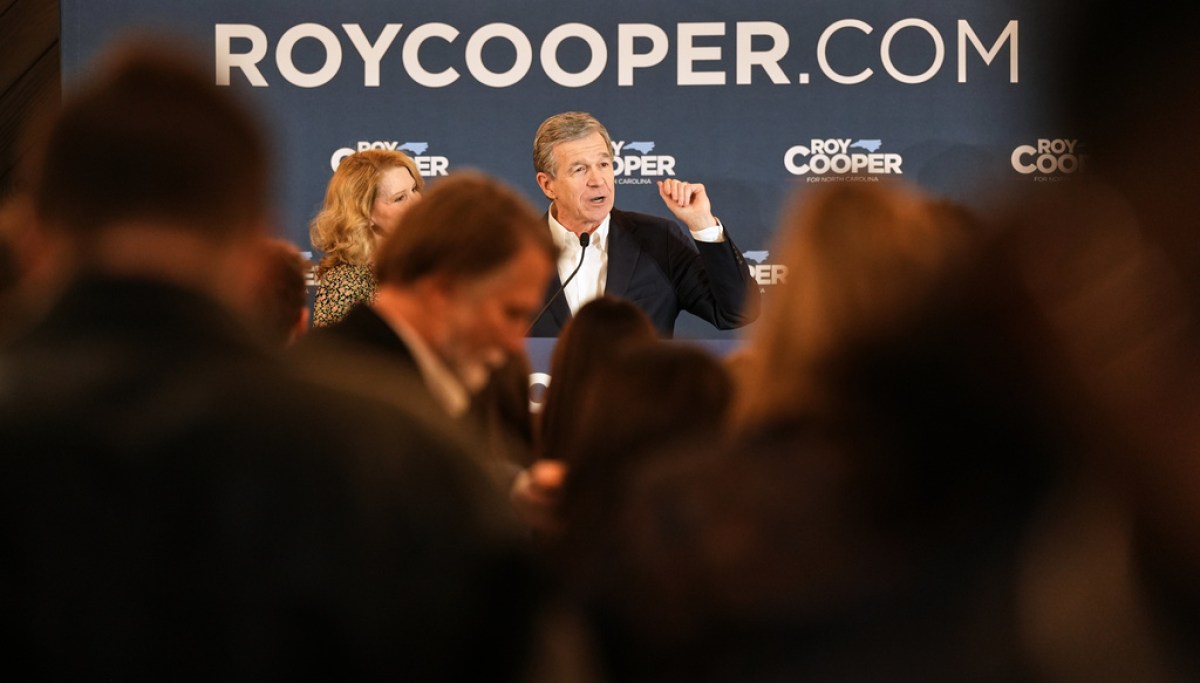
3) What should we think about Minnesota in particular, where Democratic Lt. Gov. Peggy Flanagan is in a surprisingly close race in polls against former NFL sideline reporter Michele Tafoya? asserted
Flanagan → think → Tafoya
A double flip is plausible this year, but not a good bet at even money This part of the equation is easy: Democrats are extremely likely to pick up at least one currently Republican-held seat. asserted
Democrats → pick → seat

Give feedback · no sign-in needed

No sign-in needed for now. Your note is sent without a name, so it cannot be answered.

History Support