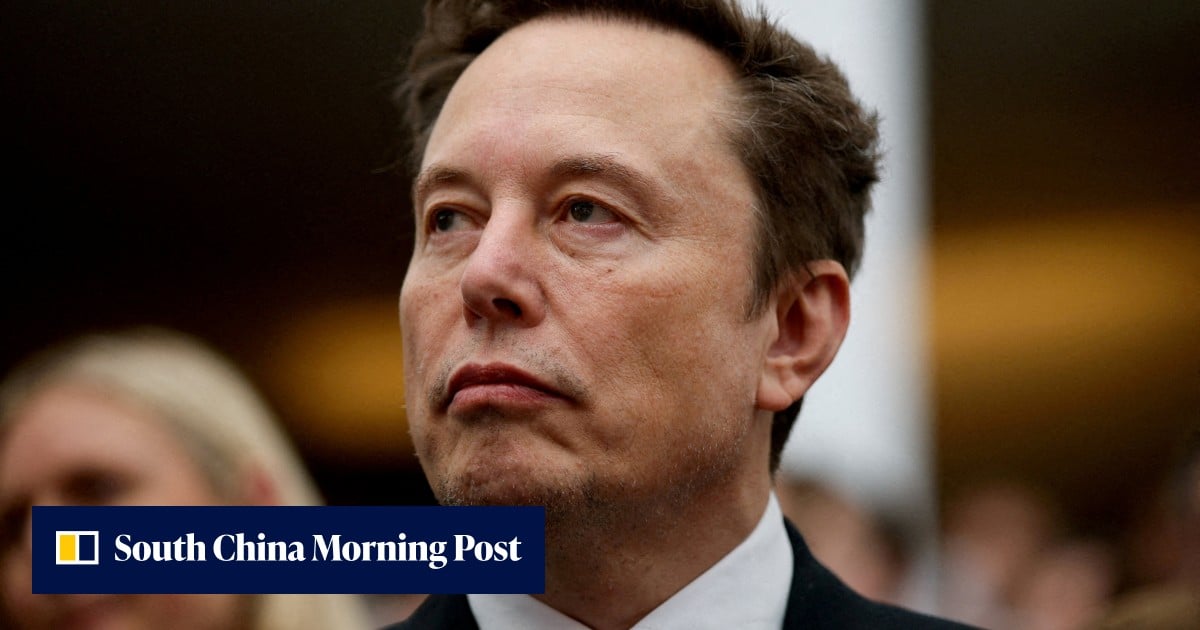
Photo via South China Morning Post

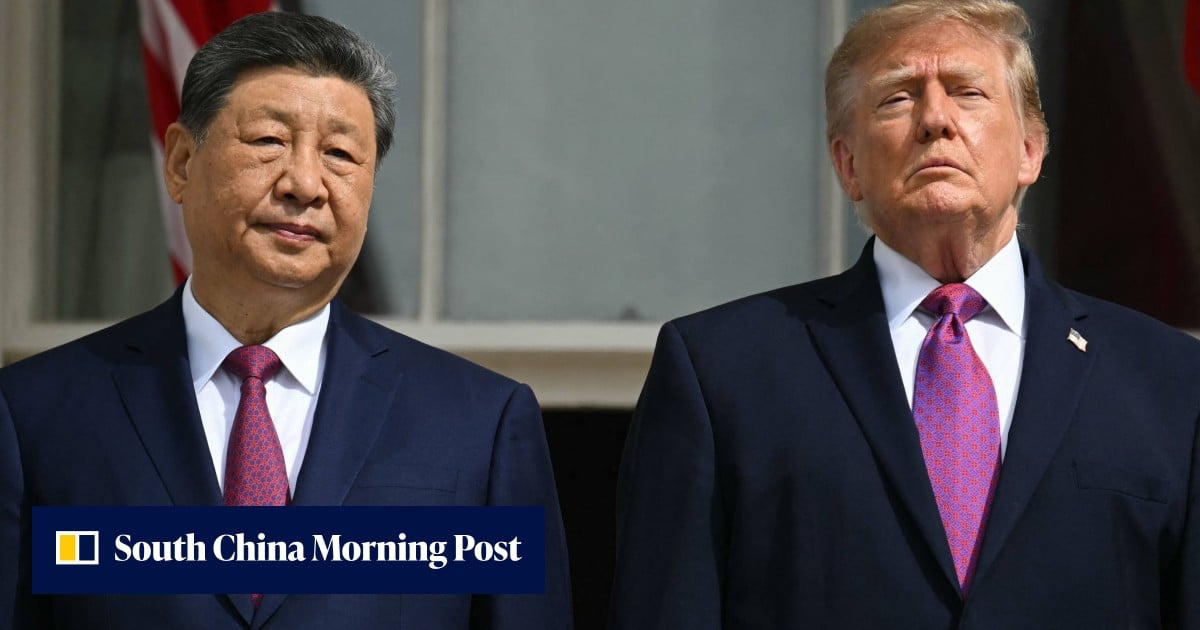
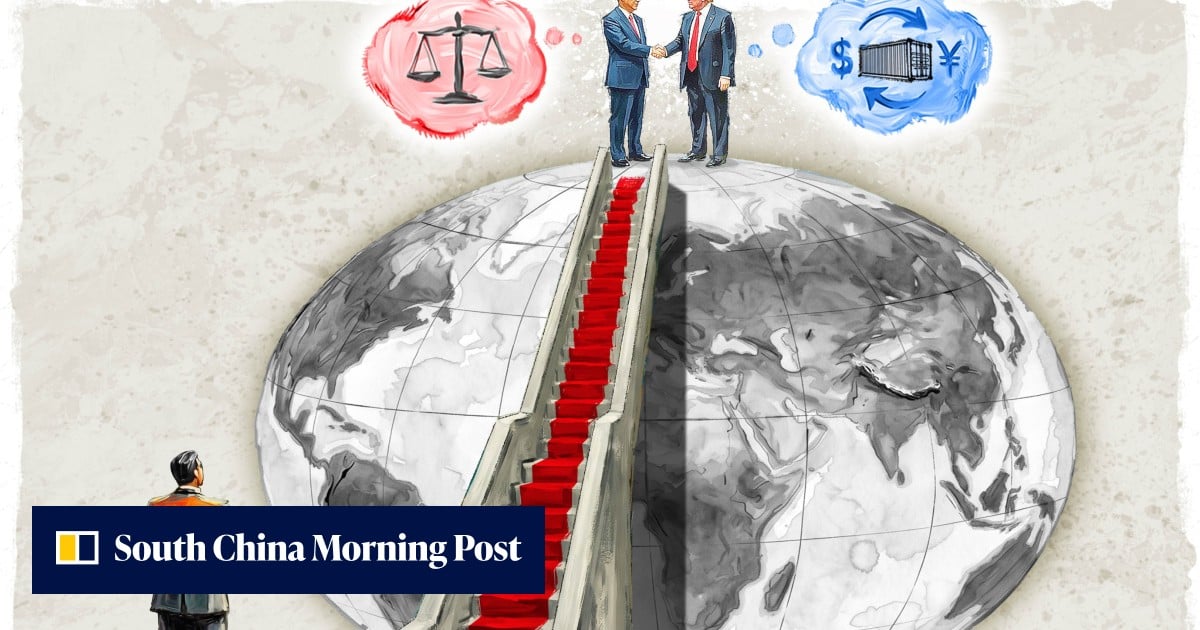
What are the concerns and priorities behind the new language used to define China-US ties?

Read the original at South China Morning Post ↗
Cite

Sim, D. (2026, October 9). What are the concerns and priorities behind the new language used to define China-US ties? South China Morning Post. https://www.scmp.com/news/china/diplomacy/article/3370323/what-are-concerns-and-priorities-behind-new-language-used-define-china-us-ties?utm_source=rss_feed

Dated when The Aporia collected the article, usually within hours of publication. Check the original for its exact date and byline.

South China Morning Post · collected 2026-10-09 · by Dewey Sim

Quick Summary

The article discusses recent changes in how China and the United States define their bilateral relationship, focusing on new principles of "respect" and "fairness and reciprocity." These additions reflect ongoing negotiations where each country emphasized different priorities: the U.S. sought to highlight fairness and reciprocal treatment, whereas China insisted on including mutual respect as a core component.
Written by AI on 2026-10-09, from this article's own text only (the story summary below draws on all the coverage).

AI analysis

Story summary

The United States and China have been working on defining their bilateral ties more clearly, with recent discussions including principles of "respect" and "fairness and reciprocity." This agreement was reached after four months of diplomatic negotiations where the US initially sought to emphasize "fairness and reciprocity," while China insisted that mutual respect be included. The inclusion of these terms aims to better reflect each country's priorities in their relationship, though the specifics remain somewhat ambiguous as details are still being elaborated upon.


Written for “China Us Relations Shifts” on 2026-11-20, grounded in this article and the 0 other(s) covering the same event.

Compared with similar articles

This article reads unscored and hedges 33% of its claims. Each row says how that neighbour differs.
South China Morning Post
Hedges 2 of 2 claims Outlet record 62/100
“The articles discuss different aspects of China-US relations without referencing the same specific summit or outcome.”
South China Morning Post
Hedges 0 of 2 claims Outlet record 62/100
“The articles discuss different aspects of US-China relations without referencing the same specific incident or meeting.”
South China Morning Post
Centre Hedges 0 of 3 claims Outlet record 62/100
“The articles discuss different aspects of China-US relations over time, not a single specific incident or meeting.”
South China Morning Post
Leans left Hedges 0 of 2 claims Outlet record 62/100
“While both articles discuss diplomatic relations between China and the US, they describe different aspects of the ongoing dialogue rather than a single specific summit or agreement.”
South China Morning Post
Hedges 1 of 2 claims Outlet record 62/100
“The articles discuss different aspects of China's diplomatic relations; one focuses on Wang Yi's statement regarding China’s engagement with Pacific island countries, while the other discusses new language used to define China-US ties.”
The Hindu
Leans right Hedges 4 of 47 claims Outlet record 60/100
“The articles discuss different aspects of China-U.S. relations over time rather than a single specific incident.”
South China Morning Post
Leans right Hedges 1 of 11 claims Outlet record 62/100
“Article A discusses the new language defining China-US ties, while Article B covers broader diplomatic and economic maneuvering ahead of the Shenzhen Apec summit.”

Story

China Us Relations Shifts
Politics · 1 article(s) covering the same event.
How this article was measured signals, leaning charts, publisher record, byline, topics and claims

Signals How these are calculated →

Claims extracted
3
sentences that state something as happening or true
Uncertain
33%
1 of 3 hedged ("reportedly", "may", "according to")
Leaning
withheld
no quote in the article backed the model's score
Publisher signals
62/100
South China Morning Post's corrections and hedging, across everything collected from it. Not a measure of accuracy.
Outlets on this story
1
Politics
Same framing elsewhere
1
articles that frame the event the way this one does
Analyzed 2026-10-09 · how these are computed

How this is being covered How these are calculated →

Article leaning vs. publisher reliability
Source leaning vs. consistency

Publisher

South China Morning Post · 4214 article(s) · 8 correction(s) detected
Running correction rate · 8 correction(s)

Who wrote this

Dewey Sim
19 article(s) here · 0 carrying a prediction
With Ukraine and North Korea off the table, the search is on for areas of possible consensus between Xi, Putin and Trump 4-MIN READ4-MIN Listen Talks between China, the US and Russia could yield a commitment to control AI in nuclear arsenals as part of a broader agenda on global governance, sources told the South China Morning Post.
All three accompanied Trump on his state visit to Beijing in May.
With Democrats set to take over Congress in January, they will have the power to block Trump’s agenda and investigate his administration.
US midterms will not upend broader China strategy, but ‘blue tsunami’ could shift Washington’s tactics, Zhao Minghao says
ExclusiveAustralian PM to visit Beijing after China-hosted Apec summit as tensions simmer Despite efforts to stabilise relations, Canberra’s ties with Beijing continue to be tested by a range of issues 2-MIN READ2-MIN Australian Prime Minister Anthony Albanese is expected to travel to Beijing next month as Canberra seeks to deepen a relationship which stabilised after years of trade disputes but has been recently complicated by geopolitical tensions. Sources told the South China Morning Post that Albanese would first attend the Asia-Pacific Economic Cooperation (Apec) leaders’ summit in Shenzhen, which runs from November 18 to 19, before travelling to the Chinese capital.
Will Xi, Trump, Putin meet at Apec?
Tokyo is hoping for a visit by the US president that would signal the strength of the relationship between the two allies The US president spent three days in Japan ahead of last year’s Asia-Pacific Economic Cooperation summit, and his meeting with Prime Minister Sanae Takaichi was hailed as a sign of a “new golden age” in the countries’ relationship. But since then Trump’s growing rapport with his Chinese counterpart Xi Jinping has caused concern in Japan, which has seen its own relationship with Beijing deteriorate sharply following controversial comments by Takaichi about Taiwan.
Beijing is “willing to continue” fast-tracking licenses for rare earth mineral exports to Europe, while the sides will continue negotiations on reducing tariffs and creating minimum price deals that would allow Chinese electric vehicles to enter the EU market at a lower duty rate, according to the statement.
ExclusiveGerman President Steinmeier targets China trip as Berlin sharpens trade stance Trip coincides with Merz’s Asia tour as Berlin and Paris advocate new EU mechanism to exclude rule-breaking trade partners It will mark the first official visit to China since 2018 for Steinmeier, a former foreign minister whose decade-long tenure as president ends in March 2027.
Trump may also be accompanied by his wife, Melania, who has not travelled to Asia with her husband since 2020, sources say If the trip happens, Trump’s appearance at the Association of Southeast Asian Nations meeting, expected to run from November 16-18 in Manila, will be his second consecutive appearance at the gathering during this term.
Also by Dewey Sim
Nothing else under this byline is closely related to this article, so these are simply their most recent.
All 19 articles by Dewey Sim →

Topics

Beijing China Washington

Subjects

Beijing GPE · 1× China GPE · 1× Washington GPE · 1×

Narrative

The two sides have now agreed to include principles such as ‘respect’ and ‘fairness and reciprocity’ that reflect their different priorities Four months on, they have added an elaboration that offers further insight into the two sides’ respective priorities.
framing: mixed · carried by 1 article(s) · first seen 2026-10-09

Claims (3 extracted, 1 hedged)

ExclusiveWhat are the concerns and priorities behind the new language used to define China-US ties? asserted
concerns → use → ties
The two sides have now agreed to include principles such as ‘respect’ and ‘fairness and reciprocity’ that reflect their different priorities Four months on, they have added an elaboration that offers further insight into the two sides’ respective priorities. asserted
that → agree → priorities
According to people familiar with the matter, the new phrasing was agreed following a diplomatic back and forth in which Washington had pushed for the relationship to be defined by “fairness and reciprocity”, while Beijing insisted that “respect” be written in as well. uncertain
respect → accord → fairness
Give feedback · no sign-in needed

No sign-in needed for now. Your note is sent without a name, so it cannot be answered.

History Support