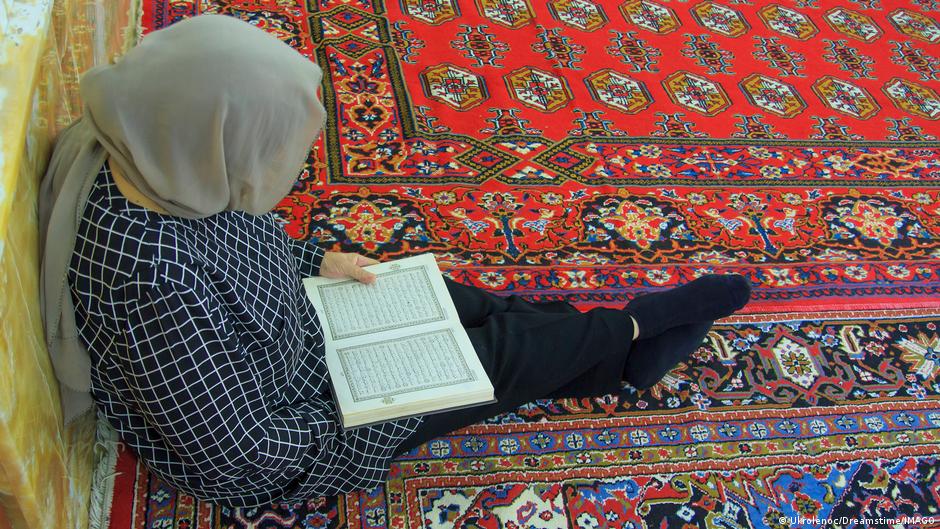
Photo via Al Jazeera

Azerbaijan’s school hijab ban: What’s behind it, and what’s next?

Read the original at Al Jazeera ↗
Cite

Al Jazeera Staff. (2026, October 12). Azerbaijan’s school hijab ban: What’s behind it, and what’s next? Al Jazeera. https://www.aljazeera.com/news/2026/10/12/azerbaijans-school-hijab-ban-whats-behind-it-and-whats-next?traffic_source=rss

Dated when The Aporia collected the article, usually within hours of publication. Check the original for its exact date and byline.

Al Jazeera · collected 2026-10-12 · by Al Jazeera Staff

Quick Summary

Azerbaijan's government has amended its school uniform regulations, indirectly prohibiting students and staff from wearing hijabs by barring clothing that violates the country’s “principle of secularism.” This decision has led to protests and social media campaigns, with some schools preventing those who wear hijabs from attending classes. The amendment aims to ensure a unified dress code reflecting Azerbaijan's secular nature while allowing clothing that represents national values for special occasions, pending approval by educational authorities.
Written by AI on 2026-10-12, from this article's own text only (the story summary below draws on all the coverage).
See how they differ ↓

AI analysis

Story summary

As of October 16, 2026, protests against a hijab ban in Azerbaijani schools have erupted across the country, involving students and teachers who oppose new dress code regulations aimed at enforcing secularism. The amendment approved last month by Azerbaijan's government indirectly prohibits the wearing of headscarves, despite not explicitly mentioning them, sparking significant unrest. Teacher Zahra Hasanova expressed emotional distress over being told she could no longer wear her hijab to school, highlighting the personal and cultural significance of the issue.

Protests have been ongoing for nearly a week, with children actively demonstrating against the ban, an unusual occurrence in Azerbaijan where public demonstrations are typically quashed by police. Social media platforms like Instagram and TikTok faced disruptions as videos documenting the protests began circulating widely, indicating authorities' concern over the situation. This rare wave of student-led activism has drawn criticism from Turkey, another predominantly Muslim country with close ties to Azerbaijan.

The ban reflects broader tensions regarding religious freedom and sovereignty in Azerbaijan, amid concerns about external influences from neighboring powers like Turkey and Iran.

Written for “Hijab Ban In Azerbaijan Schools” on 2026-11-21, grounded in this article and the 1 other(s) covering the same event.

How they differ

2 outlets covered “Hijab Ban In Azerbaijan Schools”.

What each outlet says

One AI summary per outlet of its latest article on this story, written from that article alone and checked against it. Open the article for the outlet's own words.

Al JazeeraThis outlet12 Oct

Azerbaijan's government has amended its school uniform regulations, indirectly prohibiting students and staff from wearing hijabs by barring clothing that violates the country’s “principle of secularism.” This decision has led to protests and social media campaigns, with some schools preventing those who wear hijabs from attending classes. The amendment aims to ensure a unified dress code reflecting Azerbaijan's…

Azerbaijan’s school hijab ban: What’s behind it, and what’s next? (this article)
Deutsche Welle16 Oct

Azerbaijan has seen rare protests against a de facto ban on Islamic headscarves in schools since September. The government introduced stricter dress code rules for students and teachers in July and September without explicitly mentioning hijabs but allowing local administrators to interpret the rules as banning them. This has led to girls being turned away from classrooms, sparking demonstrations across the country…

Hijab ban at schools in Azerbaijan: What's behind the rare wave of protests? →

Compared with similar articles

This article reads leans right and hedges 8% of its claims. Each row says how that neighbour differs.
Deutsche Welle
Leans left further left than this Hedges 2 of 49 claims Outlet record 95/100
Al Jazeera
Leans right Hedges 0 of 1 claims Outlet record 60/100
“While both articles discuss the same general protest against hijab restrictions in Azerbaijan, they describe different aspects of the incident: Article A focuses on the immediate protests and boycotts by school pupils, while Article B provides background context and analysis.”
Al Jazeera
Leans left further left than this Hedges 0 of 38 claims Outlet record 60/100
“The first article describes a general policy decision that sparked protests, while the second article focuses on a personal incident involving a teacher and her daughter being denied entry to school because of the hijab ban.”

Story

Hijab Ban In Azerbaijan Schools
Politics · 2 article(s) covering the same event. See how they differ ↑
How this article was measured signals, leaning charts, publisher record, byline, topics and claims

Signals How these are calculated →

Claims extracted
24
sentences that state something as happening or true
Uncertain
8%
2 of 24 hedged ("reportedly", "may", "according to")
Leaning
Leans right
of the writing, not the subject · beta estimate
Publisher signals
60/100
Al Jazeera's corrections and hedging, across everything collected from it. Not a measure of accuracy.
Outlets on this story
2
Politics
Same framing elsewhere
1
articles that frame the event the way this one does
Analyzed 2026-10-12 · how these are computed

How this is being covered How these are calculated →

Article leaning vs. publisher reliability
Source leaning vs. consistency

Publisher

Al Jazeera · 6216 article(s) · 4 correction(s) detected
Running correction rate · 4 correction(s)

Who wrote this

Al Jazeera Staff
1198 article(s) here · 1 carrying a prediction
Speaking to the court, Zecler said he would likely not have been recognised as a victim if not for the security footage recording the incident.
Crowds of people observing the emergency response could also be seen.
Recommended Stories list of 3 items- list 1 of 3Houthi advance on Aden may spur resurgence of Yemen’s southern separatists - list 2 of 3Saudi coalition hits 60 Houthi military sites; Taiz sees ‘fierce battles’ - list 3 of 3How
US President Donald Trump has said he would welcome Jensen Huang’s return as Nvidia’s CEO, more than a week after the company’s founder stepped down over a scandal involving extramarital affairs.
According to the court documents, the suspects were arrested five minutes before the concert was set to begin and one of them had bought a ticket to the performance.
“It is not acceptable to have a COP or a cover document that does not even mention fossil fuels, and we simply will not put up with it,” Panama’s environment minister, Juan Carlos Navarro, told a news conference.
Analysts, however, have questioned how much the Salvadoran deployment has contributed to recent gains and whether those gains would last.
Estonia’s government on Friday approved a preliminary six-month closure of its road border crossings from December 1, and will decide next year whether to extend it.
New York City Mayor Zohran Mamdani has unveiled a plan to close the notorious Rikers Island jail complex by 2032, setting out how his administration hopes to shut down a facility long criticised for violence, overcrowding and poor sanitation.
President Donald Trump had urged senators to pass the measure and said he would sign the bill if it passes the House of Representatives.
Wire or desk byline, not an individual reporter.
Also by Al Jazeera Staff
Nothing else under this byline is closely related to this article, so these are simply their most recent.
All 1198 articles by Al Jazeera Staff →

Topics

APA Azerbaijan Muslim Russia Turkiye

Subjects

Azerbaijan GPE · 7× Muslim NORP · 4× Turkiye GPE · 4× APA ORG · 2× Aliyev PERSON · 2× Azerbaijani NORP · 2× 3Pashinyan PERSON · 1× Armenia GPE · 1× Russia GPE · 1× pro-Europe NORP · 1×

Narrative

The amendment approved last month stopped short of explicitly banning the Muslim headscarf but barred clothing in schools that the government said violates the “principle of secularism”. Recommended Stories list of 3 items- list 1 of 3Things are not going so well for Russia - list 2 of 3Pashinyan’s pro-Europe party wins Armenia election - list 3 of 3After Nagorno-Karabakh, Armenians vote for peace over nationalism The decision has sparked protests as some schools began preventing students and teachers from attending classes.
framing: assertive · carried by 1 article(s) · first seen 2026-10-12
Teacher Zahra Hasanova told Al Jazeera that she was informed she could no longer wear the hijab at school.
2026-10-12 · Al Jazeera
Azerbaijan’s school hijab ban: What’s behind it, and what’s next? · assertive framing

Claims (24 extracted, 2 hedged)

An Azerbaijan government decision to indirectly prohibit students and staff from wearing the hijab in schools has sparked protests. asserted
decision → prohibit → protests
The amendment approved last month stopped short of explicitly banning the Muslim headscarf but barred clothing in schools that the government said violates the “principle of secularism”. Recommended Stories list of 3 items- list 1 of 3Things are not going so well for Russia - list 2 of 3Pashinyan’s pro-Europe party wins Armenia election - list 3 of 3After Nagorno-Karabakh, Armenians vote for peace over nationalism The decision has sparked protests as some schools began preventing students and teachers from attending classes. asserted
schools → approve → classes
Teacher Zahra Hasanova told Al Jazeera that she was informed she could no longer wear the hijab at school. uncertain
she → tell → school
I am hurt,” she said. asserted
she → hurt → ?
“[The hijab] is a personal choice, and if one day I want to take it off, that should be my choice too.” asserted
that → want → it
How has the ban played out? asserted
ban → play → ?
The state-run Azerbaijani Press Agency (APA) said the amendment to the Descriptions of Uniforms for Students of State General Education Institutions aimed to ensure a unified dress code that reflects the country’s “secular principle”. asserted
that → run → principle
About 96 percent of Azerbaijan’s population identifies as Muslim. asserted
percent → identify → population
Its constitution defines the country as secular while also guaranteeing religious freedom. asserted
constitution → define → freedom
The APA added that clothes that reflect the “history, culture, and national and moral values of the Azerbaijani people” may be worn for celebrations pending approval by the Pedagogical Council, which operates under the Ministry of Science and Education. uncertain
which → add → Science
Such clothing ensures that teachers reflect “professional standards” and will have positive effects on the “school’s public reputation”, it said. asserted
it → ensure → reputation
Have protests taken place? asserted
protests → take → place
The measure has sparked protests and a social media campaign in Azerbaijan. asserted
measure → spark → Azerbaijan
Videos circulated showing students hugging their teachers and crying as they were turned away from schools. asserted
they → circulate → schools
Local media outlets reported that students in at least two schools in Azerbaijan boycotted classes in protest against the restrictions. asserted
students → report → restrictions
Imprisoned journalist Polad Aslanov, who is serving a 113-year prison sentence after being convicted of high treason in 2020, launched a hunger strike over the new requirements. “Despite being in prison, I am raising my voice against the trampling of our constitutional rights by employing the only means of struggle available to me – a hunger strike!” Aslanov wrote in a message posted on Facebook by his wife, Gulmira Aslanova. asserted
Aslanov → imprison → wife
Reports of internet blackouts have not been confirmed by data from watchdogs, including Open Observatory of Network Interference and NetBlocks. asserted
Reports → confirm → Interference
Have other countries reacted? asserted
countries → react → ?
A social media campaign followed by protests also spread to Turkiye. asserted
campaign → follow → Turkiye
Some have drawn parallels between the developments in Azerbaijan and Turkiye’s “post-modern coup” in 1997 when women wearing headscarves were banned from attending university classes and dismissed from their civil service jobs or were forced to resign. asserted
women → draw → jobs
Demonstrators last week gathered outside Azerbaijan’s consulate in Istanbul to protest the restrictions affecting Muslim women, calling on authorities in Baku to reconsider the decision. Azerbaijani President Ilham Aliyev issued a veiled criticism of Turkiye, a strong ally of Azerbaijan, for the protests. asserted
Aliyev → gather → protests
In a speech at his New Azerbaijan Party congress, Aliyev warned not to “interfere with our lifestyle” without directly mentioning Turkiye. asserted
Aliyev → warn → Turkiye
Authorities in Ankara did not officially respond to Aliyev’s comment. asserted
Authorities → respond → comment
Turkish President Recep Tayyip Erdogan, however, mentioned in his September 23 address at the United Nations General Assembly that Muslim women were facing increasing discrimination. asserted
women → mention → discrimination
Give feedback · no sign-in needed

No sign-in needed for now. Your note is sent without a name, so it cannot be answered.

History Support