Photo via Al Jazeera

The Houthis are testing the limits of Saudi restraint

Read the original at Al Jazeera ↗
Cite

Batarfi, K. M. (2026, September 10). The Houthis are testing the limits of Saudi restraint. Al Jazeera. https://www.aljazeera.com/opinions/2026/9/10/the-houthis-are-testing-the-limits-of-saudi-restraint?traffic_source=rss

Dated when The Aporia collected the article, usually within hours of publication. Check the original for its exact date and byline.

Al Jazeera · collected 2026-09-10 · by Khaled M Batarfi

Quick Summary

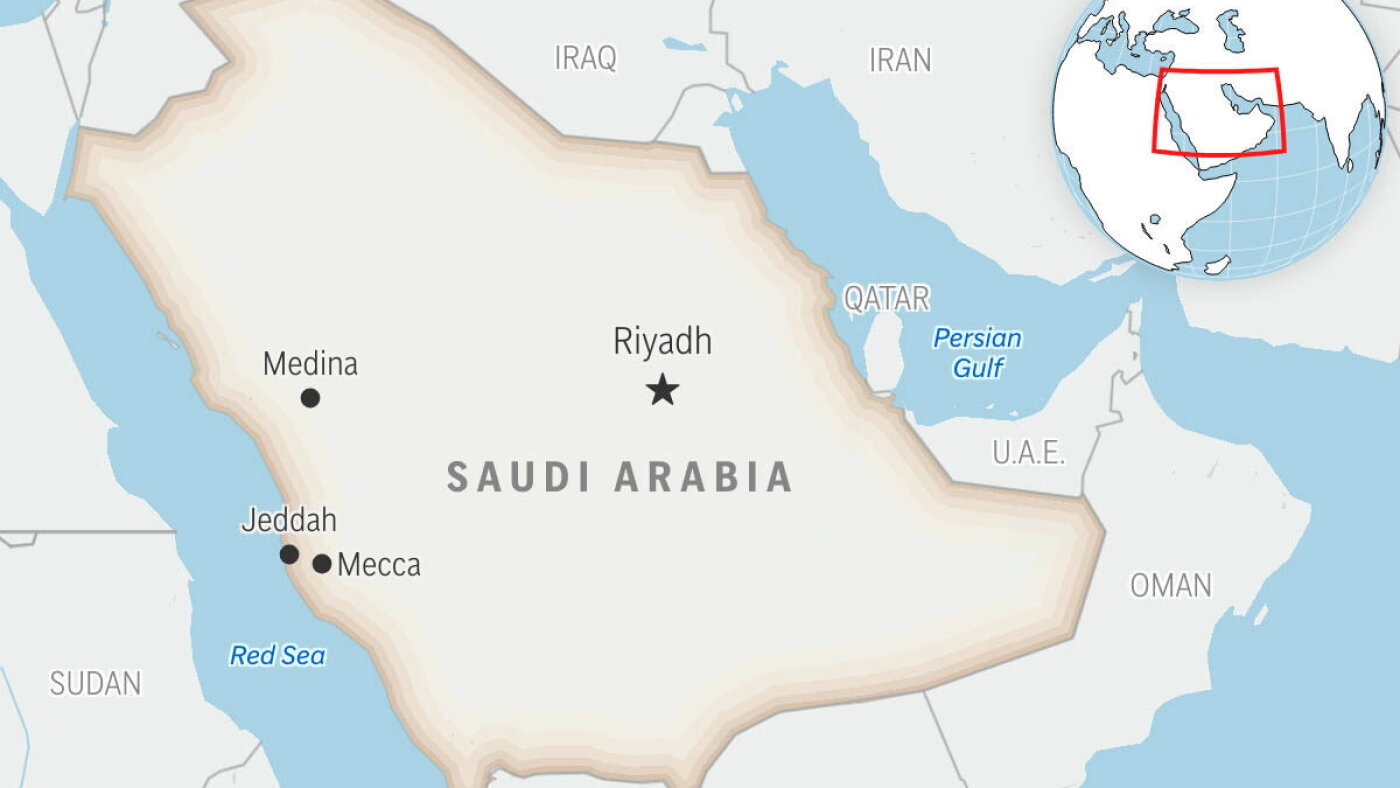
The Houthis are escalating their attacks on Saudi territory, targeting civilian and economic sites with missiles and drones, causing injuries and disruptions to energy facilities. These attacks have injured dozens of civilians and disrupted maritime traffic in the Red Sea and Bab al-Mandeb. Saudi Arabia faces two interconnected threats: attacks on its territory and attempts to disrupt trade routes, creating a difficult strategic equation for Riyadh. The article suggests that while Saudi Arabia has strengthened its defenses, it needs to shift from interception to deterrence through a combination of military options, including intelligence operations, border security, and disrupting supply networks.
Written by AI on 2026-09-10, from this article's own text only (the story summary below draws on all the coverage).
See how they differ ↓

AI analysis

Story summary

On September 15, 2026, Saudi Arabia warned it would respond "firmly" to attacks by Yemen’s Houthis after a series of missile and drone strikes wounded 13 civilians in the kingdom's south. The Iran-backed rebels have been fighting against Saudi-supported government forces since Yemen’s civil war reignited in July, including declaring a maritime blockade on Riyadh and targeting its ships in the Red Sea. Recently, the Houthis seized control over much of Yemen's Red Sea coast and the Bab al-Mandab Strait, critical routes as tensions escalate between the U.S. and Iran.

In response to these attacks, Saudi Arabia launched 54 air raids across Yemen’s western governorates in retaliation for Houthi missile strikes on Khamis Mushait and other southern cities. The conflict has further complicated regional stability, with Gulf Arab states postponing planned talks with Iran amid fears of escalating Middle East conflicts impacting global oil supplies.

Written for “Houthis Attack Saudi Targets” on 2026-11-20, grounded in this article and the 18 other(s) covering the same event.

How they differ

7 outlets covered “Houthis Attack Saudi Targets”.

What each outlet says

One AI summary per outlet of its latest article on this story, written from that article alone and checked against it. Open the article for the outlet's own words.

Al JazeeraThis outlet10 Sep

The Houthis are escalating their attacks on Saudi territory, targeting civilian and economic sites with missiles and drones, causing injuries and disruptions to energy facilities. These attacks have injured dozens of civilians and disrupted maritime traffic in the Red Sea and Bab al-Mandeb. Saudi Arabia faces two interconnected threats: attacks on its territory and attempts to disrupt trade routes, creating a…

The Houthis are testing the limits of Saudi restraint (this article)4 articles from Al Jazeera on this story
Dawn15 Sep

Saudi Arabia has vowed to respond "firmly" to recent attacks by Yemen's Houthi rebels, following missile and drone strikes that injured 13 people in Saudi territory and damaged oil infrastructure. The attacks include a large-scale assault on King Khalid airbase in southern Saudi Arabia, which the Houthis claim involved dozens of missiles and drones. In response, Saudi Arabia conducted more than 50 airstrikes against…

Saudi Arabia vows to respond 'firmly' to Houthi attacks →5 articles from Dawn on this story
The Hindu15 Sep

On September 14, 2026, Yemen's Houthi rebels launched attacks in southern Saudi Arabia using ballistic missiles and drones, resulting in injuries to 13 civilians and damage to seven houses and two vehicles in the cities of Khamis Mushait, Abha, and Taif. A spokesman for the Riyadh-led coalition reported these details on X the following day.

Houthi attack in southern Saudi Arabia wounds 13: Riyadh-led coalition →4 articles from The Hindu on this story
CBC14 Sep

The Houthis in Yemen have launched new attacks on Saudi Arabia, including firing missiles and drones at an airbase in Khamis Mushait, citing retaliation for recent Saudi airstrikes in Yemen. Gulf Arab states postponed planned talks with Iran due to these escalating tensions, which raise concerns over the impact on global oil supplies as the conflict spreads. The International Organization for Migration estimates…

Houthis attack more Saudi targets as regional talks with Iran postponed →2 articles from CBC on this story
The Straits Times15 Sep

Yemen’s Houthi rebels launched new attacks on September 15, targeting military installations in southern Saudi Arabia and taking control of Perim Island near the Red Sea. These actions prompted Saudi Arabia to issue emergency alerts and led to the postponement of talks between Gulf Arab states and Iran regarding the Strait of Hormuz. The attacks caused civilian casualties and disrupted a crucial Saudi oil pipeline…

Houthis strike Saudi targets anew as talks over Strait of Hormuz stall →2 articles from The Straits Times on this story
NPR8 Sep

A wave of Houthi attacks on Saudi Arabia has wounded 73 people and ignited fires at several oil facilities and utilities in the kingdom's southern region, according to authorities. The attacks targeted civilian and economic facilities in cities including Abha, Jazan, Najran, and Khamis Mushait, with the Energy Ministry temporarily suspending operations at affected sites. This escalation comes amid renewed clashes…

Houthi attacks on Saudi Arabia ignite fires at oil facilities and wound 73 people →
Show 1 more outlets
Toronto Star15 Sep

A Houthi official reported Tuesday that Saudi airstrikes in Yemen killed three people, including two children. Meanwhile, Human Rights Watch alleged that Houthi rebels may be committing war crimes by attacking commercial ships. The ongoing conflict is jeopardizing civilian safety and maritime traffic through the Red Sea, which has become increasingly crucial because of shipping disruptions caused by tensions near…

Houthi official says Saudi airstrikes leave 3 dead, and other Mideast developments →

Where they agree and split

The full story: what happened, how it changed, and all 19 articles →

Compared with similar articles

This article reads leans right and hedges 2% of its claims. Each row says how that neighbour differs.
CBC News
Hedges 4 of 29 claims Outlet record 60/100
Dawn
Leans right Hedges 1 of 25 claims Outlet record 67/100
NPR
Hedges 2 of 38 claims Outlet record 60/100
Al Jazeera
Hedges 0 of 30 claims Outlet record 60/100
The Hindu
Hedges 0 of 7 claims Outlet record 60/100
Toronto Star
Hedges 1 of 28 claims Outlet record 64/100
The Free Press
Leans strongly right further right than this Hedges 0 of 12 claims Outlet record 96/100
“The articles describe different attacks occurring at separate times and locations.”
The Straits Times
Hedges 2 of 11 claims Outlet record 64/100
“Article A describes Houthi attacks on civilian and economic sites in Saudi Arabia, while Article B reports Yemen government forces striking Houthis in a strategic Red Sea city. These are different specific incidents.”
CBC News
Leans right Hedges 4 of 33 claims Outlet record 60/100
“The articles describe different events occurring in separate locations: one involving Houthi attacks on Saudi Arabia's southern cities and energy facilities, and another concerning an alleged militia attack on a Saudi oil pipeline near Iraq.”
CBC News
Hedges 4 of 35 claims Outlet record 60/100
“Article A describes recent Houthi attacks in Saudi Arabia, while Article B is a general overview and primer about the Houthi movement.”

Story

Houthis Attack Saudi Targets
World · 19 article(s) covering the same event. Compare every outlet's account →
How this article was measured signals, leaning charts, publisher record, byline, topics and claims

Signals How these are calculated →

Claims extracted
63
sentences that state something as happening or true
Uncertain
2%
1 of 63 hedged ("reportedly", "may", "according to")
Leaning
Leans right
of the writing, not the subject · beta estimate
Publisher signals
60/100
Al Jazeera's corrections and hedging, across everything collected from it. Not a measure of accuracy.
Outlets on this story
19
World
Same framing elsewhere
1
articles that frame the event the way this one does
Analyzed 2026-09-10 · how these are computed

How this is being covered How these are calculated →

Article leaning vs. publisher reliability
Source leaning vs. consistency

Publisher

Al Jazeera · 6131 article(s) · 4 correction(s) detected
Running correction rate · 4 correction(s)

Who wrote this

Khaled M Batarfi
1 article(s) here · 1 carrying a prediction
A return to an open-ended war would contradict that strategy and impose unnecessary political and economic costs.
2026-09-10 · assertive framing · The Houthis are testing the limits of Saudi restraint
The only article under this byline in the corpus.

Topics

Houthi Saudi Saudi Arabia Yemen Yemeni

Subjects

Saudi Arabia GPE · 8× Saudi NORP · 4× Yemen GPE · 3× Houthi NORP · 2× Houthis NORP · 2× Riyadh GPE · 2× Yemeni NORP · 2× Abha GPE · 1× Jizan GPE · 1× Khamis Mushait GPE · 1×

Narrative

These include intelligence operations, strengthening Yemeni government forces, improving border security, disrupting missile and drone supply networks and, where necessary, conducting proportionate operations against facilities directly involved in attacks on Saudi Arabia.
framing: assertive · carried by 1 article(s) · first seen 2026-09-10
A return to an open-ended war would contradict that strategy and impose unnecessary political and economic costs.
2026-09-10 · Al Jazeera
The Houthis are testing the limits of Saudi restraint · assertive framing

Claims (63 extracted, 1 hedged)

The renewed escalation in Yemen is no longer simply a Yemeni battlefield development. asserted
escalation → renew → Yemen
For Saudi Arabia, it is becoming a direct test of national security, economic resilience and the kingdom’s ability to prevent the wider regional war from spilling further across its borders. asserted
it → become → borders
The latest Houthi attacks have demonstrated this clearly. asserted
attacks → demonstrate → this
Missiles and drones have hit civilian and economic sites in Abha, Khamis Mushait, Jizan and Najran, injuring dozens of civilians and causing fires and temporary disruption at energy facilities. asserted
Missiles → hit → facilities
The attacks came as fighting intensified in Yemen and around the western coast, while the Houthis continued to threaten maritime traffic in the Red Sea and Bab al-Mandeb. asserted
Houthis → come → Sea
Saudi Arabia therefore faces two interconnected threats: Attacks on its territory and attempts to disrupt the maritime routes on which regional and international trade depends. asserted
trade → face → which
This creates a difficult strategic equation for Riyadh. asserted
This → create → Riyadh
Saudi Arabia has spent the past several years trying to move away from direct military involvement in Yemen and towards diplomacy, de-escalation and support for a political settlement. asserted
Arabia → spend → settlement
A return to an open-ended war would contradict that strategy and impose unnecessary political and economic costs. asserted
return → contradict → costs
But restraint cannot mean accepting repeated attacks on Saudi territory. asserted
restraint → mean → territory
A different security environment The security challenge today differs considerably from the first years of the Yemen war. asserted
challenge → differ → war
Saudi Arabia has strengthened its air and missile defences, improved coordination between its military and security institutions and accumulated considerable experience in countering drones and ballistic missiles. asserted
Arabia → strengthen → drones
It is therefore much better prepared to defend its territory than it was a decade ago. asserted
it → prepare → territory
Yet the Houthi threat has also evolved. asserted
threat → evolve → ?
The group possesses a combination of ballistic missiles, cruise missiles and increasingly sophisticated drones. asserted
group → possess → missiles
Even when most incoming weapons are intercepted, relatively inexpensive systems can impose disproportionate defensive costs and create uncertainty around airports, industrial facilities, border communities and energy infrastructure. asserted
systems → intercept → airports
This means Saudi security cannot depend on interception alone. asserted
security → mean → interception
No air defence system can guarantee a perfect shield indefinitely. asserted
system → guarantee → shield
The strategic objective must therefore be deterrence: Convincing the Houthis that attacks on Saudi territory will impose costs greater than any political or military benefit they expect to obtain. asserted
they → convince → benefit
This does not necessarily require returning to the large-scale military campaign of previous years. asserted
This → require → years
Riyadh has more options today. asserted
Riyadh → have → options
These include intelligence operations, strengthening Yemeni government forces, improving border security, disrupting missile and drone supply networks and, where necessary, conducting proportionate operations against facilities directly involved in attacks on Saudi Arabia. asserted
These → include → Arabia
Saudi Arabia does not need to choose between doing nothing and returning to a full-scale war. asserted
Arabia → need → war
Saudi Arabia is one of the world’s largest energy exporters, which makes attacks on its oil infrastructure internationally significant even when physical damage is limited. asserted
damage → make → infrastructure
The latest attacks affected energy facilities and contributed to renewed concern in already nervous global oil markets. asserted
attacks → affect → markets
There is an apparent paradox here: Regional instability can push oil prices higher and temporarily increase Saudi oil revenues. asserted
instability → be → revenues
But higher prices caused by war should not be confused with economic benefit. asserted
prices → cause → benefit
Saudi Arabia’s economic strategy under Vision 2030 depends increasingly on stability, investment, tourism, logistics, technology and the development of major projects outside the oil sector. asserted
strategy → depend → sector
Persistent missile and drone attacks can raise insurance and transport costs and affect perceptions of regional risk even if the kingdom’s underlying economy remains strong. asserted
economy → raise → risk
Saudi Arabia occupies a strategic position between two of the world’s most important energy corridors: The Strait of Hormuz to the east and Bab al-Mandeb to the west. asserted
Arabia → occupy → west
Disruption of both routes represents a serious challenge not only for Saudi Arabia but for the global economy. asserted
Disruption → represent → economy
Bab al-Mandeb connects the Indian Ocean with the Red Sea and the Suez Canal. asserted
Mandeb → connect → Sea
A sustained Houthi ability to threaten shipping there would increase freight and insurance costs and potentially divert vessels around Africa. asserted
ability → threaten → Africa
Saudi Arabia, however, possesses an important strategic advantage: Its energy infrastructure is not completely dependent on the Gulf. asserted
infrastructure → possess → Gulf
The kingdom can transport significant quantities of oil through its East-West pipeline to terminals on the Red Sea. asserted
kingdom → transport → Sea
This provides an alternative to Hormuz and gives Riyadh greater strategic flexibility. asserted
This → provide → flexibility
That advantage does not, however, eliminate Saudi Arabia’s exposure to insecurity elsewhere in the Red Sea, including around Bab al-Mandeb. asserted
advantage → eliminate → Mandeb
Protecting Bab al-Mandeb should therefore be understood not simply as a Saudi or Yemeni interest but as an international economic and security requirement. asserted
Protecting → protect → requirement
The Houthis could benefit from drawing Saudi Arabia back into an extensive war. uncertain
Houthis → benefit → war
It would allow them to portray the conflict once again as a confrontation between Yemen and an external power rather than a struggle among Yemenis over the future of their state. asserted
them → allow → state
…and 23 more, not listed.
Give feedback · no sign-in needed

No sign-in needed for now. Your note is sent without a name, so it cannot be answered.

History Support