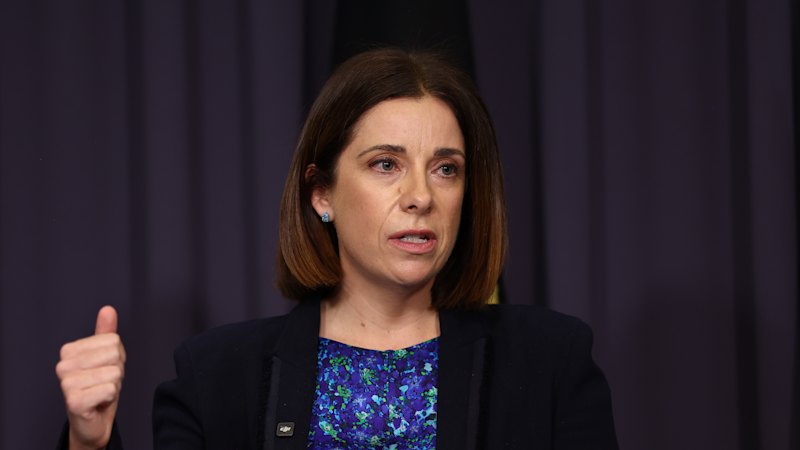
Photo via The Hindu

Australia’s plan to let users opt out of social media algorithms | Explained

Read the original at The Hindu ↗
Cite

Bureau, T. H. (2026, September 10). Australia’s plan to let users opt out of social media algorithms | Explained. The Hindu. https://www.thehindu.com/news/international/australias-plan-to-let-users-opt-out-of-social-media-algorithms-explained/article71451234.ece

Dated when The Aporia collected the article, usually within hours of publication. Check the original for its exact date and byline.

The Hindu · collected 2026-09-10 · by The Hindu Bureau

Quick Summary

The Australian government has proposed a plan to give users control over social media algorithms, allowing them to opt out of personalized content and choose what they see online. The "My Feed, My Way" initiative will require tech firms to offer users a choice between algorithm-driven feeds and curated feeds with user-selected content. If the proposal passes, non-compliance could result in fines up to $79 million. The plan aims to address concerns over online safety norms, particularly for young users, by limiting exposure to harmful or addictive content.
Written by AI on 2026-09-10, from this article's own text only (the story summary below draws on all the coverage).
See how they differ ↓

AI analysis

Story summary

The Australian government introduced landmark legislation on September 8, 2026, allowing social media users to opt out of algorithms controlling their feeds. This Digital Duty of Care bill requires major platforms like Facebook, Instagram, and TikTok to offer users the choice to turn off personalized content recommendations, displaying posts only from friends and followed accounts instead. Companies failing to comply could face fines exceeding $109 million. The legislation aims to protect vulnerable groups, including children under 18, from harmful online content related to eating disorders, bullying, and misogynistic material. Despite broad support, opposition leader Angus Taylor expressed skepticism over potential censorship concerns.

Written for “Australia Plans Algorithm Opt-Out Law” on 2026-11-21, grounded in this article and the 7 other(s) covering the same event.

How they differ

7 outlets covered “Australia Plans Algorithm Opt-Out Law”.

What each outlet says

One AI summary per outlet of its latest article on this story, written from that article alone and checked against it. Open the article for the outlet's own words.

The HinduThis outlet10 Sep

The Australian government has proposed a plan to give users control over social media algorithms, allowing them to opt out of personalized content and choose what they see online. The "My Feed, My Way" initiative will require tech firms to offer users a choice between algorithm-driven feeds and curated feeds with user-selected content. If the proposal passes, non-compliance could result in fines up to $79 million…

Australia’s plan to let users opt out of social media algorithms | Explained (this article)
The Guardian6 Sep

Federal Communications Minister Anika Wells plans to introduce draft legislation creating a digital duty of care for social media users in Australia, which would include rules requiring social media platforms to allow users to turn off algorithms controlling their feeds. The plan aims to protect vulnerable users, including children, from being fed content that reinforces dangerous stereotypes and behaviors…

Labor plans crackdown on social media algorithms as Taylor says he’s ‘deeply sceptical’ →
South China Morning Post7 Sep

Communications Minister Anika Wells has proposed a law requiring social media companies to give users an option to opt out of algorithms that tailor their feed. The government's digital duty of care bill would force firms like Meta Platforms to offer chronological feeds as an alternative. No specific numbers or enforcement mechanisms are mentioned in the article. The opposition raises doubts about the effectiveness…

Australians could opt out of social media algorithms under proposed law →
Al Jazeera7 Sep

Communications Minister Anika Wells announced that Australia's government will unveil draft laws requiring companies like Meta to give users an option to turn off algorithms under a "digital duty of care". The proposed legislation aims to tackle online harm, with Wells stating that users should be given a choice in using the algorithm. Opposition leader Angus Taylor expressed skepticism about the bill, fearing it…

Australia’s proposed ‘opt out’ law targets Big Tech algorithms →
BBC7 Sep

Communications Minister Anika Wells plans to introduce draft legislation allowing Australians to opt out of social media algorithms. The proposed laws would require tech firms like Meta, Google, and TikTok to give users the option to turn off algorithms or face "substantial" penalties. A public debate has erupted over the proposal, with some opposition members calling it censorship and others expressing support in…

Australians will be able to switch off social media algorithms under planned legislation →
NPR8 Sep

The Australian government has proposed new laws that would allow social media users aged 16 and over to opt out of algorithms that personalize their feeds. According to Prime Minister Anthony Albanese, the legislation would provide "genuine and enduring choice" for users, who could choose to see only content from friends and creators they follow rather than algorithm-recommended posts. The proposed Digital Duty of…

Australian social media users to be offered choice to opt out of algorithms →
Show 1 more outlets
The Straits Times8 Sep

The Australian Government has unveiled a landmark bill that would allow social media users to opt out of algorithms controlling their content, with fines of up to A$109 million for non-compliance. The draft Digital Duty of Care bill aims to improve online safety by giving users control over what they see, particularly in regards to misinformation and explicit content. Experts have hailed the move as "profound" but…

Australia unveils landmark Bill to let social media users opt out of algorithm →

Compared with similar articles

This article reads leans left and hedges 11% of its claims. Each row says how that neighbour differs.
The Straits Times
Leans right further right than this Hedges 6 of 33 claims Outlet record 64/100
South China Morning Post
Leans left Hedges 1 of 4 claims Outlet record 62/100
NPR
Hedges 2 of 13 claims Outlet record 60/100
The Guardian
Hedges 0 of 26 claims Outlet record 64/100
Al Jazeera
Hedges 2 of 13 claims Outlet record 60/100
BBC News
Hedges 1 of 20 claims Outlet record 65/100
The Sydney Morning Herald
Leans left Hedges 2 of 24 claims Outlet record 61/100
“Article A discusses government fines, while Article B focuses on user opt-out of algorithms and release of draft legislation”
The Sydney Morning Herald
Hedges 0 of 8 claims Outlet record 61/100
“Article A mentions fines and legislation, while Article B focuses on opt-out plan from algorithms”

Story

Australia Plans Algorithm Opt-Out Law
Technology · 8 article(s) covering the same event. See how they differ ↑
How this article was measured signals, leaning charts, publisher record, byline, topics and claims

Signals How these are calculated →

Claims extracted
28
sentences that state something as happening or true
Uncertain
11%
3 of 28 hedged ("reportedly", "may", "according to")
Leaning
Leans left
of the writing, not the subject · beta estimate
Publisher signals
60/100
The Hindu's corrections and hedging, across everything collected from it. Not a measure of accuracy.
Outlets on this story
8
Technology
Same framing elsewhere
1
articles that frame the event the way this one does
Analyzed 2026-09-10 · how these are computed

How this is being covered How these are calculated →

Article leaning vs. publisher reliability
Source leaning vs. consistency

Publisher

The Hindu · 907 article(s) · 2 correction(s) detected
Running correction rate · 2 correction(s)

Who wrote this

The Hindu Bureau
96 article(s) here · 1 carrying a prediction
The dialogue, which will be organised by the Ministry of Culture and the Ministry of External Affairs, was proposed by Prime Minister Narendra Modi at the SCO leaders’ Summit in Tianjin last year and adopted by the SCO Council.
Heavy post war damages from Germany The Yalta Conference pressed for large sums of post-war damages to be exacted from Germany, and it was decided that half of it would go to the Soviet Union.
A Pakistani delegation will be participating in the SCO Civilisations Dialogue Forum to be held in New Delhi from November 20 to 22, 2026.
China's Xi says will work with Trump to keep China-U.S. ties on course -
U.S. President Donald Trump, Russian President Vladimir Putin, and China’s Xi Jinping will hold a trilateral meeting in Shenzhen, China, on November 19, 2026.
NASA’s Voyager 1 is set to cross a historic threshold in space exploration as it is about to become humanity’s first object to reach one light-day from Earth.
Prime Minister Narendra Modi will meet U.S. President Donald Trump, Japanese Prime Minister Sanae Takaichi and Australian Prime Minister Anthony Albanese at the Quad Summit to be held in Manila on the sidelines of the ASEAN (Association of Southeast Asian Nations) meetings on November 17, 2026.
The International Court of Justice (ICJ), based in The Hague, Netherlands, on November 19, 2026, will rule on a landmark case against Myanmar, which is accused of committing genocide against the Rohingya people.
Britain’s Prince William and Princess Catherine (Kate) has arrived in Mumbai for a three-day visit to India as part of the sixth edition of The Earthshot Prize.
Pakistan’s Climate Minister Musadik Masood Malik will represent the country at the Shanghai Cooperation Organisation (SCO) Civilizational Dialogue to be held in New Delhi from November 20-22, 2026, the country’s Foreign Ministry said in a statement.
Wire or desk byline, not an individual reporter.
Also by The Hindu Bureau
Nothing else under this byline is closely related to this article, so these are simply their most recent.
All 96 articles by The Hindu Bureau →

Topics

Australia Australian Australians eSafety the Digital Duty of Care

Subjects

Australia GPE · 3× Australian NORP · 3× DIGI ORG · 2× Meta ORG · 2× Anika Wells PERSON · 1× Australians NORP · 1× Facebook ORG · 1× Instagram ORG · 1× Parliament ORG · 1× eSafety ORG · 1×

Narrative

They will also have to protect them from harmful content, including content that promotes eating disorders, and hostile ideas about women and gender equality; glorification of crime or life endangering stunts; content that causes serious mental health distress; and pornography.
framing: assertive · carried by 1 article(s) · first seen 2026-09-10
The Australian government has said that the new laws will place the burden on social media companies to provide a safe online experience for users.

Claims (28 extracted, 3 hedged)

Australia has announced a plan to offer social media users greater control over their feed by providing them a choice to opt out of algorithm-driven feed. asserted
Australia → announce → feed
Part of the country’s push for greater online safety norms, the plan ensures that Australian users have more choice on what they see online. asserted
they → ensure → what
The draft legislation for the Digital Duty of Care was released on Tuesday (September 8, 2026) for targeted consultation. asserted
legislation → release → consultation
The Australian government has said that the new laws will place the burden on social media companies to provide a safe online experience for users. asserted
laws → say → users
“The digital duty of care will ensure online service providers – including some of the most powerful companies in the world – step up and do more to keep Australians safe from harm on their platforms,” said Australian Minister for Communications Anika Wells. asserted
Wells → ensure → Communications
These laws will include the “My Feed, My Way” initiative, which will allow users to make decisions about their algorithms. asserted
users → include → algorithms
Users can choose between their default feed, which includes personalised content, and a feed without the algorithm-prescribed content, and see posts of friends and creators they choose to follow. asserted
they → choose → friends
Tech firms will also have to send pop-up messages to both new and existing users offering them the choice over their feed. asserted
firms → have → feed
Apart from this, it also wants to empower eSafety, a government agency responsible for the regulation of online safety, to send removal notices to apps and websites. asserted
it → want → apps
Further, social media firms, AI chatbots, and gaming platforms will be required to protect users under the age of 18 from features that cause a negative behavioural impact, including addictive features. asserted
that → require → features
They will also have to protect them from harmful content, including content that promotes eating disorders, and hostile ideas about women and gender equality; glorification of crime or life endangering stunts; content that causes serious mental health distress; and pornography. asserted
that → have → distress
These firms have to document and identify measures taken to address identified risks of harm to users. asserted
firms → have → users
Non-compliance with these rules may attract fines to the tune of $79 million (₹750 crore). uncertain
compliance → attract → million
What will change and why is it needed? asserted
it → change → ?
The exact nature of the changes and what they will look like will only be known once Australia finishes consultations and introduces the legislation in Parliament. asserted
Australia → look → Parliament
The government is seeking feedback from digital platforms, industry bodies, civil society organisations and advocates on the draft laws Algorithms are a set of rules and calculations that determine what you will see online. asserted
you → seek → what
Basically, they use data based on your previous likes, comments, posts, and various other things to determine what posts you are served. asserted
you → use → posts
Social media firms use these algorithms to increase traffic to their platforms. asserted
firms → use → platforms
Researchers and experts have accused these firms of building in features that encourage “doomscrolling”, which in turn leads to addiction. asserted
which → accuse → addiction
Recently, Meta - which is the parent company of Facebook and Instagram - reached a $16.68 billion settlement to resolve claims brought by U.S. states that the company designed its platforms to addict children. uncertain
company → reach → children
While none of the Big Tech firms have directly commented on the legislation, The Guardian reported that DIGI, the lobby group representing tech companies including Meta, Snapchat, and Google, defended algorithms as helpful to users seeking diverse content. asserted
DIGI → comment → content
“We support an approach that gives people meaningful choice and control over the content they see, while managing safety risks,” a DIGI spokesperson reportedly said. uncertain
spokesperson → support → risks
Meanwhile, some members of the Opposition parties in Australia have expressed reservations and have flagged risks of censorship. asserted
members → express → censorship
However, Prime Minister Anthony Albanese has said, “This is not about giving government control, it is about giving people control. asserted
it → say → control
The European Union, which introduced the Digital Services Act in 2022, has a similar provision for users to opt out of personalised content on social media. asserted
users → introduce → media
However, it has been reported that the firms have not made it easy for users to change their settings. asserted
users → report → settings
In 2025, a rights group in the Netherlands took Meta to court for violating the DSA and not offering users a feed that is not based on profiling. asserted
that → take → profiling
The court ordered Meta to modify the platforms to comply and offer users simpler feed. asserted
court → order → feed

Give feedback · no sign-in needed

No sign-in needed for now. Your note is sent without a name, so it cannot be answered.

History Support