Photo via Al Jazeera

Middle East and Central Asia’s economy to shrink in 2026 amid war, IMF says

Read the original at Al Jazeera ↗
Cite

Power, J. (2026, October 13). Middle East and Central Asia’s economy to shrink in 2026 amid war, IMF says. Al Jazeera. https://www.aljazeera.com/economy/2026/10/13/middle-east-and-central-asias-economy-to-shrink-in-2026-amid-war-imf-says?traffic_source=rss

Dated when The Aporia collected the article, usually within hours of publication. Check the original for its exact date and byline.

Al Jazeera · collected 2026-10-13 · by John Power

Quick Summary

The International Monetary Fund predicts that the Middle East and Central Asia will face economic contraction of 0.3 percent in 2026 due to disruptions caused by the US-Israel war on Iran, particularly affecting countries like Kuwait (-16.7%), Iraq (-16%), Qatar (-15.6%), Bahrain (-11.3%), and Iran (-7.6%). In contrast, Kyrgyzstan is forecasted for a 9 percent growth, making it an outlier in the region. The IMF warns that global risks such as further conflict escalation and AI-related uncertainties could worsen economic prospects worldwide.
Written by AI on 2026-10-13, from this article's own text only (the story summary below draws on all the coverage).
See how they differ ↓

AI analysis

Story summary

The International Monetary Fund (IMF) has downgraded its economic forecast for the Middle East and Central Asia, predicting a 0.3% contraction in GDP for 2026, reversing an earlier prediction of 1.9% growth made in April. This downturn is largely attributed to disruptions caused by the US-Israel war on Iran, affecting vital shipping routes like the Strait of Hormuz. Countries such as Kuwait, Qatar, and Iraq are expected to face significant economic contractions, with GDP forecasted to shrink by 16.7%, 15.6%, and 16% respectively. In contrast, Saudi Arabia and the UAE might fare better due to their ability to reroute crude oil around the Strait of Hormuz. Qatar’s emir reported a sharp decline in government revenue, down 42% in the first half of 2026. The IMF anticipates a recovery for these nations next year if shipping through the Strait of Hormuz gradually resumes from March onwards.

Written for “IMF Economic Forecasts Cut” on 2026-11-20, grounded in this article and the 1 other(s) covering the same event.

How they differ

2 outlets covered “IMF Economic Forecasts Cut”.

What each outlet says

One AI summary per outlet of its latest article on this story, written from that article alone and checked against it. Open the article for the outlet's own words.

Al JazeeraThis outlet13 Oct

The International Monetary Fund predicts that the Middle East and Central Asia will face economic contraction of 0.3 percent in 2026 due to disruptions caused by the US-Israel war on Iran, particularly affecting countries like Kuwait (-16.7%), Iraq (-16%), Qatar (-15.6%), Bahrain (-11.3%), and Iran (-7.6%). In contrast, Kyrgyzstan is forecasted for a 9 percent growth, making it an outlier in the region. The IMF…

Middle East and Central Asia’s economy to shrink in 2026 amid war, IMF says (this article)
Semafor13 Oct

The International Monetary Fund (IMF) has revised downward its 2026 economic growth forecasts for the Gulf region, predicting that the Middle East and North Africa will be the only world region to experience a contraction this year. Previously in April, the IMF forecasted positive growth for Saudi Arabia and the United Arab Emirates, but now projects these countries to perform better than Kuwait, Bahrain, and Qatar…

The IMF cuts its 2026 growth forecasts across the Gulf →

Compared with similar articles

This article reads unscored and hedges 33% of its claims. Each row says how that neighbour differs.
Dawn
Hedges 5 of 29 claims Outlet record 67/100
“The articles discuss different forecasts and economic impacts from different organizations (WTO vs. IMF) covering distinct regions and outcomes.”
Global growth set to slow Different event
Dawn
Hedges 2 of 11 claims Outlet record 67/100
“The articles discuss different economic forecasts for global growth and regional contraction in the Middle East and Central Asia, indicating distinct events.”
The Guardian
Leans left Hedges 2 of 35 claims Outlet record 64/100
“Article A describes a specific attack on Riyadh, while Article B discusses economic forecasts for the region due to broader geopolitical tensions.”
Semafor
Hedges 0 of 5 claims Outlet record 64/100
The Independent
Leans strongly left Hedges 0 of 29 claims Outlet record 59/100
“The articles discuss different aspects of the economic impact in the region due to conflict but describe separate incidents: one focusing on a broader economic forecast and the other on specific attacks by Houthi rebels.”
Al Jazeera
Leans left Hedges 2 of 29 claims Outlet record 60/100
“The articles discuss different economic issues in the region: one focuses on the overall economic contraction in the Middle East and Central Asia due to the war, while the other reports specifically on Iraq's decision to devalue its currency.”
The Hindu
Leans left Hedges 0 of 24 claims Outlet record 78/100
“Article A discusses the IMF's economic forecast for the Middle East and Central Asia due to the US-Israel war on Iran, while Article B focuses on Pakistan's Finance Minister commenting on attacks on Gulf energy infrastructure at an IMF-World Bank meeting. Although both articles mention the impact of conflicts in the region on economies, they describe different specific events.”
Semafor
Hedges 0 of 4 claims Outlet record 64/100
“The articles discuss different aspects of global economic conditions in 2026, with one focusing on AI trade growth and the other on the Middle East's economic contraction due to conflict. They do not describe the same specific incident.”
The Hindu
Leans right Hedges 3 of 23 claims Outlet record 78/100
“While both articles are about IMF economic forecasts in 2026, they discuss different aspects and regions (global vs. Middle East and Central Asia).”
The Hindu
Hedges 1 of 19 claims Outlet record 78/100
“While both articles discuss economic impacts related to the war on Iran as forecasted by the IMF, they focus on different aspects and implications for distinct regions.”

Story

IMF Economic Forecasts Cut
Economy/Business · 2 article(s) covering the same event. See how they differ ↑
How this article was measured signals, leaning charts, publisher record, byline, topics and claims

Signals How these are calculated →

Claims extracted
12
sentences that state something as happening or true
Uncertain
33%
4 of 12 hedged ("reportedly", "may", "according to")
Leaning
not political
takes no side on a contested political question
Publisher signals
60/100
Al Jazeera's corrections and hedging, across everything collected from it. Not a measure of accuracy.
Outlets on this story
2
Economy/Business
Same framing elsewhere
1
articles that frame the event the way this one does
Analyzed 2026-10-13 · how these are computed

How this is being covered How these are calculated →

Article leaning vs. publisher reliability
Source leaning vs. consistency

Publisher

Al Jazeera · 6159 article(s) · 4 correction(s) detected
Running correction rate · 4 correction(s)

Who wrote this

John Power
50 article(s) here · 1 carrying a prediction
The emergence of the memo acknowledging the negative fallout of the blockade comes as a definitive end to the Iran war remains elusive after months of on-again, off-again negotiations between Washington and Tehran. US President Donald Trump last week dismissed the need for a peace deal with Iran, days after suggesting that the conflict could end “fairly soon” and that renewed US strikes were “highly unlikely”. “Those days have long since passed,” Trump wrote on Truth Social on Thursday.
Global AI-related investment is projected to reach $2.7 trillion in 2026 and $3.6 trillion in 2027, according to technology insights company Gartner.
Instead, the two leaders are expected to focus on stabilising ties between Washington and Beijing a time when their differences are in full view amid claims that chip giant Nvidia’s former CEO was targeted in a Chinese espionage operation.
“Earnings were very strong, and were just what the market needed to shake off some AI-related jitters experienced over the last couple of weeks,” Will Rhind, chief executive officer at GraniteShares Advisors, told Al Jazeera.
Kuala Lumpur, Malaysia – Southeast Asian leaders are preparing to hold their flagship annual summit as US President Donald Trump embarks on an Asia Pacific trip that will focus attention on his upending of trade and traditional alliances.
The plunge comes after the New York Times, the Financial Times and the Wall Street Journal reported that Nvidia’s board of directors would discuss Huang’s position amid controversy over his personal life.
Earlier this month, the European Union announced it would cap imports of Chinese hybrid electric vehicles at 350,000 units annually as part of its efforts to counter China’s “overcapacity”.
Whereas hawkish voices argued that Beijing should not have access to cutting-edge US technology on national security grounds, Huang and like-minded executives argued that China already had the computing power to make strides in AI and that wider uptake of US technology would help maintain its dominance in the field.
“I think he will be in good shape.”
Key indexes in Japan, South Korea, Taiwan and Hong Kong made substantial gains on Monday, following a rebound on Wall Street on Friday. Recommended Stories list of 4 items- list 1 of 4Mexican mayor found alive after hours-long abduction - list 2 of 4Nvidia CEO’s affair sparks Chinese espionage probe - list 3 of 4Jeffries backs Hegseth impeachment as Democrats vow probes of Trump allies - list 4 of 4India’s night lights up for Diwali In Tokyo, the benchmark Nikkei 225 was up 3.45 percent as of 04:00 GMT. In Taipei, the Taiex was 5.72 percent higher, while the Kospi in Seoul was up 1.68 percent. Hong Kong’s Hang Seng Index was up 0.19 percent. Futures for Wall Street’s benchmark S&P 500 index and the tech-heavy Nasdaq 100 were up 0.60 percent and 0.59 percent, respectively. They had dipped earlier following US-based chip giant Nvidia’s announcement that it would investigate its CEO over a romantic relationship he conducted with a woman accused of being a Chinese spy.
2026-11-09 · assertive framing · Asian stock markets climb after earlier tech rout
Also by John Power
Nothing else under this byline is closely related to this article, so these are simply their most recent.
All 50 articles by John Power →

Topics

IMF Iran Kuwait Qatar the International Monetary Fund

Subjects

IMF ORG · 4× Iran GPE · 2× Kuwait GPE · 2× Qatar GPE · 2× 4Man PERSON · 1× 4Ronaldo PERSON · 1× Anthropic ORG · 1× Georgia GPE · 1× Saudi NORP · 1× the International Monetary Fund ORG · 1×

Narrative

The region’s gross domestic product (GDP) is forecast to contract by 0.3 percent this year, a sharp downgrade from the 1.9 percent expansion projected in April, the IMF said in its latest economic outlook on Tuesday.
framing: mixed · carried by 1 article(s) · first seen 2026-10-13
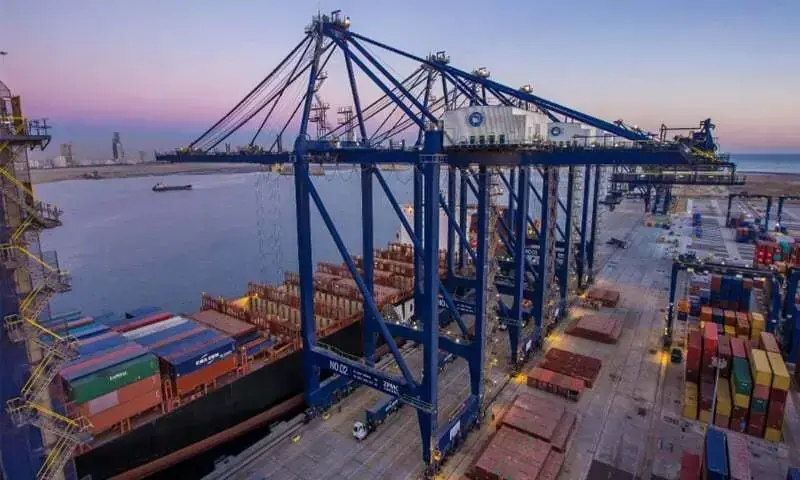
The economy of the Middle East and Central Asia is set to shrink in 2026 amid the fallout of the US-Israel war on Iran, with countries such as Kuwait and Qatar facing double-digit contractions, according to the International Monetary Fund (IMF).

Claims (12 extracted, 4 hedged)

The economy of the Middle East and Central Asia is set to shrink in 2026 amid the fallout of the US-Israel war on Iran, with countries such as Kuwait and Qatar facing double-digit contractions, according to the International Monetary Fund (IMF). uncertain
countries → set → Fund
The region’s gross domestic product (GDP) is forecast to contract by 0.3 percent this year, a sharp downgrade from the 1.9 percent expansion projected in April, the IMF said in its latest economic outlook on Tuesday. asserted
IMF → forecast → Tuesday
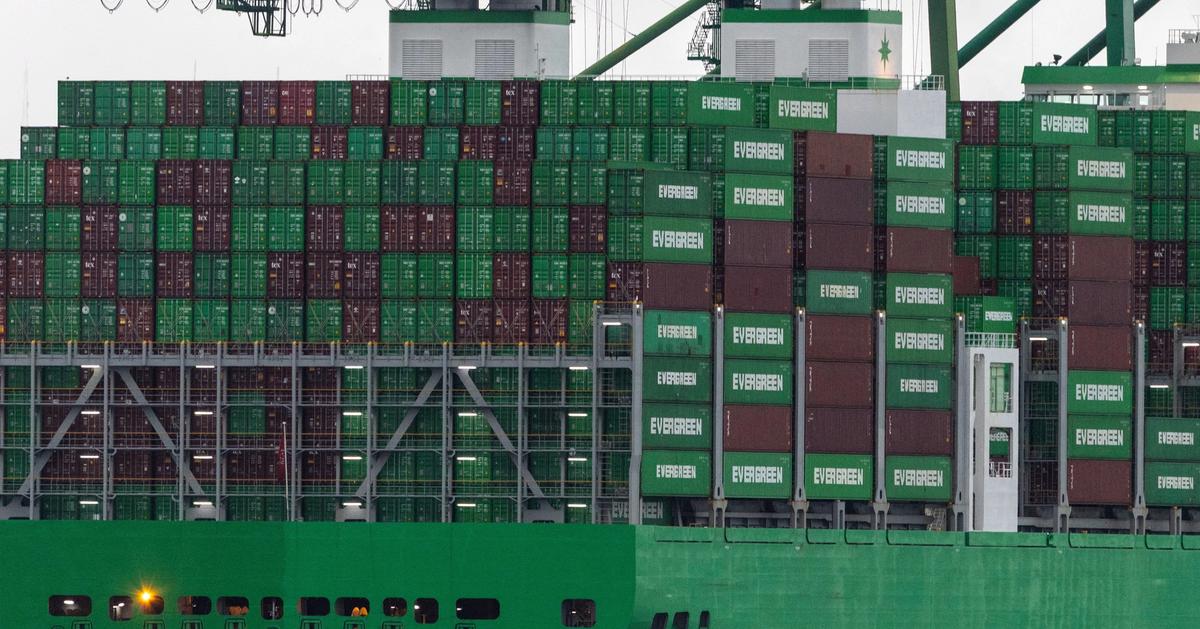
Recommended Stories list of 4 items- list 1 of 4Ronaldo waves Saudi-flag scarf after match interrupted by missile alert - list 2 of 4AI could self-replicate on home devices within ‘months’, Anthropic says - list 3 of 4Man dies after fall from Six Flags rollercoaster in Georgia - list 4 of 4More than 100 foreign trekkers stranded by floods in Nepal’s Gorkha region The IMF cited the prolonged disruption to shipping in the Strait of Hormuz, a conduit for one-fifth of global oil supplies in peacetime, for the downgraded outlook. Kuwait, Iraq and Qatar are likely to experience the most severe economic contractions, with their GDPs forecast to shrink by 16.7 percent, 16 percent and 15.6 percent, respectively. Bahrain’s GDP is forecast to contract by 11.3 percent, while Iran’s economy is projected to shrink by 7.6 percent. uncertain
economy → wave → percent
Saudi Arabia, which has partially offset the hit to its energy sector by boosting oil exports through the East-West pipeline, is estimated to record negative growth of 3.3 percent. asserted
which → offset → percent
Kyrgyzstan is projected to have the strongest growth in the region, with GDP forecast to expand 9 percent. asserted
GDP → project → region
The Middle East and Central Asia is the only region that is likely to experience negative growth in 2026. asserted
that → experience → 2026
Emerging and developing Asia’s GDP is forecast to grow 5.1 percent, while the economies of Sub-Saharan Africa and Latin America and the Caribbean are expected to expand 4.5 percent and 2.3 percent, respectively. asserted
economies → emerge → percent
The United States and China, the world’s two largest economies, are forecast to register growth of 2.3 percent and 4.5 percent, respectively, while the eurozone’s GDP is estimated to grow 1.1 percent. asserted
GDP → forecast → percent
The IMF said it expected global GDP to grow 3.1 percent, up from 3 percent in its previous outlook. asserted
GDP → say → outlook
The Washington, DC-based institution said while economic activity had proved resilient this year, the global economy faced multiple risks. asserted
economy → base → risks
“Further escalation in conflicts, a reassessment of expectations surrounding artificial intelligence (AI), renewed trade tensions, and fiscal vulnerabilities could weaken growth,” it said. uncertain
it → surround → growth
“On the upside, stronger momentum in AI investment and productivity gains from AI or a sustained easing of geopolitical and trade tensions could strengthen growth.” uncertain
momentum → strengthen → growth
Give feedback · no sign-in needed

No sign-in needed for now. Your note is sent without a name, so it cannot be answered.

History Support