Photo via Reason

Other Courts Should Heed a Federal Judge's Warning About Flock-Enabled Mass Surveillance

Read the original at Reason ↗
Cite

Sullum, J. (2026, October 14). Other Courts Should Heed a Federal Judge's Warning About Flock-Enabled Mass Surveillance. Reason. https://reason.com/2026/10/14/other-courts-should-heed-a-federal-judges-warning-about-flock-enabled-mass-surveillance/

Dated from the outlet's own feed. Check the original for its byline.

Reason · collected 2026-10-14 · by Jacob Sullum

Quick Summary

A federal judge in Oklahoma has recognized that automated license plate readers (ALPRs) used by companies like Flock Safety enable a form of mass surveillance, challenging the long-standing notion that individuals have no reasonable expectation of privacy regarding their movements on public roads. This decision reflects changing judicial attitudes towards privacy in an era where advanced technology can track and store vast amounts of vehicle movement data without physical intrusion or warrants. The judge's ruling draws parallels to recent Supreme Court decisions that expanded Fourth Amendment protections for digital location data, suggesting a potential shift in legal approaches to ALPR systems nationwide.
Written by AI on 2026-10-14, from this article's own text only (the story summary below draws on all the coverage).

AI analysis

Story summary

A federal judge in Oklahoma recently ruled that AI-assisted cameras installed by companies like Flock Safety enable "a type of indiscriminate mass surveillance," potentially shifting how courts view automated license plate readers (ALPRs). This decision comes amid a nationwide network of over 144,000 ALPRs tracking vehicle movements across the country billions of times weekly. Previously, state and federal courts had largely dismissed constitutional challenges to these systems, but this ruling suggests a possible legal change regarding privacy concerns. The judge's warning follows a precedent set by the Supreme Court in 2018, which recognized that mobile-phone location data implicates the Fourth Amendment due to individuals' "reasonable expectation of privacy" in their movements.

Written for “Flock Enabled Mass Surveillance Warning” on 2026-11-21, grounded in this article and the 0 other(s) covering the same event.

Compared with similar articles

This article reads leans left and hedges 9% of its claims. Each row says how that neighbour differs.
Reason
Leans left Hedges 7 of 55 claims Outlet record 67/100
“The articles discuss different court rulings on ALPR legality in Oklahoma and California, not the same specific incident.”
404 Media
Hedges 0 of 13 claims Outlet record 95/100
“The articles discuss different aspects of surveillance using license plate readers, but they do not describe the same specific incident or occurrence.”
Al Jazeera
Leans left Hedges 6 of 28 claims Outlet record 60/100
“The articles discuss different topics: one focuses on a federal judge's warning about mass surveillance using AI-assisted cameras, while the other reports on ICE pushing back against a recommendation for body cameras that automatically record.”
The Straits Times
Leans left Hedges 1 of 13 claims Outlet record 64/100
“The articles discuss different topics related to surveillance and law enforcement technology, but do not describe the same specific incident.”

Story

Flock Enabled Mass Surveillance Warning
Politics · 1 article(s) covering the same event.
How this article was measured signals, leaning charts, publisher record, byline, topics and claims

Signals How these are calculated →

Claims extracted
22
sentences that state something as happening or true
Uncertain
9%
2 of 22 hedged ("reportedly", "may", "according to")
Leaning
Leans left
of the writing, not the subject · beta estimate
Publisher signals
67/100
Reason's corrections and hedging, across everything collected from it. Not a measure of accuracy.
Outlets on this story
1
Politics
Same framing elsewhere
1
articles that frame the event the way this one does
Analyzed 2026-10-14 · how these are computed

How this is being covered How these are calculated →

Article leaning vs. publisher reliability
Source leaning vs. consistency

Publisher

Reason · 1464 article(s) · 4 correction(s) detected
Running correction rate · 4 correction(s)

Who wrote this

Jacob Sullum
45 article(s) here · 1 carrying a prediction
Contrary to the implication of that label, the initiative affected many people who had no criminal convictions that would justify revoking their visas.
Trump also averred that his projects do not involve much money, although the ballroom alone is expected to cost around $600 million, half of which will be covered by taxpayers.
Last week, the city of Delray Beach, Florida, announced that it will not organize or sponsor next year's St. Patrick's Day parade, citing a state law that takes effect on January 1.
That means SSJC members cannot even legally transport their guns to the vicinity of the synagogue on those occasions, since they would pass within 300 feet of parks, schools, and other houses of worship while walking there.
In a 60 Minutes interview that aired on Sunday night, President Donald Trump conceded that his mass deportation campaign may have contributed to the Republican rout in last week's midterm elections because "a lot of people think it's too tough."
2026-11-11 · assertive framing · Trump Debates Mass Deportation With Himself
They say Hegseth is flouting the law, undermining basic principles of justice, and perverting the mission of the U.S. military by treating civilians as combatants who can be killed at will, from a distance and in cold blood, without any semblance of due process.
Attorney General Todd Blanche nevertheless seemed to reinforce Trump's threat during an interview on CNN's State of the Union yesterday, saying members of the House Oversight Committee, which will be chaired by Rep. Robert Garcia (D–Calif.) in the next congressional session, should "be very worried."
President Donald Trump today announced that Stephen Miller will replace Susie Wiles as White House chief of staff.
Like many other police officers in New Mexico, Paul Jessen Jr., a Bernalillo County sheriff's deputy, was willing to accept bribes from Albuquerque defense attorney Thomas J. Clear III in exchange for compromising DWI cases against Clear's clients.
These results might be dismissed as anomalous, the product of anger at the party of an unpopular president whose war, tariff, and deportation policies, combined with his constant self-aggrandizement and presidential profiteering, alienated Americans who otherwise might have voted for Republicans.
Also by Jacob Sullum
Nothing else under this byline is closely related to this article, so these are simply their most recent.
All 45 articles by Jacob Sullum →

Topics

Court Flock Flock Safety Oklahoma the Supreme Court

Subjects

Hill ORG · 4× the Supreme Court ORG · 3× California GPE · 2× Oklahoma GPE · 2× Court ORG · 1× Elena Kagan PERSON · 1× Flock Safety ORG · 1× Google ORG · 1× Sara E. Hill PERSON · 1× U.S. GPE · 1×

Narrative

That theory came to the fore in a 2018 case involving mobile-phone location data collected by cell sites, which the majority said implicated the Fourth Amendment because "individuals have a reasonable expectation of privacy in the whole of their physical movements."
framing: assertive · carried by 1 article(s) · first seen 2026-10-14
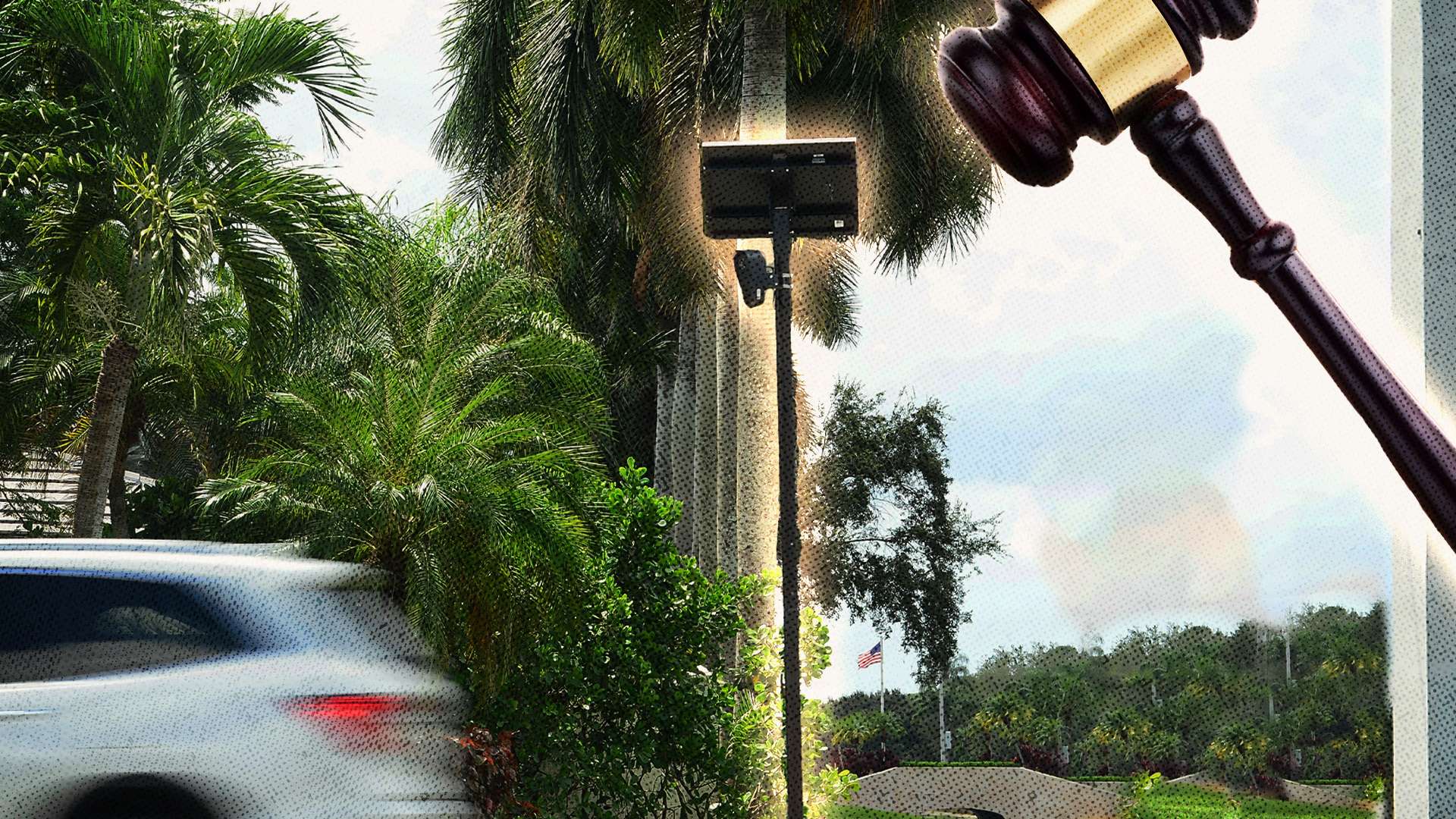
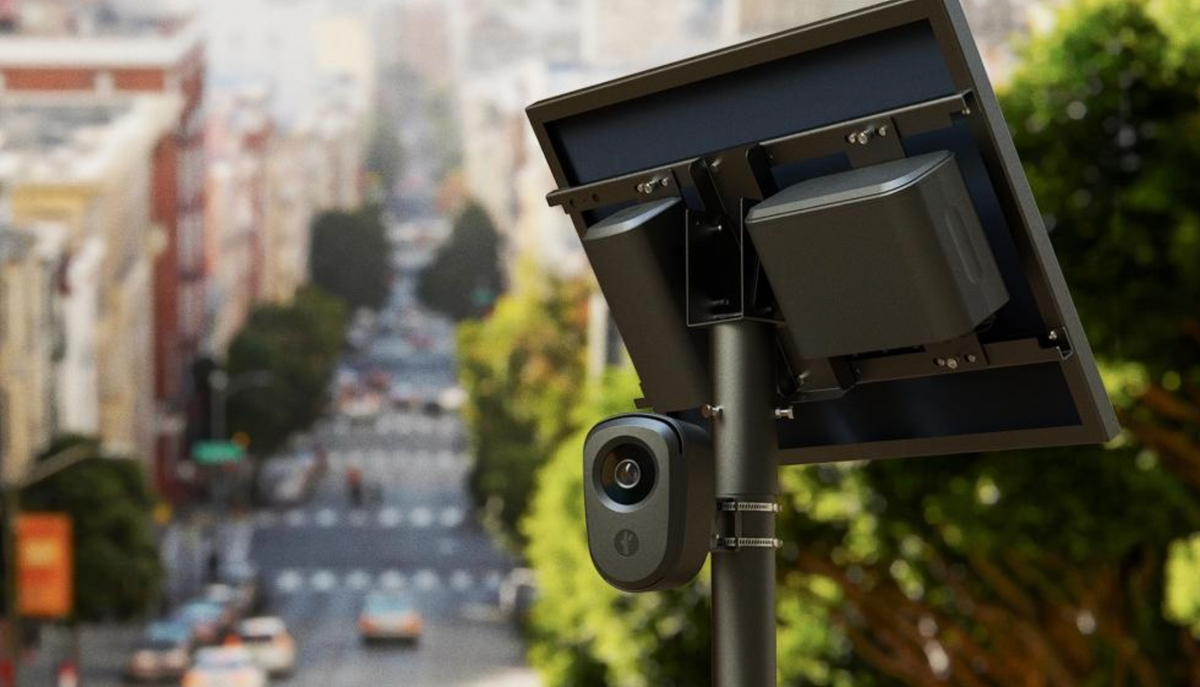
But in a decision that could signal a shift in the legal treatment of Flock cameras, a federal judge in Oklahoma recently recognized that they enable "a type of indiscriminate mass surveillance."

Claims (22 extracted, 2 hedged)

Back in 1983, the Supreme Court declared that "a person traveling in an automobile on public thoroughfares has no reasonable expectation of privacy in his movements from one place to another." asserted
person → declare → another
That increasingly doubtful proposition underpins a nationwide network of more than 144,000 AI-assisted cameras that track the travels of innocent motorists across the country billions of times each week. asserted
that → underpin → times
So far, state and federal courts have almost uniformly rejected constitutional challenges to automated license plate readers (ALPRs) installed by companies such as Flock Safety. asserted
courts → reject → Safety
But in a decision that could signal a shift in the legal treatment of Flock cameras, a federal judge in Oklahoma recently recognized that they enable "a type of indiscriminate mass surveillance." uncertain
they → signal → surveillance
ALPRs are much more sophisticated than the technology that the Supreme Court considered in 1983, when it approved the warrantless use of a radio transmitter that helped police tail a suspected methamphetamine manufacturer's car. asserted
police → consider → car
Three decades later, by contrast, the Court said police should have obtained a search warrant before attaching a GPS tracker to another drug suspect's car. asserted
police → say → car
The majority opinion in the latter case emphasized the physical intrusion necessary to install the tracker. asserted
opinion → emphasize → tracker
But five justices embraced an alternative rationale, saying GPS tracking impinges on reasonable expectations of privacy by revealing potentially sensitive information about the target's historical whereabouts. asserted
tracking → embrace → whereabouts
That theory came to the fore in a 2018 case involving mobile-phone location data collected by cell sites, which the majority said implicated the Fourth Amendment because "individuals have a reasonable expectation of privacy in the whole of their physical movements." asserted
individuals → come → movements
The Supreme Court reiterated that principle this year, extending it to data collected by Google's Location History feature. asserted
Court → reiterate → feature
"An individual has a reasonable expectation of privacy in records about his cell phone's location," Justice Elena Kagan said in the majority opinion, "and police intrude on that constitutionally protected interest when they demand the information." asserted
they → have → information
By similar logic, U.S. District Judge Sara E. Hill concluded this month in the Oklahoma case, people have a reasonable expectation of privacy in ALPR records, and police therefore generally need a warrant to search them. asserted
police → conclude → them
Those databases include "information about all vehicles that pass by any network-connected camera at all times," which police can peruse "on demand," Hill noted. asserted
Hill → include → demand
"Freedom from persistent, dragnet-style surveillance while in public is not a foreign concept in our society, and it is a reasonable expectation that society already accepts," as reflected in the Supreme Court's cellphone decisions. asserted
society → accept → decisions
Like cars, cellphones "move in public places where people can see you in plain view," Hill wrote. asserted
Hill → move → view
"But it becomes constitutionally problematic when law enforcement can indiscriminately and passively catalog your whereabouts over an extended period of time and then use that information for any purpose whenever convenient." asserted
enforcement → become → purpose
"It appears that nearly every court examining the issue to date has determined that ALPR technology use is not a search under the Fourth Amendment because people have no reasonable expectation of privacy in their movements on public streets," she noted. asserted
she → appear → streets
Last month, for instance, a federal judge in California held that ALPR database searches are "clearly distinguishable from and less extensive than the 'near perfect surveillance' achievable" with cell-site or Location History data. asserted
searches → hold → data
And the day after Hill's ruling, a state judge in California rejected a challenge to San Jose's Flock camera network, saying "there is no reasonable expectation of privacy in license plate data collected from cameras directed solely at public streets." asserted
judge → reject → streets
A federal lawsuit involving the same city's ALPR system, which the Institute for Justice filed last April, is still pending. asserted
Institute → involve → Justice
Even when they reject such lawsuits, courts commonly acknowledge that the legal picture could change as the number and capabilities of ALPRs multiply. uncertain
number → reject → ALPRs
If so, it seems likely that Hill will eventually be joined by other judges who recognize the perils of "indiscriminate mass surveillance." asserted
who → seem → surveillance

Give feedback · no sign-in needed

No sign-in needed for now. Your note is sent without a name, so it cannot be answered.

History Support