Photo via The Independent

World’s oldest shipwreck discovered by archaeologists near Turkish island

Read the original at The Independent ↗
Cite

Gilliver, L. (2026, October 14). World’s oldest shipwreck discovered by archaeologists near Turkish island. The Independent. https://www.independent.co.uk/news/science/archaeology/shipwreck-turkey-archaeology-mediterranean-sea-b3066445.html

Dated from the outlet's own feed. Check the original for its byline.

The Independent · collected 2026-10-14 · by Liam Gilliver

Quick Summary

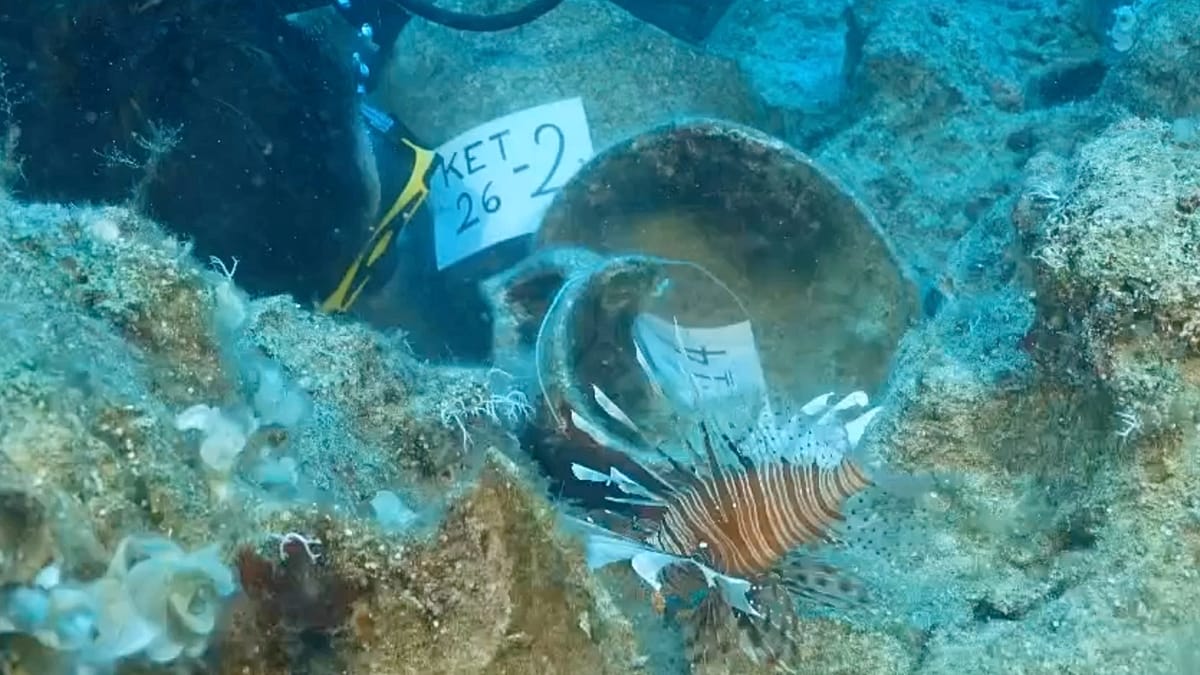
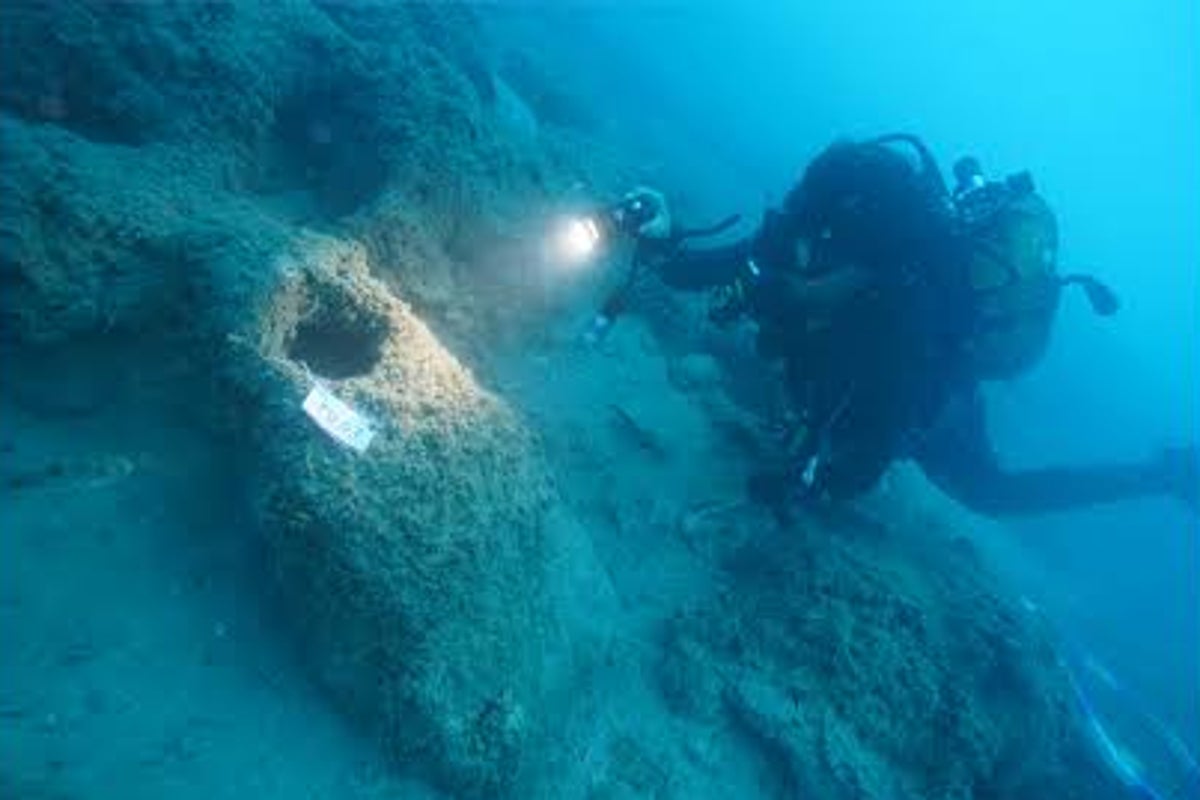
Archaeologists discovered what is believed to be the world’s oldest shipwreck off the coast of Kekova Island in Turkey. The wreck dates back to between 2600 and 2400 BC during the Early Bronze Age, predating previous records by several centuries. Researchers from the Mediterranean Archaeology Association found ceramic storage vessels and stone anchors at a depth of about 30 meters, indicating that the ship was likely used for trade across the Mediterranean Sea around the same time as the construction of the Great Pyramid.
Written by AI on 2026-10-14, from this article's own text only (the story summary below draws on all the coverage).
See how they differ ↓

AI analysis

Story summary

The world's oldest shipwreck has been discovered off the coast of Turkey, near Kekova Island in Antalya. Estimated to be between 4,400 and 4,700 years old (around the time of the Great Pyramid), this Early Bronze Age vessel was likely a trade ship carrying cargo across the Mediterranean Sea. Although the wooden structure has not survived, more than 30 ceramic storage pots called amphorae and three stone anchors remain on the seabed about 30 meters underwater. The wreck's age is confirmed by analyzing the distinctive shape and decoration of the pottery. Dr. Karin Sowada from Macquarie University in Sydney played a crucial role in identifying the vessel, solving mysteries related to ancient trade routes between Greece and Egypt.

Written for “World's Oldest Shipwreck Found Off Turkey Coast” on 2026-11-20, grounded in this article and the 3 other(s) covering the same event.

How they differ

4 outlets covered “World's Oldest Shipwreck Found Off Turkey Coast”.

What each outlet says

One AI summary per outlet of its latest article on this story, written from that article alone and checked against it. Open the article for the outlet's own words.

The IndependentThis outlet14 Oct

Archaeologists discovered what is believed to be the world’s oldest shipwreck off the coast of Kekova Island in Turkey. The wreck dates back to between 2600 and 2400 BC during the Early Bronze Age, predating previous records by several centuries. Researchers from the Mediterranean Archaeology Association found ceramic storage vessels and stone anchors at a depth of about 30 meters, indicating that the ship was…

World’s oldest shipwreck discovered by archaeologists near Turkish island (this article)
BBC14 Oct

Archaeologists have discovered the world's oldest known shipwreck off the coast of Kekova Island near Antalya, Turkey. The wreck dates back 4,400 to 4,700 years and includes more than 30 ceramic storage pots called amphorae, along with three large stone anchors. Prof Hakan Öniz led the expedition that found the ship, which was about 10 meters long and used for trade in the Early Bronze Age, coinciding with the…

World's oldest shipwreck found off coast of Turkey →
Euronews14 Oct

Archaeologists have found what they claim to be the world’s oldest shipwreck near Kekova Island in Turkey's Mediterranean coast. The wreckage, dated between 4,400 and 4,700 years old based on pottery analysis, includes more than thirty ceramic storage pots and three stone anchors scattered at a depth of about 30 meters. Researchers estimate the age by examining the distinctive features of the pottery found at the…

World’s oldest shipwreck discovered off Turkey’s Mediterranean coast →
Sydney Morning Herald15 Oct

Dr Karin Sowada, an Australian archaeologist from Macquarie University, played a crucial role in identifying the world's oldest shipwreck off Turkey's southern coast, dating back 4500 to 4700 years. Despite her expertise in Egyptology and desert excavations, she joined the Turkish team led by Associate Professor Hakan Oniz for this underwater dig. Sowada’s discovery of Bronze Age ceramics on the wreck provided…

‘This is going to be different’: Meet the Sydney professor who cracked the code on the world’s oldest shipwreck →

Where they agree and split

Framing

How the first headlines put it

Stated as fact3
The headlines (3)

World's oldest shipwreck found off coast of Turkey BBC · stated as fact

World’s oldest shipwreck discovered off Turkey’s Mediterranean coast Euronews · stated as fact

World’s oldest shipwreck discovered by archaeologists near Turkish island The Independent · stated as fact

The full story: what happened, how it changed, and all 4 articles →

Compared with similar articles

This article reads unscored and hedges 17% of its claims. Each row says how that neighbour differs.
BBC News
Hedges 3 of 32 claims Outlet record 65/100
Euronews
Hedges 0 of 5 claims Outlet record 60/100
The Sydney Morning Herald
Hedges 1 of 25 claims Outlet record 61/100
“While both articles describe the discovery of a shipwreck off the coast of Turkey, Article A focuses on the initial discovery and findings by archaeologists, whereas Article B highlights the involvement of Dr. Karin Sowada from Australia in identifying the significance of the wreck.”

Story

World's Oldest Shipwreck Found Off Turkey Coast
World · 4 article(s) covering the same event. Compare every outlet's account →
How this article was measured signals, leaning charts, publisher record, byline, topics and claims

Signals How these are calculated →

Claims extracted
12
sentences that state something as happening or true
Uncertain
17%
2 of 12 hedged ("reportedly", "may", "according to")
Leaning
not political
takes no side on a contested political question
Publisher signals
59/100
The Independent's corrections and hedging, across everything collected from it. Not a measure of accuracy.
Outlets on this story
4
World
Same framing elsewhere
1
articles that frame the event the way this one does
Analyzed 2026-10-14 · how these are computed

How this is being covered How these are calculated →

Article leaning vs. publisher reliability
Source leaning vs. consistency

Publisher

The Independent · 4711 article(s) · 10 correction(s) detected
Running correction rate · 10 correction(s)

Who wrote this

Liam Gilliver
39 article(s) here · 1 carrying a prediction
Waymo has stopped offering driverless taxi rides on all freeways in the US – and is yet to confirm when the suspension will lift.
The EU plan differs from Britain's abandoned Rwanda deportation scheme in one key respect: it would apply only to migrants who have exhausted all legal avenues to remain in the European Union, rather than to those whose claims are still being processed.
A special commission will work to determine the cause of the crash.
2026-11-17 · assertive framing · One dead after military jet crashes in Serbia
Russia has warned Britain it would face “serious consequences” if it attempts to curtail Moscow’s rights when London assumes the G20 presidency for 2027.
But five European countries are set to unveil similar plans on Monday following discussions to create so-called “return hubs” with a non-EU country.
The gang – consisting of three men, two women and a teenager – allegedly struck on 28 October – the same day a high-speed train collision killed at least 69 people in the nearby town of Urda. Three men are thought to have covered their faces before storming into a jewellery shop where they allegedly pulled out a firearm, threatened and assaulted the owners before helping themselves to jewellery on display and valuables locked inside a safe. The haul was expected to be worth between €300,000 and €400,000 (£250,000-£334,000).
During a search of premises used by one of the suspects, ABW officers seized chemical substances that could be used to manufacture explosives.
Five European countries are set to unveil plans on Monday to transfer rejected asylum seekers to a deportation hub in Rwanda, according to two sources familiar with the proposal.
This ranged from verbal harassment to visual abuse, such as unwilling exposure to pornography, unwanted touching or, in two per cent of cases, sexual violence.
LAPD Chief Jim McDonnell said investigators will now go through video footage of the crash frame by frame.
Also by Liam Gilliver
One dead after military jet crashes in Serbia
2026-11-17 · The Independent
Nothing else under this byline is closely related to this article, so these are simply their most recent.
All 39 articles by Liam Gilliver →

Topics

Akdeniz University Anatolian Antalya Independent Levantine

Subjects

Akdeniz University ORG · 2× Anatolian NORP · 2× Antalya GPE · 2× Levantine ORG · 2× Dokos GPE · 1× Hakan Öniz PERSON · 1× Independent ORG · 1× Kekova GPE · 1× Turkey GPE · 1× the Mediterranean Archaeology Association ORG · 1×

Narrative

“Akdeniz University conducted a study of the Kekova region in the Demre district of Antalya, during which a shipwreck carrying Early Bronze Age amphorae was documented,” archaeologists noted in a study detailing the discovery in the Journal of Maritime Archaeology.
framing: assertive · carried by 1 article(s) · first seen 2026-10-14
“The three-holed stone anchors found in the wreck area resemble those seen in Bronze Age Minoan, Cypriot, Anatolian, Levantine contexts,” they stated, “while the single-holed stone anchor resembles those seen on the Bronze Age Anatolian and Levantine coasts It was unclear if the anchors were indeed part of the ship, but they could shed more light on anchoring technology in use in the region during the Bronze Age.
2026-10-14 · The Independent
World’s oldest shipwreck discovered by archaeologists near Turkish island · assertive framing

Claims (12 extracted, 2 hedged)

Archaeologists have found the world’s oldest-known shipwreck off the coast of Turkey, dating the Early Bronze Age vessel to between 4,400 and 4,700 years ago. asserted
Archaeologists → find → vessel
The ship, built around the same time as the Great Pyramid, was likely a trade vessel carrying cargo across the Mediterranean Sea, researchers from the Mediterranean Archaeology Association said. asserted
researchers → build → Association
While the wooden structure of the ship was gone, archaeologists dated the ceramic storage vessels and stone anchors found in the wreck off Kekova Island to 2600-2400 BC, making it the oldest shipwreck in the world. asserted
it → go → world
It takes the title from the Dokos shipwreck in the Aegean Sea which dates to around 2200 BC. asserted
which → take → BC
The shipwreck was discovered during excavations led by underwater archaeologist Hakan Öniz from Akdeniz University in Antalya. asserted
shipwreck → discover → Antalya
“Akdeniz University conducted a study of the Kekova region in the Demre district of Antalya, during which a shipwreck carrying Early Bronze Age amphorae was documented,” archaeologists noted in a study detailing the discovery in the Journal of Maritime Archaeology. asserted
archaeologists → conduct → Archaeology
Some of these amphorae, which are large double-handled pottery vessels, are similar to Early Bronze Age pottery from the Levant, which includes modern-day Lebanon, Syria, Israel, and Palestine. asserted
which → include → Lebanon
The ceramic vessels were found scattered across a partly sandy and partly rocky seabed at a depth of about 30m. One vessel seemed similar to containers used for transporting agricultural products like wine and olive oil during the Bronze Age. asserted
vessel → find → Age
“The upper part of this amphora features two parallel lines made with a pointed tool, as well as a zigzag pattern in the middle,” archaeologists wrote. asserted
archaeologists → feature → middle
Researchers also found two three-holed stone anchors and a single-holed anchor around the wreck, similar to those found at other Bronze Age sites. asserted
Researchers → find → sites
“The three-holed stone anchors found in the wreck area resemble those seen in Bronze Age Minoan, Cypriot, Anatolian, Levantine contexts,” they stated, “while the single-holed stone anchor resembles those seen on the Bronze Age Anatolian and Levantine coasts It was unclear if the anchors were indeed part of the ship, but they could shed more light on anchoring technology in use in the region during the Bronze Age. uncertain
they → find → Age
“Current information suggests that the shipwreck is from a small vessel that sank while sailing east to west during the Early Bronze Age,” the study noted. uncertain
study → suggest → Age
Give feedback · no sign-in needed

No sign-in needed for now. Your note is sent without a name, so it cannot be answered.

History Support