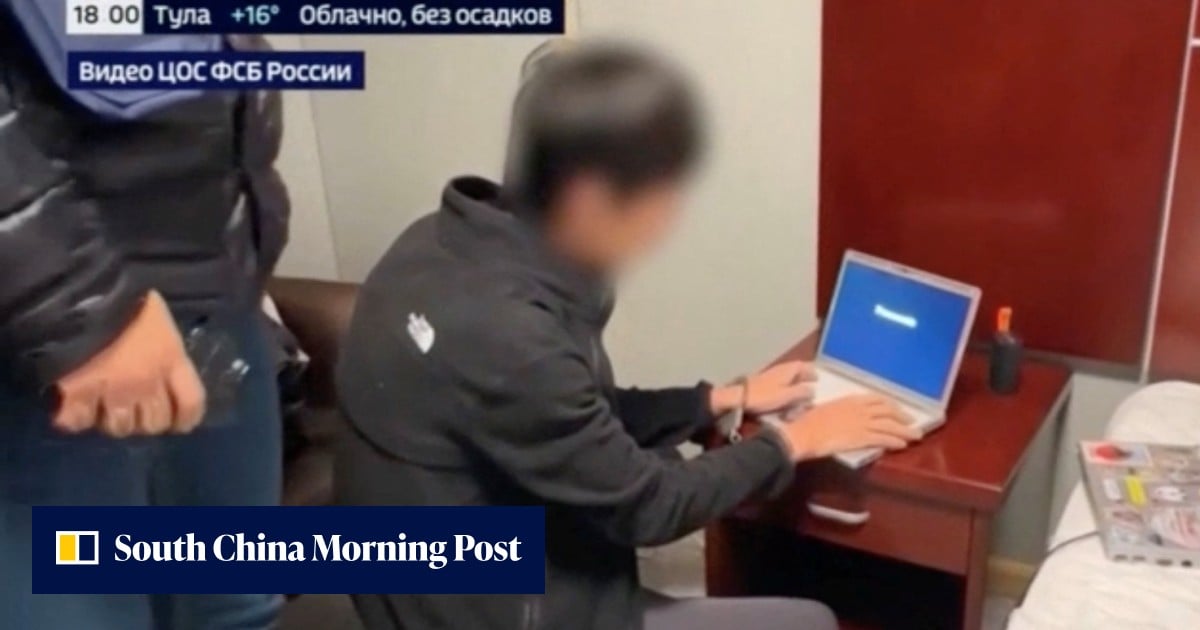
Photo via Al Jazeera

Russia’s arrest of Japanese journalist: Why are tensions rising?

Read the original at Al Jazeera ↗
Cite

Mohamed, E. (2026, October 14). Russia’s arrest of Japanese journalist: Why are tensions rising? Al Jazeera. https://www.aljazeera.com/news/2026/10/14/russias-arrest-of-japanese-journalist-why-are-tensions-rising?traffic_source=rss

Dated from the outlet's own feed. Check the original for its byline.

Al Jazeera · collected 2026-10-14 · by Edna Mohamed

Quick Summary

Russia arrested Japanese journalist Imai Yuki on charges of espionage while he was working for the Hokkaido Shimbun newspaper in the Sakhalin region. The arrest occurred as tensions between Russia and Japan increase due to Japan joining Western sanctions against Russia over its invasion of Ukraine. Russian officials accused Yuki of gathering information that could harm national security, highlighting a broader deterioration in bilateral relations stemming from territorial disputes and differing policies regarding defense and remilitarization.
Written by AI on 2026-10-14, from this article's own text only (the story summary below draws on all the coverage).
See how they differ ↓

AI analysis

Story summary

On October 13, 2026, Russia's FSB security agency detained Yuki Imai, a Japanese journalist from the Hokkaido Shimbun newspaper, in the Sakhalin region, accusing him of espionage and collecting intelligence on Russian defense capabilities. The arrest occurred just before Imai was set to leave the country, and he has been flown to Moscow where he faces pre-trial detention for at least two months. Russia’s foreign ministry spokeswoman Maria Zakharova alleged that Tokyo uses its correspondents in Russia to gather information aimed at undermining Russia's security, expressing regret over this practice. The arrest comes amid heightened tensions between Japan and Russia following President Vladimir Putin's visit to the disputed Kuril Islands in August.

Written for “Russian Detention Of Japanese Journalist” on 2026-11-21, grounded in this article and the 5 other(s) covering the same event.

How they differ

6 outlets covered “Russian Detention Of Japanese Journalist”.

What each outlet says

One AI summary per outlet of its latest article on this story, written from that article alone and checked against it. Open the article for the outlet's own words.

Al JazeeraThis outlet14 Oct

Russia arrested Japanese journalist Imai Yuki on charges of espionage while he was working for the Hokkaido Shimbun newspaper in the Sakhalin region. The arrest occurred as tensions between Russia and Japan increase due to Japan joining Western sanctions against Russia over its invasion of Ukraine. Russian officials accused Yuki of gathering information that could harm national security, highlighting a broader…

Russia’s arrest of Japanese journalist: Why are tensions rising? (this article)
South China Morning Post13 Oct

Russia’s FSB security agency detained Japanese journalist Imai Yuki from the Hokkaido Shimbun newspaper on suspicion of espionage related to gathering information about Russian defense capabilities in Sakhalin region. The detention occurred just before he was set to depart Russia, and Moscow's foreign ministry expressed regret over Japan allegedly using journalists for spying purposes, further straining bilateral…

Russia detains Japanese journalist on suspicion of spying →
The Guardian14 Oct

Russia has detained Japanese journalist Yuki Imai from the Hokkaido Shimbun newspaper on Sakhalin Island, accusing him of espionage. Russian authorities claim he was working for Japanese intelligence to gather information about Russia’s defenses. The FSB security agency showed a video of his arrest and stated that he faces up to 20 years in prison if convicted. This incident occurs against the backdrop of ongoing…

Russia detains Japanese journalist, accusing him of alleged spying →
BBC14 Oct

Russian authorities have charged Japanese journalist Yuki Imai with espionage for allegedly gathering information about Moscow’s defense capabilities on behalf of Japan. Detained in Sakhalin, a day before his planned departure from Russia, Imai faces up to 20 years in prison if convicted. The arrest coincides with heightened tensions between the two nations following Russian President Vladimir Putin's visit to…

Russia arrests Japanese journalist on alleged espionage →
The Hindu14 Oct

On October 13, 2026, the Russian Federal Security Service arrested a Japanese journalist from the Hokkaido Shimbun newspaper in Russia's Sakhalin region on charges of spying for gathering information related to Russia’s defense capabilities. The arrest occurred amid heightened tensions between Russia and Japan following President Vladimir Putin's visit to the disputed Kuril Islands earlier that year. The FSB stated…

Japanese journalist arrested in Russia's Sakhalin region on spying charges →
Euronews14 Oct

Russian security services have detained Yuki Imai, a correspondent for the Japanese newspaper "Hokkaido Shimbun," in Russia's Sakhalin region on suspicion of espionage. The Federal Security Service (FSB) claims that Imai collected information related to Russia’s military readiness and mobilized troops involved in the war in Ukraine. He has been transported to Moscow, where he faces charges under article 276 of the…

Russia arrests Japanese Hokkaido Shimbun journalist on suspicion of spying →

Where they agree and split

Framing

How the first headlines put it

Stated as fact6
The headlines (6)

Russia detains Japanese journalist on suspicion of spying South China Morning Post · stated as fact

Russia detains Japanese journalist, accusing him of alleged spying The Guardian · stated as fact

Russia arrests Japanese journalist on alleged espionage BBC · stated as fact

Japanese journalist arrested in Russia's Sakhalin region on spying charges The Hindu · stated as fact

Russia arrests Japanese Hokkaido Shimbun journalist on suspicion of spying Euronews · stated as fact

Russia’s arrest of Japanese journalist: Why are tensions rising? Al Jazeera · stated as fact

The full story: what happened, how it changed, and all 6 articles →

Compared with similar articles

This article reads leans left and hedges 8% of its claims. Each row says how that neighbour differs.
South China Morning Post
Hedges 1 of 5 claims Outlet record 62/100
BBC News
Hedges 2 of 25 claims Outlet record 65/100
The Hindu
Leans right further right than this Hedges 0 of 16 claims Outlet record 78/100
Euronews
Leans right further right than this Hedges 3 of 36 claims Outlet record 60/100
The Guardian
Leans right further right than this Hedges 0 of 17 claims Outlet record 64/100

Story

Russian Detention Of Japanese Journalist
Politics · 6 article(s) covering the same event. Compare every outlet's account →
How this article was measured signals, leaning charts, publisher record, byline, topics and claims

Signals How these are calculated →

Claims extracted
36
sentences that state something as happening or true
Uncertain
8%
3 of 36 hedged ("reportedly", "may", "according to")
Leaning
Leans left
of the writing, not the subject · beta estimate
Publisher signals
60/100
Al Jazeera's corrections and hedging, across everything collected from it. Not a measure of accuracy.
Outlets on this story
6
Politics
Same framing elsewhere
1
articles that frame the event the way this one does
Analyzed 2026-10-14 · how these are computed

How this is being covered How these are calculated →

Article leaning vs. publisher reliability
Source leaning vs. consistency

Publisher

Al Jazeera · 6216 article(s) · 4 correction(s) detected
Running correction rate · 4 correction(s)

Who wrote this

Edna Mohamed
21 article(s) here · 1 carrying a prediction
These could be the contours of how boards of mubil-billion dollar corporations decide on contentious issues.
The vessel will now feature as part of the world’s largest artificial reef, which is expected to become a popular diving destination.
We will work together to take robust action against those we suspect of any criminal activity that could undermine our national security.”
2026-11-11 · assertive framing · US soldier arrested for Russia spying: What we know
But in the phone interview, Trump put on a brave face — and offered an olive branch: He said that he would be willing to work with Democrats.
Hours after results confirmed that the Republican Party had lost control of both the Senate and the House of Representatives in the United States Congress in the midterm elections this week, senior Republicans were hand-wringing over what had gone so badly wrong and whether a major course correction would now be required.
Rashid added that vulnerabilities include “easily guessable” passwords, which would mean anyone could gain access.
Recommended Stories list of 3 items- list 1 of 3How will the Iran war shape the outcome of the US midterm vote? - list 2 of 3How US oil firms profit $130bn from Iran war as household bills surge - list 3 of 3China steps up Middle East diplomacy with Iran and Oman meetings
US Representative Rashida Tlaib and New York City Mayor Zohran Mamdani have opposed the US’s ongoing support for Israel, which has continued since President Donald Trump was re-elected last year.
Recommended Stories list of 3 items- list 1 of 3France to increase nuclear warheads, lend nuclear aircraft to Europe allies - list 2 of 3Could Russia hit northern Europe if it gained control of Arctic’s Bear Gap? - list 3 of 3Russian nuclear-powered submarine fires missiles during Pacific drills The report named the three submarines at sea as HMS Vanguard, HMS Vigilant and HMS Vengeance, with the fourth, HMS Victorious, currently undergoing maintenance.
They may have good reason for doing so as France considers plans to impose fines on those whose children vandalise or damage property following a similar measure introduced this week in Italy.
Also by Edna Mohamed
Nothing else under this byline is closely related to this article, so these are simply their most recent.
All 21 articles by Edna Mohamed →

Topics

Japanese Moscow Russia Russian Tokyo

Subjects

Russia GPE · 12× Japan GPE · 8× Japanese NORP · 5× Russian NORP · 5× Tokyo GPE · 5× Moscow GPE · 4× Yuki PERSON · 3× FSB ORG · 2× Ministry of Foreign Affairs ORG · 2× Ukraine GPE · 2×

Narrative

“Given the overall decline in bilateral cooperation caused by the Japanese authorities’ anti-Russian policies since the start of the Second World War, as well as Tokyo’s reluctance to listen to Moscow’s concerns regarding Japan’s remilitarisation policy, which affects our legitimate security interests in the Far East, we are forced to note that this development will further darken the atmosphere of Russian-Japanese relations.”
framing: assertive · carried by 1 article(s) · first seen 2026-10-14
“Given the overall decline in bilateral cooperation caused by the Japanese authorities’ anti-Russian policies since the start of the Second World War, as well as Tokyo’s reluctance to listen to Moscow’s concerns regarding Japan’s remilitarisation policy, which affects our legitimate security interests in the Far East, we are forced to note that this development will further darken the atmosphere of Russian-Japanese relations.”
2026-10-14 · Al Jazeera
Russia’s arrest of Japanese journalist: Why are tensions rising? · assertive framing

Claims (36 extracted, 3 hedged)

Russia has arrested a Japanese journalist from Sakhalin Island after accusing him of spying and gathering information on its defence capabilities. asserted
Russia → arrest → capabilities
On Tuesday, Russian news agencies reported that the reporter, working for the Hokkaido Shimbun newspaper, was arrested by the Federal Security Service (FSB) as he was preparing to leave the next day. asserted
he → report → Service
Recommended Stories list of 3 items- list 1 of 3‘New tactic’: Russia expands deadly attacks on Ukraine’s transport system - list 2 of 3Poland says two Turks arrested over Russia-linked Starlink station fire - list 3 of asserted
3Poland → expand → fire
3Ukrainian ex-officer goes on trial in Germany over Nord Stream blasts According to the TASS news agency, the FSB said the journalist, Imai Yuki, was arrested in the Sakhalin region and taken to Moscow after being accused in a “criminal case”. uncertain
journalist → go → case
The arrest of the Japanese citizen comes amid deteriorating relations between the two countries as Tokyo joined Western sanctions against Moscow due to the invasion of Ukraine. asserted
Tokyo → come → Ukraine
Russian President Vladimir Putin’s August visit to Iturup Island, which is part of the Kuril Islands archipelago, drew sharp reactions from Japan. asserted
which → draw → Japan
The two countries have a longstanding territorial dispute over the Kuril Islands dating back more than a century. asserted
countries → have → Islands
Here’s what we know about the arrest: Who is the arrested journalist and what is he accused of? asserted
he → ’ → what
Russia’s Ministry of Foreign Affairs spokesperson Maria Zakharova, during a press briefing on Tuesday, said Yuki was accused of espionage. asserted
Yuki → say → espionage
“Tokyo’s attempts to use its correspondents in Russia, who hold foreign journalist status, to gather information aimed at undermining our country’s security are regrettable. asserted
who → use → security
We cannot help but point out that today’s incident is not an isolated one,” Zakharova said. asserted
Zakharova → help → ?
“Given the overall decline in bilateral cooperation caused by the Japanese authorities’ anti-Russian policies since the start of the Second World War, as well as Tokyo’s reluctance to listen to Moscow’s concerns regarding Japan’s remilitarisation policy, which affects our legitimate security interests in the Far East, we are forced to note that this development will further darken the atmosphere of Russian-Japanese relations.” asserted
development → give → relations
Zakharova called on Tokyo to “come to its senses and change its approach, abandoning hostile steps towards Russia”. asserted
Zakharova → call → Russia
According to Russia’s Interfax news agency, Yuki will be remanded until December 12 before the trial begins. uncertain
trial → accord → December
What has Japan said? asserted
Japan → say → What
On Wednesday morning, Foreign Minister Toshimitsu Motegi said Tokyo had requested the “prompt provision of information” from Russian authorities over the arrest. asserted
Tokyo → say → arrest
“As well as for humanitarian consideration and fair and impartial treatment,” he added. asserted
he → add → consideration
Japanese media have also reported that the country’s Ministry of Foreign Affairs would summon the Russian ambassador Nikolay Nozdrev to lodge a protest over the arrest, but no official confirmation has been released so far. The Hokkaido Shimbun, where Yuki worked, said it was still confirming details and added that it would “respond with the reporter’s safety as our top priority”. asserted
it → report → priority
While Russia administers the Kuril Islands archipelago, Japan claims the four southernmost islands – Iturup, Kunashir, Shikotan and the Habomai islets – calling them the Northern Territories. uncertain
Japan → administer → them
The Kuril chain of islands sits between Hokkaido in northern Japan and Russia’s Kamchatka Peninsula. asserted
chain → sit → Japan
The dispute began in 1855, after Russia and Japan established their first diplomatic and trade treaty, which also drew the Russo-Japanese border in the Kuril Islands, with Iturup under Japanese control and the islands to the north under Russian control. asserted
Iturup → begin → control
Russia took control of the Kuril Islands after the 1945 Yalta agreement, which was signed by United States President Franklin Roosevelt, British Prime Minister Winston Churchill and Soviet leader Joseph Stalin. asserted
which → take → Roosevelt
Following Japan’s surrender in the final weeks of World War II, Moscow seized the entire archipelago and expelled about 17,000 Japanese citizens. asserted
Moscow → follow → citizens
In the 1951 San Francisco peace treaty, Japan renounced the Kurils but maintained that the four southernmost islands were part of its territory. asserted
islands → renounce → territory
However, Russia never signed the treaty. asserted
Russia → sign → treaty
Because of the ongoing dispute, Russia and Japan have never signed a peace treaty to end World War II. asserted
Russia → sign → II
What’s behind the recent rise in tensions? asserted
What → ’ → tensions
In August, Putin visited Iturup on his first-ever trip to the disputed islands. asserted
Putin → visit → islands
He was the second president to visit the islands after his predecessor, Dmitry Medvedev. asserted
He → visit → predecessor
But Putin’s visit caused uproar, with Japanese Prime Minister Sanae Takaichi calling it “absolutely unacceptable”. asserted
Takaichi → cause → it
Takaichi told reporters at the time that Putin’s visit had “worsened Japanese sentiment towards Russia”, adding that the chain of islands was a “unique territory of [Japan] historically and under international law”. “I hope that the Russian side will take the gravity of this matter very seriously,” she said. asserted
she → tell → matter
Foreign Minister Toshimitsu Motegi also said the islands were “inherently Japanese territory both historically and under international law, and the Government of Japan strongly protests this visit”. asserted
Government → say → visit
Relations between the two neighbouring countries are at a low point. asserted
Relations → neighbour → point
Russia has increased its military presence on the Kuril Islands over the past decade, with Iturup used as its primary military airbase in the region. asserted
Iturup → increase → region
Moscow has also labelled Japan as an “unfriendly” country due to sanctions over the Ukraine war. asserted
Moscow → label → war
On the other hand, Takaichi’s cabinet last week approved additional sanctions against Moscow, including expanded export bans and asset freezes for those linked to the Russian military. asserted
cabinet → approve → military
Give feedback · no sign-in needed

No sign-in needed for now. Your note is sent without a name, so it cannot be answered.

History Support