Photo via TIME

Health Experts on the Major Breakthroughs in Fighting Cancer

Read the original at TIME ↗
Cite

Lee, C. (2026, September 11). Health Experts on the Major Breakthroughs in Fighting Cancer. TIME. https://time.com/collection/time100-leadership-forums/2026/from-treatment-to-cure-the-breakthrough-science-to-beat-cancer/

Dated when The Aporia collected the article, usually within hours of publication. Check the original for its exact date and byline.

TIME · collected 2026-09-11 · by Chantelle Lee

Quick Summary

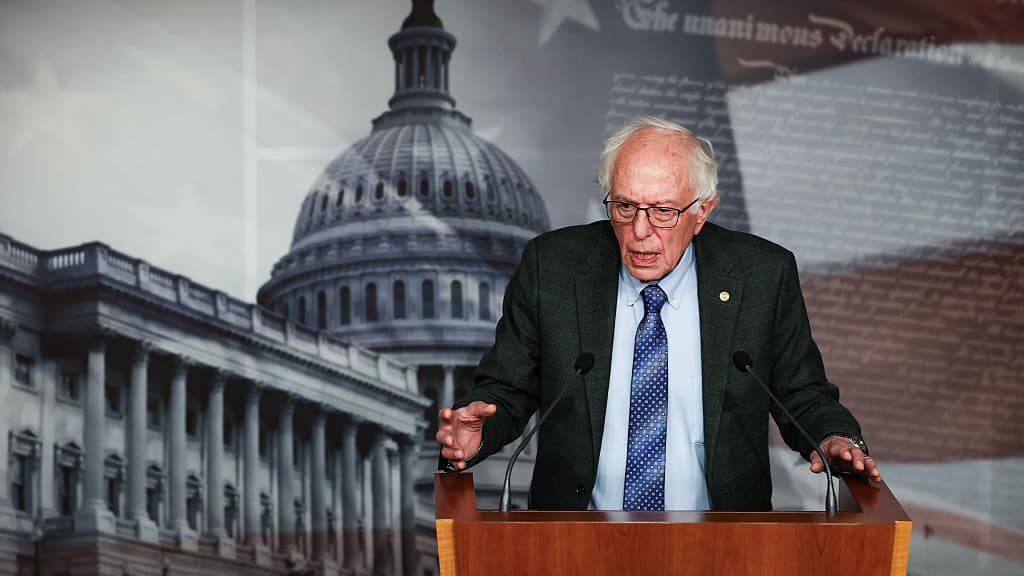
At a forum in New York on Thursday, experts including Shane Jacobson, CEO of the American Cancer Society, and Dr. Andrea Cercek, a medical oncologist at Memorial Sloan Kettering Cancer Center, discussed major breakthroughs in fighting cancer. According to Jacobson, one in three men and women in the US will receive a cancer diagnosis at some point in their lives. The experts highlighted developments such as mRNA cancer vaccines and immunotherapy treatments that have emerged as powerful tools against cancer. They emphasized the importance of making these advancements accessible to all patients, rather than just those who can afford them.
Written by AI on 2026-09-11, from this article's own text only (the story summary below draws on all the coverage).

AI analysis

Story summary

The TIME100 Health Leadership Forum was held on September 10 in New York City, bringing together experts to discuss equity, longevity, and solution-driven care. A panel discussion, "The Access Gap: Expanding Pathways to Life-Saving Care," focused on the issue of patients accessing breakthrough technologies like xenotransplants and novel cancer therapies. Amy Ronneberg, CEO of NMDP, a nonprofit connecting patients with lifesaving cell therapies and transplants, noted that while modern science has solved some access issues, others remain. Specifically, she mentioned that six years ago, the biggest barrier was the lack of donors to match patients. However, now that more patients have found donors, new barriers are emerging. Meanwhile, Shane Jacobson, CEO of the American Cancer Society and the American Cancer Society Cancer Action Network, spoke at a separate panel discussion about the significant strides made in tackling cancer, attributing these advancements to philanthropic investments and federal government funding. He noted that cancer is an "omnipresent" disease, affecting one in three men and women in the US, but emphasized that with continued progress, it may become more manageable.

Written for “Medical Breakthroughs and Reform” on 2026-11-21, grounded in this article and the 1 other(s) covering the same event.

Compared with similar articles

This article reads unscored and hedges 4% of its claims. Each row says how that neighbour differs.
TIME
Hedges 0 of 30 claims Outlet record 60/100

Story

Medical Breakthroughs and Reform
Health · 2 article(s) covering the same event. See how they differ ↑
How this article was measured signals, leaning charts, publisher record, byline, topics and claims

Signals How these are calculated →

Claims extracted
24
sentences that state something as happening or true
Uncertain
4%
1 of 24 hedged ("reportedly", "may", "according to")
Leaning
not political
takes no side on a contested political question
Publisher signals
60/100
TIME's corrections and hedging, across everything collected from it. Not a measure of accuracy.
Outlets on this story
2
Health
Same framing elsewhere
1
articles that frame the event the way this one does
Analyzed 2026-09-11 · how these are computed

How this is being covered How these are calculated →

Article leaning vs. publisher reliability
Source leaning vs. consistency

Publisher

TIME · 1078 article(s) · 2 correction(s) detected
Running correction rate · 2 correction(s)

Who wrote this

Chantelle Lee
39 article(s) here · 1 carrying a prediction
It marks the first time in decades that the race for the Senate Democratic leadership will be contested.
Last week, Leonard shared a video on his social media account, in which he claimed that senior members of the party told him his life would become a “living hell” if he didn’t back Jeffries.
Nearly 6 million people are expected to fly within the U.S. over the Thanksgiving holiday, just a little more than a week after a telecommunications issue prompted the Federal Aviation Administration (FAA) to order a nationwide ground stop that continued to disrupt flights around the country even days after it ended.
The ongoing delays and cancellations come ahead of an anticipated Thanksgiving travel rush next week, when AAA has projected that nearly 6 million people will travel by air in the U.S.
Democrats’ sweeping wins in the midterm elections have dealt a devastating blow to President Donald Trump, and could spell trouble for the speculated presidential ambitions of his second-in-command, Vice President J.D. Vance, as the contest to succeed Trump on the Republican ticket and in the Oval Office looms.
New York City Mayor Zohran Mamdani said in a statement on social media Thursday morning that at least 17 other people were injured, including three firefighters.
Former President Joe Biden said in a recent interview that he wasn’t aware that he had cancer when he was in the White House—but that if he had known, he would have stepped down.
“There’s a Forbes’ story that said that your net worth—maybe it’s changed with the stock market recently—but your net worth went up by $3 billion since you—” “60 Minutes” correspondent Ross Douthat asked Trump during the interview.
Now, all three will be sending Democrats to the upper chamber, shattering decades of Republican dominance in the deep-red states.
Democratic socialists will soon be running three major U.S. cities, now that progressive Nithya Raman has defeated Los Angeles’ incumbent mayor.
Also by Chantelle Lee
Nothing else under this byline is closely related to this article, so these are simply their most recent.
All 39 articles by Chantelle Lee →

Topics

New York U.S. the American Cancer Society the American Cancer Society Cancer Action Network the TIME100 Health Leadership Forum

Subjects

Cercek PERSON · 3× Jacobson PERSON · 3× the American Cancer Society ORG · 3× Andrea Cercek PERSON · 1× Merck ORG · 1× Moderna ORG · 1× New York GPE · 1× Shane Jacobson PERSON · 1× U.S. GPE · 1× the American Cancer Society Cancer Action Network ORG · 1×

Narrative

In 2024, she and her colleagues released the findings of their study of patients who had a specific type of rectal cancer, revealing that, after six months of being treated with an immunotherapy drug, none of the patients showed detectable tumors, meaning that none of them needed chemotherapy, radiation, or surgery afterwards.
framing: assertive · carried by 1 article(s) · first seen 2026-09-11
In the U.S., one in three men and women will receive a cancer diagnosis sometime during their lives, according to the American Cancer Society.
2026-09-11 · TIME
Health Experts on the Major Breakthroughs in Fighting Cancer · assertive framing

Claims (24 extracted, 1 hedged)

Leading experts in cancer research reflected on the significant strides made in tackling the disease, along with the work that remains to be done toward finding a cure, at the TIME100 Health Leadership Forum in New York on Thursday. asserted
that → lead → Thursday
Resources have been the key toward making important discoveries, said Shane Jacobson, the CEO of both the American Cancer Society, which sponsored the event, and the American Cancer Society Cancer Action Network. asserted
which → make → event
Philanthropic investments and federal government funding, he continued, have allowed scientists and oncologists to make the progress we see today in cancer prevention and treatment. asserted
we → continue → prevention
Cancer is “omnipresent” Jacobson said. asserted
Jacobson → say → ?
In the U.S., one in three men and women will receive a cancer diagnosis sometime during their lives, according to the American Cancer Society. uncertain
men → receive → Society
“It has been, historically, such a devastating disease,” he said. asserted
he → say → ?
“We knew so little about it that it has garnered resources—and it takes resources to tackle most of the problems we face in healthcare.” asserted
we → know → healthcare
Developments in tackling cancer—such as the encouraging results of an mRNA cancer vaccine that were announced by Moderna and Merck last month—stem from “decades of progress, decades of new knowledge, decades of even failure, and learning from that failure to bring forth these kinds of results,” Jacobson said. asserted
Jacobson → tackle → results
“It used to be maybe on an annual basis we would celebrate something significant, but the innovation is moving so rapidly that these celebrations, these big moments, are now almost on a monthly basis, and we should expect that speed to continue,” he said. asserted
he → use → basis
But, he added, just as important as these advances is ensuring that everyone is able to access the drugs and therapies they need—”otherwise,” he said, “the innovation falls short of its potential. asserted
innovation → add → potential
Vaccines and immunotherapy have emerged as powerful tools to fight cancer, said Dr. Andrea Cercek, a gastrointestinal medical oncologist at Memorial Sloan Kettering Cancer Center who was a 2025 TIME100 Health honoree. asserted
who → emerge → Center
“The hope … between vaccines and immunotherapy as well is that they harness the immune system, which is really the most powerful drug we have,” she said. asserted
she → harness → system
“It can fight anything as long as it’s equipped to do so and it recognizes something is foreign, and so it’s really that combination that needs to happen for therapy to work.” asserted
therapy → fight → anything
Cercek herself has been pioneering immunotherapy drugs to treat cancer. asserted
Cercek → pioneer → cancer
In 2024, she and her colleagues released the findings of their study of patients who had a specific type of rectal cancer, revealing that, after six months of being treated with an immunotherapy drug, none of the patients showed detectable tumors, meaning that none of them needed chemotherapy, radiation, or surgery afterwards. asserted
none → release → chemotherapy
Cercek has expanded her research, and said during the panel that “we’re very close” to seeing this kind of treatment being used successfully for other types of cancer so that patients don’t have to undergo more invasive therapies. asserted
patients → expand → therapies
TIME senior health correspondent Alice Park, who moderated the panel, closed the discussion with a big question: Will we cure cancer? asserted
we → moderate → cancer
And if so, what will that cure look like? asserted
cure → look → what
“Absolutely we will,” Cercek replied. asserted
Cercek → reply → ?
“Probably it will be with early detection and prevention—I think that is going to be, ultimately, what cures cancer.” asserted
what → think → cancer
“Yes,” Jacobson said. asserted
Jacobson → say → ?
“And I think it’s ‘cures,’ plural. asserted
it → think → ?
It’s not one cure, and we’re seeing that now.” asserted
we → ’ → that
The TIME100 Health Leadership Forum was presented by the American Cancer Society, Kite—a Gilead Sciences company, Insulet, Musely, and NMDP. asserted
Forum → present → Society

Give feedback · no sign-in needed

No sign-in needed for now. Your note is sent without a name, so it cannot be answered.

History Support