That is 0 articles you have read today.
The Aporia is free and carries no advertising, so readers are the only
thing paying for it. If you are getting this much out of it, a small
donation is what keeps it independent.
You have read 0 articles today.
That is more than the 15 a day The Aporia gives away,
and well past what it can carry on nothing. Your allowance resets at
midnight.
There is no advertising here and nothing about you is sold, so readers
are the only thing paying for it. If the site is worth this much of
your day, it is worth a few dollars.
Everything else stays open: the front page, the
directory and search do
not count against this, and neither does re-opening something you have
already read today.
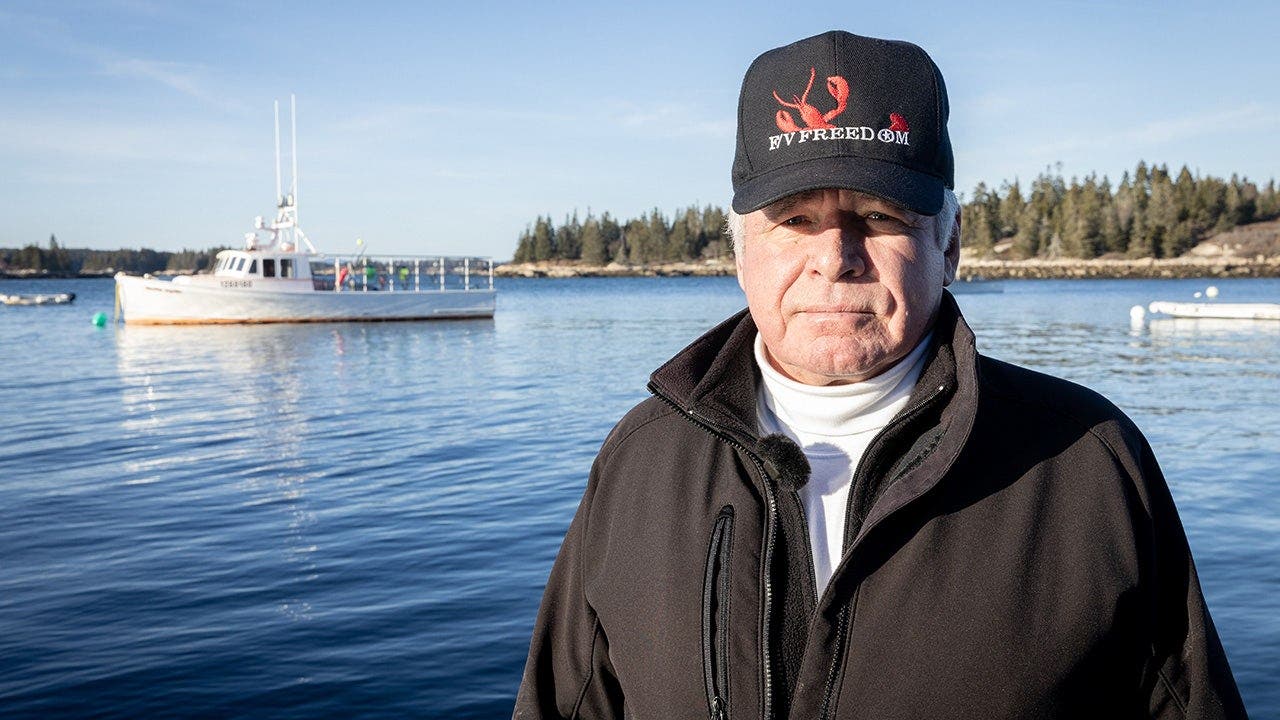
Photo via Toronto Star
Supreme Court declines to hear the case of a lobster fisherman who opposes boat tracking
Whittle, P. (2026, October 14). Supreme Court declines to hear the case of a lobster fisherman who opposes boat tracking. Toronto Star. https://www.thestar.com/news/world/united-states/supreme-court-declines-to-hear-the-case-of-a-lobster-fisherman-who-opposes-boat-tracking/article_f7195117-3a3f-5afa-9e6c-64f37171c8f2.html
Whittle, Patrick. “Supreme Court declines to hear the case of a lobster fisherman who opposes boat tracking.” Toronto Star, 14 Oct. 2026, https://www.thestar.com/news/world/united-states/supreme-court-declines-to-hear-the-case-of-a-lobster-fisherman-who-opposes-boat-tracking/article_f7195117-3a3f-5afa-9e6c-64f37171c8f2.html.
Whittle, Patrick. “Supreme Court declines to hear the case of a lobster fisherman who opposes boat tracking.” Toronto Star, October 14, 2026. https://www.thestar.com/news/world/united-states/supreme-court-declines-to-hear-the-case-of-a-lobster-fisherman-who-opposes-boat-tracking/article_f7195117-3a3f-5afa-9e6c-64f37171c8f2.html.
Dated from the outlet's own feed. Check the original for its byline.
Toronto Star
· collected 2026-10-14 · by Patrick Whittle
Quick Summary
Frank Thompson, a Maine lobster fisherman, had challenged the government's requirement for commercial fishing boats to use electronic tracking devices, arguing it violated his privacy rights under unreasonable search and seizure laws. The Supreme Court has decided not to hear Thompson’s case following previous rejections by lower courts in appeals.
Written by AI on 2026-10-14,
from this article's own text only (the story summary below draws on all the coverage).
The Supreme Court declined to hear a case brought by Maine lobster fisherman Frank Thompson, who challenged a state requirement for commercial fishing boats to use GPS trackers on privacy grounds. Thompson argued that the government mandate violated his Fourth Amendment rights against unreasonable search and seizure. Despite losing at the First Circuit level, Thompson is undeterred, stating, "Ain't over yet," as he continues his legal battle against what he considers intrusive surveillance. The case could have broader implications for closely regulated industries beyond lobster fishing in Maine.
Written for “Lobsterman'S Privacy Case Scotus Decision” on 2026-11-20,
grounded in this article and the 1 other(s) covering the same event.
How they differ
2 outlets covered “Lobsterman'S Privacy Case Scotus Decision”.
What each outlet says
One AI summary per outlet of its latest article on this story, written from that article alone and checked against it. Open the article for the outlet's own words.
Toronto StarThis outlet14 Oct
Frank Thompson, a Maine lobster fisherman, had challenged the government's requirement for commercial fishing boats to use electronic tracking devices, arguing it violated his privacy rights under unreasonable search and seizure laws. The Supreme Court has decided not to hear Thompson’s case following previous rejections by lower courts in appeals.
Supreme Court declines to hear the case of a lobster fisherman who opposes boat tracking (this article)Fox News11 Oct
Frank Thompson, a fifth-generation lobsterman from Vinalhaven, Maine, is continuing his legal battle against a federal GPS tracking requirement for lobster boats despite the Supreme Court declining to hear his case. The mandate requires a small electronic box on federally licensed lobster vessels to track their location, which Thompson argues violates his Fourth Amendment rights by enabling constant surveillance…
The population of one of the world’s rarest whales has fallen after trending upward in recent years, worrying scientists who fear the animal could still be at risk of extinction.
Writing in an op-ed Wednesday, Lana Pelletier, Jackson's partner, criticized the ad and wider family attacks by Collins and her supporters, saying she never expected they "would stoop this low."
"Sen. Collins has been quick to demand respect and decency for herself.
Maine lobster fisherman Frank Thompson sued after his state began requiring all federally permitted lobstermen to install GPS trackers on their boats to collect data that will help manage the industry.
John Evich, a commercial fisherman in Washington and Alaska, has voted for President Donald Trump three times, viewing him as someone who would fight for his industry.
But these days, Evich is weary of the high cost of doing business at sea, with fuel prices rising and trade hostilities with Canada jeopardizing markets for the crabs that he pulls off the ocean floor.
“If somebody came along that was going to do a better job, I would vote for them in a heartbeat,” he said.
“Just about every week, I dial up Georgia mayors and pastors and farmers to find out how I can help,” Ossoff said at a recent campaign rally for his reelection bid against Republican Rep. Mike Collins.
John Evich, a commercial fisherman in Washington and Alaska, has voted for President Donald Trump three times, viewing him as someone who would fight for his industry.
For years, Planned Parenthood’s endorsement of Susan Collins was enough to persuade Erin Evans to vote for Maine’s longtime U.S. senator, believing that the moderate Republican would protect abortion access.
framing: assertive ·
carried by 1 article(s) ·
first seen 2026-10-14
Maine lobster fisherman Frank Thompson sued after his state began requiring all federally permitted lobstermen to install GPS trackers on their boats to collect data that will help manage the industry.
The Supreme Court has declined to hear the case of a lobster fisherman who alleged the government requiring commercial fishing boats to use electronic tracking devices amounts to unreasonable search and seizure.
asserted
government → decline → search
Maine lobster fisherman Frank Thompson sued after his state began requiring all federally permitted lobstermen to install GPS trackers on their boats to collect data that will help manage the industry.
asserted
that → sue → industry
Thompson appealed to the high court after losing at the appeals court level.
asserted
Thompson → appeal → level
Give feedback · no sign-in needed
No sign-in needed for now. Your note is sent without a name, so it cannot be answered.

 The Aporia