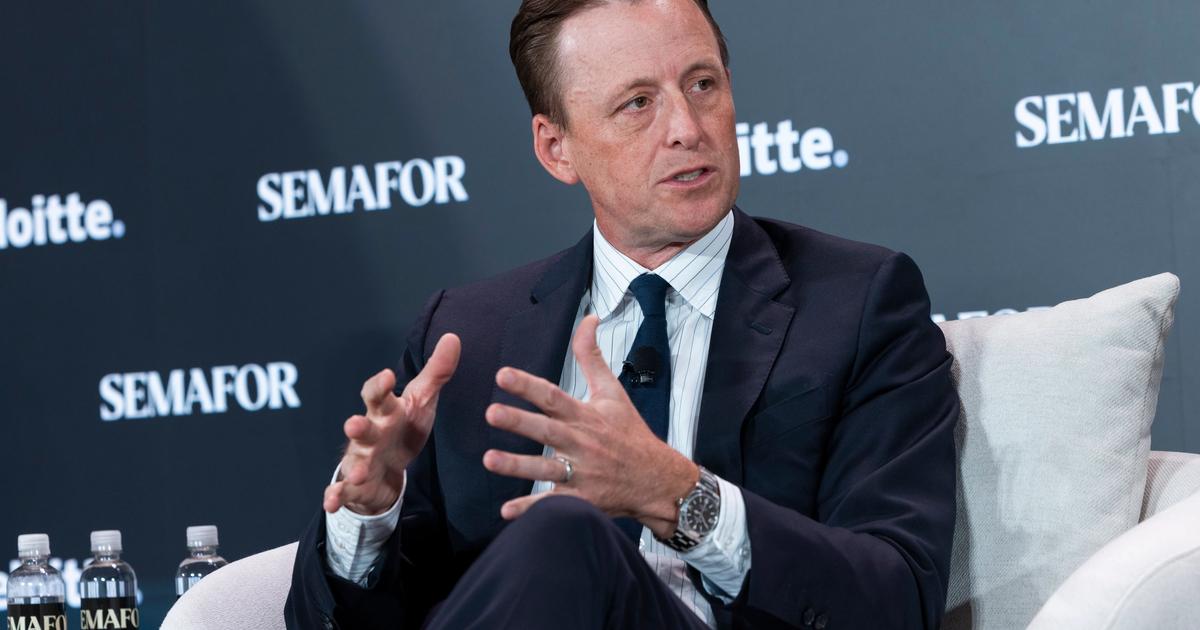
Photo via Semafor

Disagreements reemerge in bipartisan AI safety talks

Read the original at Semafor ↗
Cite

Gold, A. (2026, September 11). Disagreements reemerge in bipartisan AI safety talks. Semafor. https://www.semafor.com/article/09/10/2026/disagreements-reemerge-in-bipartisan-ai-safety-talks

Dated when The Aporia collected the article, usually within hours of publication. Check the original for its exact date and byline.

Semafor · collected 2026-09-11 · by Ashley Gold

Quick Summary

Senators are facing disagreements during bipartisan talks for an AI safety bill in the Senate Commerce Committee. Maria Cantwell, a Democrat from Washington, expressed concerns that any federal standard should not override stronger state protections against weak legislation proposed by Commerce Chair Ted Cruz and others. The key issue revolves around whether the bill will preempt existing or future state-level AI regulations. Anthropic, a company involved in providing feedback on the bill, has neither officially opposed nor supported it yet, highlighting ongoing negotiations over how to balance regulatory oversight with innovation.
Written by AI on 2026-09-16, from this article's own text only (the story summary below draws on all the coverage).

AI analysis

Story summary

Maria Cantwell, the lead Democrat on the Senate Commerce Committee from Washington, expressed concerns about a bipartisan bill on artificial intelligence (AI) safety, saying it could weaken state protections. The bill, currently being worked on by Ted Cruz of Texas, Amy Klobuchar of Minnesota, and John Thune, still contains language that would preempt state-level AI safety laws. Cantwell wants a stricter version of the bill that holds AI companies accountable for managing catastrophic risks. However, some sources claim that she, along with Anthropic and other safety groups, are being uncooperative in creating a bipartisan agreement on federal oversight of AI models.

Written for “Bipartisan AI Safety Talks” on 2026-11-20, grounded in this article and the 0 other(s) covering the same event.

Compared with similar articles

This article reads unscored and hedges 0% of its claims. Each row says how that neighbour differs.
Los Angeles Times
Leans right Hedges 10 of 54 claims Outlet record 95/100
“The articles describe different perspectives on AI safety concerns—one focuses on disagreements during bipartisan talks while the other covers Trump's response to rising alarm over AI dangers.”
Al Jazeera
Leans left Hedges 1 of 2 claims Outlet record 60/100
“The articles discuss different topics related to AI governance, one focusing on U.S. bipartisan talks and disagreements, while the other focuses on China's stance on international cooperation.”
Al Jazeera
Leans left Hedges 8 of 55 claims Outlet record 60/100
“The articles describe different events: one covers disagreements in bipartisan talks on AI legislation in the US Senate, while the other discusses calls to slow down AI development and concerns about US-China relations in AI technology.”
The Guardian
Hedges 10 of 32 claims Outlet record 64/100
“The articles describe different events involving distinct sets of individuals and organizations discussing AI safety from separate angles.”
Washington Examiner
Hedges 1 of 11 claims Outlet record 67/100
“The articles discuss different aspects of AI regulation and concerns without describing the same specific incident or time.”
The Independent
Hedges 2 of 50 claims Outlet record 59/100
“The articles discuss different aspects of AI safety regulation and do not refer to the same specific incident or meeting.”
Los Angeles Times
Leans strongly right Hedges 8 of 52 claims Outlet record 95/100
“The articles describe different events: one discusses disagreements during AI safety talks on September 11, while the other mentions President Trump's response to AI fears and calls for slowing development on September 14.”
Washington Examiner
Leans left Hedges 2 of 29 claims Outlet record 67/100
“The articles describe different phases of ongoing discussions and meetings related to AI safety legislation rather than a single specific incident.”
CBS News
Hedges 0 of 3 claims Outlet record 67/100
“Article A reports on disagreements during bipartisan AI safety talks in a Senate committee, while Article B discusses industry leaders calling for government regulation and mentions President Trump's perspective.”
Semafor
Leans right Hedges 2 of 26 claims Outlet record 64/100
“The articles discuss different aspects of AI safety concerns, with one focusing on bipartisan Senate talks in the US and the other on broader international relations between the US and China regarding AI.”

Story

Bipartisan AI Safety Talks
Politics · 1 article(s) covering the same event.
How this article was measured signals, leaning charts, publisher record, byline, topics and claims

Signals How these are calculated →

Claims extracted
5
sentences that state something as happening or true
Uncertain
0%
0 of 5 hedged ("reportedly", "may", "according to")
Leaning
withheld
no quote in the article backed the model's score
Publisher signals
64/100
Semafor's corrections and hedging, across everything collected from it. Not a measure of accuracy.
Outlets on this story
1
Politics
Same framing elsewhere
1
articles that frame the event the way this one does
Analyzed 2026-09-16 · source text last changed 2026-09-16 · how these are computed

How this is being covered How these are calculated →

Article leaning vs. publisher reliability
Source leaning vs. consistency

Publisher

Semafor · 1913 article(s) · 7 correction(s) detected
Running correction rate · 7 correction(s)

Who wrote this

Ashley Gold
42 article(s) here · 1 carrying a prediction
Ashley’s view Someone was bound to take the fall for a string of tech outages that have left the country terrified about what services might get disrupted next — even if the most basic (and likely true) explanation is that organizations are rushing to patch software bugs discovered by AI programs and are crashing their systems in the process.
Cybersecurity experts say the government is largely telling the truth about the crashes’ causes, but the situation reveals a bigger problem: Much more digital instability is coming, and it will be worse.
Big Tech would face some policy threats from the past if Sen. Chris Van Hollen, D-Md., somehow pulls off his longshot bid for Senate Majority Leader over current Democratic leader Chuck Schumer, according to an audio recording of Van Hollen’s remarks at a Hewlett Foundation event in California this week that was shared with Semafor.
Howard Lutnick is expected to travel on Air Force One with the president to China this week as the commerce secretary fights to regain his footing after clashing with Trump officials over Nvidia and China chip controls, according to people familiar with the matter.
2026-11-15 · assertive framing · Under pressure, Lutnick joins Trump in China
Beyond the corporate governance questions raised by the furor, lawmakers are incensed by reports that Nvidia may have pushed for access to its chips by dubious Chinese companies.
2026-11-09 · assertive framing · Nvidia CEO is in Congress’ sights after spy scandal
Public First, which gets significant funding from Anthropic and backs AI guardrails, wrote that Leading the Future — the top pro-AI super PAC — had a “crash out,” but warned: “It would be a mistake to read this cycle and Leading the Future’s decline as the end of Big Tech’s AI political project.
I am fully committed to NVIDIA and will work to earn back your confidence.”
Nvidia spokesman John Rizzo did not directly answer whether Huang would attend the briefing, telling Semafor in a statement: “We’re confident that if the U.S. government believes that any person is a threat to American industry, it would let us know.
2026-11-06 · mixed framing · Nvidia faces a more hostile Washington
But money could not buy influence on the most salient AI-related outcome of the election: local ballot measures curbing data center development, about 40 of which passed across the country on Tuesday.
2026-11-05 · assertive framing · Where AI money worked in the midterms
However, divisions between the more progressive wing of the party and more business-friendly moderates, along with disagreements between the House and the Senate, will make it difficult for the newly empowered party to quickly pass any sweeping AI rules.
2026-11-05 · assertive framing · Democrats are fired up on AI. Consensus is harder.
Also by Ashley Gold
Nothing else under this byline is closely related to this article, so these are simply their most recent.
All 42 articles by Ashley Gold →

Topics

Anthropic Democrat Senate The Senate Commerce Committee’s Washington

Subjects

Anthropic ORG · 2× Cantwell PERSON · 2× Commerce ORG · 1× Democrat NORP · 1× Maria Cantwell PERSON · 1× Senate ORG · 1× Ted Cruz PERSON · 1× Texas GPE · 1× The Senate Commerce Committee’s ORG · 1× Washington GPE · 1×

Narrative

The Senate Commerce Committee’s lead Democrat, Maria Cantwell of Washington, brought her concerns to X on Wednesday, saying that while she “welcomes the urgency” to get something done, the “answer is not a weak federal standard that becomes a backdoor for wiping out stronger state protections.” At issue: A bill in the works from Commerce Chair Ted Cruz, R-Texas, Sen. Amy Klobuchar, D-Minn., and Majority Leader John Thune, which is said to still contain language preempting state-level AI safety laws.
framing: assertive · carried by 1 article(s) · first seen 2026-09-11
The source said Cantwell, Anthropic, and safety groups are “refusing to play ball” and unwilling to create a bipartisan product to have federal power over AI models “while ensuring continued innovation and due process in the courts.”
2026-09-16 · Semafor
Disagreements reemerge in bipartisan AI safety talks · assertive framing

Claims (5 extracted, 0 hedged)

Disagreements over how far to go on AI safety legislation portend a rocky road ahead for bipartisan Senate talks on a bill that remains the most likely vehicle for action this year. asserted
that → go → action
The Senate Commerce Committee’s lead Democrat, Maria Cantwell of Washington, brought her concerns to X on Wednesday, saying that while she “welcomes the urgency” to get something done, the “answer is not a weak federal standard that becomes a backdoor for wiping out stronger state protections.” At issue: A bill in the works from Commerce Chair Ted Cruz, R-Texas, Sen. Amy Klobuchar, D-Minn., and Majority Leader John Thune, which is said to still contain language preempting state-level AI safety laws. asserted
which → bring → laws
A source familiar with the matter told Semafor that Cantwell still wants a stricter version of the bill, which creates legal duties for AI companies to manage catastrophic risks. asserted
companies → tell → risks
The source said Cantwell, Anthropic, and safety groups are “refusing to play ball” and unwilling to create a bipartisan product to have federal power over AI models “while ensuring continued innovation and due process in the courts.” asserted
Cantwell → say → courts
A source within Anthropic said the company hasn’t taken a position on the bill and continues to provide feedback to the bill sponsors. asserted
company → say → sponsors
Give feedback · no sign-in needed

No sign-in needed for now. Your note is sent without a name, so it cannot be answered.

History Support