Photo via Semafor

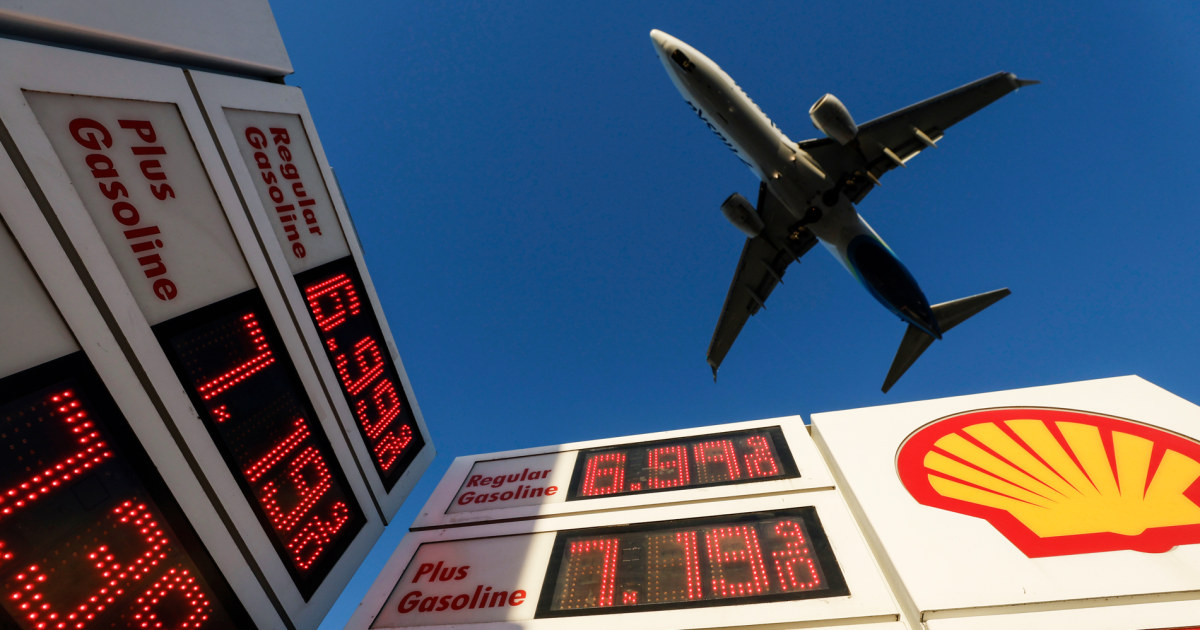
Fossilflation is a permanent risk to the US

Read the original at Semafor ↗
Cite

McDonnell, T. (2026, October 15). Fossilflation is a permanent risk to the US. Semafor. https://www.semafor.com/article/10/15/2026/fossilflation-is-a-permanent-risk-to-the-us

Dated from the outlet's own feed. Check the original for its byline.

Semafor · collected 2026-10-15 · by Tim McDonnell

Quick Summary

Tim argues that rising fossil fuel costs are driving high inflation in the United States, with gasoline prices up 34.2% and fuel oil prices up 74.2% over the past year. While the immediate cause is the war in Iran, the volatility of global oil and gas markets represents a persistent economic risk for the US, dubbed "fossilflation." Reducing dependence on fossil fuels could stabilize energy costs but transitioning to non-fossil alternatives also faces inflationary challenges due to technological adoption and critical mineral production costs.
Written by AI on 2026-10-15, from this article's own text only (the story summary below draws on all the coverage).

AI analysis

Story summary

As of October 15, 2026, Semafor reported that rising energy costs from the war in Iran contributed significantly to US inflation figures. Gasoline prices surged by 34.2% and fuel oil prices increased by 74.2%, contributing to an overall Consumer Price Index (CPI) increase of 3.7% over the past year. Tim McDonnell argues that this volatility underscores "fossilflation," a term coined by European Central Bank official Isabel Schnabel, referring to how reliance on fossil fuels makes economies susceptible to global price fluctuations, especially in periods of geopolitical tension. The broader implication is that transitioning away from oil and gas dependency could stabilize the economy against future shocks.

Written for “Fossilflation Risk In US” on 2026-11-21, grounded in this article and the 0 other(s) covering the same event.

Compared with similar articles

This article reads leans strongly left and hedges 0% of its claims. Each row says how that neighbour differs.
The Sydney Morning Herald
Leans left further right than this Hedges 8 of 38 claims Outlet record 61/100
“While both articles discuss US inflation data related to Donald Trump's presidency, they do not describe the exact same specific incident or time frame. ARTICLE A focuses on the broadening impact of inflation on affordability ahead of midterm elections, while ARTICLE B zeroes in on fossil fuel prices as a major driver behind recent inflation figures.”
NBC News
Leans left further right than this Hedges 6 of 48 claims Outlet record 74/100
“While both articles discuss rising inflation driven by fuel costs due to the Iran war, they refer to different time points and data releases.”

Story

Fossilflation Risk In US
Economy/Business · 1 article(s) covering the same event.
How this article was measured signals, leaning charts, publisher record, byline, topics and claims

Signals How these are calculated →

Claims extracted
12
sentences that state something as happening or true
Uncertain
0%
0 of 12 hedged ("reportedly", "may", "according to")
Leaning
Leans strongly left
of the writing, not the subject · beta estimate
Publisher signals
64/100
Semafor's corrections and hedging, across everything collected from it. Not a measure of accuracy.
Outlets on this story
1
Economy/Business
Same framing elsewhere
1
articles that frame the event the way this one does
Analyzed 2026-10-15 · how these are computed

How this is being covered How these are calculated →

Article leaning vs. publisher reliability
Source leaning vs. consistency

Publisher

Semafor · 1931 article(s) · 7 correction(s) detected
Running correction rate · 7 correction(s)

Who wrote this

Tim McDonnell
31 article(s) here · 1 carrying a prediction
More restrictions are almost certainly forthcoming in newly Democrat-led states like Texas, and the wellspring of capital from Nvidia, both for hyperscalers’ construction ambitions and the comparatively modest needs of energy startups, could start to ebb.
2026-11-17 · assertive framing · AI isn't out of energy yet
The CEO of fuel cell maker Bloom Energy said at Semafor’s Silicon Valley & The World that he’s not worried about rising natural gas prices or political pushback to data centers, as the economy-wide scramble for electrons marks an “architectural shift” for the grid that will favor onsite power production.
2026-11-17 · assertive framing · Bloom Energy sees 'nothing but a huge opportunity'
Acwa, which is part-owned by Saudi Arabia’s Public Investment Fund, operates power and desalination plants across the Gulf, and Serhan quickly understood they could become targets.
2026-11-16 · assertive framing · Inside Acwa’s clean power battle plan
“I don’t want to romanticize what this will mean.
There are still many people here at COP31 in Antalya, Türkiye, this week who would love to see the oil and gas industry shuttered tomorrow, energy access and prices be damned.
2026-11-10 · assertive framing · COP should put itself out of business
A panel factory in Texas shows how that’s already happening — but why weaning them off entirely could be harder than it looks.
2026-11-10 · assertive framing · US solar learns to live without China
Democrats, while not able to directly control US national security strategy, can also flex their powers over the budget and personnel confirmations to pressure US President Donald Trump on a deal with Iran, which would push oil prices down.
2026-11-05 · assertive framing · Big Oil sweats the blue wave
Thanks to the breakneck evolution of frontier AI models, “We’re now really seeing the technology mature to the level where it will make a significant change in the operating processes within the sector,” said Dan Jeavons, president of UK-based Applied Computing.
2026-11-05 · assertive framing · AI companies race to lock down oil clients
Tim’s view Today’s US election is a test of how much voters will want to punish the president for soaring gasoline and power prices.
2026-11-03 · assertive framing · Gas on the ballot in US elections
US President Donald Trump’s apparent handout to Big Oil this week is really more of a favor for small producers, and may actually hand more regulatory sway to Europe.
2026-10-29 · assertive framing · Trump's methane rollback could backfire
Also by Tim McDonnell
AI isn't out of energy yet
2026-11-17 · Semafor
Nothing else under this byline is closely related to this article, so these are simply their most recent.
All 31 articles by Tim McDonnell →

Topics

American European Central Bank Fed Iran Russia

Subjects

Iran GPE · 2× American NORP · 1× Donald Trump PERSON · 1× European Central Bank ORG · 1× Fed ORG · 1× Isabel Schnabel PERSON · 1× Russia GPE · 1× Tim’s PERSON · 1× Trump PERSON · 1× Venezuela GPE · 1×

Narrative

The best evidence of the benefits of a less oil-reliant economy is that inflation isn’t even higher now; during the US oil crises of the 1970s, when cars were less efficient and oil was far more widely used in power and other sectors, Consumer Price Index inflation surged well above 10%.
framing: assertive · carried by 1 article(s) · first seen 2026-10-15
If the Fed chooses to raise interest rates to tamp today’s inflation down, capital-intensive renewables will suffer.
2026-10-15 · Semafor
Fossilflation is a permanent risk to the US · assertive framing

Claims (12 extracted, 0 hedged)

Rising energy costs were a major driver of the hotter-than-expected US inflation figures reported yesterday. asserted
costs → rise → figures
This fact won’t surprise anyone reading this newsletter. asserted
fact → surprise → newsletter
The proximal cause is the war, of course, and the figures cement that US President Donald Trump has by now run out of time to change the picture ahead of the midterm election. asserted
Trump → cement → election
But the broader takeaway here is that the inherent volatility of oil and gas prices is a persistent vulnerability in the US economy that can only be solved by limiting exposure to these energy sources. asserted
that → solve → sources
Many politicians before Trump have seen their domestic economic agenda undermined by global fossil fuel price dynamics largely outside their control — an effect European Central Bank official Isabel Schnabel dubbed “fossilflation.” asserted
Schnabel → see → control
The best evidence of the benefits of a less oil-reliant economy is that inflation isn’t even higher now; during the US oil crises of the 1970s, when cars were less efficient and oil was far more widely used in power and other sectors, Consumer Price Index inflation surged well above 10%. asserted
inflation → use → %
Domestic drilling has put more of the supply-demand balance under US control, but can’t shield American consumers from global price turmoil. asserted
drilling → put → turmoil
The transition to non-fossil energy has its own inflationary impacts, from the costs to heavy industry of adopting new technologies to the production costs of critical minerals. asserted
transition → have → minerals
If the Fed chooses to raise interest rates to tamp today’s inflation down, capital-intensive renewables will suffer. asserted
renewables → choose → inflation
But from an economic standpoint, the best thing about replacing oil and gas with non-fossil electric alternatives is that the energy they produce, in addition to being cheap (although not always to consumers’ benefit, as we discuss below), can be predictably priced. asserted
we → replace → addition
A world with very boring energy prices would be one in which inflation is significantly more divorced from geopolitics. asserted
inflation → divorce → geopolitics
Notable - The US is considering lifting sanctions on shadow fleet vessels— which have commonly been used to transport sanctioned oil from producers such as Iran, Russia and Venezuela— to ease record high freight rates, a US official said yesterday. asserted
official → consider → rates

Give feedback · no sign-in needed

No sign-in needed for now. Your note is sent without a name, so it cannot be answered.

History Support