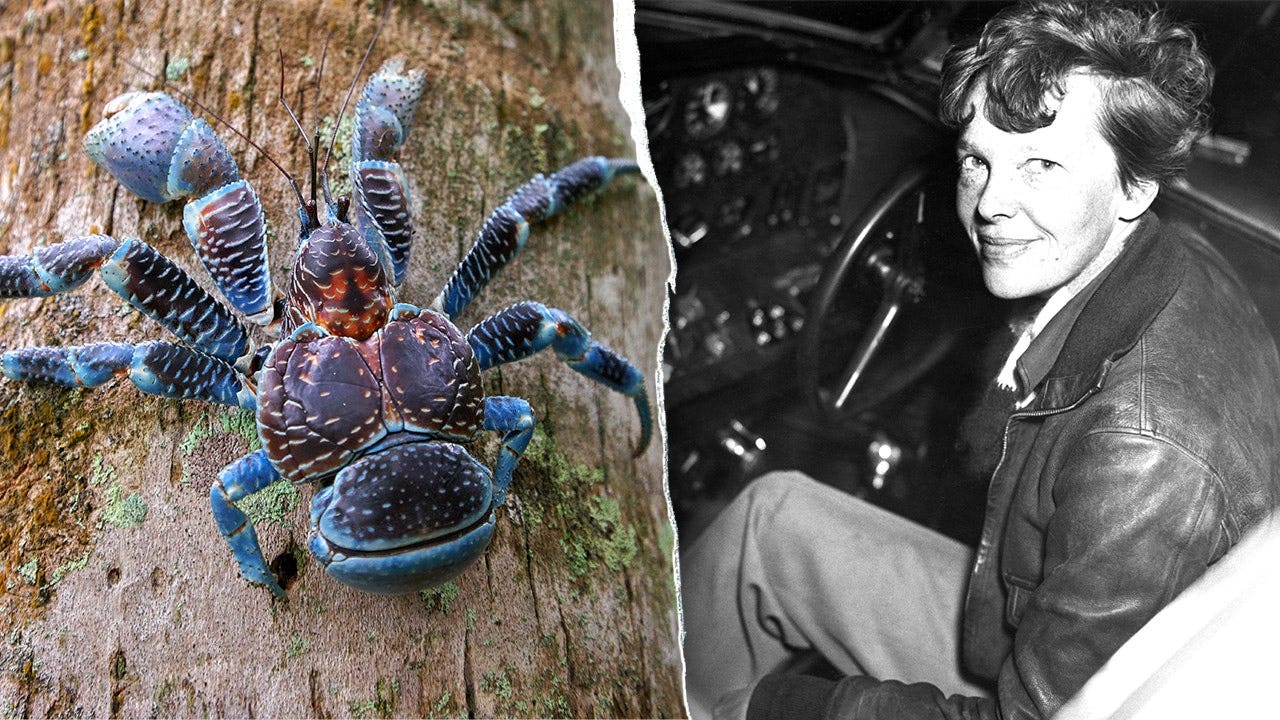
Photo via Fox News

Giant meat-eating crabs with crushing grip complicate Amelia Earhart expedition on remote island

Read the original at Fox News ↗
Cite

Margolis, A. (2026, October 15). Giant meat-eating crabs with crushing grip complicate Amelia Earhart expedition on remote island. Fox News. https://www.foxnews.com/travel/giant-meat-eating-crabs-crushing-grip-complicate-amelia-earhart-expedition-remote-island

Dated from the outlet's own feed. Check the original for its byline.

Fox News · collected 2026-10-15 · by Andrea Margolis

Quick Summary

Purdue University’s expedition searching for Amelia Earhart’s plane on Nikumaroro Island faces challenges from giant meat-eating coconut crabs. The team decided to sleep aboard their vessel due to the presence of these massive crustaceans, which can generate over 1,765 newtons of force with their pincers—stronger than a human's grip—and pose threats while scavenging and climbing trees. The expedition encountered at least four coconut crabs during trail clearance on Tuesday, but no serious incidents occurred despite the crabs' formidable strength and size.
Written by AI on 2026-10-15, from this article's own text only (the story summary below draws on all the coverage).
See how they differ ↓

AI analysis

Story summary

A team of researchers from Purdue University and the Archaeological Legacy Institute traveled to Nikumaroro Island in Kiribati, searching for wreckage believed to be that of Amelia Earhart's lost plane. The expedition, costing $900,000, aimed to investigate an object visible since 1938, known as the "Taraia Object." However, after studying it on October 19th, they determined the object was merely a cluster of washed-up trees, leaving Earhart's disappearance one of aviation’s most enduring mysteries unresolved. The team remains committed to continuing their search based on the hypothesis that Earhart and her navigator Fred Noonan may have crash-landed there as castaways. Despite this setback, the researchers see value in their mission, emphasizing that "adventure is worthwhile."

Written for “Amelia Earhart Mystery Investigation” on 2026-11-21, grounded in this article and the 24 other(s) covering the same event.

How they differ

9 outlets covered “Amelia Earhart Mystery Investigation”.

What each outlet says

One AI summary per outlet of its latest article on this story, written from that article alone and checked against it. Open the article for the outlet's own words.

Fox NewsThis outlet15 Oct

Purdue University’s expedition searching for Amelia Earhart’s plane on Nikumaroro Island faces challenges from giant meat-eating coconut crabs. The team decided to sleep aboard their vessel due to the presence of these massive crustaceans, which can generate over 1,765 newtons of force with their pincers—stronger than a human's grip—and pose threats while scavenging and climbing trees. The expedition encountered at…

Giant meat-eating crabs with crushing grip complicate Amelia Earhart expedition on remote island (this article)4 articles from Fox News on this story
CBS News19 Oct

Researchers traveled to Nikumaroro Island in the Pacific Ocean to investigate a potential clue regarding the disappearance of Amelia Earhart and Fred Noonan ninety years ago. The team aims to explore an intriguing artifact on the island that might be connected to Earhart's plane, with their findings set to guide future search efforts.

The quest to solve the mysterious fate of Amelia Earhart →9 articles from CBS News on this story
BBC19 Oct

Researchers who believed they might have found wreckage of Amelia Earhart's plane near a lagoon in the Taraia Peninsula on Nikumaroro Island now say it is likely just washed-up trees. The Purdue University-led team traveled there after spotting a shiny object via satellite imagery in 2020, but upon arrival, most debris had fragmented and was gone. Only a single Y-shaped segment remained. Project director Rick…

Possible wreckage of Amelia Earhart's plane likely to be trees, say researchers →3 articles from BBC on this story
NBC News19 Oct

Researchers from the Archaeological Legacy Institute and Purdue University concluded their recent expedition to Nikumaroro, an island in the South Pacific, without finding conclusive evidence of Amelia Earhart’s missing plane. The team investigated an anomaly first spotted in satellite images in 2020 but determined it was likely a collection of debris rather than aircraft wreckage. Despite not solving the mystery…

‘No conclusive evidence’ of Amelia Earhart’s missing plane found in South Pacific expedition →3 articles from NBC News on this story
Times of India15 Oct

Amelia Earhart disappeared in 1937 during her attempt to fly around the world with navigator Fred Noonan. In October 2026, a 17-member expedition funded by Purdue University and the Archaeological Legacy Institute visited Nikumaroro Island to investigate potential clues related to her disappearance. The team explored an underwater object that could be connected to Earhart's missing Lockheed Electra aircraft. This…

Amelia Earhart vanished in 1937; a theory suggests crabs consumed her remains as a castaway →2 articles from Times of India on this story
Sydney Morning Herald11 Oct

A US-based team of marine archaeologists has embarked on a mission to Nikumaroro, an uninhabited island in Kiribati’s Phoenix Islands, to investigate a submerged object detected six years ago using satellite imagery. The researchers from Purdue University aim to determine if this object is the wreckage of Amelia Earhart's plane, which disappeared in 1937 during her attempted round-the-world flight. Led by Richard…

Amelia Earhart expedition heads to Pacific atoll hoping to find her plane →
Show 3 more outlets
The Straits Times20 Oct

Explorers searching for Amelia Earhart's plane in the South Pacific recently announced that a suspected piece of wreckage from her aircraft was actually tree debris. The US$900,000 expedition to Kiribati by private donors and Purdue University ended October 19 without finding conclusive evidence. Despite this outcome, Richard Pettigrew, leader of the mission, stated that the hypothesis suggesting Earhart died as a…

In search for Amelia Earhart’s plane, tantalising clue turns out to be tree debris →
ABC News (AU)20 Oct

Researchers who thought satellite imagery from 2020 might show Amelia Earhart's plane wreckage found instead a clump of trees during an expedition to Kiribati's Nikumaroro Island this month. The $900,000 mission aimed to solve the enduring mystery of Earhart’s disappearance in 1937 but concluded without finding definitive proof. Despite the lack of conclusive evidence, the team leader emphasized that the hypothesis…

Suspected Amelia Earhart plane wreckage identified as clump of trees →
The Independent20 Oct

Expeditionists searching for Amelia Earhart's aircraft on Nikumaroro Island in the South Pacific have concluded that recent wreckage sightings were actually washed-up trees, despite previous satellite imagery suggesting otherwise. The Taraia Object expedition, involving the Archaeological Legacy Institute and Purdue University, found no definitive evidence of the plane but discovered other artifacts during their…

The 89-year hunt for Amelia Earhart takes another turn as searchers stick by ‘castaway hypothesis’ →

Where they agree and split

Agreed

AI · cited, from two or more outlets

  • The expedition team is investigating an object visible since 2020 and possibly dating back to 1938 photos.12

Disputed

Picked by our model, which is sometimes wrong

  • CBS News and other outlets did not specify the exact nature of the object before it was determined to be tree debris, while The Straits Times and ABC News reported that the object turned out to be washed-up trees.15

Framing

How the first headlines put it

  • CBS News focuses on the expedition's start, while The Straits Times emphasizes the disappointment of finding tree debris instead of plane wreckage.15
  • The Independent highlights the ongoing commitment to search despite setbacks, contrasting with ABC News which underscores the failure to find evidence.76
The full story: what happened, how it changed, and all 25 articles →

Compared with similar articles

This article reads unscored and hedges 25% of its claims. Each row says how that neighbour differs.
Fox News
Hedges 2 of 20 claims Outlet record 66/100
Times of India
Hedges 14 of 38 claims Outlet record 59/100
BBC News
Hedges 6 of 25 claims Outlet record 65/100
The Sydney Morning Herald
Hedges 2 of 35 claims Outlet record 61/100
Times of India
Hedges 9 of 45 claims Outlet record 59/100
CBS News
Hedges 4 of 15 claims Outlet record 66/100
Fox News
Hedges 3 of 17 claims Outlet record 66/100
“The articles describe different phases of the expedition, with Article A discussing initial challenges from coconut crabs on landing day, while Article B talks about severe weather forcing a pause in field operations several days later.”
Fox News
Hedges 3 of 15 claims Outlet record 66/100
“Article A describes the challenges faced by the expedition team due to meat-eating crabs, while Article B reports on the lack of conclusive evidence for the Taraia Object hypothesis.”
BBC News
Hedges 7 of 27 claims Outlet record 65/100
“The articles refer to different stages of the expedition: the first article discusses initial challenges due to coconut crabs, while the second mentions resuming search efforts after severe weather.”

Story

Amelia Earhart Mystery Investigation
Science · 25 article(s) covering the same event. Compare every outlet's account →
How this article was measured signals, leaning charts, publisher record, byline, topics and claims

Signals How these are calculated →

Claims extracted
28
sentences that state something as happening or true
Uncertain
25%
7 of 28 hedged ("reportedly", "may", "according to")
Leaning
not political
takes no side on a contested political question
Publisher signals
66/100
Fox News's corrections and hedging, across everything collected from it. Not a measure of accuracy.
Outlets on this story
25
Science
Same framing elsewhere
1
articles that frame the event the way this one does
Analyzed 2026-10-15 · how these are computed

How this is being covered How these are calculated →

Article leaning vs. publisher reliability
Source leaning vs. consistency

Publisher

Fox News · 8391 article(s) · 16 correction(s) detected
Running correction rate · 16 correction(s)

Who wrote this

Andrea Margolis
69 article(s) here · 1 carrying a prediction
"The head quickly disappeared before I could get a photo," the man said.
The embassy said some 50 European leaders were expected to attend the ninth European Political Community summit and an informal European Council meeting to discuss strategic priorities under Ireland's EU presidency.
Jennifer Adams, director of tourism for Okaloosa County, previously told local outlet WUWF that the site could open to divers within a day or two of the sinking. "As soon as she goes down, she’ll be ready to dive in the next day or so," Adams said.
The ship is expected to sink in about 180 feet of water, roughly 25 miles southwest of Destin, Florida.
"We will continue to monitor the situation and provide updates," the consulate wrote Saturday.
"We feel very vulnerable in this moment because this harm that our CCC community members are feeling right now could have happened to any of us," he told the outlet.
At the time, Spann's son, Zach Guerrina, told the Post his mother was trying to hold the alligator's jaws open so she could escape.
A powerful new telescope has discovered a dwarf planet candidate beyond Pluto — and scientists say it could be among the largest of its kind ever found in the reaches of our solar system.
"Travelers looking ahead to Thanksgiving and Christmas travel will need to plan ahead for a larger travel budget this year, as the 2026 holiday travel is on track to be the most expensive in a decade," the report said.
They carefully dug a small silver coin out of the soil — and more finds would follow."
Also by Andrea Margolis
Nothing else under this byline is closely related to this article, so these are simply their most recent.
All 69 articles by Andrea Margolis →

Topics

London Purdue University USGS the Marin Mainiku the U.S. Geological Survey

Subjects

Earhart PERSON · 4× Purdue University ORG · 4× USGS ORG · 3× Amelia Earhart's PERSON · 1× London GPE · 1× Natural History Museum ORG · 1× Renato LaRocca PERSON · 1× Rick Pettigrew PERSON · 1× Sirisha Bandla PERSON · 1× the U.S. Geological Survey ORG · 1×

Narrative

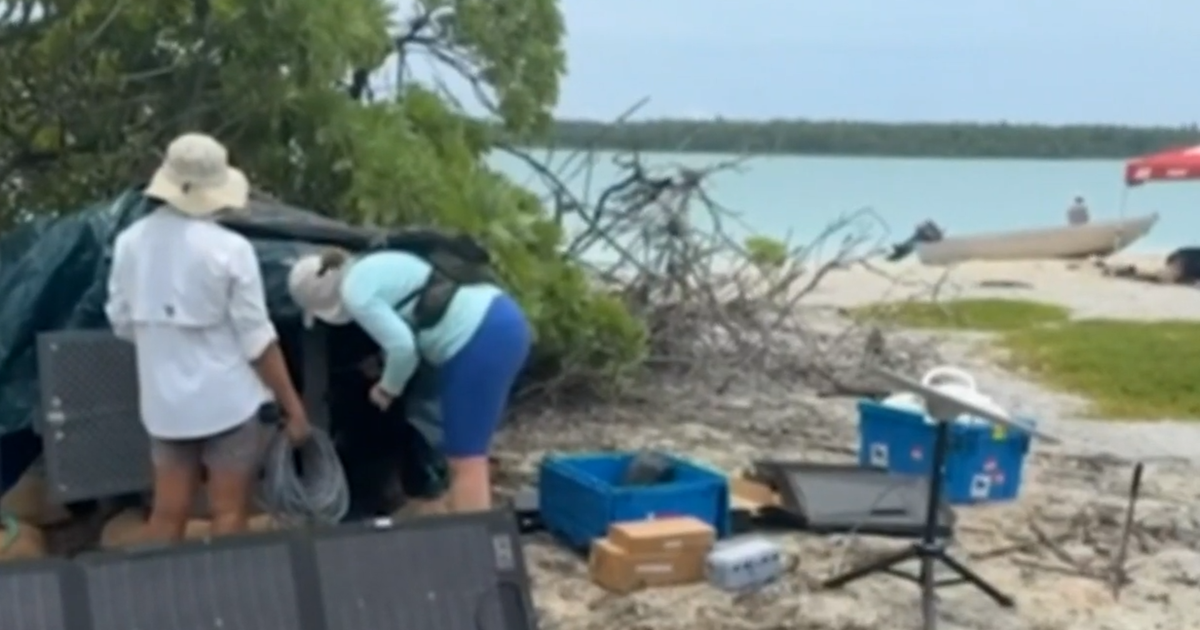
"The crew will sleep nightly aboard the Marin Mainiku for a number of reasons, one of which is the presence of coconut crabs, whose size and overnight activity make staying on the island impractical," the university said.
framing: mixed · carried by 1 article(s) · first seen 2026-10-15
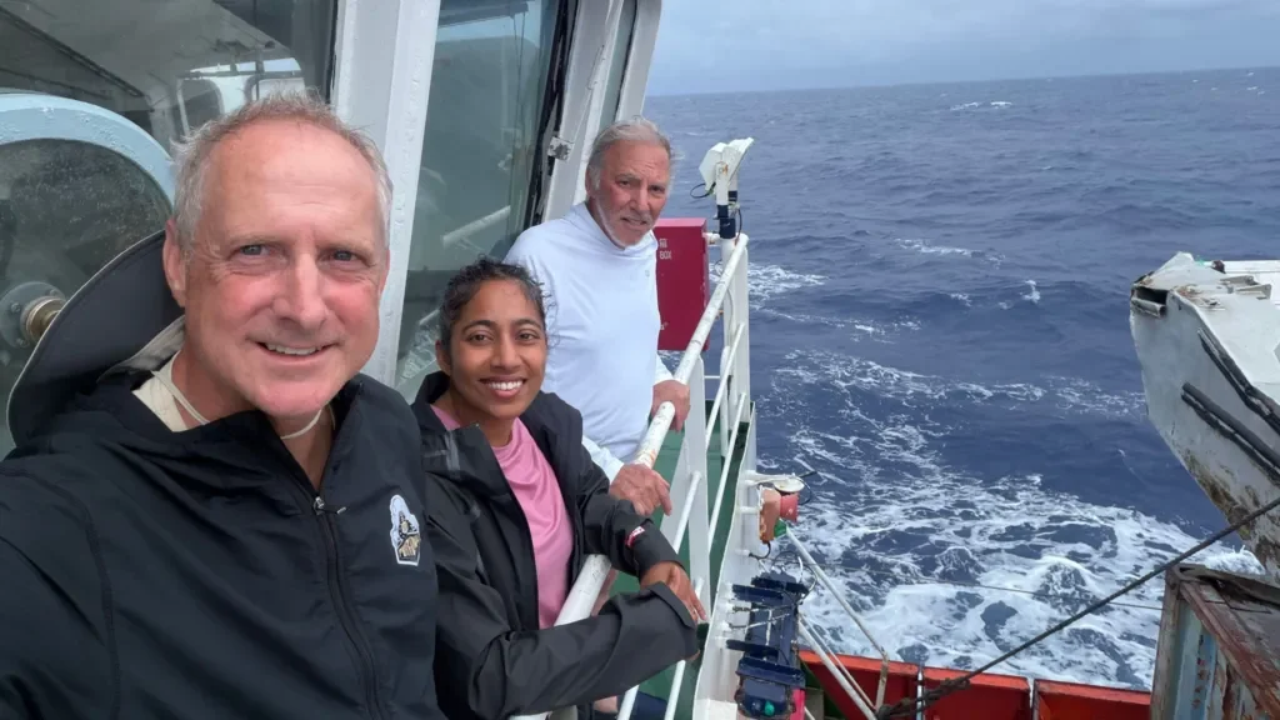
Purdue University confirmed on Monday that the crew would sleep aboard its vessel rather than on the island, citing the enormous crustaceans as one reason for the decision.

Claims (28 extracted, 7 hedged)

Massive meat-eating coconut crabs are posing an unusual challenge for the team searching for Amelia Earhart's missing plane on the remote Pacific island of Nikumaroro. asserted
crabs → eat → Nikumaroro
Purdue University confirmed on Monday that the crew would sleep aboard its vessel rather than on the island, citing the enormous crustaceans as one reason for the decision. asserted
crew → confirm → decision
The 17-person expedition team arrived off Nikumaroro on Monday evening after a five-day voyage across the Pacific, going ashore the following morning to begin investigating clues that could help solve Earhart's disappearance. uncertain
that → arrive → disappearance
"The crew will sleep nightly aboard the Marin Mainiku for a number of reasons, one of which is the presence of coconut crabs, whose size and overnight activity make staying on the island impractical," the university said. asserted
university → sleep → island
The team, which is 16 hours ahead of Eastern Daylight Time (EDT), has already encountered the massive crustaceans while working on the island. asserted
which → encounter → island
In a Tuesday statement, Purdue University officials said researchers came across at least four coconut crabs while clearing an overgrown trail to the island's lagoon. asserted
researchers → say → lagoon
The path, nicknamed the "Gallagher Highway," had become heavily overgrown since the last expedition — forcing researchers and crew members to use machetes and hand chainsaws to clear a route. asserted
path → nickname → route
The work took about two hours. asserted
work → take → hours
Despite the crab encounters, the animals "posed no threat to the operation," according to the university. uncertain
animals → pose → university
The coconut crab is considered the largest terrestrial arthropod, according to a 2011 report from the U.S. Geological Survey (USGS). uncertain
crab → consider → Survey
The crab digs shallow burrows for mating and molting and frequently maintains several burrows within its territory, the USGS report states. asserted
report → dig → territory
"The species is omnivorous and will scavenge carcasses, climb trees to access food or escape, and can live [for] over 40 years," added the USGS report. asserted
report → scavenge → years
Coconut crabs are also equipped with two powerful pincers capable of cracking through the tough exterior of a coconut, according to London's Natural History Museum. uncertain
crabs → equip → Museum
The crustaceans' claws have serrated edges that function like teeth, allowing them to break open the hard shells. asserted
them → have → shells
"The squeeze of a coconut crab’s pincers can be much stronger than a human’s grip," the museum said. asserted
museum → say → grip
"There is a problem with coconut crabs and hermit crabs, but otherwise it’s a magical place." asserted
it → be → crabs
Researchers testing 29 wild coconut crabs found that their pincers could generate more than 1,765 newtons of force. uncertain
pincers → test → force
"For comparison, humans have a maximum bite force of between 1,100 and 1,300 newtons," the museum added. asserted
museum → have → newtons
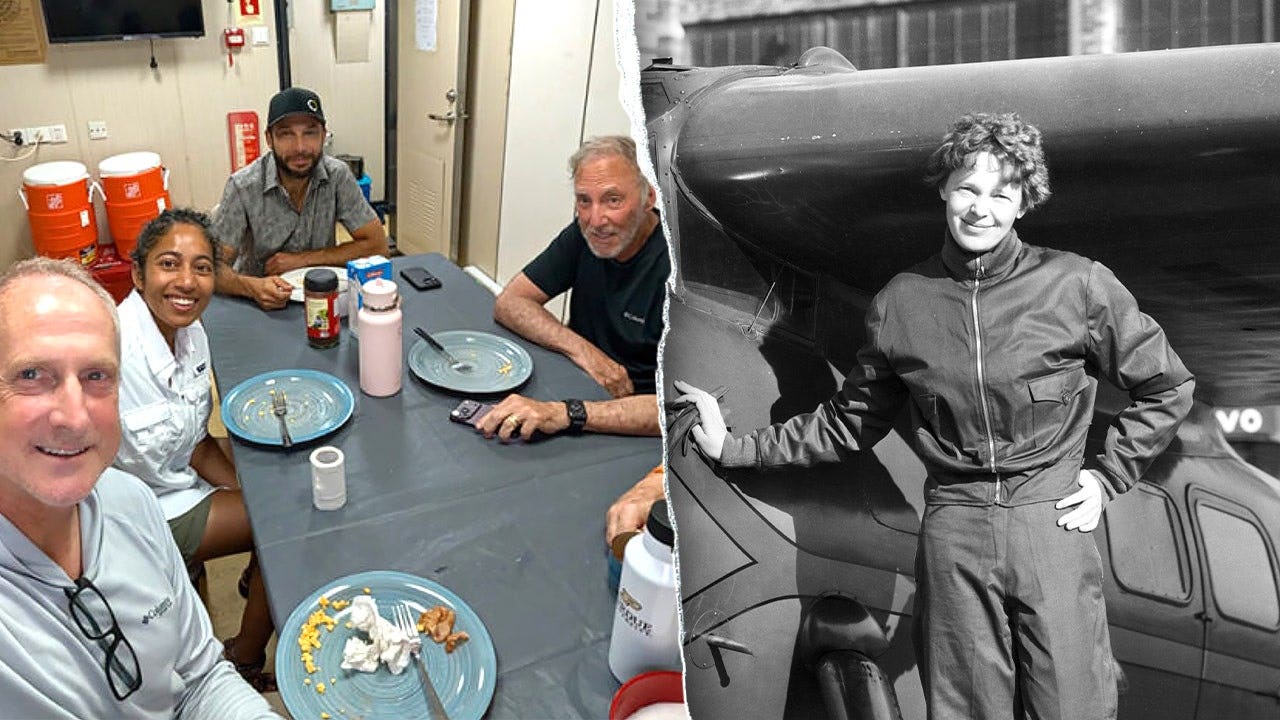
One photo released by Purdue University shows expedition member Sirisha Bandla smiling as she holds a massive coconut crab, its long legs and claws extending outward. asserted
legs → release → crab
Expedition member Renato LaRocca, who had previously visited Nikumaroro, acknowledged the challenges posed by the island's wildlife in an Oct. 9 university statement. asserted
who → visit → statement
"There is a problem with coconut crabs and hermit crabs, but otherwise it's a magical place," he said. asserted
he → be → crabs
Despite the challenges, Rick Pettigrew, executive director of the Archaeological Legacy Institute and leader of the expedition, said the team remained in "excellent spirits." asserted
team → say → spirits
"We continue to be well taken care of by our very capable Kiribati crew, and we are looking forward to the work ahead," he added. asserted
he → continue → work
Purdue University told Fox News Digital on Thursday that the crabs have not caused any additional challenges for the crew. asserted
crabs → tell → crew
The expedition is investigating a mysterious anomaly detected in satellite imagery that some researchers believe could be Earhart's missing Lockheed Electra. uncertain
researchers → investigate → imagery
The search is rooted in the Nikumaroro Hypothesis, which suggests Earhart's aircraft went down near the remote Pacific island. uncertain
aircraft → root → island
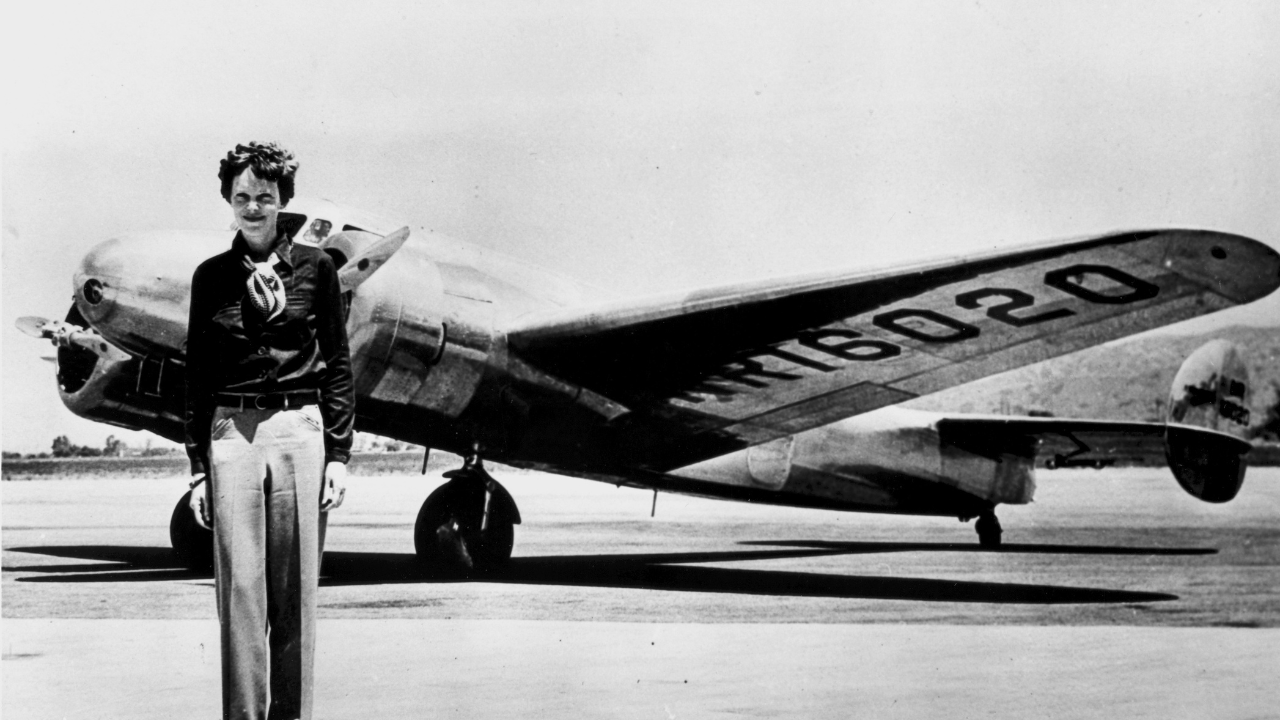
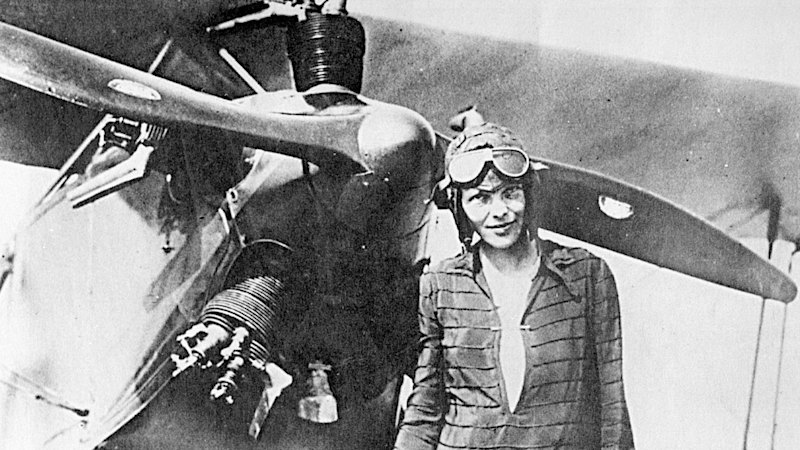
Earhart was just 39 years old when she disappeared on July 2, 1937, during her attempt to become the first woman to fly around the world. asserted
she → disappear → world
The famed aviator as well as her navigator, Fred Noonan, vanished during one of the final legs of their journey after taking off from Lae, New Guinea, en route to Howland Island. asserted
aviator → vanish → Island
Give feedback · no sign-in needed

No sign-in needed for now. Your note is sent without a name, so it cannot be answered.

History Support