Photo via Semafor

Houthi strikes expose Saudi Arabia's vulnerabilities

Read the original at Semafor ↗
Cite

Sergie, M. (2026, October 16). Houthi strikes expose Saudi Arabia's vulnerabilities. Semafor. https://www.semafor.com/article/10/16/2026/houthi-strikes-expose-saudi-arabias-vulnerabilities

Dated from the outlet's own feed. Check the original for its byline.

Semafor · collected 2026-10-16 · by Mohammed Sergie

Quick Summary

The article reports on Houthi strikes in Saudi Arabia this month, which killed 17 people and injured 333 at Riyadh’s airport, despite Saudi Arabia's advanced air defenses. These attacks have highlighted vulnerabilities in Saudi military technology and have increased regional solidarity against the Houites, with support from other Gulf nations like Kuwait, Bahrain, Qatar, and the UAE. The economic impact of the conflict is also significant, as new IMF projections show a deeper contraction in GDP than previously forecasted for the region post-war.
Written by AI on 2026-10-16, from this article's own text only (the story summary below draws on all the coverage).
See how they differ ↓

AI analysis

Story summary

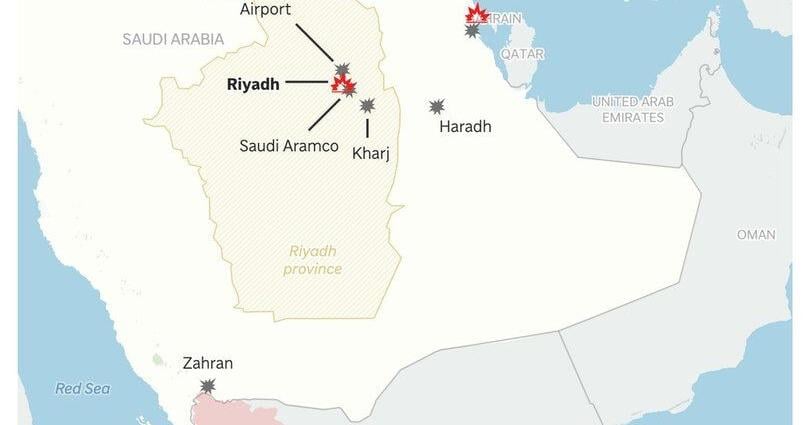
The Houthis, backed by Iran, have launched a series of attacks on Saudi Arabia since early September, targeting oil infrastructure and airports including Riyadh’s main international airport, which they hit 20 times. These strikes killed 17 people and injured 333 others, highlighting the group's expanding military capabilities despite Saudi Arabia's robust defense systems. The conflict escalated after a Saudi bombardment of Sanaa Airport in July, aimed at preventing a Houthi delegation from landing there. Since then, both sides have engaged in "tit-for-tat" strikes, with the Houthis employing a mix of seized arsenals, smuggled parts, and self-manufactured weapons to sustain their attacks on key targets across Saudi Arabia and the Bab al-Mandeb Strait. The IMF has now projected deeper economic contraction for the region due to these ongoing conflicts.

Written for “Houthis Strikes On Saudi Arabia” on 2026-11-21, grounded in this article and the 2 other(s) covering the same event.

How they differ

3 outlets covered “Houthis Strikes On Saudi Arabia”.

What each outlet says

One AI summary per outlet of its latest article on this story, written from that article alone and checked against it. Open the article for the outlet's own words.

SemaforThis outlet16 Oct

The article reports on Houthi strikes in Saudi Arabia this month, which killed 17 people and injured 333 at Riyadh’s airport, despite Saudi Arabia's advanced air defenses. These attacks have highlighted vulnerabilities in Saudi military technology and have increased regional solidarity against the Houites, with support from other Gulf nations like Kuwait, Bahrain, Qatar, and the UAE. The economic impact of the…

Houthi strikes expose Saudi Arabia's vulnerabilities (this article)

Dawn16 Oct

Yemen's Houthi rebels have resumed attacks on Saudi Arabia since July 2024, hitting critical oil infrastructure and airports, including Riyadh’s airport which has been targeted 20 times. The renewed conflict stems from a Saudi bombardment of Sanaa’s airport in Yemen aimed at preventing a Houthi delegation from landing there. The Houthis possess an arsenal that includes various types of missiles and drones, some…

The Houthis' varied arsenal used to strike Saudi Arabia →
Toronto Star17 Oct

Yemen’s Houthi rebels have recently demonstrated their growing military strength by striking Saudi Arabia’s main international airport and seizing territory near a critical shipping chokepoint. Over the past decade, despite interventions from multiple nations including Saudi Arabia, the United States, and Israel, the Houthis have become more powerful, now possessing an array of ballistic missiles, cruise missiles…

Houthi strikes on Saudi Arabia show the Yemeni rebels' growing strength →

Where they agree and split

Framing

How the first headlines put it

Stated as fact2
The headlines (2)

The Houthis' varied arsenal used to strike Saudi Arabia Dawn · stated as fact

Houthi strikes expose Saudi Arabia's vulnerabilities Semafor · stated as fact

The full story: what happened, how it changed, and all 3 articles →

Compared with similar articles

This article reads leans left and hedges 0% of its claims. Each row says how that neighbour differs.
Toronto Star
Leans right further right than this Hedges 4 of 39 claims Outlet record 64/100
Dawn
Hedges 2 of 19 claims Outlet record 66/100
New York Post
Hedges 5 of 12 claims Outlet record 66/100
“Article A discusses the development of advanced missiles by Houthis using Chinese parts, while Article B reports on actual Houthi strikes against Saudi Arabia's airport.”
The Straits Times
Leans left Hedges 2 of 30 claims Outlet record 64/100
“Article A describes Houthi strikes on Riyadh's airport, while Article B covers families taking shelter in Taiz due to ongoing conflict. These are separate events occurring at different locations.”
Al Jazeera
Hedges 1 of 2 claims Outlet record 60/100
“The articles describe different events: one focuses on Houthi strikes in Saudi Arabia and the impact on civilians, while the other reports Trump's claim about a US Navy blockade stopping Iranian ships in Hormuz.”
Toronto Star
Leans left Hedges 1 of 23 claims Outlet record 64/100
“The articles describe different events: Article A discusses Houthi strikes on Riyadh's airport, while Article B reports an airstrike in Yemen that killed three children.”
Al Jazeera
Hedges 0 of 2 claims Outlet record 60/100
“The articles describe different military actions occurring at distinct times and locations.”
The Straits Times
Hedges 1 of 5 claims Outlet record 64/100
“The articles describe different incidents: one involving Houthi strikes on Riyadh's airport and another about a helicopter crash in Najran due to technical malfunction.”
Dawn
Leans right further right than this Hedges 1 of 18 claims Outlet record 66/100
“The articles describe different events: one reports on Houthi strikes at Riyadh's airport, while the other describes a helicopter crash near Yemen with the coalition blaming technical issues and not enemy action.”
Dawn
Leans strongly right further right than this Hedges 1 of 18 claims Outlet record 66/100
“The articles describe different events: one covers multiple Houthi strikes on Riyadh's airport, while the other reports a helicopter crash near Yemen border with military fatalities.”

Story

Houthis Strikes On Saudi Arabia
World · 3 article(s) covering the same event. Compare every outlet's account →
How this article was measured signals, leaning charts, publisher record, byline, topics and claims

Signals How these are calculated →

Claims extracted
9
sentences that state something as happening or true
Uncertain
0%
0 of 9 hedged ("reportedly", "may", "according to")
Leaning
Leans left
of the writing, not the subject · beta estimate
Publisher signals
64/100
Semafor's corrections and hedging, across everything collected from it. Not a measure of accuracy.
Outlets on this story
3
World
Same framing elsewhere
1
articles that frame the event the way this one does
Analyzed 2026-10-16 · how these are computed

How this is being covered How these are calculated →

Article leaning vs. publisher reliability
Source leaning vs. consistency

Publisher

Semafor · 1931 article(s) · 7 correction(s) detected
Running correction rate · 7 correction(s)

Who wrote this

Mohammed Sergie
28 article(s) here · 1 carrying a prediction
The recent dip in AI company valuations isn’t concerning to one of the Gulf’s biggest investors in the space because it could allow stronger businesses to emerge and give the industry time to win over public opinion, Qatar Investment Authority’s CEO said at Semafor’s Silicon Valley & The World.
The Scene When Massachusetts-based Commonwealth Fusion Systems looked for companies that could produce large metal components and complex machinery for its prototype, it landed on the oil and gas industry.
Though the eight-month Iran conflict was a test, he acknowledged, “I would say that if there was a bubble, it would have burst.”
The anticipated blue wave in the US midterm elections turned into a tsunami, and its political ripples will reach the Gulf.
2026-11-04 · mixed framing · Gulf and 'Blue Wave'
Separating signal from noise on whether the US-Iran war will escalate has been difficult for months, and now it’s a cacophony.
2026-11-03 · mixed framing · Reading the signs of war in the Gulf
The war is transforming everything in the region, from trade flows to alliances, but the conflict itself may, in hindsight, seem temporary.
2026-11-03 · assertive framing · At ADIPEC, war is the challenge and AI the opportunity
Gulf economies as a whole are expected to shrink 4.8% this year, almost matching the COVID-19 shock, with non-oil output receding in four countries.
If selected, Nusseibeh would become the second Arab to lead the UN, after Egypt’s Boutros Boutros-Ghali, and its first woman.
Global demand for energy from all sources is forecast to rise over the next decade, driven by electrification and AI adoption.
But the IMF now predicts a deeper contraction than previously expected, with GDP trailing pre-war forecasts even after energy production and trade recover.
2026-10-16 · assertive framing · Houthi strikes expose Saudi Arabia's vulnerabilities
Also by Mohammed Sergie
Gulf and 'Blue Wave'
2026-11-04 · Semafor
Nothing else under this byline is closely related to this article, so these are simply their most recent.
All 28 articles by Mohammed Sergie →

Topics

Houthis IMF Riyadh Saudi Arabia Yemen

Subjects

Houthis NORP · 2× IMF ORG · 2× Riyadh GPE · 2× Saudi Arabia GPE · 2× Yemen GPE · 2× Aden GPE · 1× Beirut GPE · 1× Iranian NORP · 1× Irbil GPE · 1× Salalah GPE · 1×

Narrative

Authorities in the region are reinforcing this message of unity: In today’s Friday prayer sermons in Kuwait, imams were instructed to praise the kingdom’s support during Iraq’s 1990 invasion and condemn the Houthis.
framing: assertive · carried by 1 article(s) · first seen 2026-10-16
But the IMF now predicts a deeper contraction than previously expected, with GDP trailing pre-war forecasts even after energy production and trade recover.
2026-10-16 · Semafor
Houthi strikes expose Saudi Arabia's vulnerabilities · assertive framing

Claims (9 extracted, 0 hedged)

The deadliest week for civilians in the Gulf marks a turning point in the US-Iran war that has engulfed the Middle East from Beirut to Aden, and from Irbil to Salalah. asserted
that → mark → Salalah
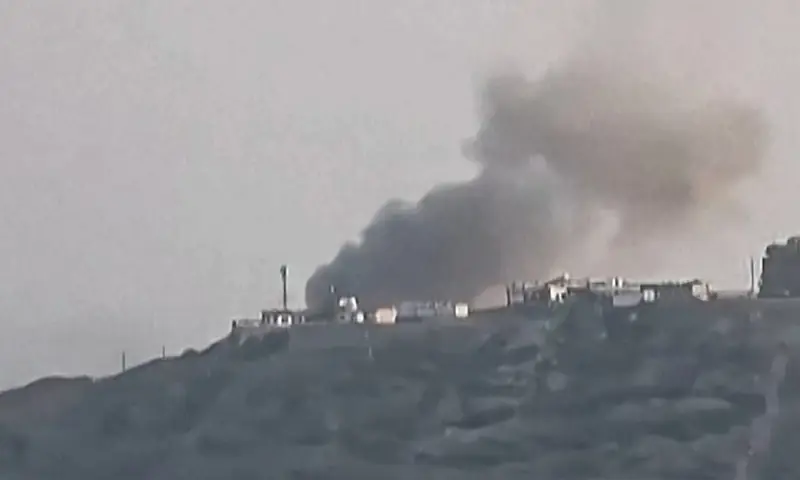
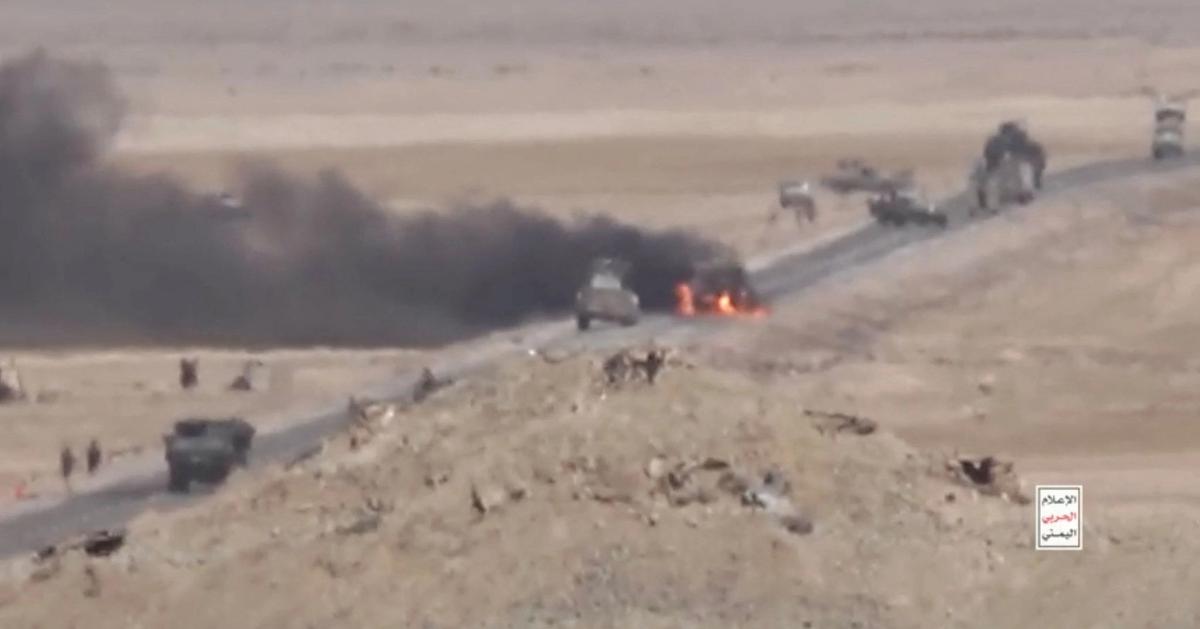
Saudi Arabia stepped up strikes on Yemen’s Houthis after the group hit Riyadh’s airport 20 times this month, killing 17 people and injuring 333. asserted
group → step → 333
Despite Riyadh’s considerable air defenses and vast military spending, the militants have been able to outsmart the systems using relatively cheap drones and missiles. asserted
militants → outsmart → drones
Iranian attacks on the Gulf have brought the region closer together, and the latest strikes by Tehran’s allies in Yemen have galvanized support for Saudi Arabia. asserted
strikes → bring → Arabia
Authorities in the region are reinforcing this message of unity: In today’s Friday prayer sermons in Kuwait, imams were instructed to praise the kingdom’s support during Iraq’s 1990 invasion and condemn the Houthis. asserted
imams → reinforce → Houthis
Similar expressions of support were also voiced in Bahrain, Qatar, and the UAE. asserted
expressions → voice → Bahrain
While security is by far the most pressing priority, new projections from the IMF have revealed the war’s deepening economic toll. asserted
projections → reveal → toll
Jihad Azour, the fund’s regional director, told Asharq Bloomberg that the Gulf’s financial reserves, diversified export routes, and government interventions have cushioned the shock. asserted
reserves → tell → shock
But the IMF now predicts a deeper contraction than previously expected, with GDP trailing pre-war forecasts even after energy production and trade recover. asserted
production → predict → forecasts
Give feedback · no sign-in needed

No sign-in needed for now. Your note is sent without a name, so it cannot be answered.

History Support