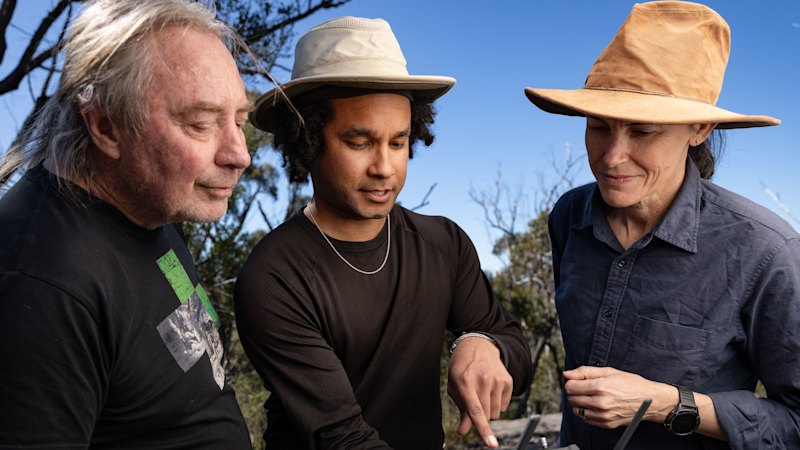
Photo via Times of India

Drone LiDAR reveals three unregistered Aboriginal rock shelters in Australia's rugged Blue Mountains

Read the original at Times of India ↗
Cite

TOI Science Desk. (2026, October 17). Drone LiDAR reveals three unregistered Aboriginal rock shelters in Australia's rugged Blue Mountains. Times of India. https://timesofindia.indiatimes.com/science/archaeology/researchers-used-drone-lidar-to-scan-rugged-australian-bushland-that-is-difficult-to-search-on-foot-the-technology-led-them-to-three-previously-unregistered-aboriginal-rock-shelters-with-red-hand-stencils/articleshow/135010684.cms

Dated from the outlet's own feed. Check the original for its byline.

Times of India · collected 2026-10-17 · by TOI Science Desk

Quick Summary

Researchers used drone-based LiDAR technology to discover three previously unregistered Aboriginal rock shelters in Australia's Blue Mountains. The study, published in Remote Sensing, involved collaboration between archaeologists from the University of Sydney and the Australian Museum with the Dharug Custodian Aboriginal Corporation. This method identified potential sites that were later confirmed through field surveys, revealing red hand stencils and stone artifacts.
Written by AI on 2026-10-17, from this article's own text only (the story summary below draws on all the coverage).
See how they differ ↓

AI analysis

Story summary

Drone archaeologist Dr Jacob Bongers from the University of Sydney has uncovered three previously unrecorded ancient Indigenous shelters in Australia's Blue Mountains using LiDAR technology. Published this week in the journal Remote Sensing, the findings highlight how aerial laser scanning can reveal cultural heritage sites hidden by dense bush and steep terrain. The newly located rock shelters, some adorned with red hand stencils and stone artefacts, suggest continuous Indigenous occupation spanning millennia within the UNESCO-listed 1.03 million hectares of the Blue Mountains World Heritage site. This discovery raises hopes that hundreds or even thousands more ancient sites could be identified across this vast area, which is roughly the size of Lebanon. Researchers collaborated with the Dharug Custodian Aboriginal Corporation to confirm these findings through subsequent field visits.

Written for “Drone Archaeology Reveals Ancient Sites” on 2026-11-21, grounded in this article and the 2 other(s) covering the same event.

How they differ

2 outlets covered “Drone Archaeology Reveals Ancient Sites”.

What each outlet says

One AI summary per outlet of its latest article on this story, written from that article alone and checked against it. Open the article for the outlet's own words.

Times of IndiaThis outlet17 Oct

Researchers used drone-based LiDAR technology to discover three previously unregistered Aboriginal rock shelters in Australia's Blue Mountains. The study, published in Remote Sensing, involved collaboration between archaeologists from the University of Sydney and the Australian Museum with the Dharug Custodian Aboriginal Corporation. This method identified potential sites that were later confirmed through field…

Drone LiDAR reveals three unregistered Aboriginal rock shelters in Australia's rugged Blue Mountains (this article)
Sydney Morning Herald13 Oct

University of Sydney researchers used LiDAR technology to discover three new Aboriginal rock shelters within a small section of the Greater Blue Mountains World Heritage Site, covering 1.03 million hectares. The drone-generated 3D map helped identify sites with red hand stencils and stone artifacts, indicating long-term Indigenous occupation. Dr Jacob Bongers, the project’s digital archaeologist, emphasizes that…

How high-tech drones reveal ancient Blue Mountains Indigenous sites →2 articles from Sydney Morning Herald on this story

Compared with similar articles

This article reads unscored and hedges 26% of its claims. Each row says how that neighbour differs.
The Sydney Morning Herald
Hedges 4 of 37 claims Outlet record 61/100

Story

Drone Archaeology Reveals Ancient Sites
Science · 3 article(s) covering the same event. See how they differ ↑
How this article was measured signals, leaning charts, publisher record, byline, topics and claims

Signals How these are calculated →

Claims extracted
35
sentences that state something as happening or true
Uncertain
26%
9 of 35 hedged ("reportedly", "may", "according to")
Leaning
not political
takes no side on a contested political question
Publisher signals
59/100
Times of India's corrections and hedging, across everything collected from it. Not a measure of accuracy.
Outlets on this story
3
Science
Same framing elsewhere
1
articles that frame the event the way this one does
Analyzed 2026-10-17 · how these are computed

How this is being covered How these are calculated →

Article leaning vs. publisher reliability
Source leaning vs. consistency

Publisher

Times of India · 5445 article(s) · 6 correction(s) detected
Running correction rate · 6 correction(s)

Who wrote this

TOI Science Desk
330 article(s) here · 1 carrying a prediction
The study, conducted by the Beaver Trust and the University of Exeter, confirmed 349 territories and identified 56 more that may be occupied, bringing the total to as many as 405.
Although its external lettered dials could still turn, nobody had managed to find the correct combination since its discovery.
It states that, while they may be small, they are still extremely venomous, and that its experienced reptile team is handling them under the highest safety and care protocols.
Elephants are known for their strong family bonds and complex social relationships, but declining populations may be putting these connections at risk.
Individually, such objects might seem small; together, they provide strong evidence that the outpost was active during the Sui period.
Who knew one animal could change an entire landscape?
The snakes were temporarily brought to the San Francisco Zoo, where they could give birth in a controlled environment.
Scientists have drawn a treasure map of where fossils of ancient sea life may still be waiting to be found.
The newly excavated channels, along with additional connections to Darby Creek, are expected to improve tidal circulation overall.
We have often wondered what animals might be trying to tell us, whether it is a dog barking at the postman or birds calling out to one another from the trees.
Wire or desk byline, not an individual reporter.
Also by TOI Science Desk
Nothing else under this byline is closely related to this article, so these are simply their most recent.
All 330 articles by TOI Science Desk →

Topics

Aboriginal Australia the Australian Museum the Dharug Custodian Aboriginal Corporation the University of Sydney

Subjects

Aboriginal NORP · 7× the Australian Museum ORG · 3× the Dharug Custodian Aboriginal Corporation ORG · 3× the University of Sydney ORG · 2× Amy Mosig Way PERSON · 1× Australia GPE · 1× Remote Sensing ORG · 1× Vere Gordon Childe Centre ORG · 1× Wayne Brennan PERSON · 1× the University of Sydney's ORG · 1×

Narrative

By identifying three previously unregistered shelters, the project demonstrates how remote sensing can complement ground surveys and Aboriginal cultural knowledge, helping expand the archaeological record and support the protection of cultural landscapes for future generations.
framing: mixed · carried by 1 article(s) · first seen 2026-10-17
The findings, published in the journal Remote Sensing, highlight how aerial mapping can help Aboriginal communities and archaeologists locate, document and protect cultural heritage that might otherwise remain unrecorded.

Claims (35 extracted, 9 hedged)

Researchers have used drone-based laser scanning to identify and document three previously unregistered Aboriginal rock shelters in Australia's Blue Mountains, revealing traces of cultural heritage in rugged bushland that is difficult to explore on foot. asserted
that → use → foot
According to the Australian Museum, the research team worked with the Dharug Custodian Aboriginal Corporation to identify potential sites using LiDAR technology. uncertain
team → accord → technology
Subsequent field visits confirmed rock shelters containing red hand stencils and stone artefacts. asserted
visits → confirm → stencils
The findings, published in the journal Remote Sensing, highlight how aerial mapping can help Aboriginal communities and archaeologists locate, document and protect cultural heritage that might otherwise remain unrecorded. uncertain
that → publish → heritage
How drone technology helped locate the shelters asserted
technology → locate → shelters
The research brought together archaeologists from the University of Sydney's Vere Gordon Childe Centre and the Australian Museum, working alongside the Dharug Custodian Aboriginal Corporation. asserted
research → bring → Corporation
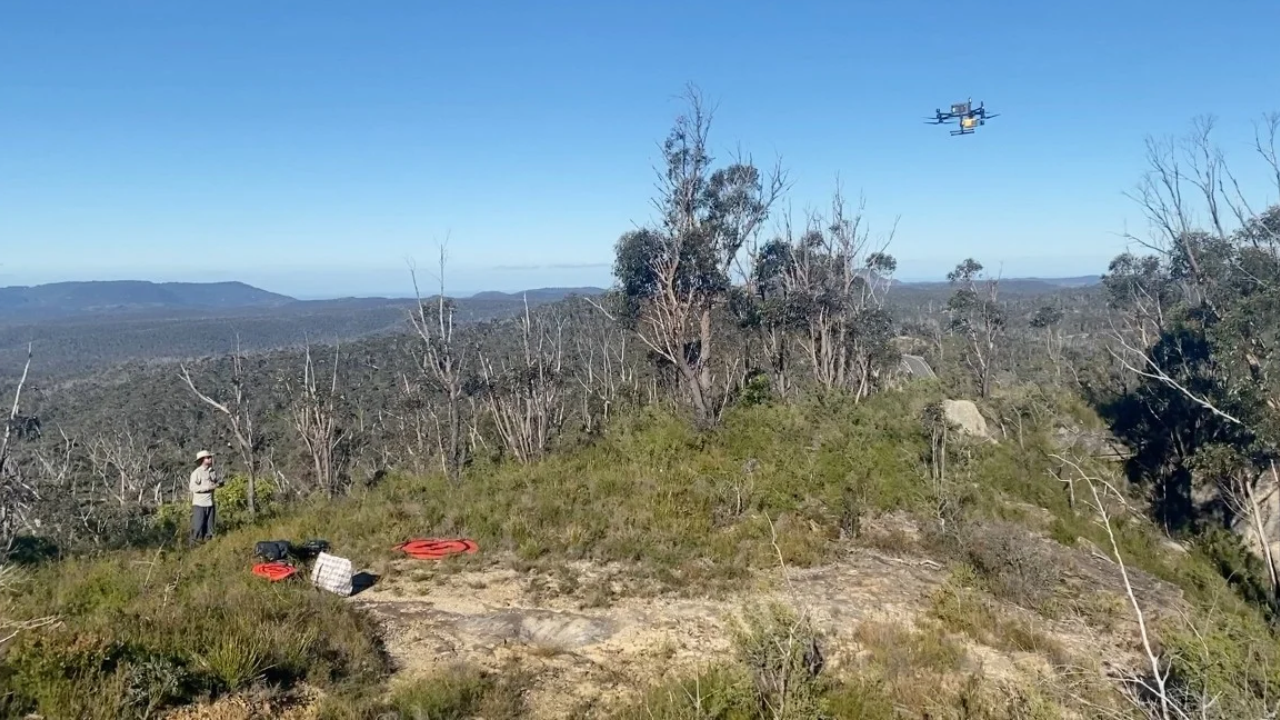
The team used drones equipped with LiDAR sensors to scan sections of the Blue Mountains, where steep terrain and dense vegetation can make traditional archaeological surveys difficult, expensive and time-consuming. asserted
surveys → use → Mountains
LiDAR stands for Light Detection and Ranging. asserted
LiDAR → stand → Detection
The technology sends laser pulses towards the ground and measures their return to build detailed three-dimensional maps of the landscape. asserted
technology → send → landscape
Researchers analyse these maps to identify landforms and potential rock shelters, which are then checked through field surveys. asserted
which → analyse → surveys
The aerial survey identified potential locations, which researchers then visited to verify the findings. asserted
researchers → identify → findings
The fieldwork was led by project co-director Dr Amy Mosig Way, a research archaeologist at the University of Sydney and the Australian Museum. asserted
fieldwork → lead → Sydney
Students and volunteers helped assess the shelters for cultural material, while rock art recording was led by Wayne Brennan and Erin Wilkins of the Dharug Custodian Aboriginal Corporation. asserted
recording → help → Corporation
What the researchers found in the Blue Mountains The field surveys confirmed the locations of six registered rock shelters and identified three previously unregistered shelters containing rock art and stone artefacts. asserted
surveys → find → art
Among the most notable discoveries were red hand stencils, traces of Aboriginal artistic expression preserved on rock surfaces. asserted
stencils → preserve → surfaces
The findings also addressed a separate problem with existing heritage records. asserted
findings → address → records
The researchers obtained more accurate geographical coordinates for known shelters than those recorded in New South Wales' Aboriginal Heritage Information Management System (AHIMS), the state's official register of Aboriginal cultural heritage sites. asserted
researchers → obtain → sites
According to the University of Sydney, more than 200 rock shelters containing cultural and archaeological evidence have been recorded across the Blue Mountains. uncertain
shelters → accord → Mountains
However, Dr Way estimates that only around 10% of the region has been surveyed because its rugged terrain makes systematic exploration challenging. asserted
exploration → estimate → region
The new approach could help researchers identify additional sites in areas that have received limited archaeological attention. uncertain
that → help → attention
Why the discovery matters for Aboriginal heritage asserted
discovery → matter → heritage
The research is part of the Gulamada Project, which brings scientific research together with First Nations cultural knowledge. asserted
which → bring → knowledge
Its guiding principle is to work side by side with Aboriginal communities to better understand and care for Country, a term that encompasses connections to ancestral lands, waters, culture and community. asserted
that → guide → lands
The technology helps identify possible locations, but researchers still need to visit sites, verify the evidence and record cultural material with the involvement of Aboriginal custodians. asserted
researchers → help → custodians
The process combines aerial mapping with archaeological investigation and community knowledge. asserted
process → combine → investigation
The project received $248,610 through Round 1 of the Australian Government's First Nations Heritage Grants program, administered by the Department of Climate Change, Energy, the Environment and Water. asserted
project → receive → Change
The program supports on-Country projects led by First Nations people to identify, document and protect heritage in existing World and National Heritage-listed places. asserted
program → support → places
Could drone LiDAR help uncover more sites? uncertain
LiDAR → help → sites
The study's findings suggest that drone-based LiDAR could make heritage surveys more targeted and efficient, particularly in landscapes where reaching every potential site on foot would be difficult. uncertain
reaching → suggest → foot
It could also help improve the accuracy of existing archaeological records, giving heritage managers better information about where sites are located. uncertain
sites → help → information
The researchers believe the approach could eventually be adapted to other parts of Australia. uncertain
approach → believe → Australia
Planned future work includes testing the method in the tropical savannahs of western Arnhem Land and the semi-arid landscapes of western New South Wales. asserted
work → include → Wales
Finding and recording previously undocumented shelters could also help communities protect them from threats such as development, erosion and bushfires. uncertain
communities → find → development
The discovery does not mean that all hidden sites can be found using drones alone, but it demonstrates how remote sensing can complement ground surveys and traditional knowledge. asserted
sensing → mean → surveys
By identifying three previously unregistered shelters, the project demonstrates how remote sensing can complement ground surveys and Aboriginal cultural knowledge, helping expand the archaeological record and support the protection of cultural landscapes for future generations. asserted
sensing → identify → generations
Give feedback · no sign-in needed

No sign-in needed for now. Your note is sent without a name, so it cannot be answered.

History Support