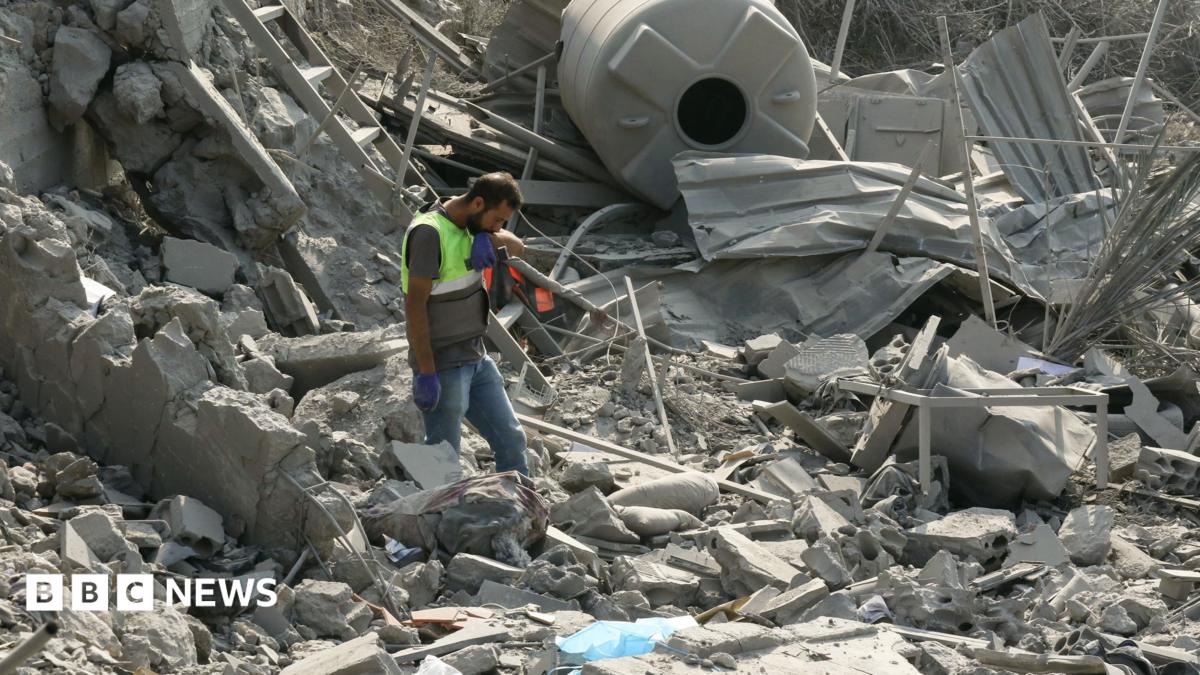
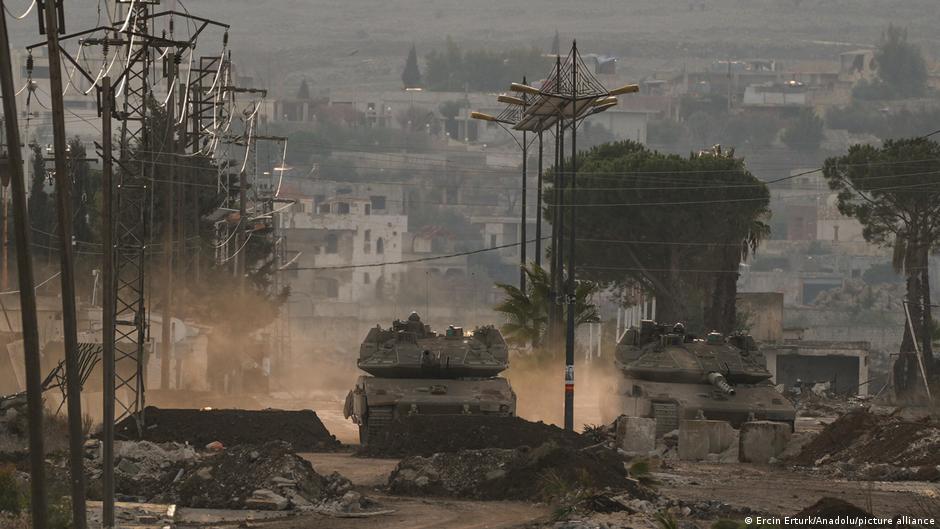
Photo via Al Jazeera

Why has Israel escalated attacks in southern Lebanon despite ceasefire?

Read the original at Al Jazeera ↗
Cite

Al Jazeera Staff. (2026, August 16). Why has Israel escalated attacks in southern Lebanon despite ceasefire? Al Jazeera. https://www.aljazeera.com/news/2026/8/16/why-has-israel-escalated-attacks-in-southern-lebanon-despite-ceasefire?traffic_source=rss

Dated when The Aporia collected the article, usually within hours of publication. Check the original for its exact date and byline.

Al Jazeera · collected 2026-08-16 · by Al Jazeera Staff

Quick Summary

Lebanese leaders have condemned Israeli attacks on southern Lebanon that killed at least 11 people, despite a ceasefire brokered by the US in June. The June 4 ceasefire was contingent on Hezbollah's withdrawal from the area, while the June 26 agreement tied it to Hezbollah's disarmament. Israeli strikes have targeted several areas, including Ansar village and Deir al-Zahrani, with footage showing flames and smoke rising from the Ali al-Taher ridge near Beaufort Castle. The attacks are part of an escalation by Israel, despite plans for further talks between Lebanon and Israel next month.
Written by AI on 2026-08-16, from this article's own text only (the story summary below draws on all the coverage).
See how they differ ↓

AI analysis

Story summary

On Saturday, Israeli airstrikes on southern Lebanon killed at least 11 people, including three children, in what is considered one of the deadliest attacks since a truce between Israel and Hezbollah went into effect in June. The strikes targeted a home in the village of Ansar, killing seven people, including three children, and wounding two others. Another strike on the village of Deir al-Zahrani killed four people and wounded 17 others. This escalation comes despite two truce agreements between Lebanon and Israel, mediated by the US, which were announced in June. Lebanese Prime Minister Nawaf Salam condemned the attacks, saying they undermine efforts at stability in the region. This marks one of the deadliest days since the renewal of the ceasefire in June, with over 4,000 people killed in Israeli strikes on Lebanon so far.

Written for “Israeli Strikes on Lebanon” on 2026-11-20, grounded in this article and the 2 other(s) covering the same event.

How they differ

3 outlets covered “Israeli Strikes on Lebanon”.

What each outlet says

One AI summary per outlet of its latest article on this story, written from that article alone and checked against it. Open the article for the outlet's own words.

Al JazeeraThis outlet16 Aug

Lebanese leaders have condemned Israeli attacks on southern Lebanon that killed at least 11 people, despite a ceasefire brokered by the US in June. The June 4 ceasefire was contingent on Hezbollah's withdrawal from the area, while the June 26 agreement tied it to Hezbollah's disarmament. Israeli strikes have targeted several areas, including Ansar village and Deir al-Zahrani, with footage showing flames and smoke…

Why has Israel escalated attacks in southern Lebanon despite ceasefire? (this article)
CBC16 Aug

Israeli airstrikes on southern Lebanon killed at least 11 people, including three children, according to the Lebanese Health Ministry. The attacks targeted a home in the village of Ansar and the village of Deir al-Zahrani, with one strike killing seven people and wounding two, and another killing four and injuring 17. These airstrikes are some of the deadliest since a truce between Israel and Hezbollah went into…

Israeli airstrikes on southern Lebanon kill 11, Health Ministry says →
BBC16 Aug

Lebanese authorities report that Israeli strikes killed eleven people, including three children and two women, in southern Lebanon. The deadliest attack occurred at around 04:30 in Ansar, where a house was struck killing seven civilians, according to Prime Minister Nawaf Salam. The Israeli Defense Forces (IDF) stated that the strike on Ansar targeted Hezbollah commander Ali Samir al-Haj Hassan and eliminated…

Eleven killed in Israeli strikes on southern Lebanon, authorities say →

Where they agree and split

Framing

How the first headlines put it

Attributed to a source2
Stated as fact1
The headlines (3)

Israeli airstrikes on southern Lebanon kill 11, Health Ministry says CBC · attributed to a source

Eleven killed in Israeli strikes on southern Lebanon, authorities say BBC · attributed to a source

Why has Israel escalated attacks in southern Lebanon despite ceasefire? Al Jazeera · stated as fact

The full story: what happened, how it changed, and all 3 articles →

Compared with similar articles

This article reads leans left and hedges 6% of its claims. Each row says how that neighbour differs.
CBC News
Hedges 1 of 29 claims Outlet record 60/100
BBC News
Hedges 1 of 25 claims Outlet record 65/100
Deutsche Welle
Hedges 3 of 67 claims Outlet record 95/100
“The dates of the events mentioned in the two articles are different, and the text does not suggest that the events are related to each other”

Story

Israeli Strikes on Lebanon
World · 3 article(s) covering the same event. Compare every outlet's account →
How this article was measured signals, leaning charts, publisher record, byline, topics and claims

Signals How these are calculated →

Claims extracted
70
sentences that state something as happening or true
Uncertain
6%
4 of 70 hedged ("reportedly", "may", "according to")
Leaning
Leans left
of the writing, not the subject · beta estimate
Publisher signals
60/100
Al Jazeera's corrections and hedging, across everything collected from it. Not a measure of accuracy.
Outlets on this story
3
World
Same framing elsewhere
1
articles that frame the event the way this one does
Analyzed 2026-08-16 · how these are computed

How this is being covered How these are calculated →

Article leaning vs. publisher reliability
Source leaning vs. consistency

Publisher

Al Jazeera · 6131 article(s) · 4 correction(s) detected
Running correction rate · 4 correction(s)

Who wrote this

Al Jazeera Staff
1170 article(s) here · 1 carrying a prediction
Kyiv Mayor Vitali Klitschko said ballistic missiles had damaged the Podilskyi, Darnitskyi, and Southern bridges, requiring traffic restrictions across the Dnipro.
2026-11-20 · assertive framing · Russia unleashes retaliatory barrage on Kyiv bridges
The populist is widely expected to win the race thanks to the huge political support earned by his crackdown on El Salvador’s violent cartels.
British and European Union leaders are set to meet at a summit billed as a chance to reset relations a decade after the Brexit vote.
The journey would usually take about two and a half hours, but as he accelerated along the road, Yazan noticed that the car was struggling to pick up speed.
“When we set our net zero emissions goal, we anticipated steady growth, falling clean energy costs, and changes in the broader system that would enable progress at the pace we envisioned.
That will give the party power over Congress’s ability to oversee investigations and issue subpoenas.
Salvadoran President Nayib Bukele is set to formally register his candidacy for his country’s upcoming presidential race, as he seeks a third consecutive term.
Four bodies have been recovered after a migrant boat capsized off Senegal’s coast, as authorities continue searching for survivors amid fears that the death toll could rise significantly.
Iraqi Prime Minister Ali al-Zaidi says his country’s security forces will establish a joint operations centre in the town of Jurf al-Sakhar, in a compromise with the Iranian-backed Kataib Hezbollah armed group over control of a strategic area south of Baghdad.
He said further measures would be announced in the coming days to ensure those responsible are held accountable.
Wire or desk byline, not an individual reporter.
Also by Al Jazeera Staff
Nothing else under this byline is closely related to this article, so these are simply their most recent.
All 1170 articles by Al Jazeera Staff →

Topics

Hezbollah Israel Israeli Lebanese Lebanon

Subjects

Israeli NORP · 19× Hezbollah ORG · 9× Lebanon GPE · 9× Israel GPE · 6× Lebanese NORP · 3× Nabatieh GPE · 3× NNA ORG · 2× al-Mansouri GPE · 2× Donald Trump PERSON · 1× the United States GPE · 1×

Narrative

An Israeli escalation came as the Lebanese government is planning to hold another round of talks with Israel next month. So what is behind the latest Israeli escalation, and where do the talks stand? Here’s what we know: What happened? Lebanon’s Ministry of Public Health said at least 11 people, including several children, were killed on Saturday in Israeli strikes in the southern district of Nabatieh.
framing: assertive · carried by 1 article(s) · first seen 2026-08-16
Recommended Stories list of 3 items- list 1 of 3Lebanon’s PM urges timetable for Israeli withdrawal as Hezbollah slams deal - list 2 of 3Israeli strikes kill 11 in southern Lebanon as attacks intensify - list 3 of 3A Syrian intervention in Lebanon would be too costly for Damascus The agreements came after another truce announced in April had unravelled.
2026-08-16 · Al Jazeera
Why has Israel escalated attacks in southern Lebanon despite ceasefire? · assertive framing

Claims (70 extracted, 4 hedged)

Lebanese leaders have condemned the Israeli bombing of southern Lebanon that has killed at least 11 people in the worst attacks since the renewal of a ceasefire was brokered in June by the United States. asserted
renewal → condemn → States
Lebanon and Israel have agreed to two truce agreements – June 4 and 26 – mediated by US President Donald Trump’s administration. asserted
Lebanon → agree → administration
The June 26 framework agreement did not specifically call for the withdrawal of the Israeli forces and instead tied it to the disarmament of Hezbollah. asserted
agreement → call → Hezbollah
Recommended Stories list of 3 items- list 1 of 3Lebanon’s PM urges timetable for Israeli withdrawal as Hezbollah slams deal - list 2 of 3Israeli strikes kill 11 in southern Lebanon as attacks intensify - list 3 of 3A Syrian intervention in Lebanon would be too costly for Damascus The agreements came after another truce announced in April had unravelled. asserted
truce → urge → April
Both the ceasefires, opposed by Hezbollah, have not stopped the Israeli military from expanding its control over Lebanese territory and carrying out deadly attacks. asserted
ceasefires → oppose → attacks
An Israeli escalation came as the Lebanese government is planning to hold another round of talks with Israel next month. So what is behind the latest Israeli escalation, and where do the talks stand? Here’s what we know: What happened? Lebanon’s Ministry of Public Health said at least 11 people, including several children, were killed on Saturday in Israeli strikes in the southern district of Nabatieh. asserted
people → come → Nabatieh
Lebanon’s National News Agency (NNA) reported that seven people were killed and three wounded when Israeli warplanes struck a house on the outskirts of Ansar village, destroying the building. asserted
warplanes → report → building
Four other people were killed in a strike on the village of Deir al-Zahrani. asserted
people → kill → Zahrani
“This is an area seen by people as safe, but an air attack has now hit. asserted
attack → see → people
We are seeing many demolitions. asserted
We → see → demolitions
They are erasing towns and villages in the south,” he said. asserted
he → erase → south
“There are villages, especially those on the border with Israel, that have been completely erased, including graveyards and historic monuments,” he added. asserted
he → be → graveyards
The Israeli army carried out an air strike on the Ali al-Taher ridge in the Nabatieh district near the UNESCO-listed Beaufort Castle. asserted
army → carry → Castle
Footage verified by Al Jazeera showed flames and smoke rising from the area between the Ali al-Taher hills and the Dabsha area amid the sound of explosions. asserted
flames → verify → explosions
Al-Manar, Hezbollah’s TV channel, said the blasts were a result of Israeli air attacks in the area while the Nabatieh news channel reported that the raids took place near the town of Kfar Reman. asserted
raids → say → Reman
The area has seen increased Israeli army activity in recent days and weeks after a lull following the June truce. asserted
area → see → truce
Israel said the area has strategic significance and it is targeting Hezbollah infrastructure. asserted
it → say → infrastructure
Explosions have also been reported in Lebanon’s southern towns of Bint Jbeil and Taybeh, according to the NNA. uncertain
Explosions → report → NNA
Israeli drones also targeted the outskirts of the town of al-Mansouri. asserted
drones → target → Mansouri
Artillery shelling was reported in the towns of Sarbin, Barashit, al-Mansouri and Wadi Zibqin. asserted
shelling → report → Sarbin
What has Israel said? asserted
Israel → say → What
The Israeli military claimed the attacks were carried out in response to what it described as an action by Hezbollah against Israeli soldiers at the Ali al-Taher Ridge. asserted
it → claim → Ridge
The office of Israeli Prime Minister Benjamin Netanyahu said in a statement on X that the Israeli military responded by striking the Hezbollah terror headquarters which ordered the attack”. asserted
which → say → attack
It added that “only later” did the Israeli military “learn that Hezbollah deliberately put civilians in that military compound”. asserted
Hezbollah → add → compound
Israel has repeatedly targeted civilians in Lebanon and during its genocidal war in Gaza, but it often claims that armed groups operate from civilian areas. uncertain
groups → target → areas
These claims have been proved to be wrong on most occasions. uncertain
claims → prove → occasions
The Israeli military also said it killed Abu Hassan Alaa, whom it described as a senior commander in Hezbollah’s “Badder Unit”, and Hezbollah commander Ali Samir al-Haj Hassan in its strikes in southern Lebanon. asserted
it → say → Lebanon
Hezbollah has not yet commented on the Israeli claims. uncertain
Hezbollah → comment → claims
Ziad Abu Rish, an associate professor of Middle Eastern Studies at Bard College in the US state of New York, told Al Jazeera most observers believe Netanyahu wants to escalate strikes on Lebanon “to demonstrate an undeterred resolve” to occupy the country’s south and to “pummel” Hezbollah and Lebanese civilians. asserted
Netanyahu → tell → Hezbollah
He said Saturday’s attacks follow “a pattern that has been in place since the so-called ceasefire” in which Israel is “allowed by the US” to attack Hezbollah and civilians in Lebanon “without any consequences”. asserted
Israel → say → consequences
He noted that Israeli forces have killed more than 4,300 people in Lebanon since March 2 and wounded more than 12,000. asserted
forces → note → 12,000
About 90,000 houses have been damaged or destroyed while roughly 600,000 people remain displaced. asserted
people → damage → ?
March 2 was the day the latest Israeli escalation in its war on Lebanon began. asserted
escalation → begin → Lebanon
It started after Hezbollah launched rockets into Israel in retaliation for United States-Israeli air strikes that killed Iranian Supreme Leader Ali Khamenei. asserted
that → start → Khamenei
“People’s lives have been broken,” Abu Rish said. asserted
Rish → break → ?
“And it is clear that the Israeli policy has been to collectively punish the Lebanese population and in particular Shia majority parts of Lebanon and south Lebanon as it wages a campaign not just against Hezbollah but against the Lebanese people.” asserted
it → punish → people
The professor added that Israel’s actions in Lebanon should also be put in the context of what is happening in Gaza. asserted
what → add → Gaza
Israel has killed more than 1,200 people in Gaza since an October “ceasefire”. asserted
Israel → kill → ceasefire
“We saw that Israel was able to continue its genocide in Gaza with no consequences,” he said. asserted
he → see → consequences
“So people should really not be surprised to see that it is really able to carry out a campaign of effectively depopulating and making south Lebanon uninhabitable, as has been documented by numerous journalists and human rights organisations.” asserted
Lebanon → see → journalists
…and 30 more, not listed.
Give feedback · no sign-in needed

No sign-in needed for now. Your note is sent without a name, so it cannot be answered.

History Support