Photo via The Sydney Morning Herald

Wall Street’s boom is sitting on a shaky foundation

Read the original at The Sydney Morning Herald ↗
Cite

Bartholomeusz, S. (2026, October 19). Wall Street’s boom is sitting on a shaky foundation. The Sydney Morning Herald. https://www.smh.com.au/business/markets/wall-street-s-boom-is-sitting-on-a-shaky-foundation-20261019-p616lj.html?ref=rss&utm_medium=rss&utm_source=rss_feed

Dated from the outlet's own feed. Check the original for its byline.

The Sydney Morning Herald · collected 2026-10-19 · by Stephen Bartholomeusz

Quick Summary

The article reports on the recent financial instability affecting companies in the neocloud sector, which provide computing power for AI training. Specifically, it highlights CoreWeave's significant share price drop by 15% and rising bond yields to 15%, along with similar issues facing other firms like Firmus. The piece argues that these problems stem from circular financing practices where companies rely heavily on long-term commitments from tech giants but face risks due to rapidly evolving GPU technology and market uncertainties around AI's future demand.
Written by AI on 2026-10-19, from this article's own text only (the story summary below draws on all the coverage).
See how they differ ↓

AI analysis

Story summary

Tech and AI-related stocks experienced significant sell-offs starting Friday, October 16, 2026, with fears mounting over debt-fueled spending on infrastructure. The Nasdaq and S&P 500 indices fell by 2.4% and 1.3%, respectively, setting the week for their worst performance since June. Shares of SanDisk, AMD, and Micron dropped by 6.7%, 5.9%, and 5.7%, while CoreWeave, an AI cloud provider, plummeted by 25% over five days. This sell-off reflects a growing crisis of confidence due to concerns about unrealistic valuations and the impact of rising interest rates on future profitability. Additionally, Firmus, an Australian data center operator, cancelled its planned $44 billion IPO after investors rejected high valuations based on speculative revenue projections, further indicating the fragility of the AI sector's financial foundations.

Written for “AI Stock Market Crash Concerns” on 2026-11-21, grounded in this article and the 1 other(s) covering the same event.

How they differ

2 outlets covered “AI Stock Market Crash Concerns”.

What each outlet says

One AI summary per outlet of its latest article on this story, written from that article alone and checked against it. Open the article for the outlet's own words.

Sydney Morning HeraldThis outlet19 Oct

The article reports on the recent financial instability affecting companies in the neocloud sector, which provide computing power for AI training. Specifically, it highlights CoreWeave's significant share price drop by 15% and rising bond yields to 15%, along with similar issues facing other firms like Firmus. The piece argues that these problems stem from circular financing practices where companies rely heavily on…

Wall Street’s boom is sitting on a shaky foundation (this article)
New York Post16 Oct

Tech and AI stocks experienced significant declines on Friday, with the Nasdaq and S&P 500 dropping 2.4% and 1.3%, respectively, marking their worst week since July. Companies like SanDisk, AMD, and Micron saw major losses of up to 6.7%. Concerns over debt-fueled spending in data centers and unrealistic valuations have intensified, leading some analysts to predict a potential crisis of confidence in the sector…

AI stock sell-off ramps up over debt-fueled data center spending fears: ‘Full-blown crisis of confidence’ →

Compared with similar articles

This article reads unscored and hedges 9% of its claims. Each row says how that neighbour differs.
Semafor
Hedges 1 of 4 claims Outlet record 64/100
“The articles discuss different aspects of the AI and neocloud market; Article A focuses on CoreWeave's financial struggles, while Article B discusses potential IPO delays for Anthropic.”
New York Post
Hedges 8 of 37 claims Outlet record 66/100
“The articles discuss different financial events related to artificial intelligence companies but describe distinct occurrences involving separate firms (CoreWeave vs Anthropic) at different times.”
Semafor
Hedges 4 of 4 claims Outlet record 64/100
“The articles describe different financial and strategic moves in the AI industry, with Article A focusing on the decline of CoreWeave's stock price and bond yields, while Article B discusses Anthropic's plans to spend $750 billion on compute capacity.”
Global News
Hedges 5 of 39 claims Outlet record 63/100
“Article A focuses on a specific event involving CoreWeave's share price and bond yields, while Article B discusses broader market trends affecting AI stocks.”
Semafor
Hedges 0 of 4 claims Outlet record 64/100
“Both articles discuss similar financial concerns regarding AI infrastructure but describe different time periods and details.”
Semafor
Hedges 1 of 20 claims Outlet record 64/100
“The articles discuss similar topics related to AI company financial stability, but describe different aspects: one focuses on credit default swaps and insurance costs, while the other discusses share price and bond yields.”
ABC News (AU)
Hedges 1 of 26 claims Outlet record 67/100
“The articles describe similar concerns about financial instability in the tech sector but refer to different aspects of CoreWeave's situation.”
Global News
Hedges 3 of 38 claims Outlet record 63/100
“The articles discuss different time periods and events related to AI stocks, with Article A covering a general sell-off on October 15th and Article B focusing on CoreWeave's performance the week before.”
Washington Examiner
Leans right Hedges 1 of 4 claims Outlet record 67/100
“Article A focuses on the financial performance of a specific neocloud company, CoreWeave, while Article B discusses broader market sentiment and concerns about AI investments in general.”

Story

AI Stock Market Crash Concerns
Economy/Business · 2 article(s) covering the same event. See how they differ ↑
How this article was measured signals, leaning charts, publisher record, byline, topics and claims

Signals How these are calculated →

Claims extracted
32
sentences that state something as happening or true
Uncertain
9%
3 of 32 hedged ("reportedly", "may", "according to")
Leaning
not political
takes no side on a contested political question
Publisher signals
61/100
The Sydney Morning Herald's corrections and hedging, across everything collected from it. Not a measure of accuracy.
Outlets on this story
2
Economy/Business
Same framing elsewhere
1
articles that frame the event the way this one does
Analyzed 2026-10-19 · how these are computed

How this is being covered How these are calculated →

Article leaning vs. publisher reliability
Source leaning vs. consistency

Publisher

The Sydney Morning Herald · 7782 article(s) · 16 correction(s) detected
Running correction rate · 16 correction(s)

Who wrote this

Stephen Bartholomeusz
29 article(s) here · 1 carrying a prediction
Nvidia has delivered a third-quarter result that outperformed expectations, raised its forecasts for the current quarter and was very bullish about its prospects in its next financial year.
Donald Trump “wouldn’t mind” if he regained the role.
If you were looking for a single barometer of the state of the world – or of a particular copper-rich sector – it would be hard to go past the copper price.
It now appears inevitable that the Fed will deliver its second rate rise in this cycle – the first was in September – after the US inflation rate came in above expectations for the third successive month.
If he were to be removed – either by his board, which has said it will conduct an inquiry, or by external pressure – could Nvidia function as effectively?
The “blue tsunami” that destroyed Republican control of Congress last week may have a silver lining for some of the key companies caught up in the scramble for artificial intelligence supremacy and for investors exposed to what appeared to be a swelling bubble.
Musk quipped on his X social media platform that his “election-interfering space lasers didn’t work,” but it was another post that shows the real damage that the failure of his efforts to influence the outcome of the elections will do.
The midterm elections could knock out one, if not two, of the pillars supporting that dominance.
Those “concepts” could produce even more trade friction.
2026-11-03 · assertive framing · Trump has lost control of his war with Canada
Alphabet and Meta have, between them, raised almost $US90 billion of new equity since June and have programs that could raise a further $US100 billion.
2026-11-02 · assertive framing · Wall Street on edge after $1.4 trillion wipeout
Also by Stephen Bartholomeusz
Nothing else under this byline is closely related to this article, so these are simply their most recent.
All 29 articles by Stephen Bartholomeusz →

Topics

Australia CoreWeave Firmus Nvidia OpenAI

Subjects

CoreWeave ORG · 9× Nvidia ORG · 3× Firmus ORG · 2× Australia GPE · 1× Gartner ORG · 1× Meta ORG · 1× OpenAI ORG · 1×

Narrative

With the bonds of neoclouds trading below their face value, and their shares imploding, that willingness is going to be tested, along with the sturdiness of the entire ASI sector’s foundations. Rising interest costs are changing the economics of AI, increasing the costs today, deferring to moment of hoped-for profitability further into the future and, by devaluing the net present value of the hoped-for future cash flows, lowering the value and appeal of their equity today. If the supply of that capital, however expensive, were to be throttled, however, it would be extremely destructive – fatal for many – for all companies with exposures to AI, with the probable exception of the stronger hyperscalers, which have their own legacy cash flows to fall back on.
framing: assertive · carried by 1 article(s) · first seen 2026-10-19
Earlier this month, Firmus, a data centre operator, yanked what would have been Australia’s second-largest initial public offering – after investors balked at the $44 billion valuation and the very pricey capitalisation of revenues and earnings from projects that are still on drawing boards.
2026-10-19 · The Sydney Morning Herald
Wall Street’s boom is sitting on a shaky foundation · assertive framing

Claims (32 extracted, 3 hedged)

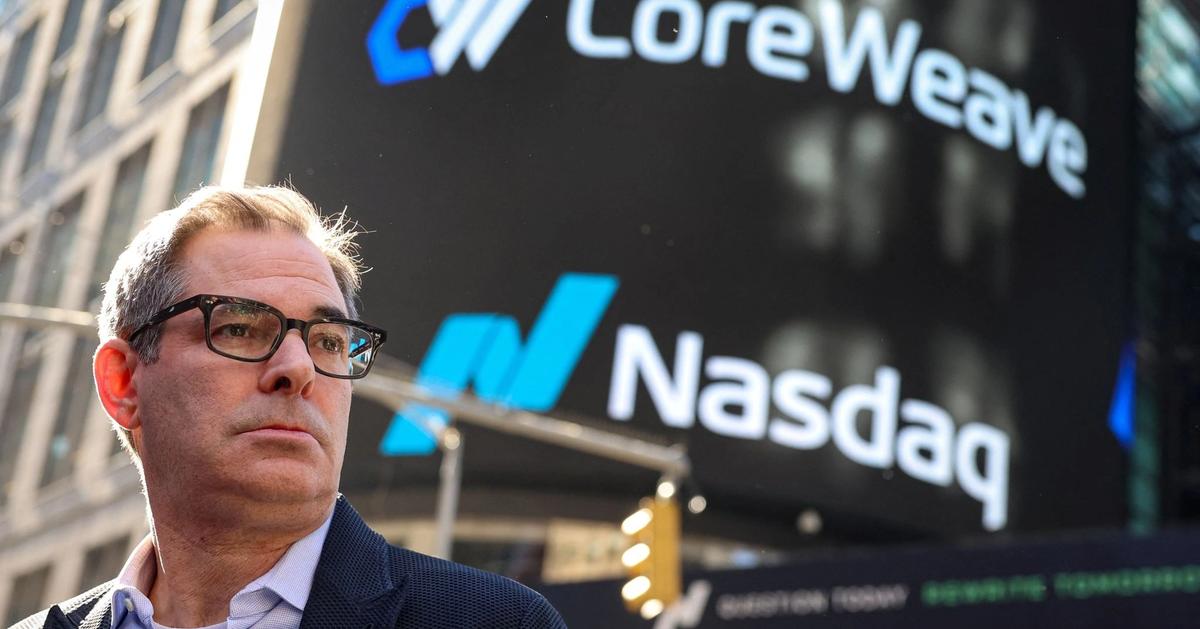
The maths of the boom in artificial intelligence is starting to undermine its foundations, with the implosion in the share price of a leading neocloud last week, and soaring bond yields, highlighting the most vulnerable point in a fragile financial edifice. asserted
maths → start → edifice
Last week the share price of neocloud CoreWeave plummeted 15 per cent and the yield on its bonds – bonds it issued with a yield of 9.675 per cent in June – rocketed to 15 per cent, with the bonds trading at less than 80 per cent of their face value. asserted
bonds → plummet → value
The share prices and bonds of other neoclouds – companies that are built specifically to provide computing power to train AI models – were also ravaged. asserted
that → build → models
Earlier this month, Firmus, a data centre operator, yanked what would have been Australia’s second-largest initial public offering – after investors balked at the $44 billion valuation and the very pricey capitalisation of revenues and earnings from projects that are still on drawing boards. asserted
that → yank → boards
It probably wasn’t a coincidence that the plunge in the value of CoreWeave’s shares and bonds came in the wake of the Firmus debacle and accelerated as last week’s inflation data showed the US inflation rate is also accelerating, presaging higher US interest rates. asserted
rate → come → rates
They commit to building or leasing data centres and installing the massive computing power necessary for AI, using contracts to rent out that capacity to AI frontier labs and the hyperscalers as the backing for the equity and debt that they raise to fund the projects. asserted
they → commit → projects
In CoreWeave’s case – and this is a common and much questioned feature of the AI sector – it has committed to buying billions of dollars of high-end graphics processing units (GPUs) or chips, from Nvidia. asserted
it → question → Nvidia
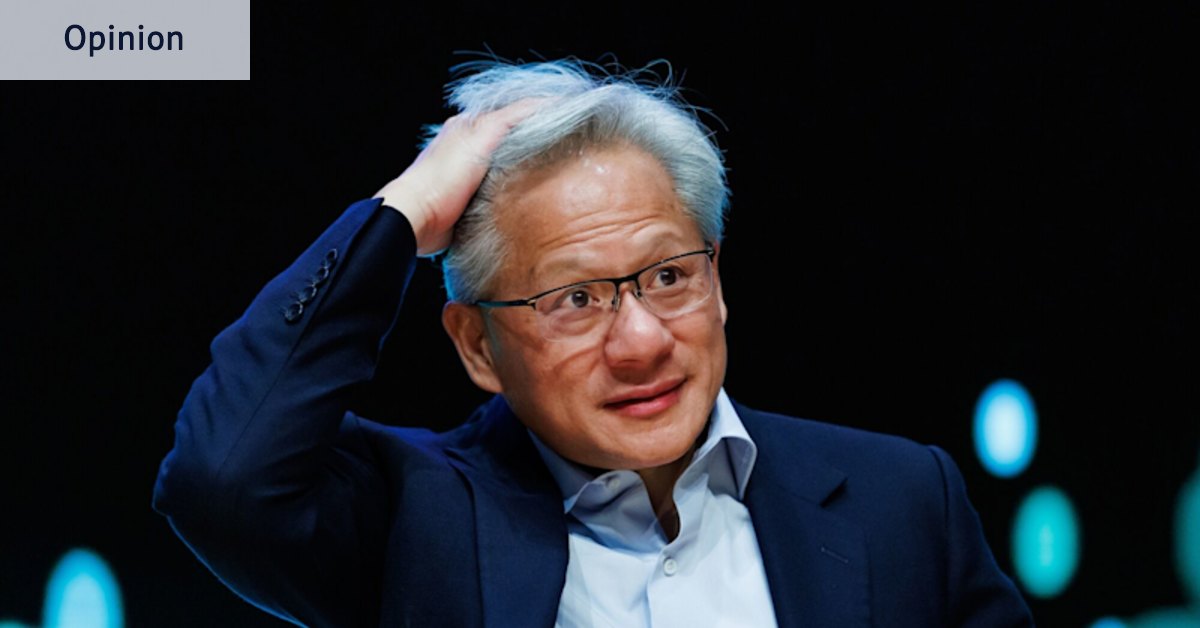
In turn, Nvidia helped to buttress CoreWeave’s finances by investing $US2 billion in the company and providing a $US6.3 billion commitment to buy any unsold capacity through to 2032. asserted
Nvidia → help → 2032
In effect, Nvidia has helped fund the purchase of its own chips, a feature often described as “circular” financing and one rife throughout the sector. asserted
Nvidia → help → sector
CoreWeave has a not dissimilar arrangement with OpenAI, which has committed to pay CoreWeave more than $US22 billion for “compute” while taking up a $US350 million equity stake in the company. asserted
which → have → company
Those contracts with major AI players – there’s another with Meta – have enabled CoreWeave to raise the equity and debt – it has more than $US40 billion of debt and leases – to fund its data centres rollout. asserted
it → enable → rollout
Adding to the risk, such is the rate of development of the GPUs that the chips they are installing at increasingly exorbitant cost may be obsolete by the time their centres are operational. uncertain
centres → add → time
Moreover, thanks to a community backlash against data centres (no-one wants to live next to them and they can consume vast amounts of energy and water) and the inflation rate, the centres are taking longer than expected to be built and are more expensive than anticipated. asserted
centres → want → energy
As with AI more broadly, there is a significant mismatch between the timing of the capital expenditures and revenue growth which is widening because of the pace at which the sector is growing. asserted
sector → be → which
That yawning and ever-expanding gap has to be funded by ever-increasing amounts of equity and debt. asserted
gap → yawn → equity
Last month the global technology research and advisory firm, Gartner released an analysis that concluded that AI companies were unlikely to deliver enough revenue to cover the expected capital expenditure on IT infrastructure between now and 2030. asserted
companies → release → 2030
It said AI providers would spend nearly $US1 trillion of infrastructure this year and were forecast to spend another $US6 trillion by 2030. asserted
providers → say → 2030
Its research, however, indicated that enterprise and consumer revenues would be insufficient to support profitable returns on the spending. asserted
revenues → indicate → spending
The operators would need to generate $US8.5 trillion of revenue to cover the capital outlays and funding costs while generating a 12 per cent return on capital (which would be the minimum required, given the riskiness, uncertainty and protracted timelines of AI investments). asserted
which → need → investments
The total revenues Gartner forecasts for AI data centres through to 2032, however, only amount to $US3.6 trillion. asserted
Gartner → forecast → trillion
It said more than 80 per cent of the neocloud operators would cease operating independently by 2030. asserted
cent → say → 2030
They’ve been willing to supply vast amounts of cheap capital to all things AI-related in what have been blind acts of faith. asserted
what → supply → faith
As we know from the experience of the 19th century railways boom, and the dot-com boom of the 1990s, AI could transform the world as we know it and still be a poor – even disastrous – investment today. uncertain
we → know → it
The experience of Firmus and CoreWeave and their peers – and analyses like Gartner’s – suggests, some more questioning and scepticism is starting to surface and risk is starting to be priced in to equities and debt. uncertain
risk → suggest → equities
Even Nvidia’s share price has fallen by more than 10 per cent in the past fortnight. asserted
price → fall → fortnight
CoreWeave’s bond yields scream distress. asserted
yields → scream → distress
Its credit default swaps – it now costs almost US1.2 million to ensure $US10 million of its debt – are pricing in a more than 60 per cent chance that it will default within the next five years. asserted
it → cost → years
The company’s June quarter results highlight the challenge it confronts. asserted
it → highlight → challenge
It generated revenue of $US2.6 billion, had capital expenditures of $US9.4 billion and lost $US626 million. asserted
It → generate → million
Both CoreWeave and Nvidia have defended the group’s financials, with CoreWeave’s chief executive, Mike Intrator, saying the markets are acting “irrationally” and that he had confidence in the CoreWeave business model. asserted
he → defend → model
That confidence, however, revolves around the markets’ willingness to continue to supply the ever-swelling amounts of capital that fills in the widening gap between the company’s cash generation and its spending commitments. asserted
that → revolve → generation
With the bonds of neoclouds trading below their face value, and their shares imploding, that willingness is going to be tested, along with the sturdiness of the entire ASI sector’s foundations. Rising interest costs are changing the economics of AI, increasing the costs today, deferring to moment of hoped-for profitability further into the future and, by devaluing the net present value of the hoped-for future cash flows, lowering the value and appeal of their equity today. If the supply of that capital, however expensive, were to be throttled, however, it would be extremely destructive – fatal for many – for all companies with exposures to AI, with the probable exception of the stronger hyperscalers, which have their own legacy cash flows to fall back on. asserted
which → trade → flows
Give feedback · no sign-in needed

No sign-in needed for now. Your note is sent without a name, so it cannot be answered.

History Support