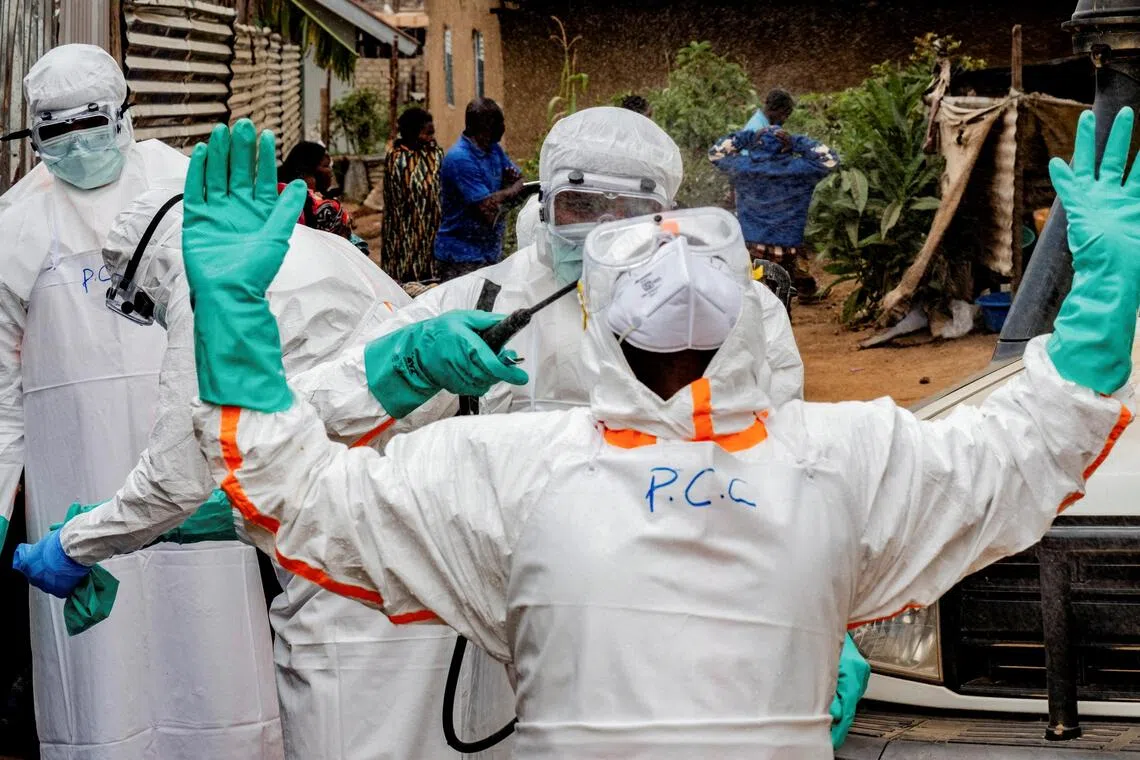
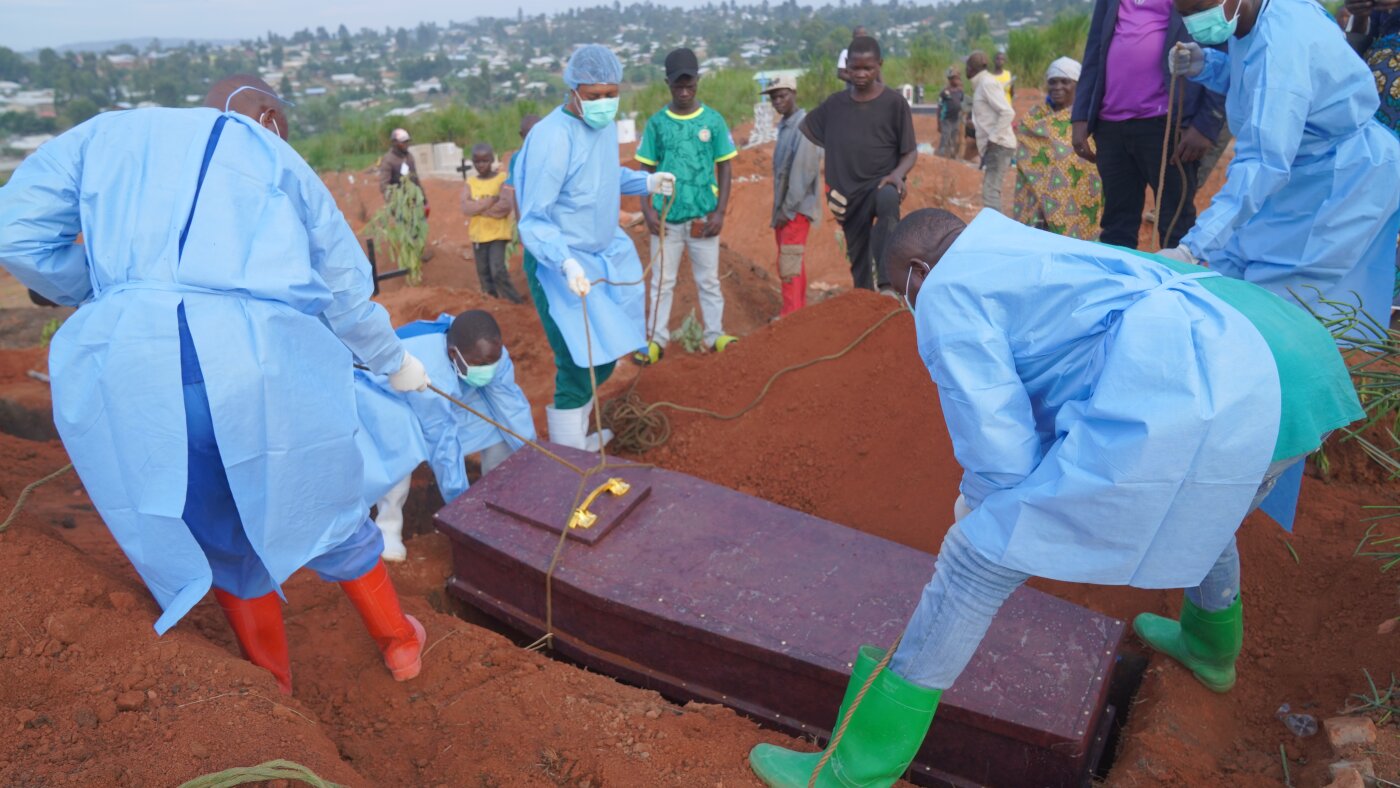
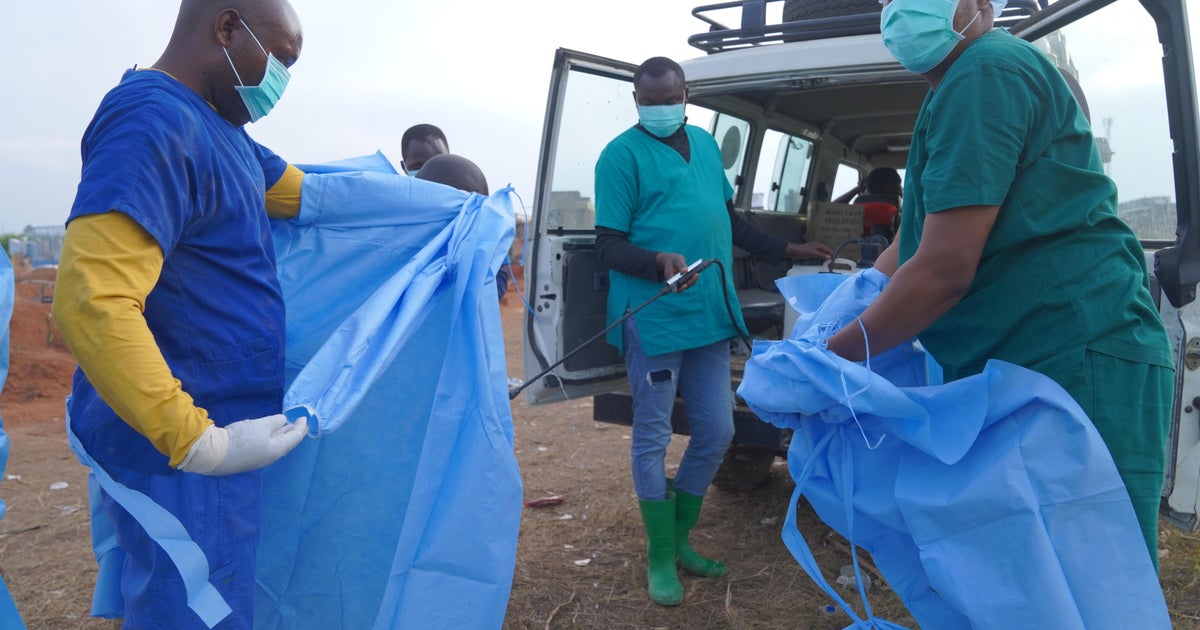
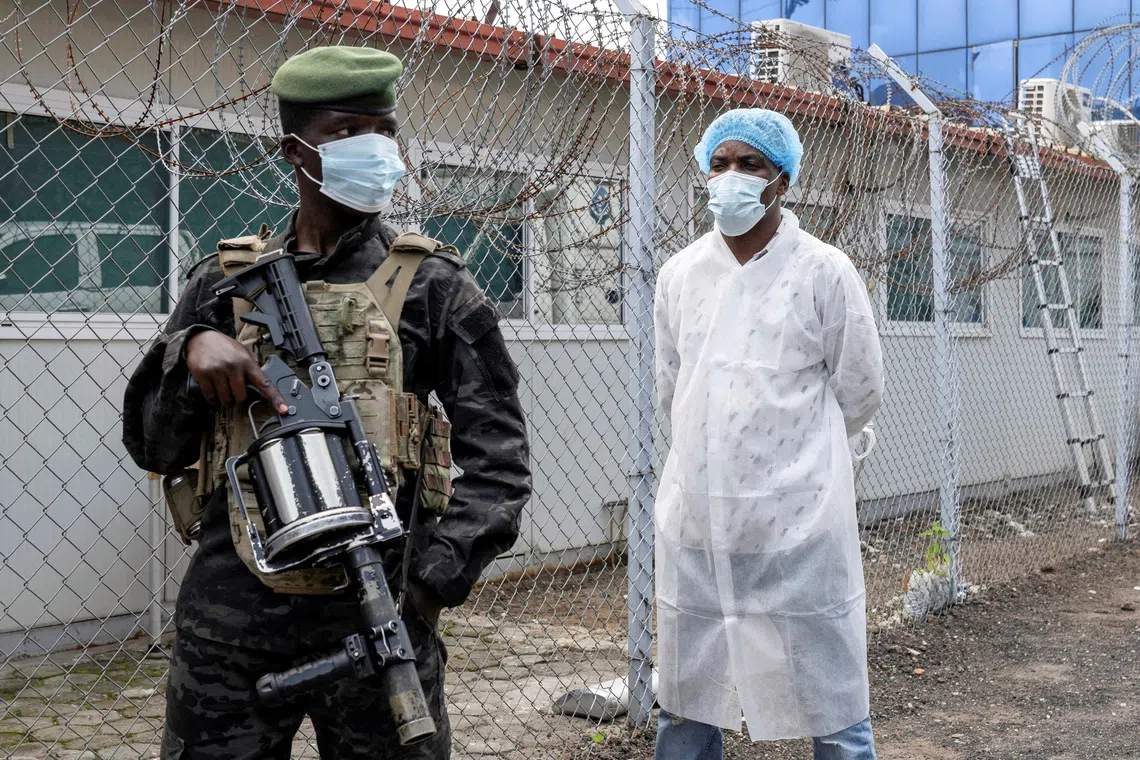
Photo via The Guardian

Ebola outbreak in Democratic Republic of the Congo now deadliest in country’s history

Read the original at The Guardian ↗
Cite

Badshah, N., & Savage, R. (2026, August 18). Ebola outbreak in Democratic Republic of the Congo now deadliest in country’s history. The Guardian. https://www.theguardian.com/world/2026/aug/17/ebola-outbreak-drc-democratic-republic-of-congo-deadliest-in-history

Dated when The Aporia collected the article, usually within hours of publication. Check the original for its exact date and byline.

The Guardian · collected 2026-08-18 · by Nadeem Badshah, Rachel Savage

Quick Summary

The World Health Organization has said that the ongoing Ebola outbreak in the Democratic Republic of the Congo is now the deadliest in the country's history, with at least 2,325 deaths. The number of confirmed cases has risen to 4,945, including 101 new cases detected in the past 24 hours. According to government data and WHO statistics, this outbreak is on track to surpass the 2014-16 West Africa Ebola outbreak as the largest in history, with the potential to reach over 28,000 cases. The rapid spread of the disease has led the UN to declare that "Ebola is winning" in the DRC, killing one person every 30 minutes.
Written by AI on 2026-08-18, from this article's own text only (the story summary below draws on all the coverage).
See how they differ ↓

AI analysis

Story summary

The Democratic Republic of the Congo (DRC) is experiencing its deadliest Ebola outbreak in history, with 2,325 deaths and over 4,945 confirmed cases as of the latest government data. The outbreak has surpassed the toll from the 2018-2020 outbreak, which killed at least 11,000 people. The World Health Organization (WHO) has warned that the outbreak is on track to surpass the deadliest in history, which occurred in West Africa from 2014 to 2016 and resulted in over 28,616 cases and 11,325 deaths.

The outbreak has spread rapidly across six of the DRC's 26 provinces, with 3,400 cases reported in Ituri province alone. The Bundibugyo strain of Ebola, responsible for the current outbreak, has no approved vaccines or treatments. WHO Director-General Tedros Adhanom Ghebreyesus has stated that the epidemic is "far from being under control" and warned of a high risk of further national and international spread.

The DRC's public health institute has reported that confirmed cases have risen to 4,945, including 101 detected in the previous 24 hours. The outbreak has been complicated by armed conflict, lack of vaccines or treatment, and weak health infrastructure, leading to community resistance and instability. In response, the M23 rebel alliance has introduced new movement restrictions on people's movements to and from Ebola-affected government-held zones.

The WHO estimates that the current outbreak will likely surpass the 2014-2016 outbreak in West Africa, which was the deadliest Ebola outbreak on record with over 11,000 deaths. The rapid spread of the virus has outpaced response efforts, with responders warning that it is spreading at an unprecedented speed.

Written for “Ebola Outbreak in the DRC” on 2026-11-21, grounded in this article and the 6 other(s) covering the same event.

How they differ

5 outlets covered “Ebola Outbreak in the DRC”.

What each outlet says

One AI summary per outlet of its latest article on this story, written from that article alone and checked against it. Open the article for the outlet's own words.

The GuardianThis outlet18 Aug

The World Health Organization has said that the ongoing Ebola outbreak in the Democratic Republic of the Congo is now the deadliest in the country's history, with at least 2,325 deaths. The number of confirmed cases has risen to 4,945, including 101 new cases detected in the past 24 hours. According to government data and WHO statistics, this outbreak is on track to surpass the 2014-16 West Africa Ebola outbreak as…

Ebola outbreak in Democratic Republic of the Congo now deadliest in country’s history (this article)2 articles from The Guardian on this story
The Straits Times20 Aug

The M23 rebel alliance in the Democratic Republic of Congo has announced new movement restrictions to prevent the spread of Ebola, citing concerns after two travelers from a government-held town tested positive for the virus in an area under their control. The rebels will suspend shared taxis on the Goma-Kirumba road and pirogue boats on certain Lake Edward routes for one month starting Saturday, but allow…

Congo's M23 rebels introduce new movement restrictions over Ebola concerns →2 articles from The Straits Times on this story
CBC19 Aug

The Democratic Republic of Congo's public health ministry has reported at least 2,378 deaths from an ongoing Ebola outbreak as of August 16, making it the deadliest in the country's history and the second-largest Ebola outbreak ever recorded. The World Health Organization's head, Tedros Adhanom Ghebreyesus, has stated that the epidemic is "far from being under control" due to its rapid spread, which has already…

Ebola in the Democratic Republic of Congo: What's going on and why is the outbreak so alarming? →
NPR19 Aug

Congo's Ebola outbreak has reached 5,001 cases, including 2,378 deaths, according to government data. The outbreak is spreading rapidly, outpacing efforts to slow it down in the remote region of Ituri, where responders are warning that the epidemic is "far from being under control". The World Health Organization estimates that this outbreak will likely surpass the deadliest Ebola outbreak on record, with more than…

Congo's Ebola outbreak reaches 5,000 cases as it outpaces response efforts →
CBS News19 Aug

The Ebola outbreak in Congo has surpassed 5,000 cases, with government data showing 5,021 cases, including 2,378 deaths, as of Sunday. The outbreak is caused by the Bundibugyo species of Ebola and has spread at a record-setting pace, infecting and killing people faster than any previous outbreak in history. According to World Health Organization Director-General Tedros Adhanom Ghebreyesus, the epidemic is "far from…

Ebola Congo cases surpass 5,000 as record-setting pace of spread continues →

Where they agree and split

The full story: what happened, how it changed, and all 7 articles →

Compared with similar articles

This article reads unscored and hedges 12% of its claims. Each row says how that neighbour differs.
The Straits Times
Leans left Hedges 2 of 5 claims Outlet record 64/100
NPR
Leans left Hedges 2 of 24 claims Outlet record 60/100
CBS News
Leans left Hedges 3 of 12 claims Outlet record 66/100
The Guardian
Hedges 5 of 27 claims Outlet record 64/100
CBC News
Hedges 5 of 33 claims Outlet record 60/100
The Straits Times
Centre Hedges 0 of 11 claims Outlet record 64/100
“Article A discusses the Ebola outbreak in general, while Article B reports on a specific response to the outbreak by M23 rebels”

Story

Ebola Outbreak in the DRC
Health · 7 article(s) covering the same event. Compare every outlet's account →
How this article was measured signals, leaning charts, publisher record, byline, topics and claims

Signals How these are calculated →

Claims extracted
32
sentences that state something as happening or true
Uncertain
12%
4 of 32 hedged ("reportedly", "may", "according to")
Leaning
not political
takes no side on a contested political question
Publisher signals
64/100
The Guardian's corrections and hedging, across everything collected from it. Not a measure of accuracy.
Outlets on this story
7
Health
Same framing elsewhere
1
articles that frame the event the way this one does
Analyzed 2026-08-18 · how these are computed

How this is being covered How these are calculated →

Article leaning vs. publisher reliability
Source leaning vs. consistency

Publisher

The Guardian · 3744 article(s) · 8 correction(s) detected
Running correction rate · 8 correction(s)

Who wrote this

Nadeem Badshah
19 article(s) here · 1 carrying a prediction
The hype around the release led to schools encouraging pupils not to miss lessons in anticipation of “GTA flu”, a term coined for the swathe of absences when GTA V was released in 2013, which is expected to recur over the coming weeks.
Andy Burnham has said he would consider cuts to national insurance for young people “very carefully”.
The $60m (£45m) US Air National Guard C-130 Hercules, which had been en route to a military assignment in another country, was rendered inoperable and will not fly again, US prosecutors said.
The woman added she decided at that moment that “I’m not going to fight” because “who knows what he could do”.
“As the decision may be subject to legal challenge, it would not be appropriate to comment further.”
Dowling, 18, who took Chloe to the house, and Archie Rycroft, 20, who followed Smith to the fight on 28 March, are also charged with murder and manslaughter and their trial will continue.
2026-11-12 · assertive framing · Woman, 18, admits murdering girl, 16, in Leeds
“As this has only just happened, we would ask everyone to please respect the family’s privacy.”
The current outbreak, declared in May by DR Congo’s health ministry, has surpassed 10,000 cases and 5,000 deaths.
She said one of the selling points of the glasses in advertisements was that they could be used “to film discreetly”.
McCallum added: “As we continue to investigate the circumstances surrounding this incident, we would appeal to anyone who may have information that could assist with inquiries to contact us on 101, quoting reference number 261 30/10/26.”
Also by Nadeem Badshah
Nothing else under this byline is closely related to this article, so these are simply their most recent.
All 19 articles by Nadeem Badshah →
Rachel Savage
2 article(s) here · 1 carrying a prediction
On Wednesday, Tedros Adhanom Ghebreyesus, the WHO director general, said the current outbreak would surpass that one based on its current pace.
In May, the WHO declared the outbreak in the DRC and Uganda as a public health emergency of international concern.
Also by Rachel Savage
Nothing else under this byline is closely related to this article, so these are simply their most recent.

Topics

Bundibugyo DRC Ituri WHO the Democratic Republic of the Congo

Subjects

DRC GPE · 6× WHO ORG · 5× Ituri GPE · 3× Bundibugyo GPE · 2× Uganda GPE · 2× the Democratic Republic of the Congo GPE · 2× Guinea GPE · 1× Liberia GPE · 1× Sierra Leone GPE · 1× The World Health Organization ORG · 1×

Narrative

Ebola is transmitted to people from wild animals and then spreads in the human population through direct contact with the blood, secretions, organs or other body fluids of infected people, including dead bodies, and with contaminated surfaces and materials such as bedding or clothing.
framing: assertive · carried by 1 article(s) · first seen 2026-08-18
In May, the WHO declared the outbreak in the DRC and Uganda as a public health emergency of international concern.

Claims (32 extracted, 4 hedged)

The Ebola outbreak in the Democratic Republic of the Congo is now the deadliest in the country’s history, with at least 2,325 people dead, according to government data, surpassing the toll from the 2018-20 outbreak. uncertain
people → accord → outbreak
The DRC’s public health institute said confirmed cases had risen to 4,945, including 101 detected in the previous 24 hours. asserted
cases → say → hours
The World Health Organization has said the outbreak is on track to surpass west Africa’s 2014-16 Ebola outbreak as the biggest in history. asserted
outbreak → say → history
The 2014-16 outbreak resulted in 28,616 cases and 11,325 deaths across Guinea, Liberia and Sierra Leone, according to WHO data. uncertain
outbreak → result → data
On Friday, the UN said Ebola “is winning in the Democratic Republic of the Congo” and said the epidemic was killing one person every 30 minutes. asserted
epidemic → say → person
Six of DRC’s 26 provinces have been affected, mainly those along the country’s north-eastern border. asserted
Six → affect → border
More than 3,400 of the cases have been recorded in Ituri province, where the outbreak was first reported. asserted
outbreak → record → province
The latest numbers of confirmed cases of Ebola in the DRC have made this outbreak – the 17th in the country’s history – the fastest-growing in the known history of the virus. asserted
outbreak → confirm → virus
It took almost five months for the 2014-16 west Africa outbreak to reach 1,000 deaths, compared with more than 2,000 deaths in less than three months in this outbreak. asserted
outbreak → take → outbreak
There are no approved vaccines or treatments yet for the rare Bundibugyo strain of the virus that is responsible for the current surge in cases. asserted
that → be → cases
Nonetheless, 1,000 people in the DRC have recovered from the infection, with 730 still in healthcare or isolation facilities. asserted
730 → recover → facilities
Clinical trials of two possible treatments for the strain began last month in Ituri. asserted
trials → begin → Ituri
Tedros Adhanom Ghebreyesus, the WHO director general, said last week that two vaccines developed specifically for Bundibugyo were now being tested on people. asserted
vaccines → say → people
Thomas Parisch, a public health specialist recently deployed to the DRC with Médecins Sans Frontières, said: “Normally, as an outbreak progresses, the case fatality ratio should fall as contact tracing improves and patients are identified and treated earlier. asserted
patients → deploy → Frontières
Instead, we’re still seeing many cases detected very late, when treatment is less likely to succeed, with many identified only after they die in the community.” asserted
they → see → community
Uganda has reported at least 20 cases, all in the capital, Kampala. asserted
Uganda → report → capital
The last case reported there was on 21 June and no community transmission has been recorded. asserted
transmission → report → June
The government declared the country Ebola-free on 28 July after the last Ebola patient, a Congolese national, was discharged on 16 July. asserted
patient → declare → July
In May, the WHO declared the outbreak in the DRC and Uganda as a public health emergency of international concern. uncertain
WHO → declare → concern
It said sequencing showed the outbreak had started months earlier, in February. asserted
outbreak → say → February
Ebola is transmitted to people from wild animals and then spreads in the human population through direct contact with the blood, secretions, organs or other body fluids of infected people, including dead bodies, and with contaminated surfaces and materials such as bedding or clothing. asserted
Ebola → transmit → bedding
According to the WHO, symptoms can include fever, fatigue, malaise, muscle pain, headache and sore throat. uncertain
symptoms → accord → fever
These are followed by vomiting, diarrhoea, abdominal pain, rash and symptoms of impaired kidney and liver functions. asserted
These → follow → functions
The response to this outbreak has been hampered by attacks on healthcare facilities, often fuelled by misinformation about safe burial practices, as well as strikes by some unpaid health workers. asserted
response → hamper → workers
Decades of unrest and outside interference on traumatised communities, as well as poor health and road infrastructure have also complicated the picture. asserted
health → traumatise → picture
More than 70% of people die in the community and not in health centres, said Mohamed Janabi, the WHO’s regional Africa director. asserted
Janabi → die → centres
Jean-Paul Malo Lotsima, a civil society official in the Djugu area of Ituri, told the AFP news agency: “People prefer to be treated at home, thinking it is a case of poisoning or some other illness.” asserted
it → tell → poisoning
He added: “It’s often at the last minute, when the family realises that the situation is getting worse, that patients are taken to hospital. asserted
patients → add → hospital
And sometimes, they die on the way.” asserted
they → die → way
Flavier Ngurima, who lives in Nizi, one of the hotspots of the outbreak in Ituri, said his brother died before reaching the treatment centre. asserted
brother → live → centre
“We had called on a nurse from the family to treat him at home because the patient and the family members were afraid to go to the ETC [treatment centre],” he said. asserted
he → call → ETC
“They said that over there, a lot of people die.” asserted
lot → say → people
Give feedback · no sign-in needed

No sign-in needed for now. Your note is sent without a name, so it cannot be answered.

History Support