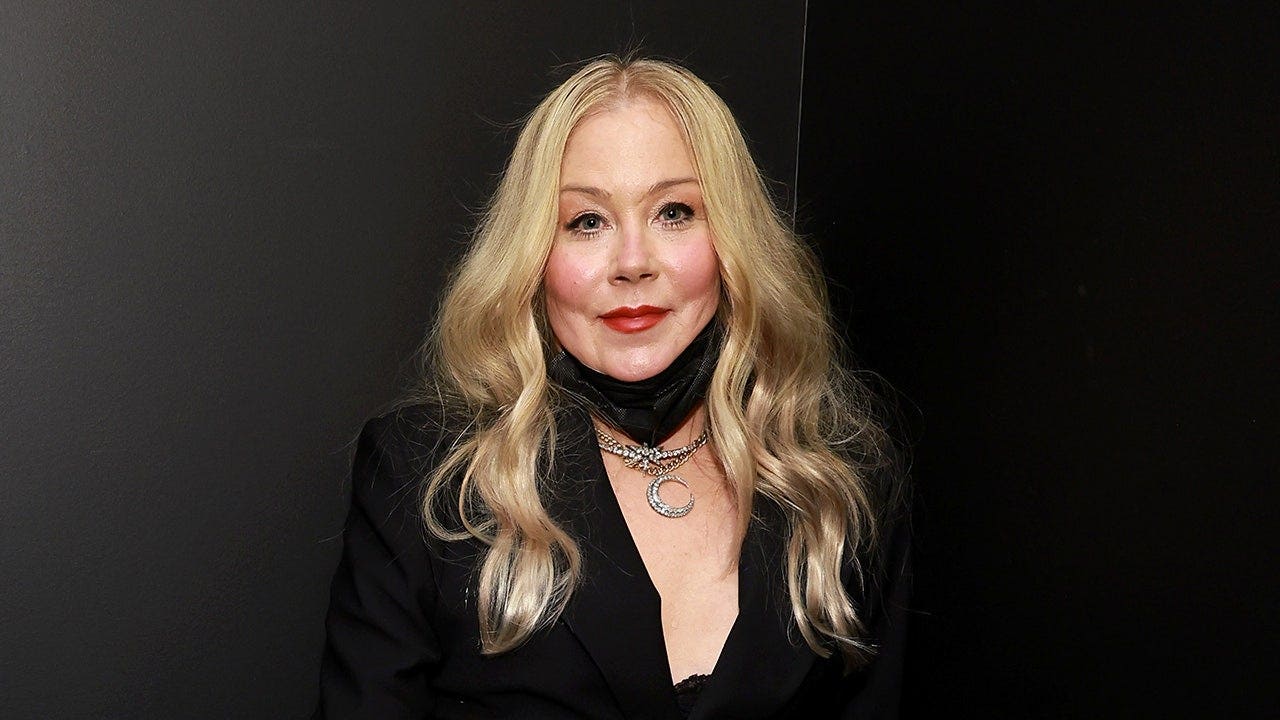
Photo via The Globe and Mail

Expert weighs in on MS misdiagnoses after celebrity’s revelation

Read the original at The Globe and Mail ↗
Cite

Kirkup, K. (2026, October 20). Expert weighs in on MS misdiagnoses after celebrity’s revelation. The Globe and Mail. https://www.theglobeandmail.com/canada/article-expert-multiple-sclerosis-misdiagnosis-christina-applegate/

Dated from the outlet's own feed. Check the original for its byline.

The Globe and Mail · collected 2026-10-20 · by Kristy Kirkup

Quick Summary

Dr. Mark Freedman, a neurologist at the Ottawa Hospital, discusses multiple sclerosis (MS) following actress Christina Applegate's revelation about being misdiagnosed with the disease. Freedman explains that MS is an autoimmune disorder affecting the myelin sheath of nerve cells in the central nervous system and highlights the complexity involved in diagnosing it accurately. He notes that while misdiagnosis is uncommon in Canada due to specialized training, it may occur more frequently in the U.S. due to a shortage of trained specialists.
Written by AI on 2026-10-21, from this article's own text only (the story summary below draws on all the coverage).
See how they differ ↓

AI analysis

Story summary

Emmy-nominated actress Christina Applegate announced on October 20, 2026, that she had been misdiagnosed with multiple sclerosis (MS) since 2021. In an episode of her podcast "MeSsy," co-hosted by Jamie-Lynn Sigler, Applegate broke down in tears as she recounted the moment a doctor told her she did not have MS. Despite being symptom-free according to doctors, Applegate still experiences debilitating symptoms and uses wheelchairs when visiting medical facilities due to mobility issues. The misdiagnosis leaves her at "square one," unsure of what is causing her health problems. Dr. Elena Grebenciucova from Northwestern Medicine noted that up to 1 in 5 patients diagnosed with MS may not actually have the condition but rather a different disorder, highlighting the challenges in diagnosing such complex neurological conditions accurately.

Written for “Christina Applegate MS Diagnosis” on 2026-11-20, grounded in this article and the 9 other(s) covering the same event.

How they differ

8 outlets covered “Christina Applegate MS Diagnosis”.

What each outlet says

One AI summary per outlet of its latest article on this story, written from that article alone and checked against it. Open the article for the outlet's own words.

The Globe and MailThis outlet20 Oct

Dr. Mark Freedman, a neurologist at the Ottawa Hospital, discusses multiple sclerosis (MS) following actress Christina Applegate's revelation about being misdiagnosed with the disease. Freedman explains that MS is an autoimmune disorder affecting the myelin sheath of nerve cells in the central nervous system and highlights the complexity involved in diagnosing it accurately. He notes that while misdiagnosis is…

Expert weighs in on MS misdiagnoses after celebrity’s revelation (this article)
CBS News20 Oct

Christina Applegate revealed on Tuesday that advanced medical technology showed her previous diagnosis of multiple sclerosis was incorrect. Initially battling the disease publicly, she now joins millions of Americans dealing with rare or undiagnosed illnesses. The article focuses on how new technological advancements can correct misdiagnoses.

Christina Applegate says new technology revealed her MS misdiagnosis →3 articles from CBS News on this story
NBC News20 Oct

Christina Applegate revealed on Tuesday that she had been misdiagnosed with multiple sclerosis and does not actually have the condition, a diagnosis she believed to be true since 2021. In an emotional episode of her podcast "MeSsy," Applegate expressed confusion and frustration about her continued health issues without knowing their cause. She recently received a standing ovation at the Emmy Awards for her…

Christina Applegate says she was misdiagnosed with multiple sclerosis →
The Guardian20 Oct

Christina Applegate, an Emmy-winning actress known for roles in "Married... with Children" and "Dead to Me," revealed via her podcast that she was misdiagnosed with multiple sclerosis (MS). In a recent episode of her show "MeSsy," posted on YouTube, Applegate expressed confusion and disappointment over the news from her doctor, despite experiencing all symptoms associated with MS. The announcement comes after…

Actor Christina Applegate reveals she was misdiagnosed with multiple sclerosis →
Fox News20 Oct

Christina Applegate announced on her podcast that doctors have informed her she does not actually have multiple sclerosis (MS), a diagnosis she received in 2021. Confused and disappointed, Applegate expressed that the misdiagnosis leaves her back at square one without understanding what has caused her ongoing health issues. She detailed how the MS diagnosis had given her a reason for her chronic pain and mobility…

Christina Applegate says she was misdiagnosed with MS and is now 'back at square one' →
The Independent20 Oct

Christina Applegate announced on her podcast "MeSsy" that she was misdiagnosed with multiple sclerosis (MS) years ago and does not actually have the condition, despite experiencing all symptoms of MS. She first revealed her diagnosis in 2021 but now faces uncertainty as to what is causing her health issues. This revelation comes as Applegate and co-host Jamie-Lynn Sigler, both public figures with a history of…

Christina Applegate says her doctor told her she was misdiagnosed with MS →
Show 2 more outlets
New York Post20 Oct

Christina Applegate, 54, revealed on her podcast "MeSsy" that she was misdiagnosed with multiple sclerosis (MS) and is now seeking the correct diagnosis for her worsening health issues. Her symptoms include tingling sensations in her toes and legs, knee pain, numbness in her feet, and difficulty walking, which led to her use of a wheelchair during filming and reliance on a cane since then. Dr. Elena Grebenciucova…

Christina Applegate’s next steps towards finding cause of worsening health issues revealed after incorrect MS diagnosis →
ABC News (AU)21 Oct

Christina Applegate announced on her podcast "Messy" that she had been misdiagnosed with multiple sclerosis (MS) after years of living with and discussing the condition publicly. Despite being previously diagnosed with MS, Applegate now reveals ongoing debilitating symptoms without confirming a new diagnosis.

Christina Applegate says she was misdiagnosed with MS →

Where they agree and split

Framing

How the first headlines put it

Attributed to a source4
Stated as fact4
The headlines (8)

Christina Applegate says she was misdiagnosed with multiple sclerosis NBC News · attributed to a source

Christina Applegate says she was misdiagnosed with MS and is now 'back at square one' Fox News · attributed to a source

Christina Applegate says her doctor told her she was misdiagnosed with MS The Independent · attributed to a source

Christina Applegate says she was misdiagnosed with MS ABC News (Australia) · attributed to a source

Actor Christina Applegate reveals she was misdiagnosed with multiple sclerosis The Guardian · stated as fact

Christina Applegate reveals she was misdiagnosed with multiple sclerosis CBS News · stated as fact

Christina Applegate’s next steps towards finding cause of worsening health issues revealed after incorrect MS diagnosis New York Post · stated as fact

Expert weighs in on MS misdiagnoses after celebrity’s revelation The Globe and Mail · stated as fact

The full story: what happened, how it changed, and all 10 articles →

Compared with similar articles

This article reads unscored and hedges 7% of its claims. Each row says how that neighbour differs.
CBS News
Hedges 4 of 44 claims Outlet record 67/100
The Independent
Hedges 0 of 14 claims Outlet record 59/100
ABC News (AU)
Hedges 0 of 3 claims Outlet record 67/100
CBS News
Hedges 0 of 3 claims Outlet record 67/100
The Guardian
Hedges 0 of 22 claims Outlet record 64/100
“While both articles discuss Christina Applegate's revelation about her misdiagnosis with multiple sclerosis, Article A focuses on her personal announcement and emotional reaction, while Article B reports on an expert commentary in response to the same news. They describe different aspects of the event.”
Daily Mail
Hedges 7 of 60 claims Outlet record 69/100
“The articles discuss Christina Applegate's misdiagnosis with multiple sclerosis but cover different aspects and do not describe the exact same incident at the same time.”
CBS News
Hedges 0 of 1 claims Outlet record 67/100
“While both articles mention Christina Applegate's revelation about being misdiagnosed with multiple sclerosis, Article A does not provide details or context of this event and instead discusses a separate topic.”
Fox News
Hedges 1 of 54 claims Outlet record 67/100
“While both articles discuss Christina Applegate's misdiagnosis with MS, Article A focuses on her personal reaction and announcement on her podcast, whereas Article B discusses an expert commentary following the revelation.”
NBC News
Hedges 0 of 15 claims Outlet record 78/100
“Article A describes Christina Applegate's announcement about her misdiagnosis, while Article B discusses an expert weighing in on MS misdiagnoses following Applegate's revelation.”

Story

Christina Applegate MS Diagnosis
Health · 10 article(s) covering the same event. Compare every outlet's account →
How this article was measured signals, leaning charts, publisher record, byline, topics and claims

Signals How these are calculated →

Claims extracted
41
sentences that state something as happening or true
Uncertain
7%
3 of 41 hedged ("reportedly", "may", "according to")
Leaning
not political
takes no side on a contested political question
Publisher signals
51/100
The Globe and Mail's corrections and hedging, across everything collected from it. Not a measure of accuracy.
Outlets on this story
10
Health
Same framing elsewhere
1
articles that frame the event the way this one does
Analyzed 2026-10-21 · how these are computed

How this is being covered How these are calculated →

Article leaning vs. publisher reliability
Source leaning vs. consistency

Publisher

The Globe and Mail · 1290 article(s) · 50 correction(s) detected
Running correction rate · 50 correction(s)

Who wrote this

Kristy Kirkup
18 article(s) here · 1 carrying a prediction
Previously, family physicians could apply a consult code for providing menopause care, but many felt the fee was not clearly defined, creating confusion about when it could be used.
“Use them and get going.” Mr. Gibson, 69, knows future research efforts won’t change the fact that ALS, which affects muscles involved in key functions such as breathing, will eventually take his life. But the grandfather, known by his family for his stubborn streak, is determined to push ahead while he can. After being diagnosed with ALS, Mr. Gibson said he had a choice to make: He could either feel bad about his situation or he could do whatever he could with his “last bit of time.” Tammy Moore, chief executive officer of ALS Canada, is urging the government to fund research that could be used to evaluate the demographics of patients across the country and ensure they have access to clinical trials.
Dr. Jerath said a possible explanation for the differences could be that female physicians may engage in more patient-centred communication and that they spend more time with their patients.
So depending on where the attack occurs, you could have a multitude of different symptoms, or you could have no symptoms at all.
By the end of a two-day interjurisdictional meeting, Canada’s provincial and territorial health ministers were able to receive assurances on funding extensions from Ottawa, but will need to convene again before 2027 to confirm the future of expiring transfer programs.
Canada’s provincial and territorial health ministers say Ottawa’s one-year extension of funding for mental health, addiction treatment and home care is not enough, and that federal plans would amount to a spending cut that is “the largest in a generation.”
The model could serve as an example for other centres across the country as Canada experiences rapid growth in its aging population.
An Ontario father of two with Stage 4 melanoma says he is heartbroken that the provincial government’s revised rules for out-of-country medical coverage will continue to bar access to a treatment that could save his and others’ lives.
At the time, a nurse told her any other surgeon would have done a hysterectomy because her situation was “a mess.”
U.S. President Donald Trump signalled that he supports the idea, but his energy secretary recently indicated a “blanket ban” will not happen.
2026-09-28 · assertive framing · Poilievre pushes for diesel plan as fuel prices soar
Also by Kristy Kirkup
Nothing else under this byline is closely related to this article, so these are simply their most recent.
All 18 articles by Kristy Kirkup →

Topics

American The Globe and Mail U.S. the Multiple Sclerosis Research Unit the Ottawa Hospital

Subjects

Canada GPE · 4× U.S. GPE · 2× American NORP · 1× Applegate PERSON · 1× Christina Applegate PERSON · 1× Kelly Bundy PERSON · 1× Mark Freedman PERSON · 1× The Globe and Mail ORG · 1× the Multiple Sclerosis Research Unit ORG · 1× the Ottawa Hospital ORG · 1×

Narrative

On Tuesday, The Globe and Mail spoke with Dr. Mark Freedman, an internationally recognized neurologist who serves as director of the Multiple Sclerosis Research Unit at the Ottawa Hospital, to learn more about the disease and how common it is to be misdiagnosed.
framing: assertive · carried by 1 article(s) · first seen 2026-10-21
So depending on where the attack occurs, you could have a multitude of different symptoms, or you could have no symptoms at all.
2026-10-21 · The Globe and Mail
Expert weighs in on MS misdiagnoses after celebrity’s revelation · assertive framing

Claims (41 extracted, 3 hedged)

American actress Christina Applegate, who is often remembered for her role as Kelly Bundy on the hit TV show Married With Children that aired from the late 80s to late 90s, said this week that she was wrongly diagnosed with multiple sclerosis. asserted
she → remember → sclerosis
Ms. Applegate first announced in 2021 that she had been diagnosed with the disorder that causes the immune system to attack the cells in the central nervous system. asserted
system → announce → system
On Tuesday, The Globe and Mail spoke with Dr. Mark Freedman, an internationally recognized neurologist who serves as director of the Multiple Sclerosis Research Unit at the Ottawa Hospital, to learn more about the disease and how common it is to be misdiagnosed. asserted
it → speak → disease
MS is considered an autoimmune disease. asserted
MS → consider → ?
Every organ of the body has an autoimmune disease associated with it. asserted
organ → have → it
In MS, the autoimmune target is the insulation of the wires of the central nervous system, called myelin. asserted
target → call → system
Anywhere you have the central nervous system, myelin is open to attack from the immune system. asserted
myelin → have → system
It includes what some people don’t realize: the optic nerve. asserted
people → include → nerve
The optic nerve is an extension of the brain and it’s coated with myelin, similar to the way the rest of the brain and spinal cord are. asserted
rest → coat → brain
Your brain controls everything, right? asserted
brain → control → everything
So depending on where the attack occurs, you could have a multitude of different symptoms, or you could have no symptoms at all. uncertain
you → depend → symptoms
How is MS diagnosed? asserted
MS → diagnose → ?
We actually just published a brand-new series of criteria about a year ago. asserted
We → publish → criteria
This was an international effort at trying to really line up the clues for MS. asserted
This → try → MS
Every rendition of our diagnostic criteria had two things in mind. asserted
rendition → have → mind
Number one: make sure that if you put the label of MS, it really is MS. asserted
it → make → MS
The second is to try to diagnose the disease earlier, so there’s an opportunity for treatments. asserted
second → try → treatments
The earlier you introduce an effective treatment, the better the long-term outcome. asserted
you → introduce → treatment
How common is it for patients to be misdiagnosed with MS? asserted
patients → misdiagnose → MS
In Canada, I would say it’s very uncommon. asserted
it → say → Canada
Most of the neurologists in our country are highly trained in usually large academic centres. asserted
Most → train → centres
We always train fellows. asserted
We → train → fellows
That’s not the case in other countries, such as the U.S. The disease has become so complex, not only in terms of the diagnosis but also in the therapies that we apply. asserted
we → become → that
Why is it key for patients to be able to receive the correct diagnosis? asserted
patients → receive → diagnosis
Psychologically, would you really want to be labelled with a disease you don’t have? asserted
you → want → disease
I would err on the side of “This could be MS, but I’m not convinced of it, and I need to do more tests or I need more time.” uncertain
I → err → time
The drugs that we’re using today are actually quite complex and very expensive. asserted
we → use → that
Do I want to commit a patient to a therapy they don’t need and could be potentially harmful to them? uncertain
they → want → them
I don’t want to do that. asserted
I → want → that
Our Hippocratic Oath when we became doctors is to first do no harm. asserted
we → become → harm
The data varies a little bit, but most of the time we say that if you have a first-degree relative – mother, father, sister, brother – with MS, your chances are 30 to 50 times the population risk. asserted
chances → vary → MS
What are you thinking about as you look to the future and how to best support patients? asserted
you → think → patients
There’s so much that we need to know. asserted
we → ’ → that
Years ago, we pioneered the use of autologous stem cell treatment for MS in Ottawa. asserted
we → pioneer → Ottawa
We are still the leading centre in Canada that does these treatments for people who have very aggressive forms of the disease. asserted
who → lead → disease
In those individuals, we’ve been able to stop it cold and they’ve done very well. asserted
they → stop → it
It’s quite an extreme procedure to completely remove an immune system and replace it with patients’ own stem cells. asserted
It → ’ → cells
We still do one or two a month from all over Canada. asserted
We → do → Canada
Even if we stop all inflammation in patients, some patients still continue to progressively get worse. asserted
patients → stop → patients
That is a different type of inflammation that is not currently targeted by the therapies we have, but there are some new ones on the horizon. asserted
we → target → horizon
…and 1 more, not listed.
Give feedback · no sign-in needed

No sign-in needed for now. Your note is sent without a name, so it cannot be answered.

History Support